




ARTIFICIAL INTELLIGENCE IN CANCER DIAGNOSIS AND TREATMENT PLANNING: A NEW FRONTIER
HTML Full TextARTIFICIAL INTELLIGENCE IN CANCER DIAGNOSIS AND TREATMENT PLANNING: A NEW FRONTIER
Suryavardhan Singh *, Krishnapal Singh Rathore and Rashyap Saraswat
Chitkara College of Pharmacy, Chitkara University, Chandigarh, Punjab, India.
ABSTRACT: Artificial intelligence (AI) has recently gained significant attention as a decision-support system used in cancer diagnosis and treatment planning. Deep learning (DL) and machine learning (ML) methods make it possible to analyze and process complex and heterogeneous medical information, such as imaging, histopathology, genomics, and electronic health records. These methods have shown promise in the area of enhancing early detection, classification of tumors, prognosis, and the choice of therapy. Nevertheless, even with the fast development, the majority of AI systems are still at the experimental or initial validation phase. Among the main issues, there is a lack of generalizability, interpretability, relying on large, high-quality data sets, and a deficiency of prospective clinical validation. Also, there are regulatory, ethical, and workflow integration obstacles which impede routine clinical adoption. This review critically assesses the existing applications of AI in oncology, distinguishing between experimental, validated, and implemented systems. Primary evidence, clinical translation, and regulatory considerations are emphasized. Further directions such as explainable AI, multimodal integration, and real-world validation are also discussed to contribute to safe, reliable, and equitable implementation in oncology practice.
Keywords: Artificial intelligence, Cancer diagnosis, Clinical Decision Support Systems (CDSS), Treatment planning, Medical imaging
INTRODUCTION: Cancer continues to be a primary cause of illness and death globally, presenting a significant public health issue 1. The epidemiological evidence is used to illustrate how there is an increasing incidence of cancer partly due to the population growth, ageing of the population, behavioural shifts and the environmental determinants.
Despite major developments in the field of biomedical research, cancer remains a large burden to the healthcare infrastructure, especially in the low- and middle-income countries where delays in the diagnosis process and the lack of access to sophisticated treatment approaches are widespread 2. Consequently, early detection and precise treatment planning are essential for enhancing patient survival rates and overall quality of life.
Conventional approaches to cancer diagnosis, including imaging, histopathological tests, and lab tests, have been the staple of oncological practice. Similarly, traditional treatment planning is highly dependent on the knowledge and experience of the clinician, standardized procedures or guidelines based on the population statistics. However, these traditional methods are marred by many shortcomings. The accuracy of diagnosis is also varies depending on the experience of the operator, interpretive bias of the operator, and the amount of work 3.
Interpatient variation, tumour heterogeneity and multifaceted clinical data together make it challenging to create truly personalized treatment regimens in the framework of treatment planning. These barriers have the potential to generate delays in diagnosis, inappropriate treatment choices, and unequal clinical results 4.
Artificial Intelligence (AI) is a useful tool in overcoming obstacles in oncology in recent years 5. Artificial intelligence, especially machine learning and deep learning processes, has shown significant potential in working with large and complex data, including medical images, pathological slides, genomic data, and electronic health records 6.
With the ability to reveal latent patterns and predictive characteristics beyond human ability, AI systems can help clinicians enhance the accuracy of diagnostic testing, optimize treatment protocols and facilitate personalized cancer care 7. The introduction of AI in cancer diagnosis and treatment planning is a new era in oncology and it promises to advance clinical decision-making, overall patient outcomes, and transform the future of cancer management altogether 8.
Review Methodology: A systematic literature search was carried out in databases such as PubMed, Scopus, and Web of Science to conduct this review. Publications published between 2015 and 2026 were screened using keywords, which included: artificial intelligence, cancer diagnosis, treatment planning, and clinical decision support system. Primary research studies, clinical validation studies and regulatory reports were given priority. Selective inclusion of review articles was aimed at adding context. Evidence was classified into experimental, validated and clinically deployed applications to provide clarity in evidence interpretation.
Overview of Artificial Intelligence in Healthcare: Artificial Intelligence (AI) is the ability of computer systems to perform tasks that typically require human cognitive abilities such as learning, inference, pattern recognition and decision making 9. In the medical field, AI aims to replicate cognitive functions to help clinicians to clarify the complex medical records and enhance clinical outcomes. The idea of AI emerged in the middle of the 20th century; however, the use of AI in medicine was impeded due to the lack of computer resources and medical data availability 10. Over the past few years, advancements in computing technology, growth of detailed datasets of healthcare, improvement of algorithms, have increased the integration of AI into various areas of medicine, with a particular focus on oncology 11.
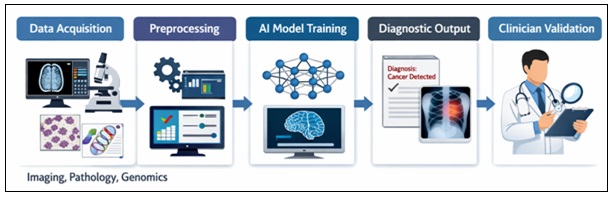
FIG. 1: THIS FIGURE SHOWS THE PROCESS OF ARTIFICIAL INTELLIGENCE IN CANCER DIAGNOSIS. THE DATA IS ACQUIRED BY MEANS OF IMAGING, PATHOLOGY, AND GENOMICS, AND THEN IT IS PREPROCESSED TO CLEAN AND ORGANIZE DATA. THE DATA IS THEN TRAINED IN AI MODELS WHEREBY MACHINE LEARNING ALGORITHMS ARE LEARNT WITH RESPECT TO CANCER DETECTION. THE TRAINED MODEL GENERATES A PRODUCT OF DIAGNOSIS THAT ASSISTS IN DETERMINING THE OCCURRENCE OF CANCER. LASTLY, THE CLINICIAN VALIDATION WILL BE USED TO VERIFY THE RESULTS OF THE AI-GENERATED INFORMATION BY MEDICAL PRACTITIONERS TO PROVIDE PROPER DIAGNOSIS AND TREATMENT PLANNING
Machine Learning (ML) is a subset of artificial intelligence facilitating computational systems to gain knowledge based on data without the need for explicit programming. ML algorithms discover trends in datasets and exploit these trends in the predictive modelling and classification. ML methods have been used extensively in the medical field to predict disease risk, provide a diagnosis of diagnostic images, and predict clinical outcomes. Deep Learning (DL), which is a more sophisticated branch of ML, is a method that uses neural networks with several hidden layers to handle large and complicated datasets 12. Due to the ability to automatically extract features from raw data, DL has excelled in areas like medical imaging, pathology and genomics since it has minimized use of manual feature selection. The impact of artificial intelligence on modern medical decision-making has grown significantly during the last few years 13. The systems based on AI can combine the information obtained using multiple sources, such as medical imaging, electronic health records, laboratory reports, and genomic data, to aid in making clinical decisions 14. These systems assist medical practitioners by improving diagnostic accuracy disease progression prediction, and the provision of personalized treatment schemes. Instead of replacing the clinicians, AI can be considered a decision-support tool that enhances human expertise, reduces diagnostic variability, and boosts efficiency in clinical processes. Revitalized in oncology, AI-based decision-making can be used to enhance the early detection of cancer, optimize the treatment strategy, and promote precision medicine, a significant paradigm shift in cancer treatment 15.
Artificial Intelligence in Cancer Diagnosis: Timely and accurate diagnosis is critical in setting the prognosis of cancer and treatment outcome. Although useful, traditional diagnostic tools have been noted to face several issues, including subjective interpretation, inter-observer inconsistency, and a increasing clinical workload 16. Artificial Intelligence (AI) has become one of the outstanding resources in diagnosing cancers, where automated analysis through the large base of clinical data can be performed with impressive rapidity and accuracy 8. Through applying machine learning and deep learning models, AI systems can help healthcare providers to detect cancers in the initial stages, classify types of tumors, and enhance a consistent and uniform diagnostic pattern across various healthcare environments 17.
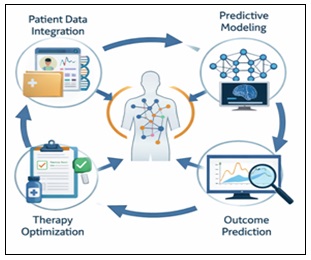
FIG. 2: THIS FIGURE IS A TOPICAL WORKFLOW OF ARTIFICIAL INTELLIGENCE IN PERSONALIZED CANCER TREATMENT. IT BEGINS WITH A STAGE OF PATIENT DATA INTEGRATION WHERE THE CLINICAL RECORDS, IMAGING AND GENOMIC DATA ARE AGGREGATED INTO A SINGLE DATASET. THIS INFORMATION IS EMPLOYED IN PREDICTIVE MODELING WHERE AI ALGORITHMS ARE USED TO ANALYZE TRENDS TO COMPREHEND DISEASE PROGRESSION. THE MODEL THEN CARRIES OUT OUTCOME PREDICTION WHICH ESTIMATES THE RESPONSE OF THE TREATMENT AND THE CHANCES OF SURVIVAL. ACCORDING TO THESE PREDICTIONS, THE OPTIMIZATION OF THE THERAPEUTIC PROCESS IS CONDUCTED TO CHOOSE THE MOST EFFECTIVE AND INDIVIDUAL TREATMENT PLAN. THE FINDINGS ARE FED BACK INTO THE SYSTEM CONTINUOUSLY FORMING A CLOSED LOOP OF FEEDBACK THAT ENHANCES ACCURACY AND HELPS IN MAKING MORE EFFECTIVE CLINICAL DECISIONS
TABLE 1: AI APPLICATIONS IN CANCER DIAGNOSIS
| AI Application | Methodology | Data Type | Clinical Utility | Validation Level | Study Type |
| Tumor detection | CNNs, DL | CT, MRI | Early detection | Validated | Retrospective |
| Histopathological grading | CNNs | Whole-slide images | Classification | Experimental/Validated | Retrospective |
| Biomarker identification | ML | Genomics | Molecular diagnosis | Experimental | Preclinical |
| Cancer subtype classification | ML, DL | Multi-omics | Precision diagnosis | Validated | Retrospective |
AI in Medical Imaging: Medical imaging cannot be replaced in the detection, staging and monitoring of cancer. The latest developments in the field of artificial intelligence and, more specifically, deep learning have dramatically improved medical image analysis by providing automated extraction of features and detection of patterns 18. AI based imaging systems are increasingly being integrated into clinical processes in order to help radiologists perform more accurate and timely diagnoses 19.
Computed Tomography (CT): Computed tomography (CT) finds extensive use in the detection and staging of several malignancies such as pulmonary, colorectal as well as abdominal tumours 20. The artificial intelligence algorithms, specifically convolutional neural networks (CNNs), have proven to have a high level of accuracy in identifying suspicious lesions, tumour margins, and metastatic spread on CT scans. These technologies provide high-volume scan processing in seconds, lower the rate of false-positives, and provide an increased number of early oncological detection especially in the lung cancer screening programmes 21.
Magnetic Resonance Imaging (MRI): Magnetic resonance imaging MRI provides superior soft-tissue contrast and has regular use in the diagnostic work-up of malignancies in the brain, breast, prostate, and musculoskeletal system 22. The application of artificial-intelligence-based MRI analytics enables the automated segmentation of the tumor, classification, and evaluation of tumour malignancy 23. Deep-learning procedures have proven to be effective in the differentiation between benign and malignant lesions and in assisting healthcare professionals by lowering the time of interpretation without compromising the diagnostics 24.
Positron Emission Tomography (PET): As a functional imaging modality that is regularly used in combination with computed tomography (CT) or magnetic resonance imaging (MRI), Positron Emission Tomography (PET) is used to evaluate the level of tumor metabolic activity 25. Techniques based on artificial intelligence can improve the analysis of PET results by enhancing lesion identification, the measurement of metabolic functions of tumors and response prediction. Through the combination of metabolic and anatomical datasets, AI technologies can support more accurate oncologic staging and improve clinical decision-making 26.
Mammography and Ultrasound: Mammography and ultrasound play a crucial role in the screening and diagnosis of breast cancer. AI technologies applied in mammography have shown considerable advancements in identifying early-stage breast cancer and minimizing false-negative outcomes 21. In the realm of ultrasound imaging, AI aids in the characterization of lesions and risk assessment by evaluating the texture and shape of images. These innovations enhance the capabilities of radiologists, boosting diagnostic confidence and decreasing the need for unnecessary biopsies 27.
AI in Histopathology and Digital Pathology: Histopathological examination remains the ultimate criterion in positive cancer diagnosis and its information is invaluable in terms of tumour classification, grading and aggressiveness. Traditionally, the method has been based on the manual microscopic analysis of the tissue specimens by the pathologist, which is both time-consuming and prone to inter-observer variability 28. The increasing use of whole-slide imaging has triggered the movement toward the digitisation of histopathological slides, as a result of which the implementation of Artificial Intelligence (AI) in the field of digital pathology is possible 29.
Automated Tumor Detection: Algorithms based on artificial intelligence (especially, convolutional neural networks) have shown considerable promise in the automated detection of neoplasm in digitized histopathological slides 30. These systems are able to examine high-resolution images to localize tumorous areas, distinguish between neoplastic and normal tissue and emphasize areas of diagnostic interest 31. Tumour detection through automation minimises the chances of those lesions that go undiagnosed, increases the consistency of diagnostic outcomes, and assists pathologists with highlighting areas that may require further examination. Besides, AI-enhanced protocols have unique benefits in the high-throughput pathology lab, where the high workload and time constraints can lead to diagnostic errors 16.
Grading and Classification of Cancer: Accurate grading and classification are essential for prognostic evaluation and treatment planning and classification of cancer. Digital pathology systems powered by AI can analyze the architecture of cells, tissue and nuclear properties to obtain correct classification of neoplastic objects and identification of tumour grade 32. These models have shown promising results in the range of malignancies such as breast, prostate, colorectal, and lung cancers. AI reduces grading subjectivity and enhances standardized reporting by providing objective and reproducible ratings 33. Moreover, the AI-based classification systems may combine histopathological data with molecular and clinical data, thus, providing a more in-depth insight into tumour biology and enabling personalized oncologic care 34.
AI-Based Biomarker and Genomic Analysis: Recent discoveries of molecular biomarkers and genomic changes are critical in understanding the biology of cancer, predicting the disease course, and guiding individualized treatment strategies 35. Over the last few years, high-throughput technologies, such as next-generation sequencing and proteomics, have produced vast amounts of molecular data that may be complex and hard to analyse with traditional methods of analysis 36. One of the powerful technologies that have come up to process these large data sets is Artificial Intelligence, which enables the generation of valuable insights which help in cancer diagnosis and can help in clinical decision-making 37.
Molecular Profiling: Molecular profiling involves the systematic study of the genetic, epigenetic, transcriptomic and proteomic characteristics of neoplastic tissues with the view to defining biomarkers that are specifically linked with the oncogenesis and progression of the disease 21. Algorithms based on artificial intelligence can analyse high-dimensional datasets of molecules and as a result explain intricate patterns, gene-expression signatures, and pathway changes that would otherwise have been hidden by traditional statistical techniques 38. Machine-learning models have been used to categorize tumor subtypes, forecast therapeutic targets and identify biomarkers of therapeutic response. Using molecular profiling in conjunction with clinical and histopathological information, the artificial-intelligence systems are advancing the holistic approach to the diagnosis of tumours and are supporting the progress in precision oncology 39.
Early Cancer Detection and Risk Prediction: Early detection of malignancies plays an important role in improving the therapeutic outcomes and increasing the survival rate of patients. There has been a lot of potential in artificial intelligence-based models to identify incipient molecular perturbations and subtle genomic variations that are predictive of cancer susceptibility, which can be detected by artificial intelligence-based modeling methods 40. Through the examination of biomarkers of blood, tissue, or other biological samples, these AI systems can detect early signs of malignancy and assess the personal risk of cancer development 7.
These predictive systems can be used to stratify risks, conduct special screening programs, and support prevention programs, especially among high-risk populations. Moreover, risk prediction AI tools support clinicians to develop evidence-based surveillance guidelines and tailor-made patient-centered care 41.
Artificial Intelligence in Cancer Treatment Planning: Treatment planning has become a central component of cancer management with a direct impact on the effectiveness of the treatment and patient safety. Traditional forms of treatment planning are based on the experience of clinicians, on the guidelines, and on the manual interpretation of complicated clinical and imaging data 42. Nevertheless, interobserver inconsistency, time limits and the growing complexity of therapeutic choices can undermine the accuracy of these conventional methods. Artificial Intelligence (AI) has become one of the pivotal assets in the sphere of cancer treatment planning as it allows developing data-oriented, personalized treatment plans. AI can enhance the precision, efficiency, and individualization of oncology care by combining clinical, imaging, and molecular data 43.
TABLE 2: AI APPLICATIONS IN CANCER TREATMENT PLANNING
| Application | AI Technique | Clinical Role | Validation Level | Clinical Readiness |
| Prognosis prediction | ML models | Risk stratification | Validated | Medium |
| Therapy recommendation | ML, CDSS | Personalized therapy | Experimental/Validated | Low–Medium |
| Radiotherapy planning | DL | Dose optimization | Validated | Medium–High |
| Drug discovery | ML models | New therapeutics | Experimental | Low |
AI in Radiotherapy Planning: Radiotherapy is one of the most commonly used therapeutic modalities in oncology, and it needs careful planning to ensure maximum tumour control and minimal collateral damage done to the surrounding healthy tissue is caused 44. There has been a significant potential of artificial intelligence-based approaches to improve different steps of radiotherapy planning, especially in tumour delineation and dose-optimisation 45.
Tumor Segmentation: In defining tumour volumes and organs at risk during the radiotherapy planning, the segmentation of the tumor has to be precise. The conventional manual system is labour intensive and is susceptible to inter-observer variation 46. Autonomous marking Tumours and the surrounding healthy tissues on a medical image may be performed using segmentation models based on artificial intelligence, in particular convolutional neural networks. Such technologies enhance consistency, decrease the planning time and increase the point of detection of tumour boundaries. Segmentation of tumours using computers assists in controlling the precise dose of radiation and also lowers the chances of geographic miss.
There are also several AI-based auto-segmentation systems, including Varian Ethos, RayStation, and Mirada AI-based contouring tools, which have been given regulatory approval, and are increasingly being integrated into regular clinical radiotherapy processes, proving their practical applicability in the modern oncology practice 47.
Dose Optimization and Delivery: The artificial intelligence algorithms are important in maximizing the radiation dose distribution by examining the individual anatomical and tumor features of the individual patient. Machine-learning can be used to predict the best dose regimens that cover the entire tumour but have minimal exposure to normal tissues surrounding the target 45. The use of AI in dose optimization enhances the efficiency of treatment, minimizes toxicity, and improves overall treatment outcomes.
Additionally, AI can be used to create adaptive radiotherapy, which is a treatment plan is adaptively changed in response to real-time variations experienced in tumor size, patient anatomy, or treatment response leading to more personalized and effective therapy 48. Here, AI-based planning systems that are approved by regulators also enable real-time dose optimization and adaptive delivery of treatment, which is reflective of the increased clinical use of AI-assisted radiotherapy technologies 45.
Clinical Trials: Research has been more clinical in assessing the efficacy of artificial intelligence in radiotherapy planning. Retrospective and prospective studies have shown that AI-assisted contouring does not only reduce the planning time but also does not compromise or even decrease the accuracy of the contouring process compared to the manual method. Moreover, clinical evidence is that there are enhanced dosimetric results, such as enhanced target coverage and lower radiation dose to at-risk organs. There are also studies which have indicated a decrease in treatment-related toxicity. Nevertheless, the promising results are still accompanied by the lack of large-scale randomized controlled trials, which would further justify the need to conduct other clinical trials before widespread standardization 48.
Multicenter Validation Studies: To determine the strength and generalisability of AI models in radiotherapy, it is necessary to conduct multicenter validation studies. A number of studies performed in various institutions have shown that there is consistency in performance of AI-based segmentation and treatment planning tools across different patient groups and imaging systems. These publications affirm reproducibility and reliability of AI applications in the real-world clinical practice. However, issues such as variability in imaging protocols, heterogeneity of data, and possible bias in the algorithm remains critical to consider, as additional large-scale validation and standardization efforts are needed 47.
AI in Chemotherapy and Targeted Therapy Selection: The chemotherapy and targeted therapy are crucial parts of oncologic care; however, the reaction of patients to this treatment may be critically different because of the heterogeneity of the tumor, genetic variations, and patient-specific clinical principles and phenomena 49. Traditional therapeutic choices are often based on clinical guidelines and population-based evidence, which might not be adequate to reflect patient-specific heterogeneity 50. Artificial Intelligence (AI) has become one of the key instruments to support the selection of chemotherapeutic and targeted agents through the use of data-driven and personalized treatment decisions 51.
Drug Response Prediction: Models that use AI allow interrogation of large and complex datasets, such as genomic profiles, molecular biomarkers, clinical phenotypes and treatment history, to predict responses of individual patients to particular anticancer agents 52. The machine learning approaches have been used to determine patterns related to chemosensitivity and resistance that guide the clinicians in the choice of the most appropriate chemotherapeutic or targeted interventions 53. Artificial intelligence reduces the trial-and-error nature of prescription practices, reduces unjustified drug toxicity, and increases the effectiveness of the therapy process by predicting drug reactions in advance. This is most useful in precision oncology where the treatment choices are made based on the molecular composition of the neoplasm 54.
Treatment Outcome Forecasting: Besides the ability to predict drug responses, AI systems are also being utilized to determine the prognosis of the treatment, which includes tumor regression, disease progression, survival rates, and also possible side effects 55. Combining longitudinal clinical data, imaging results, and molecular profiles, AI models can assess the treatment efficiency and risks related to it at the individual level. These predictive insights help clinicians in assessing a variety of treatment options, altering treatment regimens, and enhancing patient counselling 56. Furthermore, prognostication of the treatment outcomes aids shared decision-making by offering evidence-based predictions that streamline therapeutic treatments to the unique objectives and clinical cases during the management of patients 57.
AI in Personalized and Precision Oncology: Personalized and precision oncology focus on individualizing cancer therapeutics, where the intervention is customized to the unique features of the individual such as tumour biology, genomic profile, clinical status, and responses to therapeutic interventions and therapies 58. Standardised therapeutic regimens by contrast traditionally adhere to standard protocols that might not reflect the heterogeneity of patients in oncological disease. Artificial intelligence (AI) has become one of the key facilitators of precision oncology, incorporating the heterogeneous sources of data to shape the development of personalized treatment courses 59.
Patient-Specific Treatment Strategies: AI-powered technologies have the ability to assess patient-related data, such as genomic mutations, molecular biomarkers, imaging characteristics, health history and previous treatment responses, to design personalized therapeutic plans 60. Machine-learning algorithms identify trends that can be used to predict the most effective treatment solutions to particular patients. The approach to the methodology will help in choosing the best combinations of treatment, dosage schedule, and therapeutic sequence 61. Taking tumour heterogeneity into consideration and considering the unique aspects of each patient, AI-enhanced treatment plans increase the efficiency of the treatment process and reduce unnecessary toxicity, which ultimately leads to better patient outcomes 62.
Clinical Decision Support Systems: Clinical decision support systems (CDSS) are based on Artificial Intelligence (AI) and help healthcare organizations develop well-informed therapeutic decisions by providing evidence-based recommendations based on real-time patient data, informed clinical guidelines, and predictive analytics 63. In oncological practice, AI-enhanced CDSS can suggest appropriate treatment options, determine possible drug interactions, and predict the risks of treatment, instead of replacing medical professionals, such systems complement clinical decision-making by lowering cognitive loads, increasing the consistency of care, and promoting interaction between providers and patients in the decision-making process 64, 65.
Clinical Benefits of Artificial Intelligence in Oncology: Implementation of Artificial Intelligence (AI) in the field of oncology has proven significant clinical benefits throughout the cancer care continuum, including the identification of cancer, planning of treatment, and monitoring of treatment. AI helps clinicians make more specific, efficient, and tailored decisions by applying sophisticated computational methodological tools to assess intricate and large volumes of data 66. The clinical value of AI in the field of oncology is not limited to improvements in diagnostic quality; it also includes increased workflow efficiency, increased treatment accuracy, and a more reasonable use of healthcare resources 67.
Improved Diagnostic Accuracy: There has been an increased effectiveness of artificial intelligence-based diagnostic systems in detecting oncologic abnormalities compared to the conventional modalities on their own. Through the combination of medical imaging, histopathological slide, and molecular data analysis, AI algorithms are able to identify subtle patterns that can be overlooked in a manual analysis process 31. This will result in increased sensitivity and specificity in the detection of cancer, increased early diagnoses and decreased inter-observer variability. A higher level of diagnostic accuracy leads to timely clinical treatment and, as a result, better patient outcomes 68.
Time Efficiency and Workflow Optimization: Image interpretation, pathology reporting and treatment planning are routinely part of workflows in oncology, which are labour-intensive processes. The application of AI-based automation has the potential to make these processes significantly lighter in terms of time, since they are analyzed in large volumes in a short amount of time and preliminary evaluations are produced. As a result, clinicians will have an opportunity to dedicate a greater focus on challenging clinical decision-making and patient care. Increased efficiency in workflow also helps in reducing the increasing clinical workload and reduces delays in diagnosis and the commencement of treatment 66.
Enhanced Treatment Precision: AI can be used to help plan treatment correctly through the combination of personalized clinical, imaging, and molecular data. In radiotherapy, AI is able to increase the delineation of tumors and dose distribution and in systemic therapy it is able to help in the selection of personalized drugs and prediction of the outcome 69. When treatment is performed more accurately, collateral damage to the healthy tissues is reduced, adverse effects are minimized, and chances of a successful therapeutic outcome are enhanced. Such precision-based approach follows the objectives of customized and precision oncology 70.
Cost-Effectiveness and Resource Utilization: Artificial intelligence (AI) can be integrated into the field of oncology to improve cost-efficiency and maximize the use of healthcare resources. AI has the potential to significantly reduce the total treatment costs by mitigating diagnostic error, restricting unnecessary treatment, and making the treatment planning process more efficient 59. Also, predictive models made with the help of AI can help identify high-risk patients and allocate resources more efficiently. These benefits are more important in healthcare environments with limited resources, where optimal utilization of the available infrastructure is a prerequisite to high-quality cancer care delivery 71.
Challenges and Limitations of Artificial Intelligence in Cancer Care: Although the opportunities that Artificial Intelligence (AI) has when it comes to transforming the process of cancer diagnosis and treatment planning have a lot of potential, it is important to note that various risks and obstacles have to be overcome before it can be used safely and widely in the clinical setting 72. These problems include problems of data quality, algorithmic performance, interpretability, and ethical and regulatory issues. These barriers should be identified and dealt with to allow the responsible adoption of AI in the oncological practice 73.
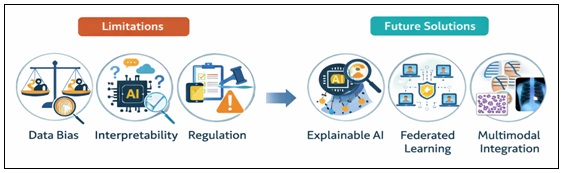
FIG. 3: THIS FIGURE IDENTIFIES THE KEY CONSTRAINTS AND THE SOLUTIONS TO THE CONSTRAINTS OF ARTIFICIAL INTELLIGENCE IN THE DIAGNOSIS OF CANCER AND THE PLANNING OF THE TREATMENT. THE EXISTING PROBLEMS ARE DATA BIAS, POTENTIALLY IMPACTING THE ACCURACY OF THE MODEL, THE ABSENCE OF INTERPRETABILITY, AND THE FACT THAT AI DECISIONS ARE HARD TO DECIPHER, AS WELL AS REGULATORY CHALLENGES CONNECTED TO SAFETY, ETHICS, AND APPROVAL PROCEDURES. TO ADDRESS THESE DRAWBACKS, THE FUTURE STRATEGIES WILL CONCENTRATE ON EXPLAINABLE AI TO MAKE TRANSPARENT DECISIONS, FEDERATED LEARNING TO SHARE DATA SECURELY AND PRIVACY-CONSCIOUSLY, AND MULTIMODAL INTEGRATION, WHICH INTEGRATES IMAGING, PATHOLOGY, AND GENOMIC DATA TO ENHANCE THE ACCURACY OF DIAGNOSTIC INFORMATION. THE GOAL OF THESE DEVELOPMENTS IS TO MAKE AI SYSTEMS MORE DEPENDABLE, ETHICAL, AND APPLICABLE IN HEALTHCARE NOWADAYS
TABLE 3: ADVANTAGES AND LIMITATIONS OF AI IN ONCOLOGY
| Aspect | Advantages | Limitations |
| Accuracy | Improved detection | Data bias |
| Efficiency | Faster workflows | High computational cost |
| Personalization | Tailored therapy | Limited adaptability |
| Clinical adoption | Decision support | Interpretability issues |
Data Quality and Availability: The artificial intelligence systems require large, high-quality, well-annotated datasets both to train and to validate. In the field of oncology, data are often incomplete, fragmented or heterogeneous because of the difference in imaging protocols, laboratory methods, and medical records between institutions 74. Poor access to representative and high-quality data may negatively affect model performance and reliability. Also, the question of privacy and limitations to the sharing of data can also become an extra impeding factor to the availability of detailed datasets, especially in multi-centric and global environments 75.
Algorithm Bias and Generalizability: The problem of algorithmic bias arises when materials used to construct artificial intelligence models do not represent a wide range of patient groups. This bias may develop into lower predictive validity and inconsistent performance between different demographic groups, types of cancers, or in different clinical contexts 76. This question of low generalizability remains a concern because models portraying a high level of performance when operating in highly controlled settings or single institutions do not necessarily continue to provide the same levels of effectiveness when applied to the more extensive setting of a regular clinical practice. In order to reduce bias and enhance external validity, it is essential to use heterogeneous, multi-centre datasets and do intensive external validation 77.
Interpretability and Transparency Issues: Various sophisticated artificial intelligence models (especially the ones that are based on deep learning algorithms) are black-box systems, thus making it difficult to understand how individual predictions or recommendations are produced 78. The lack of interpretability may damage the trust of clinicians and hinder the introduction of such technologies into clinical settings, which is why it is essential to create transparent and explainable AI models that would allow clinicians to interpret the results, confirm judgments, and be accountable and responsible in patient care. The improved model explainability is one of the main research priorities in the field of healthcare AI 61.
Ethical, Legal, and Regulatory Concerns: The use of artificial intelligence in oncologic therapy has significant ethical, legal, and regulatory issues. The main issues are patient data protection, informed consent, information ownership and responsibility of AI-aided clinical judgment 79. Regulations among AI-based medical devices are being formulated, which requires the development of specific guidelines to protect patients and standardisation. In addition, ethical considerations should focus on equity, openness, and equitable access to AI technologies to avoid exacerbation of health inequalities 80.
Current Clinical Applications and Ongoing Research: The field of artificial intelligence (AI) nowadays advances beyond its role as a research tool to a more frequent application in clinical oncology 5. Although a considerable proportion of AI systems are still in the validation stage some have already become a part of everyday clinical practice or are currently conducted in the controlled trial stage. These advancements highlight the disruptive role of AI in the area of oncologic diagnostic investigations, the development of the therapeutic strategy, and patient care 81.
| AI Maturity | Classification |
| Category | Description |
| Experimental | Early-stage models (lab research) |
| Validated | Retrospective/limited clinical validation |
| Clinical | Regulatory-approved tools |
AI Tools Approved for Clinical Use: A growing number of AI-powered technologies have received regulatory approval and are being integrated into clinical practice especially in imaging diagnostics and screening. Many AI/ML-enabled medical devices have been approved by regulatory bodies like the U.S. Food and Drug Administration (FDA) most of which are radiology-based devices specifically in the field of oncologic radiology imaging analysis workflows and the like 82. Many of such tools support cancer detection tasks such as automated mammography interpretation and locating lesions and allow radiologists to work more efficiently and reduce the workload requirements 83. The implementation of these devices into clinical settings underlines their ability to optimize the standard cancer diagnostics and integrate the imaging interpretation process of these devices in a wide range of healthcare settings. Sophisticated AI technologies are already deployed in clinical practice in different specialties. As an example, autonomous AI machines to detect skin cancer are already used in hospitals to analyze suspicious spots and aid in dermatologic screening 85. These applications demonstrate the usefulness and practical effect of AI in accelerating diagnosis and improving referrals 86.
Ongoing Clinical Trials and Validation Studies: Despite improvements in regulatory approvals, most AI applications in oncology have undergone exhaustive clinical studies before receiving approval in terms of their safety, efficacy, and overallizability to other groups of people 87. Clinical trials registration analyses indicate that current studies in the field of oncology are actively exploring AI tools at all stages of cancer care, such as early cancer detection and diagnosis, prognostication, treatment optimization, and survivorship monitoring 66.
A survey of the United States clinical trial registries has revealed numerous completed and ongoing studies that use machine learning, computer vision, and natural language processing to support cancer control programs. The papers highlight a strong desire to transfer AI between retrospective research and prospective clinical studies 88. There are a number of high-profile validation initiatives taking place across the globe. Indeed, the multi-center trials are evaluated on AI to detect prostate cancer, and risk stratification by biopsy imaging, and the final goal is to incorporate the AI-generated risk measurement into clinical therapeutic decision-making, potentially altering the management decisions according to active surveillance or systemic therapy 89.
Future Perspectives and Emerging Trends: Artificial intelligence (AI) is an emerging technology that is evolving at a fast pace and has significant potential to revolutionize the cancer care process.
In addition to the existing uses in the planning of diagnosis and treatment, future developments show that AI will play a more significant role in precision oncology, early cancer diagnosis and the reduction of inequalities in healthcare systems worldwide 66. Such potential developments are indicative of a shift to a more connected, data-driven and fairer way of oncologic care 90.
Integration of AI with Genomics and Real-World Data: The combination of AI with real-world and genomic data is one of the most promising future directions in the field of artificial intelligence as applied to oncology, as it allows gain deeper insights into cancer biology and apply this insight to more personalized care. Genomic data (e.g., DNA sequencing, transcriptomics, and epigenomic profiles) holds useful information on tumor heterogeneity and the biological forces of the disease and AI algorithms are increasingly capable of breaking down such complex data to identify actionable biomarkers, predict treatment outcomes and identify new therapeutic targets 91. With the help of genomic data and the clinical, imaging, and lifestyle data collected in the real world, AI systems are able to form more comprehensive patient profiles and aid in the development of truly individualized treatment plans 92. The integration fine-tunes predictive modelling and helps in risk stratification as well as deployment of adaptive cancer therapies that are specific to the individual molecular and clinical features of each patient 93.
AI in Early Cancer Screening Programs: Timely detection of cancers significantly enhances the survival rates; however, traditional screening programs are often faced by logistic and resource-related challenges in a myriad of locations. AI has the potential to transform the early screening of cancer by accelerating the process, improving accuracy, and making it scalable 91. There is the development of novel AI-based approaches that include machine learning algorithms that can be used to examine radiological and molecular data and the design of affordable and point-of-care screening solutions to identify early oncogenic changes with exceptional precision 94. Inclusion of AI in screening procedures can also enhance a higher response rate by automating risk stratification and targeted outreach, especially on a community-wide basis. Indicatively, AI-powered screening devices have been installed in community health campaigns to identify breast and cervical cancers at an early stage and thus offer access to underserved communities 95.
Potential Role in Low- and Middle-Income Countries: Artificial intelligence has the potential to enhance the quality of oncology care, and it is especially relevant in low- and middle-income countries (LMICs), where the supply of medical services is limited, and cancer rates are increasing. Addressing the lack of specialised clinicians may be alleviated through artificial-intelligence technologies, which may serve as automated diagnostic assistance, informal treatment decision support, and facilitate remote consultations 96. The empirical evidence shows that AI systems have the ability to minimize diagnostic delays, increase the coverage of screening, and streamline the distribution of resources by focusing on high-risk individuals. However, AI needs to be implemented in LMICs amid specific approaches that consider infrastructural limitations, issues of data governance, and training requirements 97. Nonetheless, AI presents the possibility of closing the gaps in the provision of oncology care by providing scalable and cost-effective solutions to those regions where conventional health-care services are inaccessible 98. In addition to tools used in diagnostics, artificial intelligence is explored to be applied in a variety of roles, such as finding participants that fit the study perfectly, optimising treatment procedures, and offering real-time assistance in clinical decision-making 99. The method of using AI to match patients with suitable trials and customise treatment plans are already being developed and are being evaluated, indicating increasing relevance of AI in personalised oncology research 100.
Clinical Implications: It has some profound consequences of artificial intelligence implementation in the field of oncology as it applies to patient care and healthcare systems. The artificial intelligence tools may be used to help clinicians to minimize errors in diagnosing, decrease variability in observers, and enhance the efficiency of workflow 47. In treatment planning and engineering, AI can be used to create treatment plans tailored to the individual patient that increase the accuracy of the treatment and reduce unnecessary toxicity. Additionally, decision support systems made with the help of AI can help to make informed clinical decisions and encourage uniformity in delivering cancer care. Artificial intelligence is not meant to replace clinical expertise, but it can be used as a valuable complement to enhance the abilities of clinicians and increase the quality of care on the whole 48.
Future Directions:
Explainable AI: Improving transparency to enhance clinician trust and accountability.
Multimodal Integration: Combining imaging, genomic, and clinical data for comprehensive analysis.
Prospective Clinical Validation: Large-scale trials are essential for real-world adoption.
Global and Equitable Implementation: Addressing disparities in healthcare access, particularly in low-resource settings.
CONCLUSION: Artificial intelligence is a promising development in the field of oncology, and it has the potential to enhance the process of cancer diagnosis and treatment planning. Nevertheless, recent data show that the majority of AI applications are at the development or early validation phase. Routine clinical integration needs strong prospective validation, enhanced interpretability, seamless workflow integration and clear regulation. Also, challenges associated with bias, data quality, and fair access should be tackled. Currently, AI can be viewed as an assistant technology that can be utilized to supplement clinical knowledge. Its future effects will be based on strict validation, responsible practice, and long-lasting interdisciplinary cooperation.
ACKNOWLEDGEMENTS: Nil
CONFLICTS OF INTEREST: Nil
REFERENCES:
- Wu Z, Xia F and Lin R: “Global burden of cancer and associated risk factors in 204 countries and territories, 1980–2021: a systematic analysis for the GBD” J. Hematol Oncol 2021; 17(1): 119. doi: 10.1186/S13045-024-01640-8.
- Bizuayehu HM: “Global Disparities of Cancer and Its Projected Burden in 2050.” JAMA Netw Open 2024; 7(11): doi: 10.1001/jamanetworkopen.2024.43198.
- Al-Jabbar M, Alshahrani M, Senan EM and Ahmed IA: “Multi-Method Diagnosis of Histopathological Images for Early Detection of Breast Cancer Based on Hybrid and Deep Learning,” Math. 2023, Vol. 11, Page 1429, vol. 11, no. 6, p. 1429, Mar. 2023, doi: 10.3390/math11061429.
- Shegai PV, Shatalov PA, Zabolotneva AA, Falaleeva NA, Ivanov SA and Kaprin AD: “Challenges Faced by Clinicians in the Personalized Treatment Planning: A Literature Review and the First Results of the Russian National Cancer Program.” Crit Care Res Pract vol. 2021, p. 6649771, 2021, doi: 10.1155/2021/6649771.
- Huhulea EN: “Artificial Intelligence Advancements in Oncology: A Review of Current Trends and Future Directions.” Biomedicines vol. 13, no. 4, p. 951, Apr. 2025, doi: 10.3390/biomedicines13040951.
- Norori N, Hu Q, Aellen FM, Faraci FD and Tzovara A: Addressing bias in big data and AI for health care: A call for open science. Patterns (N Y). 2021 Oct 8;2(10):100347. doi: 10.1016/j.patter.2021.100347. PMID: 34693373; PMCID: PMC8515002.
- Liao J: “Artificial intelligence assists precision medicine in cancer treatment.” Front Oncol vol. 12, p. 998222, Jan. 2023, doi: 10.3389/fonc.2022.998222.
- Li J, Zhang L, Yu Z, Bao Z, Li D and Wang L: “The impact of AI on modern oncology from early detection to personalized cancer treatment.” NPJ Precis Oncol vol. 10, no. 1, pp. 69-, Dec. 2026, doi: 10.1038/s41698-026-01276-6.
- Collins C, Dennehy D, Conboy K and Mikalef P: “Artificial intelligence in information systems research: A systematic literature review and research agenda.” Int J Inf Manage vol. 60, no. 3, p. 102383, Oct. 2021, doi: 10.1016/j.ijinfomgt.2021.102383.
- Fahim YA, Hasani IW, Kabba S and Ragab WM: “Artificial intelligence in healthcare and medicine: clinical applications, therapeutic advances, and future perspectives.” Eur J Med Res vol. 30, no. 1, p. 848, Sep. 2025, doi: 10.1186/s40001-025-03196-w.
- Faiyazuddin M: “The Impact of Artificial Intelligence on Healthcare: A Comprehensive Review of Advancements in Diagnostics, Treatment, and Operational Efficiency.” Heal Sci Reports vol. 8, no. 1, p. e70312, Jan. 2025, doi: 10.1002/hsr2.70312.
- França RP, Borges Monteiro AC, Arthur R and Iano Y: “An overview of deep learning in big data, image, and signal processing in the modern digital age.” Trends Deep Learn. Methodol Algorithms Appl Syst pp. 63–87, Jan. 2020, doi: 10.1016/B978-0-12-822226-3.00003-9.
- Yao IZ, Dong M and Hwang WYK: “Deep Learning Applications in Clinical Cancer Detection: A Review of Implementation Challenges and Solutions.” Mayo Clin Proc Digit Heal vol. 3, no. 3, p. 100253, Sep. 2025, doi: 10.1016/j.mcpdig.2025.100253.
- Khare PS, Shaikh SA and Havelikar U: “Artificial Intelligence and precision medicine for optimizing patient care: A comprehensive review.” Intell Hosp 15, no. 15, p. 100042, Nov. 2025, doi: 10.1016/j.inhs.2025.100042.
- Alowais SA: “Revolutionizing healthcare: the role of artificial intelligence in clinical practice.” BMC Med Educ vol. 23, no. 1, p. 689, Dec. 2023, doi: 10.1186/s12909-023-04698-z.
- Wang J, Wang T, Han R, Shi D and Chen B: “Artificial intelligence in cancer pathology: Applications, challenges, and future directions.” Cytojournal vol. 22, no. 1, p. 45, Apr. 2025, doi: 10.25259/Cytojournal_272_2024.
- Kumar Y: “Automating cancer diagnosis using advanced deep learning techniques for multi-cancer image classification.” Sci Reports 2024 141, vol. 14, no. 1, pp. 25006-, Oct. 2024, doi: 10.1038/s41598-024-75876-2.
- Ahmad I and Alqurashi F: “Early cancer detection using deep learning and medical imaging: A survey,” Crit. Rev. Oncol. Hematol., vol. 204, no. 9, p. 104528, Dec. 2024, doi: 10.1016/j.critrevonc.2024.104528.
- Bhandari A: “Revolutionizing Radiology With Artificial Intelligence,” Cureus, vol. 16, no. 10, p. e72646, Oct. 2024, doi: 10.7759/cureus.72646.
- Kijima S, Sasaki T, Nagata K, Utano K, Lefor AT and Sugimot H: “Preoperative evaluation of colorectal cancer using CT colonography, MRI, and PET/CT,” World J. Gastroenterol., vol. 20, no. 45, p. 16964, Dec. 2014, doi: 10.3748/wjg.v20.i45.16964.
- Rajendran A, Angelin Rajan R, Balasubramaniyam S and Elumalai K: “AI-Enhanced Predictive Imaging in Precision Medicine: Advancing Diagnostic Accuracy and Personalized Treatment,” iRADIOLOGY, vol. 3, no. 4, pp. 261–278, Aug. 2025, doi: 10.1002/ird3.70027.
- Patel DD, Leslie SW and Shetty M: “Appropriate Magnetic Resonance Imaging Ordering,” StatPearls, Nov. 2025, Accessed: Feb. 27, 2026. [Online]. Available: https://www.ncbi.nlm.nih.gov/books/NBK565857/
- Gokapay DK and Mohanty SN: “Enhanced MRI-based brain tumor segmentation and feature extraction using Berkeley wavelet transform and ETCCNN,” Digit. Heal., vol. 10, p. 20552076241305280, Jan. 2024, doi: 10.1177/20552076241305282.
- Ong W: “Application of Machine Learning for Differentiating Bone Malignancy on Imaging: A Systematic Review,” Cancers (Basel), vol. 15, no. 6, p. 1837, Mar. 2023, doi: 10.3390/cancers15061837.
- Kapoor M, Heston TF and Kasi A: “PET Scanning,” StatPearls, Feb. 2025, Accessed: Feb. 27, 2026. [Online]. Available: https://www.ncbi.nlm.nih.gov/books/NBK559089/
- Hasani N: “Artificial Intelligence in Lymphoma PET Imaging:: A Scoping Review (Current Trends and Future Directions),” PET Clin., vol. 17, no. 1, p. 145, Jan. 2022, doi: 10.1016/j.cpet.2021.09.006.
- Kim YH: “Artificial intelligence in medical ultrasonography: driving on an unpaved road,” Ultrasonography, vol. 40, no. 3, p. 313, 2021, doi: 10.14366/usg.21031.
- Gurcan, MN Boucheron LE, Can A, Madabhushi A, Rajpoot NM and Yener B: “Histopathological Image Analysis: A Review,” IEEE Rev. Biomed. Eng., vol. 2, p. 147, 2009, doi: 10.1109/RBME.2009.2034865.
- Basak K, Ozyoruk KB and Demir D: “Whole Slide Images in Artificial Intelligence Applications in Digital Pathology: Challenges and Pitfalls,” Turkish J. Pathol., vol. 39, no. 2, p. 101, 2023, doi: 10.5146/tjpath.2023.01601.
- Greeley C, Holder L, Nilsson EE and Skinner MK: “Scalable deep learning artificial intelligence histopathology slide analysis and validation,” Sci. Reports 2024 141, vol. 14, no. 1, pp. 26748-, Nov. 2024, doi: 10.1038/s41598-024-76807-x.
- Patharia P, Sethy PK and Nanthaamornphong A: “Advancements and Challenges in the Image-Based Diagnosis of Lung and Colon Cancer: A Comprehensive Review,” Cancer Inform., vol. 23, p. 11769351241290608, Jan. 2024, doi: 10.1177/11769351241290608.
- Zhang XM: “Artificial intelligence in digital pathology diagnosis and analysis: technologies, challenges, and future prospects,” Mil. Med. Res., vol. 12, no. 1, p. 93, Dec. 2026, doi: 10.1186/s40779-025-00680-6.
- Cheng CH and Shi SS: “Artificial intelligence in cancer: applications, challenges, and future perspectives,” Mol. Cancer, vol. 24, no. 1, p. 274, Dec. 2025, doi: 10.1186/s12943-025-02450-3.
- Khozin S: “From organs to algorithms: Redefining cancer classification in the age of artificial intelligence,” Clin. Transl. Sci., vol. 17, no. 9, p. e70001, Sep. 2024, doi: 10.1111/cts.70001.
- Das S, Dey MK, Devireddy R and Gartia MR: “Biomarkers in Cancer Detection, Diagnosis, and Prognosis,” Sensors 2024, Vol. 24, vol. 24, no. 1, Dec. 2023, doi: 10.3390/s24010037.
- Satam H: “Next-Generation Sequencing Technology: Current Trends and Advancements,” Biology (Basel)., vol. 12, no. 7, p. 997, Jul. 2023, doi: 10.3390/biology12070997.
- Sufyan M, Shokat Z and Ashfaq UA: “Artificial intelligence in cancer diagnosis and therapy: Current status and future perspective,” Comput Biol Med vol. 165, p. 107356, Oct. 2023, doi: 10.1016/j.compbiomed.2023.107356.
- Rehman AU: “Role of artificial intelligence in revolutionizing drug discovery,” Fundam Res vol. 5, no. 3, pp. 1273–1287, May 2025, doi: 10.1016/j.fmre.2024.04.021.
- Fountzilas E, Pearce T, Baysal MA, Chakraborty A and A. Tsimberidou M: “Convergence of evolving artificial intelligence and machine learning techniques in precision oncology,” npj Digit. Med. 2025 81, vol. 8, no. 1, pp. 75-, Jan. 2025, doi: 10.1038/s41746-025-01471-y.
- Dlamini Z: “AI and precision oncology in clinical cancer genomics: From prevention to targeted cancer therapies-an outcomes based patient care,” Informatics Med. Unlocked, vol. 31, no. R1, p. 100965, Jan. 2022, doi: 10.1016/j.imu.2022.100965.
- Dixon D: “Unveiling the Influence of AI Predictive Analytics on Patient Outcomes: A Comprehensive Narrative Review,” Cureus, vol. 16, no. 5, p. e59954, May 2024, doi: 10.7759/cureus.59954.
- Malicki J: “The importance of accurate treatment planning, delivery, and dose verification,” Reports Pract. Oncol. Radiother vol. 17, no. 2, p. 63, 2012, doi: 10.1016/j.rpor.2012.02.001.
- Chong PL: “Integrating artificial intelligence in healthcare: applications, challenges, and future directions,” Futur. Sci. OA, vol. 11, no. 1, p. 2527505, 2025, doi: 10.1080/20565623.2025.2527505.
- “Radiation Therapy for Cancer - NCI.” Accessed: Feb. 27, 2026. [Online]. Available: https://www.cancer.gov/about-cancer/treatment/types/radiation-therapy
- Zafar F: “AI in Radiation Oncology: A Comprehensive Review of Current Applications and Future Directions,” Cureus, vol. 17, no. 9, p. e92964, Sep. 2025, doi: 10.7759/cureus.92964.
- Moran K, Poole C and Barrett S: “Evaluating deep learning auto-contouring for lung radiation therapy: A review of accuracy, variability, efficiency and dose, in target volumes and organs at risk,” Phys. Imaging Radiat. Oncol., vol. 33, p. 100736, Jan. 2025, doi: 10.1016/j.phro.2025.100736.
- Zhang Y: “Advanced AI-based technologies for early detection and personalized management of cervical cancer,” Biomed. Technol., vol. 11, no. 3, p. 100100, Sep. 2025, doi: 10.1016/j.bmt.2025.100100.
- Krishnamurthy R, Mummudi N, Goda JS, Chopra S, Heijmen B and Swamidas J: “Using Artificial Intelligence for Optimization of the Processes and Resource Utilization in Radiotherapy,” JCO Glob. Oncol., vol. 8, no. 8, p. e2100393, Nov. 2022, doi: 10.1200/go.21.00393.
- Orzetti S: “Genetic Therapy and Molecular Targeted Therapy in Oncology: Safety, Pharmacovigilance, and Perspectives for Research and Clinical Practice,” Int. J. Mol. Sci., vol. 23, no. 6, p. 3012, Mar. 2022, doi: 10.3390/ijms23063012.
- Allanson PF, Brown EA, Kopasker D and Kwiatkowski A: “An Investigation of the Stability of Patients’ Treatment Preferences Over the Course of a Clinical Trial,” Value Heal., vol. 23, no. 6, pp. 775–781, Jun. 2020, doi: 10.1016/j.jval.2019.12.011.
- Abdul Rasool Hassan B, Mohammed AH, Hallit S, Malaeb D and Hosseini H: “Exploring the role of artificial intelligence in chemotherapy development, cancer diagnosis, and treatment: present achievements and future outlook,” Front. Oncol vol. 15, p. 1475893, 2025, doi: 10.3389/fonc.2025.1475893.
- Alum EU: “AI-driven biomarker discovery: enhancing precision in cancer diagnosis and prognosis,” Discov. Oncol., vol. 16, no. 1, p. 313, Dec. 2025, doi: 10.1007/s12672-025-02064-7.
- Jeong C, Goh Y and Kwak J: “Challenges and opportunities to integrate artificial intelligence in radiation oncology: a narrative review,” Ewha Med. J., vol. 47, no. 4, p. e49, Oct. 2024, doi: 10.12771/emj.2024.e49.
- Kapustina O, Burmakina P, Gubina N, Serov N and Vinogradov V: “User-friendly and industry-integrated AI for medicinal chemists and pharmaceuticals,” Artif. Intell. Chem., vol. 2, no. 2, p. 100072, Dec. 2024, doi: 10.1016/j.aichem.2024.100072.
- Zhang B, Shi H and Wang H: “Machine Learning and AI in Cancer Prognosis, Prediction, and Treatment Selection: A Critical Approach,” J. Multidiscip. Healthc., vol. 16, p. 1779, 2023, doi: 10.2147/JMDH.S410301.
- Krones F, Marikkar U, Parsons G, Szmul A and Mahdi A: “Review of multimodal machine learning approaches in healthcare,” Inf. Fusion, vol. 114, no. 19, p. 102690, Feb. 2025, doi: 10.1016/j.inffus.2024.102690.
- Légaré F: “Interventions for increasing the use of shared decision making by healthcare professionals,” Cochrane Database Syst. Rev., vol. 2018, no. 7, p. CD006732, Jul. 2018, doi: 10.1002/14651858.CD006732.pub4.
- Krzyszczyk P: “The growing role of precision and personalized medicine for cancer treatment.” Technology 2019; 6(3–4): 79, doi: 10.1142/s2339547818300020.
- Froicu EM: “Artificial Intelligence and Decision-Making in Oncology: A Review of Ethical, Legal, and Informed Consent Challenges,” Curr. Oncol. Rep., vol. 27, no. 8, p. 1002, Aug. 2025, doi: 10.1007/s11912-025-01698-8.
- Johnson KB: “Precision Medicine, AI, and the Future of Personalized Health Care,” Clin. Transl. Sci., vol. 14, no. 1, p. 86, Jan. 2020, doi: 10.1111/cts.12884.
- Woodman RJ and Mangoni AA: “A comprehensive review of machine learning algorithms and their application in geriatric medicine: present and future,” Aging Clin. Exp. Res., vol. 35, no. 11, p. 2363, Nov. 2023, doi: 10.1007/s40520-023-02552-2.
- Nardone V: “The Role of Artificial Intelligence on Tumor Boards: Perspectives from Surgeons, Medical Oncologists and Radiation Oncologists,” Curr. Oncol., vol. 31, no. 9, p. 4984, Sep. 2024, doi: 10.3390/curroncol31090369.
- Elhaddad M and Hamam S: “AI-Driven Clinical Decision Support Systems: An Ongoing Pursuit of Potential,” Cureus, vol. 16, no. 4, p. e57728, Apr. 2024, doi: 10.7759/cureus.57728.
- Borat S and Chowdhury S: “Artificial Intelligence-Driven Clinical Decision Support Systems for Precision Oncology: A Comprehensive Review,” Silico Res. Biomed., p. 100265, Feb. 2026, doi: 10.1016/j.insi.2026.100265.
- Chen Z: Harnessing the power of clinical decision support systems: challenges and opportunities,” Open Hear., vol. 10, no. 2, p. e002432, Nov. 2023, doi: 10.1136/openhrt-2023-002432.
- Tiwari A, Mishra S and Kuo TR: “Current AI technologies in cancer diagnostics and treatment,” Mol. Cancer 2025 241, vol. 24, no. 1, pp. 159-, Jun. 2025, doi: 10.1186/s12943-025-02369-9.
- Buaka ESD and Moid MZI: “AI and medical imaging technology: evolution, impacts, and economic insights,” J. Technol. Transf., vol. 49, no. 6, pp. 2260–2272, Dec. 2024, doi: 10.1007/s10961-024-10100-x.
- Bulić L: “AI-Driven Advances in Precision Oncology: Toward Optimizing Cancer Diagnostics and Personalized Treatment,” AI 2026, Vol. 7, vol. 7, no. 1, p. 11, Jan. 2026, doi: 10.3390/ai7010011.
- Kumar S, Kumar B, Ashique S, Bhui U and Sheetu: “Advances in Radiotherapy Using Artificial Intelligence,” From Radiobiol. to Radiat. Oncol., pp. 321–340, Jan. 2025, doi: 10.1007/978-3-031-95724-6_17.
- Singh S: “Electrochemical (bio) sensors for cancer therapy monitoring,” Electrochim. Acta, vol. 537, p. 146929, Oct. 2025, doi: 10.1016/j.electacta.2025.146929.
- Bajwa J, Munir U, Nori A and Williams B: “Artificial intelligence in healthcare: transforming the practice of medicine,” Futur. Healthc. J., vol. 8, no. 2, p. e188, Jul. 2021, doi: 10.7861/fhj.2021-0095.
- Wang M, Chang W and Zhang Y: “Artificial Intelligence for the Diagnosis and Management of Cancers: Potentials and Challenges,” MedComm, vol. 6, no. 11, p. e70460, Nov. 2025, doi: 10.1002/mco2.70460.
- Mennella C, Maniscalco U, De Pietro G and Esposito M: “Ethical and regulatory challenges of AI technologies in healthcare: A narrative review,” Heliyon, vol. 10, no. 4, p. e26297, Feb. 2024, doi: 10.1016/j.heliyon.2024.e26297.
- Abdelwanis M, Simsekler MCE, Gabor AF, Sleptchenko A and Omar M: “Artificial intelligence adoption challenges from healthcare providers’ perspectives: A comprehensive review and future directions,” Saf. Sci., vol. 193, no. 1, p. 107028, Jan. 2026, doi: 10.1016/j.ssci.2025.107028.
- Olawade DB, Fidelis SC, Marinze S, Egbon E, Osunmakinde A and Osborne A: “Artificial intelligence in clinical trials: A comprehensive review of opportunities, challenges, and future directions,” Int. J. Med. Inform., vol. 206, no. 3, p. 106141, Feb. 2026, doi: 10.1016/j.ijmedinf.2025.106141.
- Cross JL, Choma MA and Onofrey JA: “Bias in medical AI: Implications for clinical decision-making,” PLOS Digit. Heal., vol. 3, no. 11, p. e0000651, Nov. 2024, doi: 10.1371/journal.pdig.0000651.
- Ennab M and Mcheick H: “Enhancing interpretability and accuracy of AI models in healthcare: a comprehensive review on challenges and future directions,” Front. Robot. AI, vol. 11, p. 1444763, 2024, doi: 10.3389/frobt.2024.1444763.
- Qamar T and Bawany NZ: “Understanding the black-box: towards interpretable and reliable deep learning models,” Peer J Comput. Sci., vol. 9, p. e1629, 2023, doi: 10.7717/peerj-cs.1629.
- Pham T: “Ethical and legal considerations in healthcare AI: innovation and policy for safe and fair use,” R. Soc. Open Sci., vol. 12, no. 5, p. 241873, May 2025, doi: 10.1098/rsos.241873.
- Mohammed S and Malhotra N: “Ethical and regulatory challenges in machine learning-based healthcare systems: A review of implementation barriers and future directions,” Bench Council Trans. Benchmarks, Stand. Eval., vol. 5, no. 1, p. 100215, Mar. 2025, doi: 10.1016/j.tbench.2025.100215.
- Weerarathna IN, Kamble AR and Luharia A: “Artificial Intelligence Applications for Biomedical Cancer Research: A Review,” Cureus, vol. 15, no. 11, p. e48307, Nov. 2023, doi: 10.7759/cureus.48307.
- Petrick N: “Regulatory considerations for medical imaging AI/ML devices in the United States: concepts and challenges,” J. Med. Imaging, vol. 10, no. 5, p. 051804, Jun. 2023, doi: 10.1117/1.jmi.10.5.051804.
- Díaz O, Rodríguez-Ruíz A and Sechopoulos I: “Artificial Intelligence for breast cancer detection: Technology, challenges, and prospects,” Eur. J. Radiol., vol. 175, no. 1, p. 111457, Jun. 2024, doi: 10.1016/j.ejrad.2024.111457.
- Huang J: “Application of artificial intelligence in medical imaging for tumor diagnosis and treatment: a comprehensive approach,” Discov. Oncol., vol. 16, no. 1, p. 1625, Dec. 2025, doi: 10.1007/s12672-025-03307-3.
- Behara K, Bhero E and Agee JT:“AI in dermatology: a comprehensive review into skin cancer detection,” Peer J Comput Sci 2024; 10: 1–42, doi: 10.7717/peerj-cs.2530.
- Tettey-Engmann F, Parupelli SK, Bauer SR, Bhattarai N and Desai S: “Advances in Artificial Intelligence-Based Medical Devices for Healthcare Applications,” Biomed. Mater. Devices 2025 42, vol. 4, no. 2, pp. 1767–1787, May 2025, doi: 10.1007/s44174-025-00379-1.
- Knapen DG, van Kruchten M, de Groot DJA, Broekman KE and Fehrmann RSN: “Artificial intelligence for clinical trial design, conduct, and analysis: a narrative review,” ESMO Real World Data Digit. Oncol., vol. 11, p. 100682, Mar. 2026, doi: 10.1016/j.esmorw.2026.100682.
- Kang J, Chowdhry AK, Pugh SL and Park JH: “Integrating Artificial Intelligence and Machine Learning into Cancer Clinical Trials,” Semin. Radiat. Oncol., vol. 33, no. 4, p. 386, Oct. 2023, doi: 10.1016/j.semradonc.2023.06.004.
- Bayerl N: “Assessment of a fully-automated diagnostic AI software in prostate MRI: Clinical evaluation and histopathological correlation,” Eur. J. Radiol., vol. 181, no. 4, p. 111790, Dec. 2024, doi: 10.1016/j.ejrad.2024.111790.
- Molla G and Bitew M: “The Future of Cancer Diagnosis and Treatment: Unlocking the Power of Biomarkers and Personalized Molecular-Targeted Therapies,” J. Mol. Pathol. 2025, Vol. 6, vol. 6, no. 3, Aug. 2025, doi: 10.3390/jmp6030020.
- Najar Najafi N, Hajihassani H and Azimzadeh Irani M: “The Impact of Artificial Intelligence on Cancer Diagnosis and Treatment: A Review,” Cancer Inform., vol. 24, p. 11769351251371272, Sep. 2025, doi: 10.1177/11769351251371273.
- Serrano DR: “Artificial Intelligence (AI) Applications in Drug Discovery and Drug Delivery: Revolutionizing Personalized Medicine,” Pharmaceutics, vol. 16, no. 10, p. 1328, Oct. 2024, doi: 10.3390/pharmaceutics16101328.
- Kidd BA, Readhead BP, Eden C, Parekh S and Dudley JT: “Integrative network modeling approaches to personalized cancer medicine,” Per. Med., vol. 12, no. 3, p. 245, Jun. 2015, doi: 10.2217/pme.14.87.
- Alkhalifah B: “Artificial intelligence in the radiological diagnosis of cancer,” Bioinformation, vol. 20, no. 9, p. 1512, Sep. 2024, doi: 10.6026/9732063002001512.
- Sacca L: “Promoting Artificial Intelligence for Global Breast Cancer Risk Prediction and Screening in Adult Women: A Scoping Review,” J. Clin. Med., vol. 13, no. 9, p. 2525, May 2024, doi: 10.3390/jcm13092525.
- Gichoya JW, Mwavu R, Minja F, Kaonga N, Purkayastha S and Newsome J: “Leveraging digital technologies to reduce cancer disparities in low-income and middle-income countries,” Lancet Digit. Heal., vol. 7, no. 10, p. 100937, Oct. 2025, doi: 10.1016/j.landig.2025.100937.
- Oduoye MO: “Impacts of the advancement in artificial intelligence on laboratory medicine in low‐ and middle‐income countries: Challenges and recommendations—A literature review,” Heal. Sci. Reports, vol. 7, no. 1, p. e1794, Jan. 2024, doi: 10.1002/hsr2.1794.
- Akingbola A, Adegbesan A, Ojo O, Otumara JU and Alao UH: “Artificial Intelligence And Cancer Care in Africa,” J. Med. Surgery, Public Heal., vol. 3, no. 3, p. 100132, Aug. 2024, doi: 10.1016/j.glmedi.2024.100132.
- Khude H and Shende P: “AI-driven clinical decision support systems: Revolutionizing medication selection and personalized drug therapy,” Adv Integr Med., vol. 12, no. 4, p. 100529, Dec 2025, doi: 10.1016/j.aimed.2025.100529.
- Azenkot T, Rivera DR, Stewart MD and Patel SP: “Artificial Intelligence and Machine Learning Innovations to Improve Design and Representativeness in Oncology Clinical Trials,” Am. Soc. Clin. Oncol. Educ. B., vol. 45, no. 3, Jun. 2025, doi: 10.1200/edbk-25-473590.
How to cite this article:
Singh S, Rathore KS and Saraswat R: Artificial intelligence in cancer diagnosis and treatment planning: a new frontier. Int J Pharm Sci & Res 2026; 17(9): 2607-21. doi: 10.13040/IJPSR.0975-8232.17(9).2607-21.
All © 2026 are reserved by International Journal of Pharmaceutical Sciences and Research. This Journal licensed under a Creative Commons Attribution-NonCommercial-ShareAlike 3.0 Unported License.
Article Information
5
2607-2621
820 KB
7
English
IJPSR
Suryavardhan Singh *, Krishnapal Singh Rathore and Rashyap Saraswat
Chitkara College of Pharmacy, Chitkara University, Chandigarh, Punjab, India.
suryavardhansingh2000@gmail.com
28 March 2026
22 April 2026
24 April 2026
10.13040/IJPSR.0975-8232.17(9).2607-21
01 September 2026
 Download