




AYURVEDA MANAGEMENT OF RECURRENT BRONCHOPNEUMONIA IN CHILDREN: A CASE REPORT
HTML Full TextAYURVEDA MANAGEMENT OF RECURRENT BRONCHOPNEUMONIA IN CHILDREN: A CASE REPORT
Srihari Sheshagiri * and Simran Harobelavadi
Department of PG Studies in Kaumarabhritya, JSS Ayurveda Medical College & Hospital, Lalitadripura road, Alanahalli, Mysuru, Karnataka, India.
ABSTRACT: Bronchopneumonia is a major cause of morbidity and mortality among children under 5 years of age. Recurrent respiratory infections, significantly affect a child’s quality of life. Although bronchopneumonia has no direct equivalent in Ayurveda, its clinical manifestations like Kasa (cough), Peenasa (rhinitis), Nishteevana (expectoration), Ghurghurakam (wheezing), and Shwasakrichrata (difficulty in breathing) resemble the features described in Tamaka Shwasa. This case report describes the Ayurveda management of recurrent respiratory illness and Bronchopneumonia in pediatric patient. A 1.5-year-old male child presented with recurrent episodes of cough with expectoration, fever, cold, breathing difficulty, and reduced appetite. The child had experienced recurrent respiratory infections since infancy and had been hospitalized for6times for similar complaints. He was previously diagnosed with Influenza B-associated Bronchopneumonia with wheeze based on clinical examination, laboratory investigations, and radiological findings. Management included Ayurveda treatments which aided in improving airway patency. The patient was managed with Ayurveda therapies, including Uro Abhyanga (Localized massage) with Karpooradi Taila followed by Nadi Sweda (fomentation), along with internal medications comprising Pushkaramulasava, Bhringarajasava, Indukantha Kashaya, and Poly herbal medicines. Cough and expectoration showed reduction within 7 days of initiating external therapy. Wheezing, Rhinitis and Recurrent breathing difficulty improved within 21 days of treatment. Appetite improved progressively, and no episodes of fever were reported during treatment and follow-up. This case highlights the potential role of Ayurveda management and approach in recurrent pediatric respiratory illness following Bronchopneumonia. The observed improvement suggests that Ayurveda interventions may enhance Respiratory health, and reduce recurrence.
Keywords: Bringarajaasava, Bronchopneumonia, Influenza B, Pushkaramulasava, Tamaka Shwasa
INTRODUCTION: Pneumonia occurs more often in early childhood than at any other age. A large number of studies in the past decade have addressed the problems of diagnosis and management of pediatric pneumonia, many of these have been conducted in developing countries, where acute respiratory infection is now the leading killer of young children.
Pneumonia is a restrictive lung disease that develops when the lungs become infected by bacteria, fungi, or viruses. A form of pneumonia called bronchopneumonia causes inflammation in the lungs. The term "bronchopneumonia" describes an inflammation of the lung centred in the bronchioles and tiny air sacs.
Based on data from the 2019 Global Burden of Diseases Research, 489 million people worldwide suffer from lower pneumonia and bronchitis, which are often known as lower respiratory tract infections 1. Bronchopneumonia is the most common clinical manifestation of pneumonia in the pediatric population, and the leading cause of morbidity and mortality in children younger than the age of 5 years 2. A total of 920,136 children died in 2015 as a result of pneumonia. A total of 85% of all the diseases of the respiratory system in children under 2 years are due to bronchopneumonia. Between 2 -10 years, the condition becomes less common but has a longer course of illness 3. Younger children under the age of 2 in the developing world account for nearly 80% of pediatric deaths secondary to pneumonia 4.
Bronchopneumonia is characterized by fever, cough, expectoration, wheezing, respiratory distress, and pulmonary inflammation. In the present case, the child presented with cough, fever, wheezing, and respiratory difficulty associated with Influenza B infection. In Ayurveda, there is no direct correlation for Bronchopneumonia, based on its Lakshana (signs and symptoms) it can nearly be corelated with Tamaka shwasa. According to classical literature the clinical features of Tamaka shwasa are Kasa (cough), Peenasa (rhinitis), Kapha Nishteevana (sputum), Ghurghurata (Wheezing), Tivra vega shwasa (Tachypnoea) 5 and Annadvesha (loss of appetite).
From an Ayurvedic perspective, these manifestations can be understood under the spectrum of Tamaka shwasa associated with Pranavaha Srotodushti. The accumulation of Kapha within the Pranavaha Srotas leads to Srotorodha (obstruction of respiratory channels), resulting in aggravated Vata and manifestation of Kasa and Shwasa. Fever may be interpreted as Jwara resulting from Dosha-Dushya Sammurchana. Thus, the clinical presentation of bronchopneumonia in this case may be viewed as a Tamaka shwasa predominant disorder involving the Pranavaha Srotas.
Standard allopathic treatment involves mucolytics, expectorants, and antibiotics, but long-term use can lead to drug resistance and adverse effects. Thus, there is growing interest in natural, holistic alternatives. Ayurveda offers a root cause-based approach to Kaphaja Kasa, utilizing herbal medications, detoxifying therapies (Panchakarma), and lifestyle modifications. This case report aims to explore the effectiveness of Ayurveda management in a paediatric case of Bronchopneumonia correlated with Tamaka shwasa in clinically Ayurveda literature. The study specifically focuses on evaluating the therapeutic potential of Ayurvedic interventions including Sthanik Abhyanga (localized massage), Nadi Swedana (steam therapy), and internal medications such as Indukanta Kashaya and Pushkaramulasava + Bringarajasava in reducing respiratory symptoms and improving overall well-being.
This case study discusses the clinical presentation, Diagnostic process, therapeutic intervention, and outcome of a pediatric patient with bronchopneumonia managed through Ayurvedic treatment, highlighting its potential role in the management of respiratory disorders in children.
Patient Information:
Case Details: A 1.5-year-old male child was brought to the outpatient department by the parents with the complaints of cough with expectoration, fever, cold, and reduced appetite for 3 days.
History of Present Illness: As per the informant, the child is developmentally appropriate for age, was brought with complaints of cough with expectoration, cold, breathing difficulty, fever and reduced appetite for 3 days.
The child was apparently healthy until the age of 1 month, after which he started experiencing recurrent episodes of cough, cold and breathing difficulty. The cough was mild to moderate in intensity, occasionally productive and at times dry in nature, while the cold was associated with watery nasal discharge. Over time, the frequency of these episodes increased, often requiring medical attention. And the child had been hospitalized on six occasions for similar complaints of recurrent cough, cold, fever, and breathing difficulty. During the most recent episode, he developed fever, productive cough and breathing difficulty. He was admitted to a hospital and was diagnosed with Bronchopneumonia with Wheeze based on clinical examination, laboratory investigations, and radiological findings. The child received treatment with nebulization, antibiotics, antiviral therapy, and supportive care, resulting in symptomatic improvement. Despite repeated hospitalizations persistent respiratory symptoms, particularly cough with expectoration and recurrent cold and breathing difficulty continued after discharge in view of the recurrent nature of illness and for further management, the parents sought Ayurvedic treatment at our hospital.
Past Medical History: The child had a history of recurrent acute respiratory infections since infancy, characterized by recurrent episodes of cough, cold, fever, and respiratory distress. He was hospitalized on six occasions for similar complaints and was previously diagnosed with wheeze-associated lower respiratory tract infection (WALRI) during admissions at 1, 6, 9, and 11 months of age. During the most recent hospitalization at the age of 1year 5 months, the child was diagnosed with bronchopneumonia with wheeze associated with Influenza B infection and received inpatient treatment with nebulization, antibiotics, antiviral therapy, and supportive care. Although symptomatic improvement was achieved following treatment, recurrent respiratory symptoms persisted. In view of the recurrent nature of the illness, genetic evaluation was performed to rule out any underlying congenital or hereditary disorder, and the results were reported to be normal.
Family History: There was no history of consanguinity, genetic disorders, and seizure disorders, TB, Asthma in the family and all the family members were reported to be healthy.
Birth History: The child was born at term by normal vaginal delivery following an uneventful antenatal period. He cried immediately after birth, with a birth weight of 3.7 kg. The postnatal period was uneventful, with no history of neonatal intensive care unit (NICU) admission, neonatal jaundice, birth asphyxia, or other neonatal complications.
Developmental History: Developmental milestones were attained appropriately for age.
Nutritional History: The child was exclusively breastfed for the first 6 months of life, following which complementary feeding was initiated appropriately. At present, he is on a predominantly home-based mixed diet. The dietary pattern is primarily vegetarian, with non-vegetarian food consumed approximately once per week. There is no history of bottle feeding or consumption of condensed/commercial milk preparations.
Immunization History: The child was immunized according to the National Immunization Schedule (NIS) and had received all age-appropriate vaccinations up to 1.5 years of age.
Clinical Findings:
General and Systemic Examination: On examination, the child was conscious, alert, and developmentally appropriate for age. Pallor was present. There was no cyanosis, clubbing, pedal edema, or significant lymphadenopathy. Hydration was adequate. The child had nasal discharge and throat congestion.
Vital parameters were as follows: temperature 100.5°F, pulse rate 137/min, respiratory rate 52 breaths/min, and oxygen saturation (SpO₂) 97% on room air.
Anthropometric measurements revealed a weight of 9.2 kg, height of 81 cm, head circumference of 47 cm, and mid-arm circumference of 14.5 cm.
Systemic Examination:
Respiratory System: Examination of the upper respiratory tract revealed nasal discharge and throat congestion. Chest shape was normal with bilaterally equal chest movements and central trachea. Nosubcostal retractions were present. Percussion note was resonant.
On auscultation, bilateral normal vesicular breath sounds were heard, and Bilateral Wheeze was present.
Cardiovascular System: Chest shape was normal with no precordial bulge, scars, sinuses, or dilated veins. Apex beat was palpable in the left 4th intercostal space, lateral to the midclavicular line. Heart sounds (S1 and S2) were normal, and no murmurs were detected.
Abdominal Examination: Abdomen was soft and non-tender. Bowel sounds were present and normal.
Central Nervous System: The child was conscious and alert. Cranial nerve examination was normal. Muscle tone and power were normal in all four limbs. Sensory examination was unremarkable.
Eightfold Examination (Ashtasthana pariksha): According to Ayurvedic assessment, the Nadi (pulse) indicated a Kapha-Vata predominance. Mootra (urine) and Mala (stool) were found to be in a normal state (Prakruta). The Jihwa (tongue) was coated (Lipta), and Shabda (voice), Drik (vision), and Sparsha (touch) were Prakruta, with the touch being slightly warm (Ushna). The Aakriti (body structure) was lean (Krusha).
Tenfold Examination (Dashavida pariksha): The patient’s Prakriti (constitution) was identified as kapha-vata, while his Vikriti (current pathology) was assessed as Kapha dominantvata. Sara (tissue quality) and Samhanana (structural integrity) were both of medium grade (Madhyama). Pramana (body measurements), Satmya (adapted to all tastes) and Satva (moderate mental strength) was Madyama. Ahara Shakti (digestive capacity) and Vyayama Shakti (exercise capacity) were both poor (Avara). Based on his chronological age, he was in the Bala Avastha (childhood stage).
Timeline:
TABLE 1: SHOWING TIMELINE OF MANAGEMENT
| Events / Time | Intervention |
| 1 – 11 Months | Wheeze-associated lower respiratory tract infection (WALRI) and received inpatient treatment |
| 1year | Bronchopneumonia with wheeze and received inpatient treatment |
| 1.5 years | Bronchopneumonia with wheeze associated with influenza B infection and received inpatient treatment with nebulization, antibiotics, antiviral therapy, and supportive care on 16/3/26 |
| 8/4/26 | Uro abhyanga with Karpooradi taila followed by Nadi Sweda for 7 days |
| 14/4/26 | After 7 days of external therapies Cough and expectoration reduced |
| 15/4/26 | Internal medications: Pushkaramulasava + Bringarajasava,3tsp BD, Before food Indukanta Kashaya, 1½ tspBD, After food Polyherbal tablet (Bronchomed nano)1tab at night X 14 days |
| 28/4/26 | After 14 days of internal medications Wheeze, recurrence of breathing difficulty and nasal discharge reduced. |
| 28/4/26 | 1. Indukanta Kashaya1½ tspBD, Before food, Polyherbal syrup, 2tsp BD, After food X 7 days |
| 7/5/26 | All the symptoms were reduced and did not experience any episodes of fever, cough and breathing difficulty. |
Diagnostic Assessment: Laboratory investigations revealed haemoglobin of 9.3 g/dL, packed cell volume of 28.7%, total leukocyte count of 15,680/mm³ with neutrophilia (64.3%), and elevated C-reactive protein (110.8 mg/L), suggestive of an acute inflammatory process. Peripheral smear showed microcytic hypochromic anaemia. Chest radiography demonstrated accentuated broncho vascular markings. Influenza B testing was positive, whereas Dengue NS1 antigen was negative. Blood culture showed no growth. Liver and renal function tests were within normal limits.
Based on the clinical presentation, laboratory findings, radiological evidence, and positive Influenza B status, a diagnosis of Influenza B-associated bronchopneumonia was established.
TABLE 2: SHOWING DIAGNOSTIC INVESTIGATIONS
| Investigation | Results | Clinical significance |
| Hemoglobin | 9.3g/dl | Suggestive of mild anemia. |
| PCV | 28.7% | Reduced PCV indicating anemia. |
| Total Leukocyte count | 15,680/mm3 | Elevated count indicating active infection/ inflammatory response. |
| Neutrophils | 64.3% | Suggestive of acute respiratory infection. |
| CRP | 110.8 mg/L | Elevated indicating significant inflammation. |
| Influenza RT-PCR | Influenza B Positive | Confirmed influenza B viral infection as the etiological factor. |
| Dengue NS1 Antigen | Negative | Excluded dengue fever as a differential diagnosis. |
| Blood culture | No growth | No evidence of blood stream bacterial infection. |
| Peripheral smear | Microcytic hypochromic anemia | Anemia and ongoing infection. |
| Chest X-ray | Accentuated Bronchovascular markings | Suggestive of lower respiratory tract involvement, supporting the diagnosis of bronchopneumonia. |
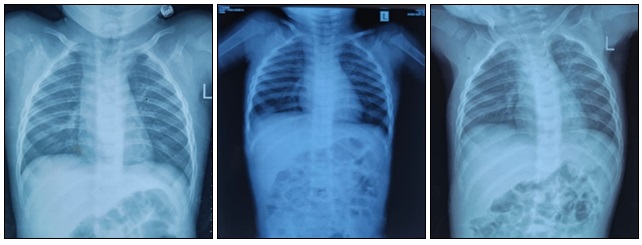
FIG. 1:
Ayurvedic Assessment:
- Kasa (Cough)
- Peenasa (Running nose)
- Kaphanistivana (Sputum)
- Ghurghurata (Wheezing)
- Tivra vega shwasa (Tachypnoea)
- Annadvesha(Loss of appetite)
Diagnosis: The case was an already diagnosed case of Bronchopneumonia with Wheeze. According to Ayurveda it was diagnosed as Tamaka Shwasa based on the presence of classical features with supportive evidence of investigations.
Therapeutic Intervention:
TABLE 3: SHOWING THERAPEUTIC INTERVENTION
| Date | Therapies | Medicines used |
| 8/4/26 | Uro abhyanga followed by Nadi sweda for 7 days | Karpooradi taila |
TABLE 4: SHOWING INTERNAL MEDICATIONS
| 15/4/26 | Pushkaramulasava + Bringarajasava
Indukanta Kashaya Polyherbal Tablet |
| 28/4/26 | Indukanta Kashaya
Polyherbal syrup |
Follow up and Outcomes: The interventions resulted in significant clinical improvement over 1 month of period, with marked reduction in cough with expectoration, cold, fever, breathing difficulty and reduced appetite within1 months. Follow-up confirmed no recurrence of infections and improvement in appetite.
TABLE 5:
| Clinical Parameters | Before treatment | After treatment |
| Respiratory rate | 52 breaths/min | 32 breaths/min |
| Temperature | 100.5°F | 98.4°F |
| SpO2 | 97% | 98% |
| Wheeze | Present | Absent |
| Cough frequency | Frequent (15-20 episodes/day) | Absent |
| Expectoration | Present | Absent |
| Rhinitis | Present | Absent |
| Breathing difficulty | Present | Reduced |
| Appetite | Poor | Improved |
| Recurrence status | Recurrent episodes every 1-2 weeks | No recurrence during follow up |
DISCUSSION: In Ayurveda, Acharya Charaka mentioned five types of Shwasa roga, 6 among them based on its Lakshanas Bronchopneumonia can be correlated to Thamaka shwasa. Which has symptoms such as cough, rhinitis, breathing difficulty and wheezing. In the present case recurrent respiratory infections, productive cough, wheeze and breathing difficulty suggest the involvement of Kapha causing Srotorodha (obstruction of respiratory channels) with secondary aggravation of Vata resulting in impaired respiratory function.
Therefore, management was planned according to the principles of Tamaka Shwasa Chikitsa.
Ayurveda treatment approach focusing on Kapha shamana (pacification of aggravated Kapha), Kapha vilayana (liquification of accumulated mucus), Vata anulomana (restoration of normal movement of Vata), Agni Deepana (enhancement of digestive fire), Shrotoshodhana (clearance of respiratory channels) and Rasayana therapy (immunomodulatory therapy) was adopted. For Shwasa, classical management begins with Snehana (oleation therapy) and Swedana (therapeutic fomentation) to liquefy obstructing Kapha, thereby restoring normal movement of Prana Vayu 7-8. In the present case, both internal medications and external therapies we reemployed to address these pathological factors.
Treatment Strategies in Ayurveda: In Tamaka Shwasa Kapha obstructs the passage of Vayu and obstructed Vayu moves in reverse direction. In such condition drug and food which possess Vata and Kapha alleviating property and which is having Ushna, Vatanulomana, Kaphahara property are helpful in relieving the Shwasa. Snehana and Swedana- Use of Swedana locally or throughout whole body helps in liquefaction of viscous Mala Rupi Kapha and also does Vataanulomana. In Ayurverda Acharya Charaka specially indicated following type of Swedana in the treatment of Shwasa– Nadi sweda, Prastara sweda and Sankara sweda 9.
Local Massage and Fomentation (Uro abhyanga Followed by Nadi sweda): External therapies including Therapeutical massage over the chest region with Karpooradi Taila followed by Nadi Sweda (localized steam fomentation) employed to facilitate Kapha vilayana and Vatanulomana. Swedana is classically recommended in Tamaka shwasa for liquifying obstructive Kapha and promoting its elimination. The local application of Karpooradi Taila followed by therapeutic fomentation may have helped reduce chest congestion, improve airway clearance, and enhance respiratory comfort by liquifying and mobilizing adhered Kapha accumulated within the channels, thereby facilitating its elimination and restoring the patency of respiratory pathways and relief of respiratory symptoms 12.
Pushkaramulasava and Bhrigarajasava: were administered to address recurrent respiratory symptomsand support overall respiratory health. Pushkaramulasava contains ingredients such as Pushkaramula, Bharangi, Kushta, Trikatu, Vidanga, Chavya, and Pippalimula, which possess Deepana-Pachana, Kapha-Shamaka, and Shwasahara properties. These actions may facilitate liquefaction and elimination of accumulated Kapha, thereby relieving obstruction within the Pranavaha Srotas and restoring normal respiratory function 13.
Pushkaramula (Inula racemosa), the principal ingredient of the formulation, has been reported to possess anti-inflammatory, bronchodilator and respiratory protective activities in experimental studies. Previous pharmacological investigations have demonstrated protective effects against histamine-induced bronchospasm and improvement in respiratory efficiency, supporting its traditional use in respiratory disorders characterized by airway obstruction and breathlessness. These properties may have contributed to the observed reduction in wheezing, cough, and breathing difficulty in the present case.
Bhringarajasava was to support recovery and improve overall respiratory health. The formulation contains Bhringaraja along with Pippali, Haritaki, Jatiphala, Lavanga, Twak, Ela, Tamalapatra, Nagakesara, and Guda 14. Traditionally, it is indicated in disorders associated with Kasa, Shwasa and recurrent respiratory disorders. Owing to the presence of ingredients possessing Deepana-Pachana, Kapha-Vata Shamaka, and Rasayana properties, the formulation may aid in improving digestion, correcting Agni, and reducing the formation of Ama, which is considered an important factor in the pathogenesis of respiratory disorders. Pharmacologically, the ingredients of Bhringarajasava have been reported to exhibit Mucolytic, Digestive stimulant, Appetizer, Antimicrobial, and Anti-inflammatory activities. These actions may facilitate the liquefaction and clearance of respiratory secretions, improve airway patency, and support respiratory function. Furthermore, the formulation may contribute to strengthening respiratory tissues and reducing susceptibility to recurrent respiratory infections.
In the present case, the use of Bhringarajasava along with other therapeutic interventions may have contributed to the observed improvement in cough, expectoration, breathing difficulty, and overall clinical status 15.
Indukantha kashaya: All the ingredients of Indukantha kashaya has immunomodulatory action. Devadaru have antioxidant and antimicrobial property which protects the body by killing the harmful disease-causing organisms. Dasamoola helps in digestive health and maintains normalcy of Agni. Panchakola composed of five medicinal plants that are known for their Deepana Pachana (digestive) and rejuvenate properties and has immense effect in maintaining the equilibrium of Agni. In Ayurveda "Rogaḥ sarvepi mandagnau" – means all diseases (Roga) are caused by a weak or impaired digestive fire (Mandagnau)." So, these ingredients of Indukantham kashaya helps in preventing disease caused by impaired Agni. By all these special ingredients Indukantham Kashaya can protect one from disease by immunity modulating and also cure the effected diseases by boosting immunity in children.10
Indukanta Kashaya was used as it possesses Deepana properties, enhancing digestion and was incorporated as a Rasayana formulation to support respiratory function 11. In the present case, Indukanta Kashaya was administered as a supportive Rasayana formulation and may have contributed to improvement in respiratory symptoms, appetite, and overall clinical condition.
Polyherbal tablet (Bronchomed Nano Tablets) are a potent Ayurveda formulation designed to support respiratory health, relieve congestion, and strengthen the immune response against respiratory pathogens. The herbal blend is enriched with Trikatu, Yashtimadhu, Kantakari, Haridra, and other drugs known for their bronchodilator, anti-inflammatory, and expectorant properties. It is beneficial for managing chronic cough, allergic rhinitis, and respiratory inflammation which may have contributed to symptomatic improvement.
Polyherbal syrup (Imunocin Syrup) strengthens the immune system and protects the body from various diseases and infections. It is effective to combat symptoms of Respiratory tract infections.
The combined therapeutic approach resulted in gradual improvement in cough, expectoration, wheezing, nasal discharge, breathing difficulty, and appetite. No recurrence of respiratory infection was reported during the follow-up period, and no adverse events associated with the interventions were observed. Although the favorable outcome observed in this case suggests a potential role of Ayurveda management in recurrent respiratory disorders.
Overall, this case demonstrates the practical application of Tamaka Shwasa Chikitsa principles in a child with recurrent respiratory symptoms following Influenza B-associated bronchopneumonia and highlights the need for further research exploring integrative approaches in pediatric respiratory care.
Safety Assessment: Throughout the treatment period and follow-up, the patient was monitored clinically for potential adverse events related to the Ayurveda interventions. Particular attention was paid to gastrointestinal intolerance (nausea, vomiting, abdominal pain, diarrhea, constipation), allergic manifestations (skin rash, itching, urticaria), worsening respiratory symptoms, increased wheezing, respiratory distress, or any new clinical complaints. No adverse events or treatment-related complications were reported by the caregivers or observed during clinical follow-up. The child tolerated both the external therapies and internal medications well, and no discontinuation or modification of treatment was required due to safety concerns.
Strength & Limitations:
Strengths: This case report documents a rare pediatric manifestation of Bronchopneumonia, thereby contributing valuable clinical evidence on Ayurveda management of this condition. The integration of the modern diagnosis with the Ayurveda concept of Tamaka shwasa offers a structured and rational interdisciplinary framework for understanding the disease pathology and therapeutic planning. Management included both external therapies and oral medications aimed at reduction in reoccurrence of cough cold fever and breathing difficulty. Additionally, detailed documentation of the treatment course and follow-up enhances transparency and potential reproducibility.
Limitations: As this is a single case report, the findings cannot be generalized to the wider pediatric population. Also, without a comparison group, it is difficult to confirm that the treatment alone caused the improvement.
Patient’s care Giver Perspective: The child’s parents reported that the child’s symptoms since infancy caused stress due to infections, hospital visits, and antibiotic use. Symptoms like cough, cold, fever and breathing difficulty affected daily life. After treatment, gradual improvement was seen, with reduced symptoms and improved appetite. No further symptoms occurred. Parents were satisfied, noting better comfort and reduced need for antibiotics and overall better quality of life for the child.
Informed Consent: The parents of the patient provided written informed consent for participation in the treatment and for publication of clinical details and investigation findings for academic purposes. All measures were taken to protect patient confidentiality, and no personally identifiable information has been included in this report.
CONCLUSION: This case report describes an uncommon pediatric presentation of recurrent respiratory illness following Influenza B-associated bronchopneumonia and its management using Ayurvedic principles. Individualized treatment based on Dosha assessment, along with Ayurveda therapies and internal medications, was associated with observed clinical improvement, including reduction in cough with expectoration, rhinitis, breathing difficulty, and wheeze, as well as improvement in appetite, without any reported adverse effects during the treatment period. While the findings from this single case suggest a potential role for Ayurveda interventions in the supportive management of such conditions
ACKNOWLEDGEMENTS: Ethical approval: As this manuscript describes a single clinical case and does not constitute a research study, Institutional Ethics Committee approval was not required. Written informed consent for publication of the clinical details was obtained from the patient’s parent/legal guardian. Patient anonymity and confidentiality have been maintained throughout the report.
Funding Sources: None
CONFLICT OF INTEREST: None declared
REFERENCES:
- Estimates of the global, regional, and national morbidity, mortality, and aetiologies of lower respiratory tract infections in 195 countries: a systematic analysis for the Global Burden of Disease Study 2015. Lancet Infect Dis 2017
- Gupta GR: Tackling pneumonia and diarrhoea: the deadliest diseases for the world's poorest children. Lancet 2012; 379(9832): 2123-4.
- https://www.medicalschemes.com/files/CMScript/CMScript%204-2019.pdf
- Trikamji Yadavji Acharya, Agniveshakrita Charaka Samhita Chakrapani Commentary, Chikitsasthan, Chapter 17, HikkaShwasa chikitsa, Verse no. 55-62, Varanasi, Chaukhambha Surbharti Prakashan, Reprint 2011; 535.
- Agnivesha, Charaka sahita, Ayurveda deepika, Cakrapani, Chaukambha publications, edition reprint chapter 2017; 17: 533.
- Caraka. Caraka-samhita: text with English translation. Sharma PV, editor and translator. Vol. II, Cikitsasthana to Siddhisthana. 8th ed.Varanasi:Chaukhambha Orientalia; 2007. Cikitsasthana, 18/17-19; 302.
- Caraka. Caraka-samhita: text with English translation. Sharma PV, editor and translator. Vol. II, Cikitsasthana to Siddhisthana. 8th ed. Varanasi: Chaukhambha Orientalia, 2007. Cikitsasthana, 18/25, 303.
- Madhavanidana commented by vijayrakshit and shriknthadatta, madhukosha teeka by madhavakara chapter 12 hikkaswasa nidana, 27-34, Varanasi: choukambha publication, 2012; 115.
- Trikamji Yadavji Acharya, Agniveshakrita Charaka Samhita Chakrapani Commentary and Chikit sasthan: Chapter 17, Hikka Shwasa chikitsa, Verse no. 71, Varanasi, Chaukhambha Surbharti Prakashan, Reprint 2011; 535.
- Divya KP, Rachana C and Harihara Prasad Rao: Evaluating the immunomodulatory effect of indukantham gritham: an ayurvedic perspective. International Journal of Ayurveda and Pharma Research 2024; 12(9): 128-130. https://doi.org/10.47070/ijapr.v12i9.3400
- George SK, Rajesh R, Kumar SS, Sulekha B and Balaram P: A polyherbal ayurvedic drug--Indukantha Ghritha as an adjuvant to cancer chemotherapy via immunomodulation. Immunobiology 2008; 213(8): 641-9. doi: 10.1016/j.imbio.2008.02.004. Epub 2008 Apr 16. PMID: 18765169.
- Acharya Yadavjitrikamji, Charaka Samhita of Agnivesha, Chakrapani Datta’s Ayurveda deepika (sans), Chikitsa stana 17/55-57, chaukambha Sanskrit series office, Varanasi, Edition reprint 2011; 533-539.
- Shrilatha Kamath and Prasad UN: Clinical evaluation of Muhurmuhur prayoga of Pushkaramulasava during the attacks of Tamaka shwasa (Bronchial asthma). Int J Res Ayurveda Pharm 2014; 5(1): 26-35http://dx.doi.org/10.7897/2277-4343.05107
- Gada Nigraham of Sri Vaidyashodala with Vidyotini Hindi Commentary by Sri Indradev Tripathi. Varanasi: Choukhamba Sanskrit Series; 1968.
- https://www.netmeds.com/c/health-library/post/bhringrajasava-benefits-uses-ayurvedic-indications-dosage-and-side effects?srsltid=AfmBOoo87i_gKoyo4dI_CKe539Vx4bmuYY8I5qKSLhoxgvPAIaq0VVeY
How to cite this article:
Sheshagiri S and Harobelavadi S: Ayurveda management of recurrent bronchopneumonia in children: a case report. Int J Pharm Sci & Res 2026; 17(10): 3221-29. doi: 10.13040/IJPSR.0975-8232.17(10).3221-29.
All © 2026 are reserved by International Journal of Pharmaceutical Sciences and Research. This Journal licensed under a Creative Commons Attribution-NonCommercial-ShareAlike 3.0 Unported License.
Article Information
34
3221-3229
709 KB
5
English
IJPSR
Srihari Sheshagiri * and Simran Harobelavadi
Department of PG Studies in Kaumarabhritya, JSS Ayurveda Medical College & Hospital, Lalitadripura road, Alanahalli, Mysuru, Karnataka, India.
dr.srihari@rediffmail.com
11 June 2026
19 June 2026
21 June 2026
10.13040/IJPSR.0975-8232.17(10).3221-29
01 October 2026
 Download