




BIOACTIVE POTENTIAL OF HERBS IN LIVER AND HEART HEALTH: INSIGHTS INTO ANTIOXIDANT, ANTI-INFLAMMATORY AND VASCULAR PATHWAYS
HTML Full TextBIOACTIVE POTENTIAL OF HERBS IN LIVER AND HEART HEALTH: INSIGHTS INTO ANTIOXIDANT, ANTI-INFLAMMATORY AND VASCULAR PATHWAYS
Ananyaa Srivastava and Richa Srivastava *
Amity Institute of Pharmacy, Amity University Uttar Pradesh Lucknow Campus, Lucknow, Uttar Pradesh, India.
ABSTRACT: Cardiovascular and liver diseases are major contributors to global mortality and morbidity, sharing common underlying mechanisms such as oxidative stress, chronic inflammation, and endothelial dysfunction. The functional interplay between the heart and liver further underscores the importance of therapeutic strategies targeting these interconnected pathways. While conventional pharmacological interventions remain essential, their single-target focus and potential adverse effects have encouraged exploration of complementary approaches. This review examines the potential roles of Origanum majorana, Ocimum sanctum, and Piper nigrum in supporting cardiovascular and liver health, with particular emphasis on their phytochemical composition and reported antioxidant, anti-inflammatory, and vascular modulating properties. Bioactive compounds present in these herbs including phenolic acids, flavonoids, terpenoids, and alkaloids have demonstrated the ability, primarily in experimental models, to scavenge reactive oxygen species (ROS), modulate endogeneous antioxidant systems such as Nrf2-ARE pathway, maintain glutathione balance, and reduce lipid peroxidation. Additionally, certain phytochemicals have been reported to influence inflammatory mediators and signaling pathways associated with tissue damage. Emerging evidence suggests that these herbs may contribute to the modulation of oxidative and inflammatory processes relevant to cardiovascular and liver health. However, the majority of available data is derived from in-vitro and in-vivo studies, with limited clinical validation. Current experimental evidence supports the use of O. majorana, O. sanctum, and P. nigrum as multi-targeted agents offering cardio-hepatic protection. This review integrates traditional knowledge with current scientific evidence, providing a cautious appraisal of the potential role of these medicinal plants as complementary agents in the management of cardiovascular and liver disorders.
Keywords: Antioxidant, Anti-inflammatory, Cardiovascular diseases, Hepatic diseases, Oxidative stress, Phytotherapy, Ayurveda, Origanum majorana, Ocimum sanctum, Piper nigrum, Cardio-hepatoprotection
INTRODUCTION: Heart and liver diseases are major chronic conditions that significantly contribute to global mortalities and morbidities. According to the World Health Organization (WHO) 2022 report, cardiovascular diseases (CVD) accounted for 19.8 million deaths, representing nearly 32% of total global mortality 1.
Notably, approximately 85% of these deaths were attributed to heart attack and stroke 1. Simultaneously, hepatic disorders according to epidemiological data from 2025 account for 2 million deaths annually 2.
Both cardiovascular and hepatic diseases are driven by shared molecular pathways: oxidative stress, chronic inflammation and vascular endothelial dysfunction 3. The liver is the primary organ responsible for regulating numerous biochemical and metabolic reactions 4, while the heart sustains continuous circulatory function through relentless contractile activity 5.
The high metabolic and physiological requirements increase reactive oxygen species (ROS) generation, thereby making both organs highly vulnerable to oxidative stress 5, 6. Oxidative stress contributes to the progression of inflammatory responses and endothelial dysfunction. ROS leads to the modulation of nuclear factor kappa B (NF-KB) which is a crucial factor responsible for stimulating inflammatory responses 7, 8. The excessive generation of ROS not only leads to oxidative damage but also induces endothelial dysfunction 9. Thus, inflammatory responses, endothelial dysfunction along with oxidative stress leads to microvascular and macrovascular injury and ultimately tissue damage contributing to cardio-hepato complications 10.
These interconnected pathways causing complications associated with heart and liver are managed by frontline therapies. Pharmacological interventions such as β-blockers, anti-thrombotic agents, diuretics, calcium channel blockers (CCB) along with other interventions manage CVDs 11. Similarly, interventions like Sodium-glucose transporter 2 (SGLT2) inhibitors, peroxisome proliferator-activated receptors (PPARs) agonists, glucagon-like peptide 1 receptor agonists (GLP1-RAs) are responsible for management of liver diseases 12. Although, these frontline therapies offer clinical benefits, they often exhibit single-target mechanism and indicate adverse drug reactions. Commonly used medications such as acetaminophen are one of the main causes of intrinsic drug induced liver injury along with dexamethasone induced hepatoxicity 13, 14. Likewise, Isoproterenol, a non-selective β-sympathomimetic agent responsible for the management of bradycardia, induces myocardial infarction 15, 16.
A complementary approach is required in order to overcome the limitations of such conventional pharmacotherapies, phytotherapy is suggested as an emerging and promising approach with multi-targeting potential and minimal side effects 17. Phytotherapy finds its roots from Ayurveda, the traditional science as in phytoconstituents from medicinal plants are involved in the therapy 18. Ayurveda as defined by WHO is a traditional medicine system which supports research for the safety and efficacy of medicament 19. Ayurveda is a centuries-old Indian practice and still plays a crucial part in India’s healthcare system 19. The evidence from scientific research substantiates the efficacy of phytotherapy and herbal formulations. The clinical studies demonstrate the therapeutic efficacy of ayurvedic formulations, managing various conditions such as diabetes, arthritis, CVD, liver diseases and anxiety 20.
The convergence of oxidative damage, inflammatory dysregulation, and endothelial compromise across both cardiac and hepatic pathologies presents a compelling basis for exploring botanical agents capable of acting on these mechanistically linked processes simultaneously 21. Phytotherapy, rooted in centuries of Ayurvedic and traditional medicinal practice, has gained measurable scientific traction in precisely this context offering the prospect of multi-targeted pharmacological activity through structurally diverse phytochemical profiles 17, 18. Ayurveda, formally recognized by the WHO as a traditional medicine system meriting systematic study for safety and efficacy, continues to inform therapeutic approaches across India and beyond 19. The translation of Ayurvedic knowledge into experimentally validated findings has yielded promising evidence in conditions including diabetes, arthritis, and cardiovascular and hepatic disorders 20.
Within this landscape, the selection of Origanum majorana (Sweet Marjoram), Ocimum sanctum (Holy Basil or Tulsi), and Piper nigrum (Black Pepper) as the subject of the present review is grounded in three converging considerations. First, each of these plants possesses a well-characterized and pharmacologically diverse phytochemical composition encompassing phenolic acids, flavonoids, terpenoids, and alkaloids known to engage the molecular pathways most relevant to cardio-hepatic pathogenesis, particularly oxidative stress and inflammation. Second, each herb carries a documented history of use in traditional systems for conditions mechanistically related to the diseases under discussion, providing an ethnopharmacological foundation that precedes and contextualizes the experimental findings. Third, unlike many other botanicals that have been studied predominantly in a single organ context, these three herbs have accumulated to varying degrees evidence touching on both hepatic and cardiovascular endpoints, making them particularly relevant candidates for a comparative review of shared cardio-hepatic protection. The rationale for prioritizing these herbs over other well-studied cardioprotective or hepatoprotective plants is discussed further in the methodology section. This review therefore proceeds to examine the mechanistic basis of these herbs' protective activities through the lens of antioxidant pathways, anti-inflammatory signaling, and vascular endothelial protection while maintaining a critical stance on the nature and translational limitations of the available evidence.
Methodology: This review was conducted following the Preferred Reporting Items for Systematic Reviews and Meta-Analyses (PRISMA) guidelines to ensure a systematic, transparent, and reproducible approach to literature selection and analysis. A comprehensive search of electronic databases, including PubMed, Scopus, Web of Science, and Google Scholar, was performed to identify relevant studies. The search strategy employed combinations of keywords and Boolean operators such as “Origanum majorana” OR “sweet marjoram,” “Ocimum sanctum” OR “Tulsi” OR “holy basil,” and “Piper nigrum” OR “black pepper,” along with “antioxidant,” “anti-inflammatory,” “cardioprotective,” “hepatoprotective,” “oxidative stress,” and “endothelial dysfunction.” The search covered literature published between January 2000 and December 2025.
A total of 342 records were initially identified through database searching, with an additional 28 records obtained through manual searches of reference lists and other relevant sources. After removal of duplicates, 301 unique records remained and were screened based on titles and abstracts. Of these, 176 records were excluded due to lack of relevance to the study objectives. The remaining 125 full-text articles were assessed for eligibility and included in the qualitative synthesis, corresponding to the total number of references cited in this review. Studies were included if they were peer-reviewed articles published in English and investigated the phytochemical composition, antioxidant, anti-inflammatory, vascular, or cardio-hepatic protective mechanisms of Origanum majorana, Ocimum sanctum, or Piper nigrum. Both experimental (in-vitro and in-vivo) and clinical studies were considered. Exclusion criteria included non-English publications, conference abstracts without full text, editorials, and studies lacking direct relevance to cardio-hepatic outcomes or the selected herbs. Data extraction was performed systematically, focusing on key parameters such as phytochemical constituents, study design, biological activities, molecular mechanisms (including pathways such as Nrf2-ARE, NF-κB, and MAPK), and reported therapeutic outcomes. The selected studies were qualitatively synthesized to identify common mechanistic pathways and evaluate the collective evidence supporting the antioxidant, anti-inflammatory, and vascular protective effects of the selected herbs. Particular emphasis was placed on their multi-targeted actions and potential synergistic effects in cardio-hepatic protection.
Rationale for Herb Selection: The field of cardio-hepatoprotective phytotherapy encompasses a wide range of botanicals including Curcuma longa (turmeric), Silybum marianum (milk thistle), Allium sativum (garlic), Berberis aristata (berberine-containing species), and Withania somnifera (ashwagandha), among others. Several of these have attracted substantial research attention and are associated with well-documented cardioprotective or hepatoprotective activity. The decision to focus on Origanum majorana, Ocimum sanctum, and Piper nigrum in the present review was deliberate and rested on considerations that distinguish them from more exhaustively reviewed alternatives. Curcuma longa and Silybum marianum, for instance, are among the most extensively reviewed herbs in the cardio-hepatoprotection literature, with dedicated systematic reviews and even some clinical trial data already available. The scientific landscape surrounding these herbs is comparatively mature. By contrast, Origanum majorana remains considerably underrepresented in structured review literature despite a growing body of mechanistic studies supporting its antioxidant, anti-inflammatory, and vasomodulatory properties a gap this review seeks to begin addressing. Ocimum sanctum was selected because it occupies a unique position at the intersection of Ayurvedic tradition and emerging mechanistic research. Its pharmacological profile encompasses eugenol, ursolic acid, linalool, and oleanolic acid compounds with documented activities across both hepatic and cardiac pathways and yet a comprehensive comparative analysis within the cardio-hepatic protective framework has not been systematically offered in recent literature. Piper nigrum was included because piperine and related alkaloids present in the herb have been increasingly studied not merely as isolated compounds but as components of a broader phytochemical matrix. Furthermore, piperine's recognized capacity to enhance bioavailability of co-administered compounds suggests an additional dimension of relevance when considered in combination with other herbs a dimension that is mechanistically intriguing, even if direct combined-herb evidence remains limited. The complementarity of these three herbs' phytochemical profiles particularly their overlapping yet distinct coverage of phenolic antioxidants, terpenoid anti-inflammatories, and endothelial-modulating constituents offered a coherent rationale for examining them together within a single review, rather than in isolation. This is not to suggest their combined use has been experimentally validated; rather, the review explores the mechanistic plausibility of complementary activity that future experimental work should test.
Phytochemical Arsenal: the Bioactive Compounds:
Ocimum sanctum: The phytochemistry of O. sanctum consists of variety of bioactive compounds belonging to different chemical classes like monoterpenes, phenolic, sesquiterpenoids, triterpenoids, phenyl propanoids with flavonoids, fatty acids and others 22. Linalool a monoterpenoid being a vasorelaxant is responsible for management of endothelial dysfunction 23, 24. Vasorelaxation increases bioavailability of NO leading to inhibition of inflammation, platelet adhesion, coagulation thereby preventing oxidative damage as well 25. Similarly, eugenol a phenolic bioactive compound is a potent antioxidant and an anti-inflammatory agent 26. Thereby linking role of eugenol in cardio-hepatoprotection, by reduction in oxidative damage and immunomodulatory action 27. Ursolic acid is also a promising bioactive constituent with anti-inflammatory activity belonging to triterpenoids chemical class 28. Collectively, phytochemical profile of Ocimum sanctum supports cardio-hepatoprotection.
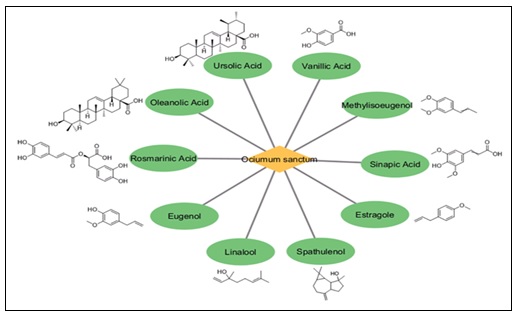
FIG. 1: MAJOR PHYTOCHEMICAL CONSTITUENTS OF OCIMUM SANCTUM. THE FIGURE PRESENTS THE PRINCIPAL CLASSES OF BIOACTIVE COMPOUNDS IDENTIFIED IN O. SANCTUM, ORGANIZED BY CHEMICAL CATEGORY. PHENOLIC ACIDS ARE REPRESENTED BY ROSMARINIC ACID, VANILLIC ACID, AND SINAPIC ACID; PHENYLPROPANOIDS INCLUDE EUGENOL, METHYLISOEUGENOL, AND ESTRAGOLE; TERPENOIDS ARE REPRESENTED BY LINALOOL AND SPATHULENOL; AND TRITERPENOIDS INCLUDE URSOLIC ACID AND OLEANOLIC ACID. THESE CONSTITUENTS COLLECTIVELY CONTRIBUTE TO THE ANTIOXIDANT, ANTI-INFLAMMATORY, AND VASCULAR PROTECTIVE PROPERTIES OF O. SANCTUM THAT ARE DISCUSSED IN THE MECHANISTIC SECTIONS OF THIS REVIEW. CHEMICAL STRUCTURES WERE COMPILED FROM PUBLISHED LITERATURE
Piper nigrum: The herb Piper nigrum is dominated by alkaloids, monoterpenes, sesquiterpenes, terpenoids and various volatile essential oils 29. Piperine a key bioactive compound, an alkaloid is a strong antioxidant agent 30. β-caryophyllene is a major sesquiterpene responsible for cardio-hepatoprotection through its antioxidant and immunomodulatory action 31. α-pinene a monoterpene is a promising anti-inflammatory agent as it inhibits inflammatory mediators 32. This monoterpene is also a potent antioxidant due to its inhibitory action in ROS generation and lipid peroxidation 33. Thus, phytochemistry of Piper nigrum is a promising approach towards cardio-hepatoprotection.
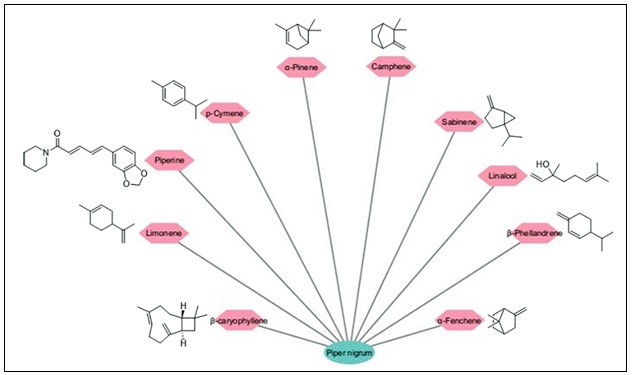
FIG. 2: REPRESENTATIVE PHYTOCHEMICAL PROFILE OF PIPER NIGRUM. THE FIGURE ILLUSTRATES THE MAJOR CLASSES OF BIOACTIVE COMPOUNDS PRESENT IN P. NIGRUM, INCLUDING PIPERIDINE ALKALOIDS (PIPERINE, PIPERETTINE), SESQUITERPENES (Β-CARYOPHYLLENE), MONOTERPENES (Α-PINENE), AND PHENOLIC FLAVONOIDS (QUERCETIN, CATECHIN, MYRICETIN). THESE CONSTITUENTS FORM THE PHARMACOLOGICAL BASIS OF THE ANTIOXIDANT, ANTI-INFLAMMATORY, AND VASCULAR MODULATORY ACTIVITIES ATTRIBUTED TO P. NIGRUM IN THE PRESENT REVIEW. CHEMICAL STRUCTURES WERE DERIVED FROM PUBLISHED PHYTOCHEMICAL CHARACTERIZATION STUDIES.
Origanum majorana: The Origanum majorana has wide phytochemistry, including bioactive constituents like thymol, carvacrol, tannins, arbutin, sitosterol, limonene, camphene, leutolin belonging to various chemical classes 34. Rosmarinic acid, a phytoconstituent of the herb is potent at managing oxidative stress 35. Ethanolic extracts of O. majorana significantly reduce the nitric oxide levels which is an important inflammatory mediator 36. Thus, the phytochemistry of the herb provides insights into its cardio-hepatoprotective potential.
A comparative summary of major bioactives across all three herbs is provided in Table 1.
TABLE 1: MAJOR BIOACTIVE CONSTITUENTS AND PRIMARY PHARMACOLOGICAL CLASSES OF THE THREE REVIEWED HERBS
| Herb | Major Bioactive Constituent | Chemical Class | Primary Pharmacological Activity | Ref. |
| Origanum majorana | Rosmarinic acid | Phenolic acid | Antioxidant, anti-inflammatory, Nrf2 activator | 37, 38 |
| Carvacrol | Phenolic monoterpene | COX inhibitor, Nrf2 activator, GSH restoration | 39 | |
| Thymol | Phenolic monoterpene | Antioxidant, antimicrobial | 40 | |
| Terpinen-4-ol | Monoterpenoid | Free radical scavenging (DPPH) | 41 | |
| Luteolin | Flavone | Anti-inflammatory, antioxidant | 42 | |
| Ocimum sanctum | Eugenol | Phenylpropanoid | Antioxidant, COX/LOX inhibitor, antiplatelet | 43, 44 |
| Ursolic acid | Triterpenoid | NF-κB inhibitor, anti-inflammatory | 45 | |
| Linalool | Monoterpenoid | Vasorelaxant, NO modulator | 46 | |
| Oleanolic acid | Triterpenoid | Hepatoprotective, anti-inflammatory | 47 | |
| Orientin | Flavone C-glycoside | Nrf2 activator, antioxidant | 48 | |
| Piper nigrum | Piperine | Piperidine alkaloid | Nrf2 activator, antioxidant, NF-κB inhibitor | 49 |
| β-caryophyllene | Sesquiterpene | Immunomodulatory | 50 | |
| α-pinene | Monoterpene | Anti-inflammatory, antioxidant | 32 | |
| Gallic acid | Phenolic acid | GSH restoration, antioxidant | 51 | |
| Quercetin | Flavonol | Antioxidant, anti-inflammatory | 52 |
Antioxidant Mechanisms:
Breaking the Oxidative Cycle: Oxidative stress defined as a sustained imbalance between the generation of reactive oxygen and nitrogen species (ROS/RNS) and the cellular capacity for their neutralization occupies a central role in the molecular pathogenesis of both cardiovascular and hepatic diseases 53. In the context of cardiac tissue, superoxide-mediated depletion of nitric oxide (NO) bioavailability initiates a cascade of endothelial dysfunction and vascular inflammation 54, 55. In hepatocytes, excessive ROS generation drives mitochondrial dysfunction, lipid peroxidation, and progression of conditions such as non-alcoholic fatty liver disease 56, 57. Malondialdehyde (MDA) serves as a clinically relevant biomarker of lipid peroxidative damage across both tissue contexts 58. Against this pathological backdrop, the antioxidant properties of O. majorana, O. sanctum, and P. nigrum are evaluated below through three mechanistic lenses: direct free radical scavenging, upregulation of endogenous antioxidant defenses via the Nrf2-ARE pathway, and restoration of glutathione homeostasis.
Direct Radical Scavenging: In DPPH-based assays, phenolic extracts of O. majorana have demonstrated superior antioxidant capacity relative to its essential oil fractions, with terpinen-4-ol identified as a principal scavenging constituent 59, 60. The methanolic flower extract of O. sanctum exhibits marked DPPH scavenging with an IC₅₀ of 0.68±0.19 µg/mL, with phenolic content obtained through ethanolic Soxhlet extraction identified as the primary contributor to this activity 59, 60. For P. nigrum, strong DPPH scavenging activity has been documented in the ethyl acetate fraction, with flavonoid content correlating positively with the observed antioxidant activity in fruit extracts 63, 64. While these in-vitro findings are encouraging, they represent controlled assay conditions and do not necessarily predict bioavailable antioxidant capacity in-vivo.
Nrf2-ARE Mediated Antioxidant Enzyme Upregulation: The Nrf2-Keap1 signaling axis is a pivotal intracellular antioxidant defense mechanism, governing the transcriptional induction of superoxide dismutase (SOD), catalase (CAT), and glutathione peroxidase (GPx) through binding to antioxidant response elements (ARE) in target gene promoters 65, 66. Several well-characterized constituents of the three herbs under review have demonstrated the capacity to activate this pathway. Rosmarinic acid and carvacrol from O. majorana promote Nrf2 dissociation from Keap1 and its subsequent nuclear translocation, resulting in upregulated antioxidant enzyme expression an effect supported by experimental evidence in preclinical models of oxidative organ injury 67, 68. In P. nigrum, both piperine and α-linolenic acid have been documented as Nrf2 pathway activators, associated with restoration of SOD, CAT, and GPx levels under oxidative challenge 67, 68. From O. sanctum, eugenol and orientin similarly engage the Nrf2-ARE axis to upregulate endogenous antioxidant defenses and protect against hepatic and cardiac oxidative damage in animal-based studies 48, 71-73. These findings collectively point to Nrf2-ARE activation as a shared mechanistic theme across all three herbs, though it warrants emphasis that the evidence is drawn from in vitro and animal studies, and no human clinical trials have specifically characterized Nrf2 induction by these herbs in cardiac or hepatic disease contexts.
Glutathione Homeostasis and Lipid Peroxidation Inhibition: Reduced glutathione (GSH) is a central non-enzymatic antioxidant whose depletion under conditions of oxidative stress predisposes both hepatic and cardiac tissues to membrane damage 74. Rosmarinic acid and carvacrol (from O. majorana), piperine and gallic acid (from P. nigrum), and eugenol (from O. sanctum) have each demonstrated, in preclinical models, a meaningful capacity to restore GSH levels that had been depleted by chemically induced oxidative insults 75-78. Additionally, all three herbs have shown the ability to significantly attenuate MDA levels in animal models an indicator of reduced lipid peroxidation 79-81. The impact of these herbs on 4-hydroxynonenal (4-HNE), the second major aldehyde product of lipid peroxidation with particular relevance to hepatocellular apoptosis, has not yet been documented and represents a priority area for future investigation. Taken together, the antioxidant evidence base for these three herbs is reasonably well-developed at the preclinical level and mechanistically coherent. What remains to be established is whether these activities translate into meaningful, clinically measurable antioxidant benefits in humans with established cardiovascular or hepatic disease.
Anti-inflammatory Pathways: Inflammation and oxidative stress are not independent processes but deeply interwoven mechanisms that amplify each other in the progression of both cardiac and hepatic diseases 82. Chronic, low-grade inflammation driven by sustained activation of innate immune signaling pathways is now recognized as a key contributor to conditions such as non-alcoholic steatohepatitis (NASH), ischemic heart disease, and cardiomyopathy 83.
The inflammatory cascade involves a diverse range of molecular mediators, including vasoactive amines (histamine, serotonin), eicosanoids (prostaglandins, leukotrienes, thromboxanes), kinins (bradykinin), and cytokines, all of which converge on transcriptional regulators such as nuclear factor kappa B (NF-κB) and mitogen-activated protein kinases (MAPKs) 84-89. A comparative evaluation of how O. majorana, O. sanctum, and P. nigrum engage with these pathways is presented below.
Origanum majorana: The anti-inflammatory potential of O. majorana is mechanistically grounded in the activity of several of its constituent phytochemicals, though direct evidence from cardio-hepatic inflammatory models remains less comprehensively characterized compared to the other two herbs reviewed here. Rosmarinic acid, a phenolic ester present in O. majorana, has been shown to inhibit NF-κB activation and attenuate the expression of pro-inflammatory cytokines including interleukin-6 (IL-6) and tumor necrosis factor-alpha (TNF-α) in experimental systems. This activity is particularly relevant because NF-κB-driven inflammatory gene expression is among the primary molecular mechanisms underlying hepatic stellate cell activation in liver fibrosis and myocardial inflammation in ischemic injury 90.
Ethanolic extracts of O. majorana have been reported to significantly reduce nitric oxide (NO) levels in inflammatory assays, suggesting suppression of inducible nitric oxide synthase (iNOS) activity an enzyme whose overactivation contributes substantially to nitrosative tissue injury in both cardiac and hepatic contexts. Carvacrol, a phenolic monoterpene abundant in marjoram essential oil, has demonstrated inhibitory effects on cyclooxygenase (COX) enzymes and prostaglandin biosynthesis in preclinical studies, an activity that functionally parallels that of non-steroidal anti-inflammatory drugs but without the associated gastric and renal toxicity concerns.
Ocimum sanctum: The anti-inflammatory pharmacology of O. sanctum is among its most well-documented properties and has been attributed to multiple constituents acting across different branches of the inflammatory cascade. Fixed oil and linolenic acid derived from the plant have been demonstrated in animal studies to meaningfully reduce the levels of both leukotrienes and prostaglandins, two eicosanoid classes central to inflammatory amplification and tissue injury 91. Separately, oils obtained from fresh leaves and seeds of holy basil have been shown to reduce elevated histamine and serotonin levels in experimental inflammatory models, attenuating the early vasodilatory and edematous phases of the inflammatory response 91. Eugenol, arguably the most pharmacologically characterized constituent of O. sanctum, contributes to anti-inflammatory activity through dual suppression of cyclooxygenase and lipoxygenase pathways, thereby reducing both prostaglandin and leukotriene synthesis. Ursolic acid, a pentacyclic triterpenoid from the same herb, complements these effects through documented inhibition of NF-κB nuclear translocation and suppression of downstream inflammatory gene transcription. The collective anti-inflammatory profile of O. sanctum is therefore relatively broad-spectrum in its mechanistic coverage, engaging both upstream mediator biosynthesis and transcriptional regulatory nodes.
Piper nigrum: The anti-inflammatory contributions of P. nigrum are largely attributable to piperine and its structurally related amide alkaloids, as well as the sesquiterpene β-caryophyllene. Piperic acid, a structural analog of piperine, has demonstrated antinociceptive and anti-inflammatory activity in animal models, operating through reduction of pro-inflammatory mediators including histamine, serotonin, eicosanoids, and bradykinin 92. Piperine itself has been shown in several experimental studies to suppress NF-κB pathway activation and reduce downstream pro-inflammatory cytokine production, including TNF-α and IL-1β, particularly in hepatic and macrophage cell models. β-caryophyllene, a sesquiterpene shared between P. nigrum and O. sanctum, selectively activates cannabinoid type-2 (CB2) receptors an endocannabinoid pathway with well-established immunomodulatory functions leading to reduced macrophage-mediated inflammatory signalling. Additionally, α-pinene, a monoterpene constituent of P. nigrum, has been reported to inhibit key inflammatory mediators and exhibits antioxidant properties that indirectly moderate the NF-κB-ROS amplification loop.
Comparative Synthesis: When the three herbs are considered alongside each other, a pattern of mechanistically complementary but non-identical anti-inflammatory coverage emerges. O. sanctum offers the broadest experimentally documented evidence spanning mediator suppression, eicosanoid inhibition, and transcriptional regulation. P. nigrum contributes both receptor-level immunomodulation (via CB2 agonism by β-caryophyllene) and direct NF-κB suppression. O. majorana, while less characterized in direct cardio-hepatic inflammatory models, contributes iNOS/NO pathway modulation and COX inhibitory activity through carvacrol and rosmarinic acid. Future comparative studies using standardized inflammatory models common to all three herbs particularly NF-κB reporter assays, cytokine profiling, and in-vivo models of hepatic inflammation.
Vascular Protective Mechanisms: Vascular endothelial dysfunction defined operationally as impaired endothelium-dependent vasodilation, reduced nitric oxide (NO) bioavailability, heightened adhesion molecule expression, and activated inflammatory and coagulatory signaling at the vessel wall is not merely a feature of cardiovascular disease 93. It is also a documented phenomenon in advanced hepatic disorders, where portal hypertension and altered hepatic sinusoidal tone reflect microvascular endothelial compromise 94. Thus, botanical agents capable of restoring or preserving endothelial function are of dual cardio-hepatic relevance.
Nitric Oxide Bioavailability and Endothelial Function: Nitric oxide, synthesized by endothelial nitric oxide synthase (eNOS), governs vasodilation, inhibits platelet adhesion, suppresses vascular smooth muscle proliferation, and maintains an anti-inflammatory phenotype at the endothelial surface. Its depletion primarily through superoxide-mediated conversion to peroxynitrite is a central mechanism underlying endothelial dysfunction in both cardiac and hepatic vascular beds 95. Linalool, a monoterpenoid constituent of O. sanctum, has been identified as a vasorelaxant capable of restoring NO-mediated vasodilation in experimental settings. By supporting eNOS activity and promoting NO bioavailability, linalool indirectly reduces platelet aggregation, opposes coagulation cascades, and limits endothelial inflammatory activation. Similarly, rosmarinic acid from O. majorana has demonstrated capacity to reduce iNOS-derived NO while the simultaneous upregulation of eNOS-derived NO through its antioxidant actions may help preserve the protective vasoregulatory role of this molecule. Piperine from P. nigrum has been shown in select experimental settings to modulate vascular smooth muscle contractility and calcium handling, contributing to vasodilatory outcomes relevant to blood pressure regulation and endothelial shear stress normalization.
Vascular Inflammation and Adhesion Molecule Expression: Under conditions of endothelial activation triggered by oxidized LDL, pro-inflammatory cytokines, or excessive ROS, endothelial cells upregulate the surface expression of vascular cell adhesion molecule-1 (VCAM-1), intercellular adhesion molecule-1 (ICAM-1), and E-selectin proteins that facilitate the recruitment and trans-endothelial migration of inflammatory leukocytes, a process fundamental to atherogenesis and hepatic inflammatory infiltration 96. Eugenol from O. sanctum has been reported to reduce VCAM-1 and ICAM-1 expression in endothelial cell models, a finding consistent with its known NF-κB suppressive properties. β-caryophyllene, present in both P. nigrum and O. sanctum, attenuates macrophage-mediated vascular inflammatory signaling through CB2 receptor engagement, reducing the chemotactic activity that drives inflammatory cell recruitment to the endothelium. While direct evidence for O. majorana in this context is less well established, carvacrol has demonstrated NF-κB inhibitory activity in inflammatory models that logically extends to endothelial inflammatory suppression, though this connection requires dedicated vascular model validation 97.
Platelet Interactions and Microvascular Consequences: Platelet hyperactivity a consequence of endothelial NO depletion and systemic oxidative stress contributes to thrombotic events in coronary and portal microcirculation 98. Eugenol has been documented to exhibit antiplatelet activity through inhibition of platelet aggregation and thromboxane A₂ synthesis, potentially reducing thrombotic risk in both cardiac and hepatic vascular beds. The antiplatelet properties of rosmarinic acid have similarly been reported, though primarily in in-vitro contexts. Piperine's influence on platelet function is mechanistically plausible through its anti-inflammatory actions but warrants more direct experimental characterization 99. At the microvascular level, protection of sinusoidal endothelial cells in the liver from ROS-mediated injury via the antioxidant activities which contributes to preservation of hepatic microvascular architecture and prevention of portal hypertension, a clinically important consequence of sinusoidal dysfunction. Collectively, the available evidence supports a biologically plausible vascular protective role for all three herbs, most strongly for O. sanctum and, to a lesser extent, for O. majorana and P. nigrum.
Conclusion and Future Outcomes: The bioactive compounds found in Origanum majorana, Ocimum sanctum and Piper nigrum play a crucial role in safeguarding liver and heart health through diverse protective mechanisms. These herbs exhibit strong antioxidant properties by neutralizing harmful free radicals, boosting body’s own antioxidant enzymes via the Nrf2-ARE signaling pathway, maintaining glutathione balance and preventing lipid peroxidation. Their anti-inflammatory effects, particularly through lowering key inflammatory mediators, further help in reducing chronic inflammation that contributes to cardio-hepatic disorders. By bridging traditional Ayurvedic wisdom with contemporary scientific research, these herbal agents emerge as promising complementary or alternative options to conventional drugs, which often target single pathways and may cause adverse effects. Human studies evaluating the cardio-hepatic benefits of these herbs are relatively scarce, and available data often lack standardization in terms of dosage and formulation. Additionally, factors such as bioavailability, pharmacokinetics, and potential herb–drug interactions particularly with commonly prescribed cardiovascular and hepatic medications require careful consideration. Establishing standardized extracts and conducting well-designed clinical trials will be essential to validate their therapeutic relevance.
The future studies should aim to clarify the precise molecular interactions behind the synergistic actions combined herbal formulations containing bioactive compounds. Rigorous clinical trials are essential to confirm their safety profiles, therapeutic effectiveness, optimal dosing and long-term impacts in patients with CVD and liver diseases. Standardizing extracts and formulations will be key to facilitating their adoption within mainstream healthcare as safe, multi-targeted therapies with minimal toxicity. Ultimately, advancing research will support the development of evidence-based herbal strategies that comprehensively address the complex processes underlying cardio-hepatic diseases.
ACKNOWLEDGEMENTS: Nil
CONFLICT OF INTEREST: No conflict of interest.
REFERENCES:
- Organization WH. Cardiovascular diseases (CVDs) 2025 [Available from: https://www.who.int/news-room/fact-sheets/detail/cardiovascular-diseases-(cvds).
- Gan C, Yuan Y, Shen H, Gao J, Kong X and Che Z: Liver diseases: epidemiology, causes, trends and predictions. Signal Transduction and Targeted Therapy 2025; 10(1): 33.
- Kasper P, Martin A, Lang S, Kütting F, Goeser T and Demir M: NAFLD and cardiovascular diseases: a clinical review. Clinical Research in Cardiology 2021; 110(7): 921-37.
- Musleh MM, Alajrami E, Khalil AJ, Abu-Nasser BS and Barhoom AM: Naser SAJIJoAISR Predicting liver patients using artificial neural network 2019; 3(10).
- Shah AK, Bhullar SK, Elimban V and Dhalla NSJA: Oxidative stress as a mechanism for functional alterations in cardiac hypertrophy and heart failure 2021; 10(6): 931.
- Allameh A, Niayesh-Mehr R, Aliarab A, Sebastiani G and Pantopoulos KJA: Oxidative stress in liver pathophysiology and disease 2023; 12(9): 1653.
- Ramos-Tovar E and Muriel P: Molecular Mechanisms That Link Oxidative Stress, Inflammation, and Fibrosis in the Liver 2020; 9(12): 1279.
- Joffre J and Hellman J: Oxidative Stress and Endothelial Dysfunction in Sepsis and Acute Inflammation 2021; 35(15): 1291-307.
- Wang X and He BJM: Endothelial dysfunction: Molecular mechanisms and clinical implications 2024; 5(8): 651.
- Matyas C, Haskó G, Liaudet L, Trojnar E and Pacher P: Interplay of cardiovascular mediators, oxidative stress and inflammation in liver disease and its complications. Nature Reviews Cardiology 2021; 18(2): 117-35.
- Cong L, Ren Y, Hou T, Han X, Dong Y and Wang Y: Use of Cardiovascular Drugs for Primary and Secondary Prevention of Cardiovascular Disease among Rural-Dwelling Older Chinese Adults 2020; 1: 2020.
- Grander C, Grabherr F and Tilg H: Non-alcoholic fatty liver disease: pathophysiological concepts and treatment options. Cardiovascular Research 2023; 119(9): 1787-98.
- Andrade RJ, Chalasani N, Björnsson ES, Suzuki A, Kullak-Ublick GA and Watkins PB: Drug-induced liver injury. Nature Reviews Disease Primers 2019; 5(1): 58.
- Mahmoud MF, Mahdi I, Ali N, Dib H, El-Shazly AM and Mostafa I: Black pepper (Piper nigrum) essential oil counteracts dexamethasone-induced hepatic injury via modulating PGC-1α/PPAR-α pathway in rats 2024; 17(4): 105690.
- Szymanski MW and Singh DP: Isoproterenol. Treasure Island (FL) ineligible companies. Disclosure: Davinder Singh declares no relevant financial relationships with ineligible companies.: StatPearls Publishing Copyright © 2025, StatPearls Publishing LLC.; 2025.
- Rababa’h AM and Alzoubi MAJCT: Origanum majorana extract protects against isoproterenol-induced cardiotoxicity in rats 2021; 21(7): 543-52.
- Ajanal MN, Nayak SU, Kadam AP and Prasad BJA: Pharmacovigilance study of Ayurvedic medicine in Ayurvedic Teaching Hospital: A prospective survey study. 2015; 36(2): 130-7.
- Colalto CJPR: What phytotherapy needs: Evidence‐based guidelines for better clinical practice 2018; 32(3): 413-25.
- Ramachandran A and Patel NJ: Ayurveda After Age of Covid-19 Exploring the Impact and Empowering Informed Decisions Through Health Literacy.
- Verma SK, Pandey M, Sharma A and Singh D: Exploring Ayurveda: principles and their application in modern medicine. Bulletin of the National Research Centre 2024; 48(1): 77.
- Netala VR, Teertam SK, Li H and Zhang Z: A Comprehensive Review of Cardiovascular Disease Management: Cardiac Biomarkers, Imaging Modalities, Pharmacotherapy, Surgical Interventions, and Herbal Remedies 2024; 13(17): 1471.
- Dharsono HDA, Putri SA, Kurnia D, Dudi D and Satari MH: Ocimum Species: A Review on Chemical Constituents and Antibacterial Activity. Molecules (Basel, Switzerland) 2022; 27(19).
- Rani N, Rawat D, Kaur G and Sood YJIJBS: A review on essential oil based therapies as an effective weapon against diseases 2022; 7(4): 131-9.
- Janaszak-Jasiecka A, Płoska A, Wierońska JM, Dobrucki LW and Kalinowski L: Endothelial dysfunction due to eNOS uncoupling: molecular mechanisms as potential therapeutic targets. Cellular & Molecular Biology Letters 2023; 28(1): 21.
- Yeo SG, Oh YJ, Lee JM, Kim SS and Park DC: A Narrative Review of the Expression and Role of Nitric Oxide in Endometriosis. Antioxidants (Basel, Switzerland) 2025; 14(3).
- Arulnangai R, Thabassoom HA, Banu HV, Thirugnanasambandham K and Ganesamoorthy RJTR: Recent developments on ursolic acid and its potential biological applications 2025; 101900.
- Tripathy NS, Sahoo L, Paikray SK and Dilnawaz F: Eugenol: The Phytocompound's Potential Biological Applications. Bio Nano Science 2024; 14(4): 4044-55.
- Ahmad A, Abuzinadah MF, Alkreathy HM, Banaganapalli B and Mujeeb MJPO: Ursolic acid rich Ocimum sanctum L leaf extract loaded nanostructured lipid carriers ameliorate adjuvant induced arthritis in rats by inhibition of COX-1, COX-2, TNF-α and IL-1: Pharmacological and docking studies 2018; 13(3): 0193451.
- Ashokkumar K, Murugan M, Dhanya MK, Pandian A and Warkentin TD: Phytochemistry and therapeutic potential of black pepper [Piper nigrum (L.)] essential oil and piperine: a review. Clinical Phytoscience 2021; 7(1): 52.
- Kim DW, Kim MJ, Shin Y, Jung SK and Kim YJ: Green Pepper (Piper nigrum) Extract Suppresses Oxidative Stress and LPS-Induced Inflammation via Regulation of JNK Signaling Pathways 2020; 10(7): 2519.
- Machado KdC, Islam MT, Ali ES, Rouf R, Uddin SJ and Dev S: A systematic review on the neuroprotective perspectives of beta‐caryophyllene 2018; 32(12): 2376-88.
- Rahimi K, Zalaghi M, Shehnizad EG, Salari G, Baghdezfoli F and Ebrahimifar AJBrb: The effects of alpha-pinene on inflammatory responses and oxidative stress in the formalin test 2023; 203: 110774.
- Allenspach M and Steuer CJP: α-Pinene: A never-ending story 2021; 190: 112857.
- Bouyahya A, Chamkhi I, Benali T, Guaouguaou F-E, Balahbib A and El Omari N: Traditional use, phytochemistry, toxicology, and pharmacology of Origanum majorana 2021; 265: 113318.
- Wagdy R, Abdel-Kader RM, El-Khatib AH, Linscheid MW, Handoussa H and Hamdi N: Origanum majorana protects against neuroinflammation-mediated cognitive impairment: a phyto-pharmacological study. BMC Complementary Medicine and Therapies 2023; 23(1): 165.
- Zhou L, Wang S, Qu J, Zhou H, Fatma A-ZKKA and Kang W: Anti-Inflammatory Phytoconstituents of Origanum majorana 2022; 2022(1): 3888075.
- Bianchi S, Acquaviva R, Di Giacomo C, Siracusa L, Issop-Merlen L and Motterlini R: Origanum majorana Extracts: A Preliminary Comparative Study on Phytochemical Profiles and Bioactive Properties of Valuable Fraction and By-Product 2025; 14(15): 2264.
- Ma Z, Lu Y, Yang F, Li S, He X and Gao Y: Rosmarinic acid exerts a neuroprotective effect on spinal cord injury by suppressing oxidative stress and inflammation via modulating the Nrf2/HO-1 and TLR4/NF-κB pathways. Toxicology and Applied Pharmacology 2020; 397: 115014.
- Huang Y, Ebrahimi H, Berselli E, Foti MC and Amorati R: Essential Oils as Antioxidants: Mechanistic Insights from Radical Scavenging to Redox Signaling 2026; 15(1): 37.
- Rúa J, Del Valle P, de Arriaga D, Fernández-Álvarez L and García-Armesto MRJFp: disease. Combination of carvacrol and thymol: Antimicrobial activity against Staphylococcus aureus and antioxidant activity 2019; 16(9): 622-9.
- Khaleel C, Tabanca N and Buchbauer GJOC: α-Terpineol, a natural monoterpene: A review of its biological properties 2018; 16(1): 349-61.
- Wang W, He P and Jiang XM: Anti-inflammatory and antioxidant effects of luteolin and its flavone glycosides 2020.
- das Chagas Pereira de Andrade F and Mendes ANJSr: Computational analysis of eugenol inhibitory activity in lipoxygenase and cyclooxygenase pathways 2020; 10(1): 16204.
- Chang Y, Hsia CW, Chiou KR, Yen TL, Jayakumar T and Sheu JR: Eugenol: A potential modulator of human platelet activation and mouse mesenteric vascular thrombosis via an innovative cPLA2-NF-κB signaling axis 2024; 12(8): 1689.
- Luan M, Wang H, Wang J, Zhang X, Zhao F and Liu Z: Advances in anti-inflammatory activity, mechanism and therapeutic application of ursolic acid 2022; 22(3): 422-36.
- Gonçalves T, Almeida A, Pontes L, Oliveira J, Feitosa M and Júnior J: Monoterpenes in Vascular Function: A Review of Bioactivity and Mechanisms of Action 2025; 26(18): 9243.
- Wang Y and Liu KJN-SsAoP: Therapeutic potential of oleanolic acid in liver diseases 2024; 397(7): 4537-54.
- Fahmy MI, Sadek MA, Abdou K, El-Dessouki AM, El-Shiekh RA and Khalaf SSJI: Orientin: a comprehensive review of a promising bioactive flavonoid 2025; 1-16.
- Guo R, Fang Y, Li J, Gao H, Niu Z and Lv Y: A comprehensive review on the main alkamides in Piper nigrum and anti-inflammatory properties of piperine 2025; 1-23.
- Gullì M, Percaccio E, Di Giacomo S and Di Sotto AJAS: Novel insights into the immunomodulatory effects of caryophyllane sesquiterpenes: a systematic review of preclinical studies 2022; 12(5): 2292.
- Gao J, Hu J, Hu D and Yang XJNPC: A role of gallic acid in oxidative damage diseases: A Comprehensive Review 2019; 14(8): 1934578X19874174.
- Lesjak M, Beara I, Simin N, Pintać D, Majkić T and Bekvalac K: Antioxidant and anti-inflammatory activities of quercetin and its derivatives 2018; 40: 68-75.
- Conde de la Rosa L, Goicoechea L, Torres S, Garcia-Ruiz C and Fernandez-Checa JCJL: Role of oxidative stress in liver disorders 2022; 2(4): 283-314.
- Frąk W, Wojtasińska A, Lisińska W, Młynarska E, Franczyk B and Rysz J: Pathophysiology of Cardiovascular Diseases: New Insights into Molecular Mechanisms of Atherosclerosis, Arterial Hypertension, and Coronary Artery Disease 2022; 10(8): 1938.
- Donia T, Khamis AJES and Research P: Management of oxidative stress and inflammation in cardiovascular diseases: mechanisms and challenges 2021; 28(26): 34121-53.
- Prasun P, Ginevic I and Oishi K: Mitochondrial dysfunction in nonalcoholic fatty liver disease and alcohol related liver disease. Translational Gastroenterology and Hepatology 2021; 6: 4.
- Zheng Y, Wang S, Wu J and Wang Y: Mitochondrial metabolic dysfunction and non-alcoholic fatty liver disease: new insights from pathogenic mechanisms to clinically targeted therapy. Journal of Translational Medicine 2023; 21(1): 510.
- Yekti R, Bukhari A and Jafar N: Thaha ARJIJoAMS, Research C. Measurement of malondialdehyde (MDA) as a good indicator of lipid peroxidation 2018; 6(4): 1-3.
- Paudel PN, Satyal P, Satyal R, Setzer WN and Gyawali R: Chemical Composition, Enantiomeric Distribution, Antimicrobial and Antioxidant Activities of Origanum majorana L. Essential Oil from Nepal 2022; 27(18): 6136.
- Prakash NKU, Sripriya NS, Raj DD, Deepa S and Bhuvaneswari SJPJoPS: Antioxidant potency and GC-MS composition of Origanum majorana 2019; 32(5): 2117-22.
- Xia K, Perveen N and Khan NJPPIJ: Phytochemical analysis, antibacterial and antioxidant activity determination of Ocimum sanctum 2018; 6(6): 490-7.
- Gowri R, Vilochana A and Vinotha S: A Comparative Evaluation of the Antioxidant and Phytochemical Properties of Various Extracts of Ocimum sanctum Linn Grown in Jaffna District, Sri Lanka 2025.
- Ukey SS and Gogle DPJJPP: Phytochemical evaluation and in-vitro antioxidant studies of Piper nigrum (L.) 2024; 13(4): 385-95.
- Al-Khayri JM, Upadhya V, Pai SR, Naik PM, Al-Mssallem MQ and Alessa FM: Comparative Quantification of the Phenolic Compounds, Piperine Content, and Total Polyphenols along with the Antioxidant Activities in the Piper trichostachyon and nigrum 2022; 27(18): 5965.
- Chen CH: Nrf2-are pathway: Defense against oxidative stress. Xenobiotic Metabolic Enzymes: Bioactivation and Antioxidant Defense: Springer 2020; 145-54.
- Silvestro S and Mazzon E: Nrf2 Activation: Involvement in Central Nervous System Traumatic Injuries. A Promising Therapeutic Target of Natural Compounds 2023; 24(1): 199.
- Ji R, Sun H, Peng J, Ma X, Bao L and Fu Y: Rosmarinic acid exerts an antagonistic effect on vascular calcification by regulating the Nrf2 signalling pathway. Free Radical Research 2019; 53(2): 187-97.
- Aslam H, Albaqami F, Rehman NU and Shah FA: Carvacrol attenuated myocardial infarction through NLRP3-mediated pyroptosis and mTOR/Nrf2/PPARγ-dependent autophagic signaling. Toxicology and Applied Pharmacology 2025; 498: 117281.
- Ponnusam Y, Louis T, Madhavachandran V, Kumar S, Thoprani N and Hamblin MR: Antioxidant activity of the ancient herb, Holy Basil in CCl4-induced liver injury in rats 2015; 2(2): 34.
- Sun C, Cai X, Jiang X, Wen F and Wan L: Neuroprotective alpha-linolenic acid derived from black pepper targets PGK1 and activates the Nrf2 pathway in PC12 cells and mice. European Journal of Pharmacology 2025; 1006: 178154.
- Damasceno ROS, Pinheiro JLS, Rodrigues LHM, Gomes RC, Duarte ABS and Emídio JJ: Anti-Inflammatory and Antioxidant Activities of Eugenol: An Update. Pharmaceuticals (Basel, Switzerland) 2024; 17(11).
- Vasudevan Sajini D, Thaggikuppe Krishnamurthy P, Chakkittukandiyil A and Mudavath RN: Correction: Orientin Modulates Nrf2-ARE, PI3K/Akt, JNK-ERK1/2, and TLR4/NF-kB Pathways to Produce Neuroprotective Benefits in Parkinson’s Disease. Neurochemical Research 2024; 49(6): 1588-91.
- Zaky MY, Morsy HM, Abdel-Moneim A, Zoheir KMA, Bragoli A and Abdel-Maksoud MA: Anticancer potential of eugenol in hepatocellular carcinoma through modulation of oxidative stress, inflammation, apoptosis, and proliferation mechanisms. Discover Oncology 2025; 16(1): 1080.
- Raj Rai S, Bhattacharyya C, Sarkar A, Chakraborty S, Sircar E and Dutta S: Glutathione: role in oxidative/nitrosative stress, antioxidant defense, and treatments 2021; 6(18): 4566-90.
- Lu Y, Hong Y, Zhang T, Chen Y, Wei Z and Gao CJF: Rosmarinic acid exerts anti-inflammatory effect and relieves oxidative stress via Nrf2 activation in carbon tetrachloride-induced liver damage 2022; 66: 10.29219/fnr. v66. 8359.
- Piao MJ, Fernando P, Kang KA, Fernando P, Herath H and Kim YR: Rosmarinic acid inhibits ultraviolet b-mediated oxidative damage via the AKT/ERK-NRF2-GSH Pathway in-vitro and in-vivo. Biomolecules & Therapeutics 2024; 32(1): 84-93.
- Meena P, Choudhary P, Nirmal NK, Bunkar SK, Kumar K and Verma RJJoIS: Restoration of biochemical alteration: Intervention of Gallic acid and Piperine against chronic stress in Danio rerio 2025; 13(2): 1035-.
- Kumar A, Siddiqi NJ, Alrashood ST, Khan HA, Dubey A and Sharma B: Protective effect of eugenol on hepatic inflammation and oxidative stress induced by cadmium in male rats. Biomedicine & Pharmacotherapy 2021; 139: 111588.
- Saleh AA, Hamed S, Hassan AM, Amber K, Awad W and Alzawqari MH: Productive Performance, Ovarian Follicular Development, Lipid Peroxidation, Antioxidative Status, and Egg Quality in Laying Hens Fed Diets Supplemented with Salvia officinalis and Origanum majorana Powder Levels 2021; 11(12): 3513.
- Yuniarti WM, Krismaharani N, Ciptaningsih P, Celia K, Veteriananta KD and Ma'ruf A: The protective effect of Ocimum sanctum leaf extract against lead acetate-induced nephrotoxicity and hepatotoxicity in mice (Mus musculus). Veterinary World 2021; 14(1): 250-8.
- E. Mballa D, Yadang FSA, Tchamgoue AD, Mba JR, Tchokouaha LRY and M. Biang E: Cafeteria Diet-Induced Metabolic and Cardiovascular Changes in Rats: The Role of Piper nigrum Leaf Extract 2021; 2021(1): 5585650.
- Caliri AW, Tommasi S and Besaratinia A: Relationships among smoking, oxidative stress, inflammation, macromolecular damage, and cancer. Mutation Research/Reviews in Mutation Res 2021; 787: 108365.
- Cai J, Xu M, Zhang X and Li HJARoPMoD: Innate immune signaling in nonalcoholic fatty liver disease and cardiovascular diseases 2019; 14(1): 153-84.
- Abdulkhaleq LA, Assi MA, Abdullah R, Zamri-Saad M, Taufiq-Yap YH and Hezmee MNM: The crucial roles of inflammatory mediators in inflammation: A review. Veterinary World 2018; 11(5): 627-35.
- Galvão I, Sugimoto MA, Vago JP, Machado MG and Sousa LP: Mediators of Inflammation. In: Riccardi C, Levi-Schaffer F, Tiligada E, editors. Immunopharmacology and Inflammation. Cham: Springer International Publishing 2018; 3-32.
- Zhao H, Wu L, Yan G, Chen Y, Zhou M and Wu Y: Inflammation and tumor progression: signaling pathways and targeted intervention. Signal Transduction and Targeted Therapy 2021; 6(1): 263.
- Rex DAB, Deepak K, Vaid N, Dagamajalu S, Kandasamy RK and Flo TH: A modular map of Bradykinin-mediated inflammatory signaling network. Journal of Cell Communication and Signaling 2022; 16(2): 301-10.
- Hariri MA, Jaffa MA, Saoud R, Zhao J, Zhu R and Jaffa AA: Vascular Cells Proteome Associated with Bradykinin and Leptin Inflammation and Oxidative Stress Signals 2020; 9(12): 1251.
- Yeung YT, Aziz F, Guerrero-Castilla A, Arguelles SJCpd. Signaling pathways in inflammation and anti-inflammatory therapies 2018; 24(14): 1449-84.
- Li X, Li S and Li NJC: Biodiversity. Research Progress on natural products alleviating liver inflammation and fibrosis via NF‐κB pathway 2025; 22(4): 202402248.
- Srivastava AK and Singh VKJCRN: Tulsi (Ocimum sanctum): A potent adaptogen 2021; 2(2): 01-5.
- Oliveira PdA, de Almeida TB, de Oliveira RG, Gonçalves GM, de Oliveira JM and Neves dos Santos BB: Evaluation of the antinociceptive and anti-inflammatory activities of piperic acid: Involvement of the cholinergic and vanilloid systems. European Journal of Pharmacology 2018; 834: 54-64.
- Poredos P, Poredos AV and Gregoric IJA: Endothelial dysfunction and its clinical implications 2021; 72(7): 604-15.
- Senoner T and Dichtl W: Oxidative Stress in Cardiovascular Diseases: Still a Therapeutic Target? 2019; 11(9): 2090.
- Daiber A, Xia N, Steven S, Oelze M, Hanf A and Kröller-Schön S: New therapeutic implications of endothelial nitric oxide synthase (eNOS) function/dysfunction in cardiovascular disease 2019; 20(1): 187.
- Pickett JR, Wu Y, Zacchi LF and Ta HTJCR: Targeting endothelial vascular cell adhesion molecule-1 in atherosclerosis: drug discovery and development of vascular cell adhesion molecule-1–directed novel therapeutics 2023; 119(13): 2278-93.
- Imran M, Aslam M, Alsagaby SA, Saeed F, Ahmad I and Afzaal M: Therapeutic application of carvacrol: A comprehensive review. Food Science & Nutrition 2022; 10(11): 3544-61.
- Aleksandrowicz M, Konop M, Rybka M, Mazurek Ł, Stradczuk-Mazurek M and Kciuk M: Dysfunction of microcirculation in atherosclerosis: implications of nitric oxide, oxidative stress, and inflammation 2025; 26(13): 6467.
- Tripathi AK, Ray AK and Mishra SKJB: Sujob, sciences a. Molecular and pharmacological aspects of piperine as a potential molecule for disease prevention and management: evidence from clinical trials 2022; 11(1): 16.
How to cite this article:
Srivastava A and Srivastava R: Bioactive potential of herbs in liver and heart health: insights into antioxidant, anti-inflammatory and vascular pathways. Int J Pharm Sci & Res 2026; 17(8): 2252-64. doi: 10.13040/IJPSR.0975-8232.17(8).2252-64.
All © 2026 are reserved by International Journal of Pharmaceutical Sciences and Research. This Journal licensed under a Creative Commons Attribution-NonCommercial-ShareAlike 3.0 Unported License.
Article Information
1
2252-2264
738 KB
938
English
IJPSR
Ananyaa Srivastava and Richa Srivastava *
Amity Institute of Pharmacy, Amity University Uttar Pradesh Lucknow Campus, Lucknow, Uttar Pradesh, India.
richasri12@gmail.com
12 March 2026
20 April 2026
23 April 2026
10.13040/IJPSR.0975-8232.17(8).2252-64
01 August 2026
 Download