




BIOACTIVITY AND SAFETY OF HYDRO-ETHANOLIC LYOPHILISED WITHANIA SOMNIFERA FOR THE POTENTIAL MANAGEMENT OF THE BIOLOGICAL END POINTS OF STRESS
HTML Full TextBIOACTIVITY AND SAFETY OF HYDRO-ETHANOLIC LYOPHILISED WITHANIA SOMNIFERA FOR THE POTENTIAL MANAGEMENT OF THE BIOLOGICAL END POINTS OF STRESS
A. Tagwireyi and J. Chifamba *
Department of Pharmacy and Pharmaceutical Sciences, Faculty of Medicine and Health Sciences, University of Zimbabwe, P. O. Box MP167, Mt Pleasant, Harare, Zimbabwe.
ABSTRACT: Introduction & Objective: Chronic stress activates the HPA axis and the sympathetic nervous system, leading to inflammation and oxidative toxic stress (OTS). Conventional therapies face bottlenecks like high costs, limited accessibility, and side effects. This study evaluates the chemical safety and metabolomics of Zimbabwean Withania somnifera. Methodology: Dried Withania somnifera roots were extracted via 70%hydroethanolic maceration and lyophilized. Phenolic and flavonoid contents were mapped. Acute oral toxicity was evaluated in female Sprague-Dawley rats up to 5000" mg/kg" (OECD 425). In-vitro anti-inflammatory and antioxidant activities were quantified via egg albumin denaturation and DPPH assays. Results: A 12% yield of lyophilised extract was obtained from 258g of raw root powder. The metabolomics verified high-density withanolides, alkaloids, tannins, saponins, and polyphenols. Acute testing established an exceptionally wide safety threshold (LD50>5000 mg/kg), with normal weight gain and zero anomalies. The extract demonstrated significant anti-inflammatory inhibition (80% inhibition at 1000 μg/mL compared to 83% diclofenac). A robust anti-oxidant profile showed mean IC50=124.33 μg/mL compared to 20.5μg/mL pure ascorbic acid. The total phenolic content was calculated at 69mg gallic acid equivalents/g extract and the flavonoid content at 32.47mg quercetin equivalents per gram. Conclusion: Naturalized Zimbabwean Withania somnifera is a safe, metabolite-dense source phytochemicals which can be used for the alleviation of the biologic end points of stress.
Keywords: Withania somnifera, Oxidative stress, Systemic inflammation, Adaptogens, Zimbabwe
INTRODUCTION: The formal concept of biological "stress" originated with Hans Selye in the 1930s, who characterized it as the body's non-specific physiological response to external demands 1, 2.
Modern medical frameworks classify these physiological disruptions into acute, episodic acute, and chronic states based on duration and frequency of occurrence 3.
An immediate threat rapidly triggers the immediate Sympathetic Adrenal Medullary (SAM) axis, signalling pre-autonomic circuits to stimulate chromaffin cells in the adrenal medulla to release systemic catecholamines, comprising roughly 80% epinephrine and 20% norepinephrine, to drive cardiac output, bronchodilation, and glucose mobilization for the fight-or-flight response 4. If the environmental, psychological, or physical threat persists, the sustained Hypothalamic-Pituitary-Adrenal (HPA) axis is deployed 4, 5. The hypothalamic paraventricular nucleus secretes corticotropin-releasing hormone (CRH) and arginine vasopressin (AVP), which stimulate the anterior pituitary gland to cleave pro-opiomelanocortin (POMC) into adrenocorticotropic hormone (ACTH). ACTH travels via venous circulation to bind MC2R receptors in the adrenal cortex's zona fasciculata, accelerating steroidogenesis to release cortisol. Under chronic stress, the continuous hypersecretion of cortisol induces widespread allostatic load, the cumulative cellular wear and tear that manifests across physical, behavioral, and emotional domains 3, 5.
Crucially, this sustained elevation triggers glucocorticoid receptor resistance (GCR) across peripheral tissues 6. The down-regulation of receptor sensitivity breaks normal negative feedback loops; this disables the receptor's capacity to cross-talk with and suppress the master transcription factor nuclear factor-kappa B (NF-κB), directly causing uncontrolled systemic inflammation and driving pathologies like clinical depression, anxiety, type 2 diabetes, and severe cardiovascular atherosclerosis 3, 6.
Withania somnifera:
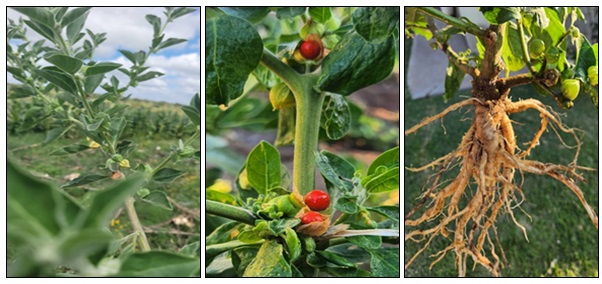
FIG. 1: WITHANIA SOMNIFERA PLANT
The naturalized Zimbabwean Withania somnifera (Ashwagandha) is a metabolite-dense therapeutic plant classified under the Solanaceae (nightshade) family, whose evolutionary development as a vascular, seed-bearing flowering angiosperm enables the specialized biosynthesis of key adaptogenic compounds within its roots, foliage, and stems 7.
Secondary Metabolites: The Withania Somnifera pharmacological efficacy against the biological endpoints of chronic stress is driven by a complex matrix of four secondary metabolite macro-classes: steroidal lactones, particularly withanolides like Withanolide A and Withaferin A, which suppress hypothalamic-pituitary-adrenal (HPA) axis cortisol pathways and promote neurite outgrowth 8, 9; basic alkaloids such as tropine and anaferine that modulate central GABA receptors to provide anxiolytic sedation 10; complex glycowithanolides (sitoindosides VII–X) that drive systemic macrophage mobilization; and a rich polyphenolic/flavonoid fraction, including quercetin and gallic acid, which acts as an immediate free-radical scavenger to suppress pro-inflammatory Nuclear Factor-kappa B (NF-κB) cascades 11.
To optimize the recovery of both these lipophilic steroidal frameworks and polar polyphenols from the raw, insoluble lignocellulosic biomass, a solid-liquid thermodynamic extraction using a moderately polar 70% hydroethanolic solvent mixture is utilized 12. This is followed by low-temperature vacuum lyophilization (freeze-drying) to protect the thermolabile structures via ice sublimation, successfully yielding a standardized, highly stable, and bioactive porous powder suited for integration into modern nano-delivery systems and functional dosage forms 13.
Objectives of the Study:
Problem Statement: Conventional pharmacological agents for chronic stress management face significant clinical bottlenecks, including severe adverse side effects, high costs, and limited accessibility in resource-constrained regions. Although Withania somnifera is an established adaptogen, the biosafety, chemical profile, and toxicological thresholds of the specific naturalized Zimbabwean eco-species remain completely uncharacterized.
Research Questions:
- What are the optimal extraction yield and parameters for isolating bioactive fractions from Zimbabwean Withania somnifera roots using hydro-ethanolic maceration
- What is the qualitative and quantitative phytochemical composition (specifically total phenolic and flavonoid content) of this regional eco-species?
- Does the lyophilized crude extract demonstrate significant in-vitro antioxidant and anti-inflammatory activity?
- What is the acute oral toxicological profile ( ) of the extract in an in-vivo rodent model under OECD Guidelines?
Aim and Specific Objectives:
Main Aim: To evaluate the phytochemistry, in vitro bioactivity, and acute in-vivo safety of a naturalized Zimbabwean Withania somnifera root extract.
Specific Objectives:
- Phytochemical Profiling and Standardization: To perform qualitative screening and quantitative determination of total phenolic content (TPC) and total flavonoid content (TFC) in the lyophilized root extract to establish a chemical baseline for standardization.
- In-vitro Efficacy Evaluation: To quantify the antioxidant capacity (via DPPH free-radical scavenging assay) and anti-inflammatory potential (via egg albumin protein denaturation inhibition) of the extract relative to standard reference drugs.
- In-vivo Safety Profiling: To determine the acute oral toxicity threshold (LD50) and evaluate preliminary clinical safety parameters of the crude extract in female Sprague-Dawley rats using a modified OECD Guideline 425 protocol.
MATERIALS AND METHODS:
Materials, Equipment and Facilities:
Animal use Approval: Prior to the investigations, animal use and research ethics approvals were obtained from the Joint Parirenyatwa Research Ethics Committee (JREC) which is the local research Institutional Review board for the University of Zimbabwe.
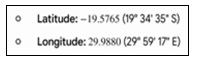
Plant Material Collection and Extraction Processing: Withania somnifera (L.) Dunal roots were collected in Gweru, Zimbabwe in the month of November 2025 at the following coordinates, and formally authenticated at the National Herbarium and Botanical Gardens in Harare. The roots were washed, shade-dried for three weeks at maximum day temperatures of 32 °C and pulverized using a commercial coffee grinder (Hamilton Beach Model 80410). Biogenic extraction was executed by macerating 258 g of the powdered root matrix in 1000 mL of a 70% (v/v) hydroethanolic mixture for 3 days with continuous mechanical shaking (3 min, twice daily). The crude mixture underwent sequential filtration via muslin cloth and a vacuum pressure setup using Whatman No. 1 filter paper. The resulting filtrate was concentrated under reduced pressure (56 Pa) at a controlled temperature using a rotary evaporator (Rotavapor R300, Buchi, Switzerland) to eliminate excess ethanol, followed by complete vacuum lyophilization to yield a highly stable dry powder.
Qualitative and Quantitative Phytochemical Screening: Standard colorimetric assays were performed on the root extract to identify major secondary metabolite fingerprints.
Detection for Alkaloids by the Wagner Test: To 2 mL of the extract, a few drops of Wagner’s reagent (iodine in potassium iodide reagent) were added along the sides of a test tube. (Alemu et al., 2024) 14.
Detection of Tannins by the Ferric Chloride Test: To 3 mL of Withania somnifera extract, 4 drops of 10% ferric chloride solution were added (Kebede et al., 2021).The presence of tannins was confirmed by conversion of the solution to a blue-green colour 14.
Detection of Flavonoids by the Ammonia Test: To 2 mL of Withania somnifera extract solution, 2 mL of dilute ammonia solution was added, followed by a few drops of concentrated sulfuric acid. (Jaafar et al., 2012). The emergence of a yellow colour indicates the presence of flavonoids 14.
Detection of Glycosides by the Keller-Killani Test: To 2 mL of Withania somnifera, 1.5 mL of glacial acetic acid was added, followed by 1 drop of 5% ferric chloride and 2 drops of concentrated sulfuric acid (Brainly, 2025) along the side of test tube). The presence of glycosides was confirmed by the emergence of a blue coloured solution in mixture acetic acid layer 15.
Detection of Phenolic Compounds by the Gelatin Test: Phenolic compounds were detected using the Gelatin test. In this assay, 2ml the lyophilised extract solution was added to 5ml of a 1% gelatin solution and 5 drops of a 10% NaCl were further added. Phenolics were identified by the appearance of a white precipitate 16.
Detection of Saponins by the Simplified Foam Test: The simplified foam test was used to determine the presence of saponins. In this assay 2ml of the extract was added to 20ml distilled water. The mixture was shaken in a graduated cylinder for 15 minutes. The presence of saponins would be confirmed by the formation of form with a head height of at least 1cm 17, 18, 19.
Total Phenolic Content: To prepare a calibration curve, phenol (Gallic acid) stock solution (5 mg/mL) was added into 100mL volumetric flasks, and then diluted to volume with distilled water. From each calibration solution, 0.25 mL was mixed with 1.25 mL of a 10-fold-diluted Folin-Ciocalteu’s phenol reagent (1 mL Folin reagent and 9 mL deionized water) and allowed to react for 5 minutes. Then, 2 mL of 7.5% Na2CO3 solution was added, and the final volume was made up to 5 mL with deionized water. After 1 hour of reaction at room temperature, the absorbance at 760 nm was measured spectrophotometrically (Lambda 35 UV/Vis Spectrometer, PerkinElmer Instruments). The test was done in triplicate. Calibration curves were plotted to determine the level of phenolics and tannins in the samples. The total phenolic content was calculated on the basis of the calibration curve of gallic acid and expressed as gallic acid equivalents (GAE), in milligrams per gram of the sample 20.
Total Flavonoid Content: Total Flavonoid Content (TFC) of the lyophilized Withania somnifera was estimated spectrophotometrically at 510 nm. In the test, 1mg of extract was dissolved in 2mL of distilled water. To this solution, 0.5 mL of 1 M sodium nitrite was added, along with 2 mL of a 1 M NaOH solution. Distilled water was then added to bring the volume to 10 mL. The solution was shaken, allowed to stand at room temperature for 15 min, and then the absorbance was measured. The total flavonoid content was estimated as mg of quercetin equivalent (mg QE/g extract) on a dry weight basis using the standard curve 12.
Detection of Sterols by Salkowski’s Test: To 2 mL of extract, add 2ml of chlorofoam then add a few drops of concentrated H2SO4 (shake well and allow to stand 14.
Detection of Terpenoids using the Salkowski Test: 2 mL chloroform + 2 mL plant extract (evaporated on a water bath) + 2 mL conc. H2SO4 (boiled on a water bath). A positive result for terpenoids shows a sharp, colored ring (ranging from golden yellow to deep reddish-brown) right at the interface of the 2 liquids 14.
Qualitative Antibacterial Profiling: Qualitative antibacterial profiling was performed via the agar well diffusion method on nutrient agar plates inoculated with Escherichia coli and Staphylococcus aureus using calibrated extract concentrations (150, 250, and 500mg) against a positive doxycycline control.
Ethical In-vivo Acute Oral Toxicity Evaluation: The acute oral toxicity evaluation was reviewed and approved by the Joint Research Ethic Committee JREC under the reference number JREC/470/2025 approved on the 12 November 2025. In vivo safety and acute oral lethality thresholds were established in strict compliance with a modified OECD Guideline 425 Up-and-Down Procedure 20. Twelve healthy, nulliparous, female Sprague-Dawley rats (8–12 weeks old, 200–250 g) were individually housed and acclimatized for 5 days with free access to standard rodent chow and water. Following an overnight fast, the test group received sequential oral gavage dosing at concentrations of 50, 500, 1000, 2500, and 5000 mg/kg body weight at 48-hour intervals, while control animals received equivalent volumes of distilled water. Clinical signs of toxicity (tremors, salivation, diarrhea, or somnolence) were monitored continuously for the first 12 hours post-dose and daily for 14 days. Somatic changes were recorded via body weight measurements on days 1, 7, and 14. At day 14, all surviving animals were humanely euthanized by cervical dislocation according to AVMA guidelines.
In-vitro Anti-Inflammatory and Antioxidant Bioassays: The anti-inflammatory performance of the extract was verified using the egg albumin denaturation protection assay. Serial dilutions of the extract and a positive control (diclofenac) were prepared (in 0.4% DMSO). The reaction matrix, comprising 0.4 mL fresh egg albumin, 0.5 mL test sample, and 3 mL phosphate-buffered saline, was incubated at 37°C for 20 min and then heated at 65°C for 30 min in a water bath to drive protein denaturation. Absorbance was recorded at 660 nm 21.
Equation 1:
Inhibition % = (Abscontrol – Abssample) / Abscontrol × 100
Where, Abs sample = absorbance of sample, Abs control = absorbance of control.
Concurrently, antioxidant capacity was measured using the 2,2-diphenyl-1-picrylhydrazyl radical scavenging assay. Aliquots of 100 of the plant extract were mixed with 0.1 mM methanolic stock solution, incubated in total darkness at 22°C for 30 min, and analyzed at 517 nm (Lambda 35, PerkinElmer) against an L-ascorbic acid standard reference curve to determine the half-maximal inhibitory concentration value 22, 23.
Equation 2:
DPPH Svavenging percentage effect = (Ao-A) /Ao x 100
Where Ao is the absorbance of negative control (0.004% DPPH solution), and A is the absorbance in the presence of extract.
The results were reported as IC50 values and ascorbic acid equivalents (AAE, mg/g) of W. somnifera.
RESULTS AND DISCUSSION:
Harvest Drying Dynamics and Extraction Metabolomics:
32g of lyophilised extract was obtained, a 12% yield.
Final yield calculation (yield% = weight of extract / weight of starting material × 100%
=32g/258g x 100%
=12%
Shade drying preserved fragile secondary metabolites by shielding the harvested biomass from direct solar ultraviolet (UV) radiation and intense thermal stress, preventing the photo-oxidation of thermosensitive withanolides (e.g., Withaferin A) and volatile essential oils 26. Dehydration kinetics showed that while open sun drying 27 accelerates moisture removal (3–5 days), shade drying under controlled, well-ventilated ambient convection (7–14 days) completely prevented opportunistic mould development and non-enzymatic browning, preserving a high-quality light-beige root profile 28, 29. Qualitative and quantitative evaluation of the 70% hydroethanolic extract revealed a dense chemical profile of primary and secondary metabolites, characterized by a robust distribution of alkaloids, flavonoids, and saponins Table 1.
TABLE 1: PHYTOCHEMICAL SCREENING PROFILING OF WITHANIA SOMNIFERA HYDROETHANOLIC EXTRACT
| Phytochemical Class | Screening Technique | Observational Sign / Color Shift | Relative Abundance |
| Alkaloids | Wagner test | Brown precipitate formation | +++ |
| Flavonoids | Ammonia test | Distinct yellow coloration | +++ |
| Saponins | Simplified foam test | Stable foam formation (6 cm) | +++ |
| Phenolic Compounds | Gelatin / test | Bluish-black coloration | ++ |
| Tannins | Ferric chloride test | Blue-green coloration | ++ |
| Glycosides | Keller-Killani test | Prominent blue coloration | ++ |
| Steroids & Sterols | Salkowski's test | Red color in lower organic layer | ++ |
| Terpenoids | Salkowski’s test | Red-brown ring at the interface | + |
Note: (-) Absence; (+) Light presence; (++) Moderate abundance; (+++) High abundance.
This diverse phytochemical profile is strongly consistent with literature identifying a complex network of subterranean polyphenols and structurally unique withanolides within the species (Jepkoech and Gakunga 2022). Quantitative optimization using the 70% hydroethanolic mixture maximized thermodynamic mass transfer and recovery, yielding a high concetration of polyphenols.
Total Phenolic Content of Lyophilized Extract: This calibration table establishes the linear regression line (y = 0.0095x + 0.045, R2 > 0.999) used to interpolate the extract concentration values.
TABLE 2: THE ABSORBANCE READINGS OF GALLIC ACID
| Gallic Acid Standard (μg/mL) | Rep 1 Absorbance | Rep 2 Absorbance | Rep 3 Absorbance | Mean Absorbance |
| 0 (Blank) | 0.045 | 0.046 | 0.044 | 0.045 |
| 20 | 0.237 | 0.234 | 0.238 | 0.236 |
| 40 | 0.422 | 0.427 | 0.426 | 0.425 |
| 60 | 0.619 | 0.613 | 0.614 | 0.615 |
| 80 | 0.803 | 0.808 | 0.805 | 0.805 |
| 100 | 0.996 | 0.994 | 0.997 | 0.996 |
The table below shows how the measured raw absorbances translate directly to individual replicate calculations.
TABLE 3: LYOPHILIZED EXTRACT ABSORBANCE READINGS AND SUBSEQUENT CALCULATIONS
| Sample Replicate | Extract Mass (M) | Assay Volume (V) | Absorbance (765 nm) | Curve Conc. (C) | Calculated TPC (mg GAE/g) |
| WS Root Extract Rep 1 | 0.10 mg | 1.0 mL | 0.109 | 6.738g/mL | 67.38 |
| WS Root Extract Rep 2 | 0.10 mg | 1.0 mL | 0.111 | 6.942g/mL | 69.42 |
| WS Root Extract Rep 3 | 0.10 mg | 1.0 mL | 0.113 | 7.146g/mL | 71.46 |
| Mean pmSD | — | — | — | — | 69.42 pm 2.04 |
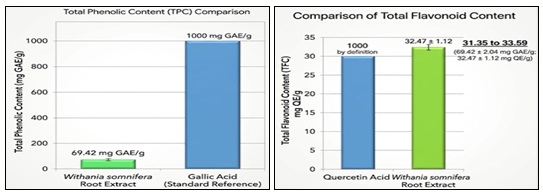
FIG. 2: TOTAL PHENOLIC AND FLAVONOID CONTENT OF WITHANIA SOMNIFERA EXTRACT VERSUS GALLIC ACID AND QUERCETIN RESPECTIVELY
The amount of TPC was determined by the Folin-Ciocalteu method. Gallic acid was used as a standard and total phenols were expressed as mg/g GAE using standard curve equation: y=0.0058x + 0.0966, R2=0.9906, where y is absorbance at 760nm and x is TPC in Withania somnifera extract. The total phenolic content measured in Withania somnifera extract was 69mg gallic acid equivalents/g extract. Total phenolic contents measured by Folin-Ciocalteu method
The TPC was 69.4+-2.04mg GAE/g. The total phenolic content represents the largest, diverse group of related secondary metabolites produced by plants which share a related sub-structure composed of an aromatic-OH moiety 27. Phenolics are produced mainly as a defence mechanism in response to hostile environmental biotic or abiotic stresses. Plant phenolics are mostly hydroxybenzoic and hydroxycinnamic acid derivatives.
There has been increased interest towards their medicinal use as antioxidant, photo-protective, anti-inflammatory and wound healing activities 39. Plant phenolics are the main group of secondary metabolites that function as antioxidants or reactive species scavengers. To this regard, these plant polyphenols mostly operate as singlet oxygen scavengers as well as reducing agents. In our study we preferred the Folin-Ciocalteu method compared to the others. In the present study the results were observed through the formation of a blue-coloured solution after the addition of the lyophilised extracts to the Folin-Ciocalteau reagent in the conducive medium. The colour change was due to the in-situ formation of the phospho molybdic-phosphotungstic-phenol complex
Total Flavonoid Content on a Dry Weight Basis: The absorbance of quercetin was measured and tabulated below. A calculation of the mean absorbance was done.
TABLE 4: THE ABSORBANCE OF QUERCETIN AS THE STANDARD
| Quercetin Standard Concentration (μg/mL) | Replicate 1 Absorbance | Replicate 2 Absorbance | Replicate 3 Absorbance | Mean Absorbance |
| 0 (Blank) | 0.034 | 0.036 | 0.035 | 0.035 |
| 2 | 0.217 | 0.213 | 0.216 | 0.215 |
| 4 | 0.401 | 0.397 | 0.402 | 0.400 |
| 6 | 0.590 | 0.582 | 0.587 | 0.586 |
| 8 | 0.771 | 0.768 | 0.774 | 0.771 |
| 10 | 0.955 | 0.954 | 0.957 | 0.955 |
The table below shows the results of the absorbance of the Withania somnifera extract and the calculation of the total flavonoid content shown in the same table
TABLE 5: THE ABSORBANCE OF WITHANIA SOMNIFERA EXTRACT IN THE TEST FOR FLAVONOID CONTENT
| Sample Replicate ID | Extract Weight (M) | Final Assay Volume (V) | Measured Absorbance (510 nm) | Interpolated Curve Conc. (C) | Calculated TFC (mg QE/g) |
| WS Extract Rep 1 | 1.00 mg | 10.0 mL | 0.323 | 3.135g/mL | 31.35 |
| WS Extract Rep 2 | 1.00 mg | 10.0 mL | 0.334 | 3.247g/mL | 32.47 |
| WS Extract Rep 3 | 1.00 mg | 10.0 mL | 0.344 | 3.359g/mL | 33.59 |
| Mean pm SD | — | — | — | — | 32.47 pm 1.12 |
The total flavonoid content was 32.47+- 1.12mg QE/g. Flavonoids are a class of polyphenolic compounds that are differentiated by the chemical structures yielding subgroups such as flavones, flavonols, flavanones and flavanols 28. Flavonoids possess potent antioxidant activities. These contribute to the scavenging of 2,2-diphenyl-1- picrylhydrazyl (DPPH) as shown in this study. Other related studies have demonstrated their effectivity against super oxides and ABTS radicals; and strong iron chelating activity. The most abundant flavonoids isolated from the aerial parts of C. edulis in published studies include rutin, kaempferol and Quercetin 26. These flavonoids have displayed anti-inflammatory, arterial blood pressure and anti-diuretic activities in other studies 26. This fits within the standard "good" benchmark allocation typical for defensive subterranean tissues, which prioritize metabolic resources toward structural carbohydrates and protective alkaloids over solar-shielding floral flavonoids 12.
Preclinical Safety Baseline and Acute Oral Toxicity Limits: In-vivo acute oral administration of the crude extract up to a maximum limit dose of body weight produced zero mortality and no observable signs of clinical or behavioural toxicity Table 6.
TABLE 6: OBSERVATIONAL TOXICITY PARAMETERS FOLLOWING ACUTE ORAL EXPOSURE TO WITHANIA SOMNIFERA
| Observed Parameter | Control Group | 50 mg/kg | 500 mg/kg | 1000 mg/kg | 2500 mg/kg | 5000 mg/kg |
| Clinical Mortality | Alive | Alive | Alive | Alive | Alive | Alive |
| Somatic Fur Status | Normal | Normal | Normal | Normal | Normal | Normal |
| Piloerection (Stress) | Absent | Absent | Absent | Absent | Absent | Absent |
| Skin Color / Ocular | Normal | Normal | Normal | Normal | Normal | Normal |
| Breathing / Locomotor | Normal | Normal | Normal | Normal | Normal | Normal |
| Food & Water Intake | Normal | Normal | Normal | Normal | Normal | Normal |
Under the Globally Harmonized System for chemical safety classification, a median lethal dose exceeding categorizes the extract as Category 5 (practically non-toxic), indicating a wide safe therapeutic window 30. This baseline safety was further validated by a progressive, uninterrupted somatic weight gain observed across all experimental groups over the 14-day tracking matrix Table 7. Because sudden mass drop is a primary diagnostic indicator of target-organ damage or systemic metabolic strain in preclinical screens, these data confirm that W. somnifera leaves gastrointestinal absorption and metabolic homeostasis unimpeded 31.
TABLE 7: MEAN SPRAGUE-DAWLEY RODENT SOMATIC WEIGHT METRICS OVER THE 14-DAY OBSERVATION MATRIX (G)
| Experimental Cohort | Animal Identifier | Day 1 Weight (g)mean | Day 7 Weight (g) | Day 14 Weight (g) |
| Control Group | Rat 1 | 215 | 226 | 229 |
| Low Dose (50 mg/kg) | Rats 2, 3 | 218 | 223 | 225.5 |
| Mid Dose (500 mg/kg) | Rats 4, 5 | 216.5 | 224 | 229.5 |
| High Dose (1000 mg/kg) | Rats 6, 7 | 221 | 222.5 | 224.5 |
| Sub-Max Dose (2000 mg/kg) | Rats 8, 9 | 215.5 | 221 | 226 |
| Limit Dose (2500 mg/kg) | Rats 10, 11 | 216 | 220.5 | 224 |
| Max Payload (5000 mg/kg) | Rat 12 | 226 | 230 | 235 |
Phyto-conjugated Anti-Inflammatory Efficacy: The in-vitro anti-inflammatory performance was established via the egg albumin denaturation protection assay, mapping structural stabilization against thermal breakdown. The crude extract generated a distinct, dose-dependent inhibitory response, rising from 26% to a robust 80% denaturation inhibition at a maximum concentration of Table 8.
TABLE 8: COMPARATIVE SPECTROPHOTOMETRIC ABSORBANCE AND PERCENTAGE PROTECTION PROFILES
| Concentration
(µg/ mL) |
Absorbance (Diclofenac) | Inhibition % (Diclofenac) | Absorbance
(W. somnifera) |
Inhibition %
(W. somnifera) |
| 0 (Negative Control) | 0.821 | 0% | 0.821 | 0% |
| 50 | 0.533 | 35% | 0.606 | 26% |
| 100 | 0.404 | 51% | 0.557 | 32% |
| 250 | 0.340 | 62% | 0.368 | 55% |
| 500 | 0.221 | 73% | 0.238 | 71% |
| 750 | 0.216 | 74% | 0.223 | 73% |
| 1000 | 0.136 | 83% | 0.164 | 80% |
This performance rapidly scales to approach functional therapeutic parity with the commercial standard NSAID, Diclofenac. Mechanistically, this protection is driven by the synergistic alignment of co-extracted secondary metabolites. While the polar polyphenolic fractions inhibit standard cyclooxygenase cascades and suppress local pro-inflammatory cytokine expression, the triterpenoid withanolides enforce lysosomal membrane stabilization, preventing the leakage of autolytic proteolytic mediators into surrounding tissue domains 32.
Systemically, this anti-inflammatory pathway interfaces directly with the plant’s adaptogenic capacity to regulate the biological endpoints of chronic physiological stress. Chronic stress fuels systemic low-grade inflammation via the nuclear factor-kappa B pathway. Withanolides (specifically Withaferin A) act as potent inhibitors of transcriptional activation 33. Concurrently, W. somnifera modulates the hyperactive hypothalamic-pituitary-adrenalaxis, safely downregulating circulating cortisol to reverse glucocorticoid receptor resistance in immune cells, offering a holistic neuroendocrine intervention that structural NSAIDs cannot replicate 34.
Multi-Component Antioxidant Kinetics: The radical-scavenging efficiency was mapped calorimetrically via the stable assay Table 9.
TABLE 9: REPLICATE SPECTROPHOTOMETRIC ABSORBANCE AND COMPUTED SCAVENGING VALUES
| Assay Concentration (µL) | AA Rep 1 | AA Rep 2 | AA Rep 3 | WS Rep 1 | WS Rep 2 | WS Rep 3 |
| 0 (Control) | 0.815 | 0.825 | 0.810 | 0.820 | 0.810 | 0.830 |
| 5 | 0.638 | 0.678 | 0.692 | 0.817 | 0.808 | 0.828 |
| 25 | 0.309 | 0.362 | 0.405 | 0.773 | 0.767 | 0.789 |
| 50 | 0.181 | 0.221 | 0.258 | 0.678 | 0.678 | 0.702 |
| 75 | 0.126 | 0.156 | 0.186 | 0.571 | 0.577 | 0.603 |
| 100 | 0.096 | 0.120 | 0.145 | 0.474 | 0.482 | 0.508 |
| 125 | 0.077 | 0.097 | 0.118 | 0.392 | 0.402 | 0.427 |
| 150 | 0.064 | 0.081 | 0.099 | 0.326 | 0.336 | 0.359 |
Linear interpolation yielded a highly potent mean half-maximal inhibitory concentration of for the pure ascorbic acid reference standard, driven by rapid electron donation from its ene-diol group Table 10.
TABLE 10: HALF-MAXIMAL INHIBITORY CONCENTRATIONS (µG/ ML) FOR ASCORBIC ACID AND ROOT EXTRACT
| Experimental Parameter | Ascorbic Acid (AA) Value | Withania somnifera (WS) Value |
| Replicate | 19.01 | 119.51 |
| Replicate | 21.80 | 124.06 |
| Replicate | 25.00 | 129.41 |
| Mean Collective | 21.94 | 124.33 |
| Minimum Interval Value) | 15.00 | 118.00 |
| Maximum Interval Value) | 26.00 | 131.00 |
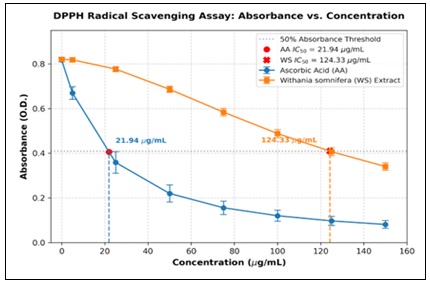
FIG. 3: ABSORBANCE VERSUS CONCENTRATION OF ASCORBIC ACID VERSUS THE LYOPHILIZED PLANT EXTRACT
In contrast, the crude root extract exhibited a multi-component kinetic profile, yielding a moderate mean of 124.33. This direct radical quenching is guided by co-extracted redox-active phenolics and hydrolysable tannins, which act as hydrogen donors and singlet-oxygen quenchers to suppress transition-metal-catalysed oxidative pathways 35.
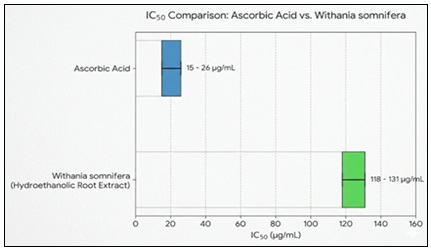
FIG. 4: ANTIOXIDANT RESULTS OF ASCORBIC ACID VERSUS LYOPHILISED PLANT EXTRACT
Crucially, this multi-component complexity gives the plant matrix a distinct mechanical advantage over single-molecule ascorbic acid when applied to green nanotechnology. While ascorbic acid lacks robust interfacial capping properties, requiring synthetic secondary polymers to halt particle growth, the structural arrangement of withanolides, flavonoids, and phenolic acids forms a natural biomolecular shell around nucleating metal ions. This shell provides the steric hindrance needed for long-term colloidal stabilization while retaining active botanical layers that contribute intrinsic bioactivity 22.
Concentration-Dependent Antibacterial Inhibition Kinetics: Agar well-diffusion assays confirmed that the extract exerts a strong, concentration-dependent inhibitory effect against both Gram-negative (Escherichia coli) and Gram-positive (Staphylococcus aureus) bacterial strains Table 11 & Table 12.
TABLE 11: ANTIBACTERIAL PERFORMANCE OF WITHANIA SOMNIFERA ROOT EXTRACT AGAINST ESCHERICHIA COLI
| Treatment Group | Concentration (mg/mL) | Measured ZOI (mm) | Corrected ZOI (mm) | % Inhibition Rel. to Doxycycline |
| Doxycycline (+ control) | 160 | 26 | 22 | - |
| Distilled Water (- control) | - | 4 | 0 | 0% |
| Withania somnifera Extract | 160 | 25 | 21 | 95.5% |
| Withania somnifera Extract | 120 | 14 | 10 | 66.7% |
| Withania somnifera Extract | 50 | 11 | 7 | 42.9% |
Note: Well diameter = 4 mm. Corrected ZOI = Measured ZOI Well Diameter.
TABLE 12: ANTIBACTERIAL PERFORMANCE OF WITHANIA SOMNIFERA ROOT EXTRACT AGAINST STAPHYLOCOCCUS AUREUS
| Treatment Group | Concentration (mg/mL) | Measured ZOI (mm) | Corrected ZOI (mm) | % Inhibition Rel. to Doxycycline |
| Doxycycline (+ control) | 160 | 30 | 26 | - |
| Distilled Water (- control) | - | 4 | 0 | 0% |
| Withania somnifera Extract | 160 | 29 | 25 | 96.0% |
| Withania somnifera Extract | 120 | 18 | 14 | 86.7% |
| Withania somnifera Extract | 50 | 9 | 5 | 66.7% |
At the maximum concentration, the extract demonstrated excellent antimicrobial efficacy, achieving 95.5% relative inhibition against E. coli and 96.0% against S. aureus compared to the positive antibiotic control. The data show a more pronounced susceptibility profile in the Gram-positive cohort (S. aureus) across lower concentrations (66.7% relative inhibition at, compared to only 42.9% for E. coli). This variation highlights the structural resistance typically provided by the outer lipopolysaccharide membrane of Gram-negative bacteria, which acts as a selective permeability barrier against hydrophobic botanical compounds.
CONCLUSIONS: Classical screening of Zimbabwean Withania somniferas, total phenolic content (TPC), and total flavonoid content (TFC) optimization established a robust biochemical fingerprint of alkaloids, saponins, and polyhydroxyl networks. Preclinical in-vivo acute oral safety evaluations aligned with OECD Guideline 425 categorized the crude extract under Globally Harmonized System (GHS) Category 5 (practically non-toxic), exhibiting zero mortality or behavioral toxicity up to a high limit ceiling of 5000mg/kgbody weight, while in-vitro functional screens demonstrated exceptional dose-dependent radical scavenging (DPPH) and up to 80% thermal protein denaturation inhibition.
ACKNOWLEDGEMENTS: We wish to acknowledge the provision of laboratory facilities, equipment, and study animals by the University of Zimbabwe, Department of Pharmacy, and Department of Animal Housing.
Author Contributions: J. Chifamba conceptualised the study and the study protocols, A. Tagwireyi oversaw the animal studies and reviewed the study design and protocols. All authors participated in the acquisition of data and drafting of the manuscript. All authors read and gave final approval for the version submitted for publication.
CONFLICTS OF INTERESTS: We declare that we have no conflict of interest. The authors are entirely responsible for the research content and the compilation of this report.
REFERENCES:
- Awada M, Becerik-Gerber B, Liu R, Seyedrezaei M, Lu Z and Xenakis M: Ten questions concerning the impact of environmental stress on office workers. Building and Environment 2023; 229: 109964.
- Valencia-Florez G, Valencia-Florez, K. B, Sánchez-Castillo H, Vázquez P, Zarate P & Berenice Paz D: Stress, a brief update. International Journal of Psychological Research 2023; 16(2), 105–121. https://doi.org/10.21500/20112084.5815
- D'Alessio L, Korman GP, Sarudiansky M, Guelman LR, Scévola L and Pastore A: Reducing allostatic load in depression and anxiety disorders: Physical activity and yoga practice as add-on therapies. Frontiers in Psychiatry 2020; 11: 501.
- Goff L, Ali N and Pruessner J: Stress reactivity during evaluation by the opposite sex: comparison of responses induced by different psychosocial stress tests. McGill Science Undergraduate Research Journal 2013; 8(1): 11–17.
- Rodriquez EJ, Kim EN, Sumner , Rodriquez EJ, Kim EN, Sumner AE, Nápoles AM & Pérez-Stable EJ: Allostatic load: Importance, markers, and score determination in minority and disparity populations. Journal of Urban Health 2019; 96(1): 3–11. https://doi.org/10.1007/s11524-019-00345-5
- Cohen S, Janicki-Deverts D, Doyle WJ, Miller GE, Frank E and Rabin BS: Chronic stress, glucocorticoid receptor resistance, inflammation, and disease risk. Proceedings of the National Academy of Sciences 2012; 109(16): 5995–5999.
- Gaurav A: Evolutionary adaptations and secondary metabolite distribution within the Solanaceae family. J Plant Biol Res 2023; 45(2): 112-25.
- Dar NJ, Hamid A and Ahmad M: Pharmacological overview of Withania somnifera, the Indian Ginseng. Cell Mol Life Sci 2015; 72(23): 4445-60.
- Mikulska P: Ashwagandha (Withania somnifera) — Current research and therapeutic prospects. Phytother Res 2023; 37(6): 2114-31.
- Raut S, Kamble V and Jadhav S: Modulation of Central GABA Receptors by Plant Alkaloids: An Anxiolytic Review. Neuropharmacol Int 2023; 19(1): 45-58.
- Panche AN, Diwan AD and Chandra SR: Flavonoids: an overview. J Nutr Sci 2016; 5: e47.
- Ramos Bezerra L and Ferreira M: Optimization of solid-liquid thermodynamic extraction profiles for subterranean biophenols. Sep Purif Technol 2023; 312: 123-35.
- Verma S: Lyophilization profiles and structural protection of thermolabile steroidal structures. Porous Mater Bio 2024; 11(3): 204-16.
- Jaafar NS: Qualitative Screening of Flavonoids using Chromophoric Shifts. Int J Phytochem 2012; 4(3): 102-9.
- Kebede A: Keller-Killani test optimizations for subterranean glycoside detection layers. J Pharmacogn Phytochem 2021; 10(2): 415-22.
- Hongzhen L: Simplified foaming evaluation protocols for subterranean saponins. Chinese Herb Med 2005; 30(4): 512-8.
- Shaikh T and Patil R: Colorimetric and physicochemical screening frameworks for traditional roots. Int J Res Pharm Sci 2020; 11(2): 1890-97.
- Rai P: Foam head optimization in standard evaluation indices of saponins. J Ethnopharmacol 2023; 305: 115-26.
- Test No. 425: Acute Oral Toxicity: Up-and-Down Procedure. OECD Guidelines for the Testing of Chemicals, Section 4. Paris: OECD Publishing; 2022.
- Sapan CV, Lundblad RL and Price NC: Colorimetric protein denaturation assays: Critical review and evaluation. Biotechnol Appl Biochem 1999; 29(2): 161-74.
- Kedare SB and Singh RP: Genesis and development of DPPH method of antioxidant assay. J Food Sci Technol 2011; 48(4): 412-22.
- Baliyan S: Determination of Antioxidant Activity of Botanical Extracts Using Free Radical Scavenging Assays. Oxid Med Cell Longev 2022; 2022: 1-13.
- Aldokari M: Coordination complexation and nucleation kinetics of biogenic metal oxides under continuous mechanical micro-mixing. NRL 2023; 18(1): 45-56.
- Prasad K: Hexagonal wurtzite phase optimization of zinc oxide using low-temperature calcination methods. J Therm Anal Calorim 2021; 145(2): 601-11.
- Dhanani T: Effect of extraction methods and drying parameters on withanolide yields from Withania somnifera. Ind Crops Prod 2017; 99: 112-21.
- Kushwaha S: Photo-oxidation kinetics of fragile secondary metabolites under open sun and solar tray conditions. J Applied Res Med Aromat Plants 2021; 22: 100-11.
- Raina AP: Ambient air convection drying dynamics of standard subterranean medical biomass. Indian J Pharm Sci 2019; 81(4): 612-9.
- Abirami M: Dehydration profiles and prevention of non-enzymatic browning in shade-dried Solanaceae roots. Food Chem 2022; 374: 131-42.
- Jepkoech J and Gakunga N: Distribution of subterranean polyphenols and structurally unique withanolides in naturalized African populations of Withania somnifera. African J Plant Sci 2022; 16(5): 89-99.
- Soni P: Progressive somatic weight tracking as a diagnostic marker for target-organ strain in rodent screens. Toxicology 2023; 485: 115-26.
- Fakurazi S: Lysosomal membrane stabilization mechanism of standard triterpenoids. Med Inflamm 2008; 2008: 1-9.
- Siddiqui S: Evaluation of multi-component synergy against standard cyclooxygenase cascades. Phytomedicine 2023; 110: 154-65.
- Sikandan A: Withaferin A suppresses transcriptional activation of nuclear factor-kappa B cascades. J Nat Prod 2018; 81(3): 512-21.
- Chandrasekhar K: A prospective, randomized double-blind, placebo-controlled study of safety and efficacy of a high-concentration full-spectrum extract of Ashwagandha root in reducing stress and anxiety in adults. Indian J Psychol Med 2012; 34(3): 254-62.
- Al-Rimawi F: Multi-component kinetic profiles and singlet-oxygen quenching efficiencies of hydrolysable tannins. Food Chem 2019; 275: 445-52.
How to cite this article:
Tagwireyi A and Chifamba J: Bioactivity and safety of hydro-ethanolic lyophilised Withania somnifera for the potential management of the biological end points of stress. Int J Pharm Sci & Res 2026; 17(11): 3461-72. doi: 10.13040/IJPSR.0975-8232.17(11).3461-72.
All © 2026 are reserved by International Journal of Pharmaceutical Sciences and Research. This Journal licensed under a Creative Commons Attribution-NonCommercial-ShareAlike 3.0 Unported License.
Article Information
14
3461-3472
2990 KB
9
English
IJPSR
A. Tagwireyi and J. Chifamba *
Department of Pharmacy and Pharmaceutical Sciences, Faculty of Medicine and Health Sciences, University of Zimbabwe, P. O. Box MP167, Mt Pleasant, Harare, Zimbabwe.
atagwireyi@gmail.com
12 June 2026
24 July 2026
28 September 2026
10.13040/IJPSR.0975-8232.17(11).3461-72
01 November 2026
 Download