




DESIGN AND OPTIMIZATION OF RASAGILINE MESYLATE TRANSDERMAL PATCHES BY USING CENTRAL COMPOSITE DESIGN, CHARACTERIZATION OF PHYSICO-CHEMICAL, IN-VITRO AND EX-VIVO STUDIES
HTML Full TextDESIGN AND OPTIMIZATION OF RASAGILINE MESYLATE TRANSDERMAL PATCHES BY USING CENTRAL COMPOSITE DESIGN, CHARACTERIZATION OF PHYSICO-CHEMICAL, IN-VITRO AND EX-VIVO STUDIES
Keerthana Myakala * and M. Sunitha Reddy
Department of Pharmaceutics, Centre for Pharmaceutical Sciences, Ist, Jntuh, Hyderabad, Telangana, India.
ABSTRACT: Objective: Rasagiline mesylate (RM) is an effective BCS class III act as a potent, irreversible monoamine oxidase- B (MAO-B) inhibitor, mainly used to treat Parkinson’s disease. It has low permeability and low oral bioavailability (35%). To overcome these disadvantages and to maintain constant plasma concentration for maximum therapeutic activity, there is a need to design an alternative route i.e. transdermal route. The pharmacokinetic parameters make RM a suitable candidate for transdermal delivery. Present investigation consists of the study of in-vitro and ex-vivo skin flux of Rasagiline mesylate (RM) from transdermal patches. Methods: The patches were fabricated by solvent casting method using hydrophilic and hydrophobic polymer with different composition. Tween 80 incorporated as solubilizer, PEG 600 as plasticizer, Menthol, Lemongrass oil used as permeation enhancers respectively. The prepared TDDS were extensively evaluated for in-vitro release, ex-vivo permeation through pig ear skin, moisture content, moisture absorption, water vapour transmission, mechanical properties. The physicochemical interaction between RM and polymers were investigated by Fourier transform infrared spectroscopy (FTIR). Results: All the formulations exhibited satisfactory physicochemical and mechanical characteristics. A flux of 31.1µg/cm2 h and 26.9 µg/cm2 h was achieved for optimized formulations containing lemongrass oil and menthol respectively permeation enhancers. Values of tensile strength (0.099±0.030kg/mm²), elongation at break (0.9864±0.115%mm²) revealed that formulation F18 was strong but not brittle. Drug and excipients compatibility studies showed no evidence of interaction between the active ingredient and polymers. Conclusion: Rasagiline mesylate transdermal patches could be prepared with required flux and suitable mechanical properties.
Keywords: Rasagiline mesylate, Transdermal patches, Permeation enhancer, In-vitro release, Ex-vivo permeation, Flux
INTRODUCTION: Rasagiline mesylate (RM) is an effective BCS class III act as a potent, irreversible monoamine oxidase- B (MAO-B) inhibitor, mainly used to treat Parkinson’s disease. It has low permeability and low oral bioavailability (35%) 1.
It is rapidly absorbed after oral administration but it undergoes extensive first pass hepatic metabolism; leading to poor bioavailability of 35% 2. The low oral bioavailability confines its use, thus an alternative route of administration is desirable to deliver high concentration in blood to treat management in Parkinson’s disease.
Transdermal route is most preferred route for low bioavailability drug thus achieving the systemic effect. TDDS is self - contained discrete dosage form when which applied to the skin it deliver drug through the skin at controlled rate to the systemic circulation 3.
Due to its potential in avoiding hepatic first pass metabolism and directly enters into systemic circulation 4. Moreover it provides convenient, painless self-administration and termination of drug action is possible in case of any toxicity reactions are occurred. Greater patient compliance due to avoiding multiple dosing, it also provides constant and prolonged drug levels in plasma 5, 6.
From both physicochemical (low molecular weight 267.34g/mol, low dose 0.5mg) and pharmacokinetic (absolute bioavailability about 35% and log P,1-3), RM was considered to be a suitable candidate for transdermal delivery 7. Physical techniques such as Iontophoresis, electroporation, sonophoresis, and microneedles and chemical penetration enhancers such as solvents, surfactants, fatty acids, and terpenes are used to increase transdermal permeation rate. In the present investigation menthol, lemongrass oil, are used as permeation enhancers. The objective of present investigation was development of transdermal therapeutic system for RM, Optimize the formulation by using DOE method of central composite design and to evaluate physicochemical, mechanical properties, in-vitro release and ex-vivo permeation through pig ear skin 8-10.
MATERIALS AND METHODS:
Materials: Rasagiline mesylate is a gift sample from Hetero labs Hyderabad. HPMC E15 Procured from Qualikems Fine chem. Pvt. Ltd. PEG 600, methanol, DCM were of analytical grade purchased from Research-lab fine chem. Industries, Mumbai. Menthol, Eucalyptus oil, Lemongrass oil were obtained from SD fine chemicals, Maharashtra, India.
Methods:
Development of RM Matrix Transdermal Systems: RM matrix type transdermal patches were prepared by solvent casting method with different ratios of HPMC E15 as polymeric layer, polymer was added to 20ml of solvent mixture (dichloromethane and methanol, 1:1) and allowed to stand for 6 hrs to swell. Small amount of polymer was added to solvent mixture to prevent the lumps.
Weighed accurate amount of RM was dissolved in 5ml of solvent mixture and added to the polymeric solution and mixed thoroughly to get uniform solution. Poly ethylene glycol 600 was added to polymer mixture as a plasticizer and vortex for 5 minutes. The total polymer mixture was set aside for 10 min to remove entrapped air, then transferred to petriplate and allowed to dry at room temperature. One funnel was placed over the petriplate in inverted position to control the rate of evaporation of solvent. The developed patches were removed carefully, cut in to required size (3.14cm²), stored in desiccators for further studies. Patches containing penetration enhancers (5%v/v) menthol, lemongrass oil were also prepared in the same method explained above by adding permeation enhancer with required amount to the poly ethylene glycol and then mixed with polymeric solution 11-14. Fabrication method and composition of details of patches were shown in Table 1.
Experimental Design: Optimization of transdermal patches was performed using randomized central composite design (CCD). This design was carried out with design expert software (state-Ease) to study effect of three factors on response variables like drug release studies. The three factors were polymers (HPMC E15), concentration of Plasticizer (PEG) and surfactant (tween 80). The selected factors and composition of central composite designs are given in Table 1.
TABLE 1: COMPOSITION OF RM TRANSDERMAL PATCHES BY USING CCD
| Factor 1 | Factor 2 | Factor 3 | Response 1 | ||
| Std | Runs | A:HPMCE15 (mg) | B:PEG 600 (ml) | C:Surfactant (ml) | CDR (%) |
| 2 | 1 | 1095.76 | 123.635 | Span 20 | 85 |
| 5 | 2 | 768.022 | 144 | Span 20 | 75 |
| 9 | 3 | 824.253 | 123.635 | Tween 80 | 92 |
| 6 | 4 | 1151.99 | 144 | Span 20 | 84 |
| 7 | 5 | 960.006 | 115.2 | Span 20 | 83 |
| 14 | 6 | 1151.99 | 144 | Tween 80 | 97 |
| 4 | 7 | 1095.76 | 164.365 | Span 20 | 82 |
| 13 | 8 | 768.022 | 144 | Tween 80 | 93 |
| 15 | 9 | 960.006 | 115.2 | Tween 80 | 98 |
| 8 | 10 | 960.006 | 172.8 | Span 20 | 82 |
| 3 | 11 | 824.253 | 164.365 | Span 20 | 81 |
| 16 | 12 | 960.006 | 172.8 | Tween 80 | 91 |
| 1 | 13 | 824.253 | 123.635 | Span 20 | 87 |
| 11 | 14 | 824.253 | 164.365 | Tween 80 | 91 |
| 10 | 15 | 1095.76 | 123.635 | Tween 80 | 97 |
| 12 | 16 | 1095.76 | 164.365 | Tween 80 | 99 |
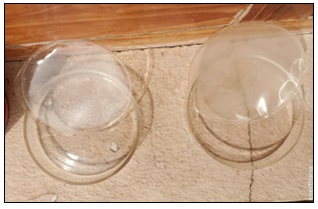
FIG. 1: PREPARED TRANSDERMAL PATCHES OF RASAGILINEMESYLATE
Evaluation of Physicochemical Parameters: Six films from each formulation weighed individually and average weight was calculated. Thickness of the patch was measured at six different points of patch by using screw gauge. Patches from each formulation were taken and cut into 4cm² pieces and weighed. The pieces were taken into 100ml volumetric flask, dissolve the patch in 2ml of solvent mixture (methanol: dichloromethane) make up to 100ml with pH 6.8 phosphate buffer. The above solution was filtered using 0.45µm membrane filter and drug content was analysed using UV-visible spectrophotometer at 265nm. Folding endurance was determined manually by repeatedly folding a small trip of the patch at the same place until it broke. The number of the times the strip could be folded at the same place without breaking gave the folding endurance 14.
Moisture Absorption: The patches were weighed accurately and placed in desiccators containing 100ml of saturated solution of aluminium chloride, which maintains 79.5% RH, after 3 days the patches were taken out and weighed. The percentage of moisture absorption was calculated.
Moisture absorption = (Final weight - Initial weight) / (Final weight) × 100
Moisture Content: The patches were weighed accurately and placed in desiccators containing calcium chloride at 40ºC for 24hrs. The final weight was noted and the percentage of moisture content was calculating by following formula.
Moisture content = (Initial weight -final weight) / (Initial weight) × 10
Water Vapour Transmission Rate (WVTR): It was performed according to method described by use glass vials of equal diameter transmission cells. 1gm of calcium chloride placed in the cell and the patch was fixed on to the brim. The cells were accurately weighed and placed in a desiccators containing potassium chloride to maintain a relative humidity 84%. The cells were taken out and weighed. Water vapor transmitted calculated by following formula.
WVTR = (Final weight - Initial weight) / (Tme × Area)
Mechanical Properties: Mechanical properties of the films were evaluated using a microprocessor based advanced force gauze (Ultra Test, Mecmes in UK) equipped with a 25kg load cell. Film strip with dimensions 60×10mm and free from air bubbles or physical imperfections were pulled with strips to a distance held between two clamps positioned at a distance of 3 cm during measurement the clamp at a rate 2mm/ still the film broke the force and elongation were measured, when the film broke. The mechanical properties calculated by following formulae 15.
Tensile strength = (Force at break (kg) / (Initial cross section of the sample (mm²)
Elongation at break (%mm²) = (Increase in length) / (Original length (mm) × cross sectional area (mm²) × 100
In-vitro Drug Release Studies: In-vitro drug release studies are carried out by using USP- type 5 apparatus (paddle over disc method). The disc assembly holds the transdermal system at the bottom of the vessel. The temperature is maintained at 32ºC±0.5. A distance of 25mm between the paddle blade and surface of the disc assembly is maintained during the test. The vessel containing 900ml of PBS of pH 6.8 stirred at 25rpm. One ml of samples was withdrawn at predetermined time intervals and replaced with equal volume of fresh medium. The drug content in the samples was determined by UV- visible spectrophotometer at 265nm. Cumulative amount of drug released were calculated and plotted against time 16-18.
Ex-vivo Drug Release Studies:
Preparation of Pig Ear Skin: Pig ear was obtained from slaughter house, no need ethical department permission. The hair of pig ear skin was trimmed short (>2mm) with a pair of scissors, prepared the epidermis of pig ear skin surgically by heat separation technique.
Involving soaking the entire pig ear skin in water at 60 ºC for 45 sec and followed by careful removal of epidermis. The epidermis was washed with water and used for the ex-vivo skin permeability studies. For ex-vivo studies the skin was mounted between the two compartments of Franz diffusion cell with facing stratum corneum donor compartment a dialysis membrane (Hi Media M.W cutoff 5000) placed over the patch, in order to secure it tightly in the way that it will not get dislodged from the skin, the receiver phase contained 20ml PBS of pH 6.8 which was stirred at 500rpm on a magnetic stirrer and the whole assembly was kept at 37±0.5 ºC. Samples of 1ml were withdrawn at pre-determined.
Time intervals up to 24hrs, then replace the equal volume of fresh medium and analysed by using UV-visible spectrophotometer at 265nm. Cumulative amount of drug permeated in (µg/cm²) plotted against time and drug flux (µg/hr/cm²) at steady state was calculated by dividing the slope of linear portion of the curve by the area of skin surface (3.14cm²) and the skin permeability coefficient was reduced by dividing initial drug load. The targeted flux was calculated by following formula 19.
JTarget = CSS ClT BW / A
Release Kinetics: Data of in-vitro release was fit into different equations to explain the release kinetics of Felodipine release from transdermal patches 22. The kinetic equations used zero-order and first order equations.
Zero–Order Release Kinetics: Defines a linear relationship between the fractions of drug released versus time
Q = Kt
Where, Q is the fraction of drug released at time t, K is the zero order release rate constant
First-Order Release Kinetics: Wagner states that during dissolution process exposed surface area of formulation decreased exponentially with time, suggested that the drug release from slow release formulation could be described adequately by apparent First-order kinetics.
(1-Q) = - kt
Models of Drug Release Mechanism: The release data of transdermal patch was fitted into different mechanism models like Higuchi model, Korsemeyer-Peppas model to interpret the drug release mechanism from patches.
Higuchi (Diffusion) Model: It explains a linear dependence of the active fraction released per unit square (Q) on the square root of time.
Q = Kt½
Korsmeyers-Peppas Model: A plot of the fraction of logarithm of the percentage of drug remained against time will be linear if the release obeys korsmeyers–Peppas equation.
Log Q = log K + n log t
RESULTS AND DISCUSSION:
Optimized Results: The polymers which produced transparent and flexible films with smooth appearance were found to be HPMC E15 in the ratio of 1:7 with PEG 600 as plasticizer and tween 80 as surfactant using menthol and DCM (1:1v/v) as solvent system. The patches were optimized by using CCD design and taking HPMC E15 and PEG 600 as dependent variables, cumulative amount of drug release as independent variable and performed evaluation parameters for optimized formulations only, F16 shows cumulative % of drug release was found to be 99% for 24 hrs.
Weight, Thickness Variation, Drug Content and Folding Endurance: The physicochemical parameters like weight variation, thickness variation, drug content and folding endurance of the prepared transdermal patches are shown Table 2. The range of weight the patches were from 119.2±2.16 to 132.1±3.24mg and thickness ranges from 0.27±0.009to 0.36±0.006 mm. When the content of HPMC E15 was increases in the patches, the weight and thickness of films is also increases. The results revealed that the transdermal films were uniform, as it was verified by RSD value, which were less than 6. Observe the good uniformity in drug content in all transdermal patches as evidenced by low RSD values. The drug content ranges from 9.25±0.042to 9.65±0.039 mg. The folding endurance of the patches were in the range of 112.45±1.06 to 148.67±3.21. The number of folding endurance gives the mechanical property of the transdermal films; high folding endurance number indicates that the patches have high mechanical property. The results revealed that films would not break and would maintain their integrity when applied with general skin folding when applied.
TABLE 2: PHYSICOCHEMICAL EVALUATION OF RASAGILINE MESYLATE PATCHES
| Formulation code | Weight variationᵃ
(mg) |
Thicknessᵃ
(mm) |
Drug content ᵇ (mg) | % constrictionᵇ | Folding enduranceᵇ |
| F1 | 121.6±2.67 | 0.27±0.009 | 9.25±0.042 | 1.19±0.083 | 112.45±1.06 |
| F13 | 119.2±2.16 | 0.31±0.010 | 9.38±0.052 | 1.28±0.011 | 125.33±2.05 |
| F9 | 130.7±2.82 | 0.32±0.005 | 9.42±0.034 | 1.80±0.027 | 134.33±3.34 |
| F16 | 132.1±3.24 | 0.36±0.006 | 9.65±0.039 | 2.29±0.036 | 148.67±3.21 |
a Values represents mean ±6, b Values represents mean ±3
Moisture Absorption and Moisture Content Studies: Moisture content and moisture absorption studies results were shown in Table 3. The moisture content in the patches varied from 1.149±2.12 to 2.026±3.47. The moisture absorption in the patches was from 12.59 ±0.95% to 16.99±0.59%.
The small moisture content in the patches helps them to remain stable and not being a completely dried and brittle film. Again, absorption of low moisture protects the transdermal patches from contamination with microbes.
Mechanical Properties: The results of mechanical properties of Tensile strength (TS), Elongation at break (E/B) were shown in Table 3. The mechanical properties show the patch strength and elasticity. It indicates that the polymer is soft and weak, when the values (TS and E/B) are low and polymer is hard and tough, when the values are high.
Based on the all values obtained patches having good mechanical property (Aulton ME et al., 1981). Optimized formulation F16 exhibited TS and E/B values (0.0989±0.0030kg/ mm2 and 0.9864±0.115mm2). Compare to all formulation high TS and low E/B values that the optimized formulation F16 was found to be strong and flexible but not brittle.
TABLE 3: MOISTURE STUDIES AND MECHANICAL PROPERTIES OF RASAGILINE MESYLATE PATCHES
| Moisture studies | Mechanical properties | ||||
| Formulation code | % moisture
Absorbed |
Formulation code | % moisture
Absorbed |
Formulation code | % moisture
Absorbed |
| F1 | 12.59 0±0.95 | F1 | 12.59 0±0.95 | F1 | 12.59 0±0.95 |
| F13 | 15.241±0.23 | F13 | 15.241±0.23 | F13 | 15.241±0.23 |
| F9 | 16.467±0.54 | F9 | 16.467±0.54 | F9 | 16.467±0.54 |
| F16 | 16.992±0.59 | F16 | 16.992±0.59 | F16 | 16.992±0.59 |
Values represent mean ±3
In-vitro Drug Release Studies: The in-vitro drug release profile of prepared transdermal patches is represented in Fig. 2. The results of release studies showed that F9 and F16 formulation has drug release 98% and 99% in 24 hrs respectively. To that optimized formulation we are performing in-vitro drug release studies for different time intervals. From the results and graphs it is clear that the drug release from optimized formulation F16 showed higher drug release compare to all the formulations. The drug release was depends on polymer and plasticizer content.
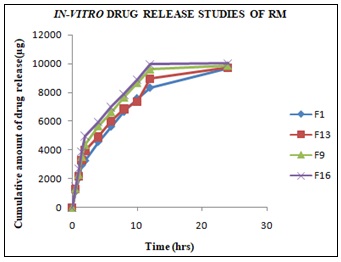
FIG. 2: IN-VITRO DRUG RELEASE STUDIES OF RASAGILINEMESYLATE
TABLE 4: ANOVA FOR RESPONSE SURFACE LINEAR MODEL
| Response | 1 | CDR | |||||||
| ANOVA for Response Surface Linear model | |||||||||
| Analysis of variance table [Partial sum of squares - Type III] | |||||||||
| Sum of | Mean | F | p-value | ||||||
| Source | Squares | df | Square | Value | Prob> F | ||||
| Model | 900.05 | 3 | 300.02 | 302.89 | < 0.0001 | significant | |||
| A-HPMC E15 | 12.07 | 1 | 12.07 | 12.19 | 0.0045 | ||||
| B-PEG 600 | 2.91 | 1 | 2.91 | 2.94 | 0.1120 | ||||
| C-Surfactant | 885.06 | 1 | 885.06 | 893.55 | < 0.0001 | ||||
| Residual | 11.89 | 12 | 0.99 | ||||||
| Cor Total | 911.94 | 15 | |||||||
| Coefficient | Standard | 95% CI | 95% CI | |||
| Factor | Estimate | df | Error | Low | High | VIF |
| Intercept | 89.44 | 1 | 0.25 | 88.90 | 89.98 | |
| A-HPMC E15 | 0.87 | 1 | 0.25 | 0.33 | 1.41 | 1.00 |
| B-PEG 600 | 0.43 | 1 | 0.25 | -0.12 | 0.97 | 1.00 |
| C-Surfactant | 7.44 | 1 | 0.25 | 6.90 | 7.98 | 1.00 |
Central Composite Designs of Rasagilinemesylate:
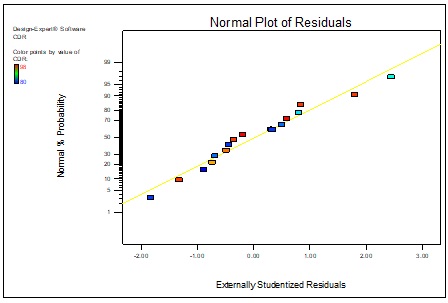
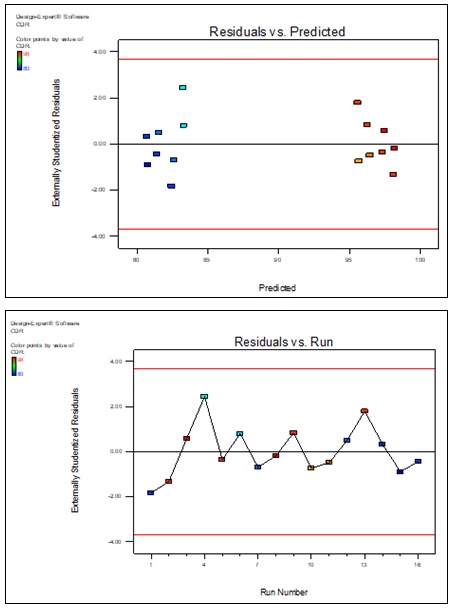
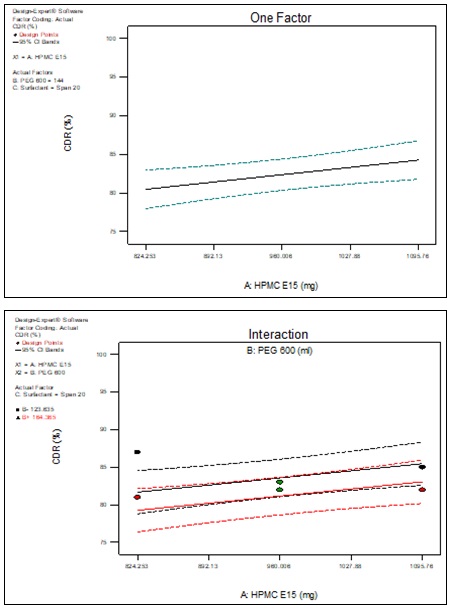
FIG. 3:
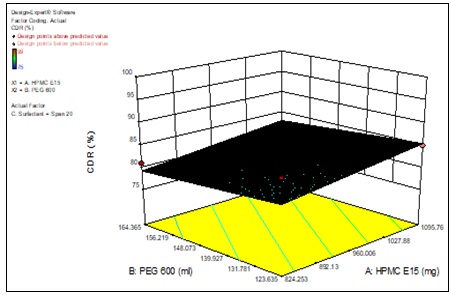
FIG. 4: CUMULATIVE DRUG RELEASE STUDIES OF RM BY USING SPAN 20
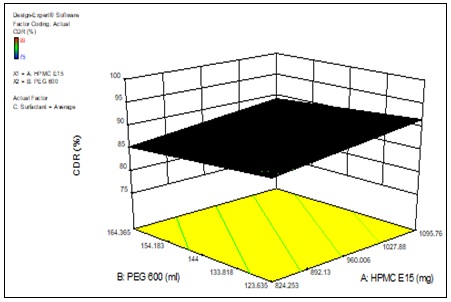
FIG. 5: AVERAGE CUMULATIVE DRUG RELEASE STUDIES OF RM
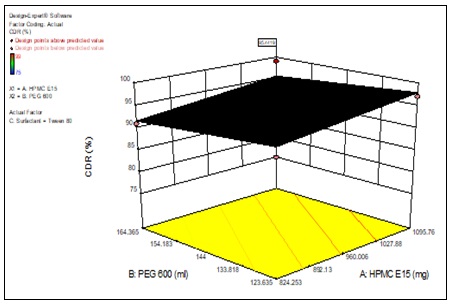
FIG. 6: CUMULATIVE DRUG RELEASE STUDIES OF RM BY USING TWEEN 80
RM Formulation was optimized by using CCD and the %CDR is more in tween 80 formulations when compared with span 20. It is observed in Fig. 4 and 6.
Ex-vivo Permeation Studies: Ex-vivo permeation studies were carried out for F16, F17 and F18 formulations through pig ear skin because it was closest alternative to the human cadaver skin. The results showed in Fig. 7. Reveals that F16 formulation has drug permeation 2426.75µg and flux 18.3µg/hr/cm² earlier research studies revealed that menthol (F17), and lemongrass oil (F18) were used as permeation enhancers.
To increase the drug permeation, permeation enhancers (F17, F18) in the concentration of 1% v/v was added to F16 formulation which showed a result of drug permeation F17- 2976µg, F18-3459.35µg and flux F17-26.9 µg/hr/cm², F18-31.1 µg/hr/cm² respectively. Hence with the use of permeation enhancer showed a good result in increase of drug permeation through pig ear skin.
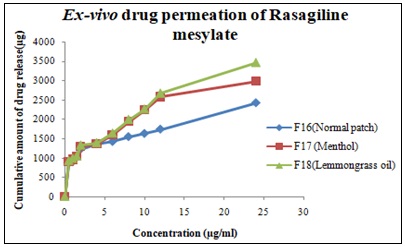
FIG. 7: EX-VIVO DRUG PERMEATION OF RASAGILINEMESYLATE
Drug-polymer Interaction Studies: The FTIR spectral analysis of RM alone showed that the principal peaks were observed at wave numbers of 2598.47cmˉˡ (N-H stretching), 1469.12cmˉˡ (C-H stretching), 1600.69cmˉˡ (C=O stretching). The FTIR spectra of physical mixture of PB and HPMC E15 approximate superimposition of drug and polymer. These results suggest that there is no interaction between drug and polymer used in the present study. The FTIR profiles were shown in Fig. 8.
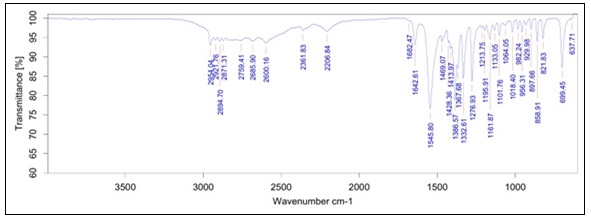
FIG. 8A: FTIR SPECTRA OF RASAGILINEMESYLATE
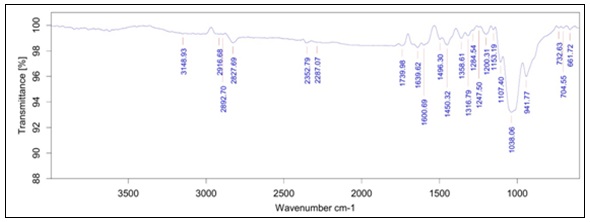
FIG. 8B: FTIR SPECTRA OF HPMC E15
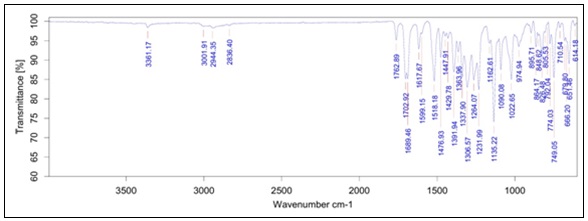
FIG. 8C: FTIR SPECTRA OF PHYSICAL MIXTURE
Drug Release Kinetics:
TABLE 5: DRUG RELEASE KINETICS OFRM TRANSDERMAL PATCHES
| Formulation code | Zero order equation (r²) | First order equation (r²) | Higuchi model (r²) | Kosmeyers peppas model n value |
| F18 | 0.893 | 0.437 | 0.885 | 0.521 |
From the above all the kinetic studies, for F8 the r² value of zero order plot 0.763 greater than the r² value of first order plot r² 0.437 and the r² value Higuchi plot 0.885. The r² values reveal that the drug release pattern was found to follow “zero order” and through diffusion process, as it was evident from the release exponent (n) which was found to be 0.521. The result of drug permeation from transdermal patches of RM through the Pig ear skin confirmed that RM was released from the formulation permeated through the Pig ear skin and hence could possibly permeate through the human skin.
CONCLUSION: The present study showed that RM patch containing HPMC E15 in the ratio of 1:7 with 15% v/w of PEG 600 achieved the desired objectives of TDDS such as overcoming bioavailability thus increases the Permeability of RM. The polymeric patches containing RM were evaluated for physicochemical, in-vitro, ex-vivo characteristics. The formulation containing HPMC E15 and permeation enhancer (Lemmon grass oil 1%v/v) were found to increase higher flux 31.1 µg/hr/cm². The transdermal patches with required flux could be prepared with suitable mechanical properties.
ACKNOWLEDGEMENT: Authors are thankful to Hetero labs Hyderabad for providing gift sample of Rasagiline mesylate drug, and also Centre for pharmaceutical sciences IST JNTUH for providing lab facilities for carried out the work.
CONFLICTS OF INTEREST: Nil
REFERENCES:
- Satheeshababu BK, Rohith G, Joshi VG and Sadashivaiah R: Rasagilinemesylate, a bcs class III drug; ex-vivo permeation enhancement study through excised rat abdominal skin. International Journal of Pharmaceutical Sciences and Research 2021; 12(10): 5505-5511.
- Vipulbhai M and Shailesh TP: Design, development and delivery of rasagilinemesylate from monolithic drug in adhesive matrix patches. International J of Pharmaceutical Sciences and Drug Research 2020; 12(1): 65-72.
- Pratikkumar P, Anuradha P, dhaval K, Abhijit AD, Yogeshvar K and Vandana P: Microemulsion-based gel for the transdermal delivery of rasagilinemesylate: in-vitro and in-vivo assessment for parkinsons therapy. European Journal of Pharmaceutics and Biopharmaceutics 2021; 165: 66-74.
- Sujay H, Shivakumar HN, Archana S and Rekha R: the formulation and evaluation of rasagilinemesylate transdermal patch for enhanced topical delivery. Journal of Tropical and Infectious Disease 2020; 1(1):
- Jyothika L, Abdul A, HaranathCh, kousarSk, Dharani Paul G and Halima S: types of transdermal drug delivery systems: a literature report of the past decade. Reserch Journal of Pharmaceutical Dosage forms and Technology 2022; 14(2): 157
- Kumar G, Bansal M and Gadhiya J: Formulation and evaluation of rasagilinemesylate via intranasal route using polymer based nanoparticles. International Journal of Pharmaceutical and Biological Science Archive 2024; 12(6): 152-158.
- Satheeshababu BK and Rohith G: Influence of chitosan thioglycolic acid conjugate in improving bioavailability of an anti-parkinson drug; rasagilinemesylate from transdermal patch. Drug Development and Industrial Pharmacy 2021; 47(6): 963-979.
- Nikhil RB, Mahesh PS, Shahadev BR and Pramod S: enhanced transdermal permeation of rasagilinemesylate nanoparticles: design, optimization, and effect of binary combinations of solvent systems across biological membrane. International Journal of Polymeric Materials and Polymeric Biomaterials 2021; 70(3): 158-173.
- Nirav S and Rajan B: formulation and evaluation of transdermal patches and to study permeation enhancement effect of eugenol. Journal of Applied Pharmaceutical Sciences 2011; 1(3): 96-101.
- Vidhi SJ, Dnyaneshwar S, Amol V and Sandeep A: formulation and evaluation of transdermal patches of migraine. Journal of Drug Delivery and Therapeutics 2023; 13(5): 47-52.
- Jalajakshi MN, Chandrakala V and Srinivasan: Preparation and evaluation of transdermal patches of anti-inflammatory drug. International Journal of Pharmaceutical Sceience Review and Research 2023; 82(2): 129-138.
- Tiwari CH, Mahima C, Princy M and Pankaj KJ: transdermal patch: A novel approach for transdermal drug delivery. Journal of Drug Delivery and Therapeutics 2022; 12(6): 179-188.
- Fatima A and Apte SS: formulation and development of transdermal patches. GSC Biological and Pharmaceutical Sciences 2022; 19(1): 346-352.
- Saini P, Raj Kumar M, Anshitha D and Rahul P: Recent advances in transdermal drug delivery system. Journal of Pharma Insights and Research 2024; 2(6): 087-097.
- Keerthana M, Shirisha S, Sahoo SK and Rao YM: Formulation and evaluation of bilayeredfelodipine transdermal patches: in-vitro and ex-vivo Asian Journal of Pharmaceutical and Clinical Research 2021; 14(3): 106-111.
- Rajashekhar B and Haranathch: Design expert optimization of transdermal patches for effective prolonged release of alzeimer’s medication. Indian Journal of Pharmaceutical Educational Research 2026; 60(2): 521-531.
- Naziya SK and Srivastava R: A review on transdermal drug delivery through patches. IP Indian Journal of Clinical and Experimental Dermatology 2024; 10(2): 113-121.
- Roshini M, Sandra S, Megha VS, roopesh P T, Mohan A, Haritha K and Sindhu V: Transdermal patches for the treatment of hypertension. International Journal of Pharmaceutical Sciences 2024; 2(7): 2106-2120.
- Rupal J, Priyanka CH and Vijay: Permeation enhancement of model anti-hypertensive drug from transdermal patches using essential oils. Plant Archives 2019; 19(2): 1-8.
- Abhishek P and Shailesh G: evaluation of formulated transdermal patches. Journal of Population Therapeutics and Clinical Pharmacology 2023; 30(16): 793-798.
How to cite this article:
Myakala K and Reddy MS: Design and optimization of Rasagiline mesylate transdermal patches by using central composite design, characterization of physico-chemical, in-vitro and ex-vivo studies. Int J Pharm Sci & Res 2026; 17(10): 3203-13. doi: 10.13040/IJPSR.0975-8232.17(10).3203-13.
All © 2026 are reserved by International Journal of Pharmaceutical Sciences and Research. This Journal licensed under a Creative Commons Attribution-NonCommercial-ShareAlike 3.0 Unported License.
Article Information
32
3203-3213
963 KB
6
English
IJPSR
Keerthana Myakala * and M. Sunitha Reddy
Department of Pharmaceutics, Centre for Pharmaceutical Sciences, Ist, Jntuh, Hyderabad, Telangana, India.
baddam.sunitha@jntuh.ac.in
10 June 2026
11 August 2026
18 September 2026
10.13040/IJPSR.0975-8232.17(10).3203-13
01 October 2026
 Download