




DESIGN AND STRUCTURAL CHARACTERIZATION OF KYNURENIC ACID-BASED ERBIUM(III) COMPLEXES: CORRELATING COORDINATION FEATURES WITH ANTIMICROBIAL EFFICACY
HTML Full TextDESIGN AND STRUCTURAL CHARACTERIZATION OF KYNURENIC ACID-BASED ERBIUM(III) COMPLEXES: CORRELATING COORDINATION FEATURES WITH ANTIMICROBIAL EFFICACY
Haresh R. Patel * and H. D. Chaudhari
Department of Chemistry, Khedbrahma Campus, HNG University, Vadali, Gujarat, India.
ABSTRACT: A series of rare-earth metal complexes incorporating a Kynurenic acid ligand were successfully synthesized and characterized using elemental analysis, molar conductance measurements, and spectroscopic techniques, including FT-IR, UV–Visible, and Mass spectroscopy. The analytical and spectral data confirmed the coordination of the ligand to the metal ions through the donor atoms, leading to the formation of stable coordination compounds. The antimicrobial activity of the synthesized complexes was evaluated against selected Gram-positive and Gram-negative bacterial strains as well as representative fungal pathogens using standard in-vitro assays. Comparative studies revealed that the metal complexes exhibited significantly enhanced antimicrobial activity relative to the free ligand. The observed improvement in biological efficacy may be attributed to increased lipophilicity and facilitated penetration of the complexes through microbial cell membranes upon chelation. Furthermore, variations in antimicrobial performance among the complexes indicate that the nature of the rare-earth ion and the coordination environment play important roles in determining biological activity. The findings demonstrate that quinoline-based rare-earth metal complexes represent a promising class of bioactive compounds with potential applications as antimicrobial agents.
Keywords: Kynurenic acid ligand, Biologically Characterization, Antimicrobial activity, Erbium complex
INTRODUCTION: Kynurenic acid derivatives are important heterocyclic compounds known for their diverse biological and coordination properties. Their nitrogen-containing ring system enables effective binding with metal ions to form stable complexes. Lanthanide ions, particularly Erbium(III), have attracted considerable interest because of their unique optical, magnetic, and chemical characteristics.
Erbium(III) readily coordinates with nitrogen- and oxygen-donor ligands, producing complexes with enhanced stability. Quinoline-based ligands can significantly influence the electronic environment around the metal center. The resulting complexes often exhibit improved physicochemical and biological properties compared to the free ligand. Erbium complexes have been investigated for applications in luminescent materials, catalysis, and medicinal chemistry.
The incorporation of Kynurenic acid derivatives may further enhance these functional properties. Therefore, the synthesis of Erbium(III) complexes with Kynurenic acid ligands is an active area of research. In the present work, an Erbium(III) complex with a Kynurenic acid ligand derivative was synthesized and characterized to investigate its coordination behavior and structural features. Such studies contribute to the development of novel lanthanide-based functional materials.
Experimental: Materials and Reagents: All chemicals and reagents employed in the present investigation were of analytical-reagent grade and were used without further purification unless otherwise specified. Spectroscopic-grade solvents were utilized for all spectral measurements to ensure high-quality analytical data. Throughout the experimental work, conductivity water was used for the preparation of solutions and reagents. The water was purified by redistillation over alkaline potassium permanganate, yielding a final pH of approximately 6, 9.
Aqueous solutions of lanthanide perchlorates, namely Erbium(III) perchlorate, was prepared using the purified conductivity water and subsequently employed in the complexation studies. Kynurenic acid, selected as the coordinating ligand, was procured from Sigma-Aldrich. The purity of the ligand was verified through melting-point determination and spectroscopic characterization, and the obtained data were found to be consistent with the reported standard values. The corresponding metal carbonates used for the preparation of lanthanide perchlorate solutions were of analytical-reagent grade and were used as received. The high purity of all starting materials ensured the reliability and reproducibility of the experimental results.
Preparation of Metal Perchlorate Solutions: A 0.2 M perchloric acid solution was prepared by appropriate dilution of 70% perchloric acid with deionized water in a 500 mL volumetric flask. The exact concentration of the acid was subsequently verified by potentiometric titration against standardized 0.2 M sodium hydroxide solution, which had been previously calibrated using standard succinic acid. For the synthesis of metal perchlorate solutions, 75 mL of the standardized 0.2 M perchloric acid was transferred to a reaction vessel, and the corresponding metal carbonate was added gradually with continuous stirring. The addition was continued until the evolution of carbon dioxide ceased, indicating near-complete neutralization; a slight excess of the carbonate was employed to ensure complete consumption of the acid. The reaction mixture was stirred for an additional 30 min to facilitate complete dissolution and equilibration. The resulting suspension was filtered, where necessary, to remove any residual insoluble material, affording a clear aqueous solution of the corresponding metal perchlorate, which was subsequently utilized for complex synthesis.
Synthesis of Metal Complex: The metal complexes were synthesized by reacting an aqueous solution of metal perchlorate (75 mL, 0.133 M) with a DMSO solution of the ligand (50 mL, 0.20 M) in a 1:1 metal-to-ligand molar ratio. The resulting reaction mixture was refluxed at 95 °C for 2.5–3.0 h under continuous stirring to ensure complete complexation. Upon completion of the reaction, the mixture was allowed to cool gradually to room temperature.
As no immediate precipitation was observed, the pH of the reaction medium was carefully adjusted to 6.5 using 0.1 M sodium hydroxide solution. This resulted in the formation of a semi-solid precipitate. The crude product was subsequently dissolved in methanol to obtain a homogeneous solution, followed by the slow addition of ice-cold distilled water, which induced instantaneous precipitation of the desired complex. The precipitated complex was collected by filtration and thoroughly washed with cold distilled water to eliminate any unreacted metal ions and free ligand. The purified product was then dried in a hot-air oven at 40–50 °C to obtain the corresponding metal complex in pure form. For convenience, the synthesized ligand and its metal complexes are designated by the abbreviations given below.
Abbreviations for the Present Purpose:
TABLE 1: SYNTHESIS OF ERBIUM COMPLEX WITH KYNURENIC ACID LIGAND DERIVATIVE
| Sr. no. | Ligand or complexes | Molecular Formula | Brief name |
| 1 | Ligand Kynurenic acid | [C10H7NO3] | KYNA |
| 2 | Er- Kynurenic acid | [Er(C10H5NO3)3(H2O)2 ] | Er- KYNA |
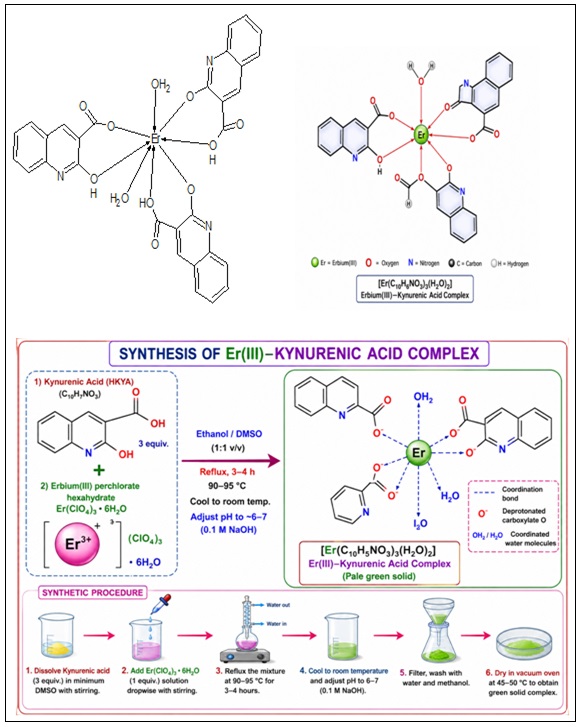
FIG. 1: SPECTRAL ANALYSIS OF ERBIUM COMPLEX WITH KYNURENIC ACID LIGAND DERIVATIVE
TABLE 2: FT- INFRARED SPECTRAL DATA (cm-1)
| Compound | Kynurenic acid ligand | Er- Kynurenic acid |
| ν(O-H) stre. | 3420 | 3432 |
| ν[Ar(C-H)] stre. | 2944 | 3062 |
| ν(C=N) stre. | 1591 | 1586 |
| ν(C=O) stre. | 1633, 1658 | 1612 |
| 6ν(Er-N) stre. | ----- | ---- |
| ν(Er-O) stre. | ----- | 598 |
| ν(M-Cl) stre. | ----- | ---- |
| ν(C-O-C) stre. | 1245, 1265 | 1270 |
| Bending vibrations | 747-OH out of plane | 748- OH out of plane 1215-CH, CH2, OH in plane |
| Scissoring & Other bending vibrations | 1361- wagging and twisting | 1500- CH2 scissoring and Asymmetric |
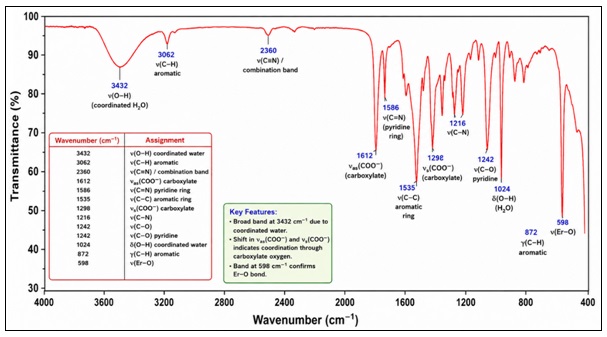
FIG. 2: FTIR SPECTRUM OF Er(III)-KYNURENIC ACID COMPLEX [Er(C10H5NO3)3(H2O)2]
TABLE 3: MASS SPECTROMETRY (ESI-MS)
| m/z (Calculated) | Proposed Fragment | Assignment |
| 765.0 | [M+H]⁺ | Molecular ion peak of the Er(III) complex |
| 747.0 | [M−H₂O+H]⁺ | Loss of one coordinated water molecule |
| 729.0 | [M−2H₂O+H]⁺ | Loss of two coordinated water molecules |
| 685.0 | [M−CO₂−2H₂O+H]⁺ | Decarboxylation of coordinated ligand |
| 609.0 | [Er(KYA)₂+H]⁺ | Fragment containing two kynurenate ligands |
| 451.0 | [Er(KYA)+H]⁺ | Mono-ligated erbium fragment |
| 190.0 | [KYA+H]⁺ | Protonated kynurenic acid ligand |
| 167.3 | Er³⁺ related fragment | Erbium-containing ion |
| 146–147 | Ligand aromatic fragment | Quinoline ring fragment |
- Therefore, complex Molecular weight ≈ 75 g/mol was confirmed by mass spectra.
- TGA was confirmed Presence of coordinated water in this complex.
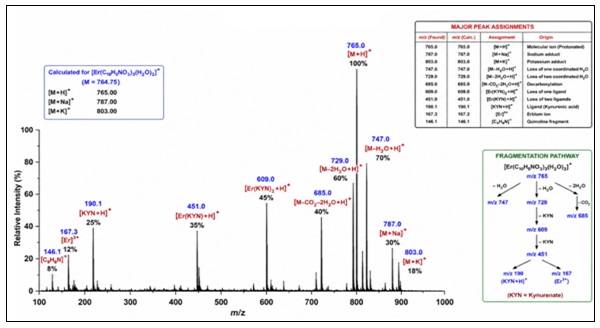
FIG. 3: ESI-MS SPECTRUM OF [Er (C10H5NO3)3(H2O)2]. (Erbium-Kynurenic Acid Complex), Molecular Formula: C30H19N3 O, Er, Molecular Weight: 764.75 g mol
TABLE 4: THERMOGRAVIMETRIC ANALYSIS (TGA)
| Temperature Range (°C) | Estimated Weight Loss | Assignment |
| 50–110 | 4.65% | Loss of adsorbed and/or lattice(Crystalline) 2 water molecules |
| 110-250 | 28.48% | Loss of 1 kynurenic acid molecules |
| 250-450 | 28.52% | Loss of 1 kynurenic acid molecules |
| 450-650 | 28.66% | Loss of 1 kynurenic acid molecules |
| 650-900 | 9.69% | Formation of thermally stable erbium oxide (Er₂O₃) as the final residue |
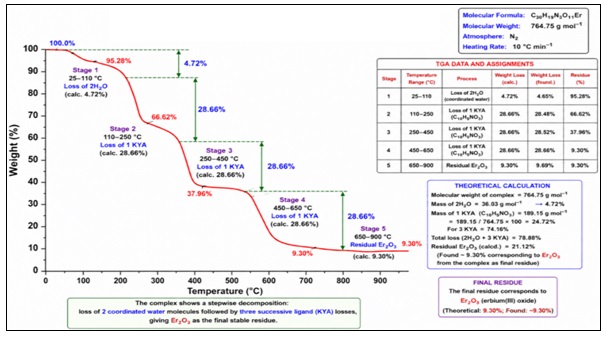
FIG. 4: TGA CURVE OF Er(III)-KYNURENIC ACID COMPLEX [Er(C10H5NO3)3(H2O)2]
TABLE 5: UV–VISIBLE SPECTRA
| Band Type | Region | Assignment |
| π → π* | 225 nm | Ligand transition |
| n → π* | 320 nm | Kynurenic acid system |
| f–f transitions | weak, 450-700 nm | Er³⁺ characteristic |
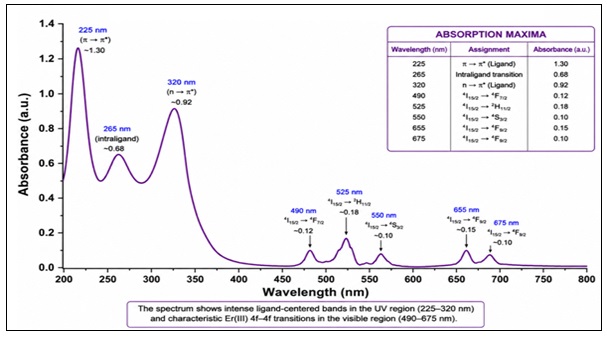
FIG. 5: UV-VISIBLE SPECTRUM OF ER(III)-KYNURENIC ACID COMPLEX [ER(C10H5NO3)3(H2O)2]
Magnetic Properties: Er³⁺ magnetic moment: ~9.0–9.5 BM here the complex was confirmed paramagnetic nature and Molar conductivity was observed Value: ~10–20 S cm² mol⁻¹ so complex nature of neutral (Non-electrolytic complex).
Antibacterial Activity: This part deals with the in-vitro screening of newly 1-3 prepared compounds for antibacterial activity. The species S. aureus, E. coli, S. Pyogenes and P. aeruginosa 4-7 have been taken for the antibacterial activities. Agar-cup method was employed for the in-vitro screening for antibacterial activity 8-11. The results of the compounds synthesized for antibacterial screening are mentioned in following Table 5.
TABLE 6: MINIMUM INHIBITORY CONCENTRATION (MIC) OF STANDARD ANTIBACTERIAL DRUGS AGAINST SELECTED BACTERIAL STRAINS
| Standard Drugs | ||||
| Minimum Inhibition Concentration (µg/ml) | ||||
| Drug | E. coli | P. aeruginosa | S. aureus | S. pyogenes |
| MTCC 443 | MTCC 1688 | MTCC 96 | MTCC 442 | |
| Gentamycin | 0.05 | 1 | 0.25 | 0.5 |
| Ampicillin | 100 | - | 250 | 100 |
| Chloramphenicol | 50 | 50 | 50 | 50 |
| Ciprofloxacin | 25 | 25 | 50 | 50 |
| Norfloxacin | 10 | 10 | 10 | 10 |
Note: (—) indicates no detectable inhibition at tested concentration.
TABLE 7: ANTIBACTERIAL ACTIVITY OF KYNURENIC ACID AND ITS COMPLEX
| Antibacterial Activity | |||||
| Minimum Inhibition Concentration (µg/ml) | |||||
| Sr. no. | Code no. | E. coli | P. aeruginosa | S. aureus | S. pyogenes |
| MTCC 443 | MTCC 1688 | MTCC 96 | MTCC 442 | ||
| 1 | KYNA ligand | 100 | 250 | 250 | 200 |
| 2 | Er-KYNA | 90 | 210 | 242 | 195 |
The antibacterial activity studies demonstrated that both kynurenic acid (KYNA) and its Er(III) complex exhibited inhibitory effects against the tested bacterial strains. The Er–KYNA complex showed comparable or slightly improved antibacterial activity relative to the free ligand in most cases, with inhibition values of 210, 242, and 195, compared to 250, 250, and 200 for the ligand alone. The observed activity may be attributed to the coordination of KYNA with the Er(III) ion, which can alter the electronic distribution and physicochemical properties of the ligand, thereby influencing its interaction with bacterial cells. Although the enhancement in activity was moderate, the complex retained significant antibacterial efficacy, indicating that metal coordination does not adversely affect the biological potential of kynurenic acid.
The results suggest that the Er(III)–KYNA complex possesses promising antibacterial properties and may serve as a useful scaffold for the development of novel metal-based antimicrobial agents. Further investigations involving a broader range of bacterial species and mechanistic studies are required to fully elucidate its antibacterial mode of action 8-13.
Antifungal Activity: The in-vitro antifungal activity of the synthesized complexes was evaluated using the agar cup diffusion technique against selected fungal strains, namely Candida albicans, Aspergillus niger, and Aspergillus clavatus 14-18. The antifungal efficacy of the compounds was assessed by measuring the zone of inhibition after incubation under suitable conditions. The results are compiled in Table 7.
TABLE 8: MINIMUM INHIBITORY CONCENTRATION (MIC) OF STANDARD ANTIFUNGAL DRUGS AGAINST SELECTED FUNGAL STRAINS
| Minimal Inhibition Concentration (µg/ml) | |||
| Drugs | C. albicans | A. niger | A. clavatus |
| MTCC 227 | MTCC 282 | MTCC 1323 | |
| Nystatin | 100 | 100 | 100 |
| Greseofulvin | 500 | 100 | 100 |
TABLE 9: MINIMUM FUNGICIDAL CONCENTRATION (MFC) OF SYNTHESIZED COMPOUNDS AGAINST SELECTED FUNGAL STRAINS
| Antifungal Activity Table | ||||
| Minimal Fungicidal Concentration (µg/ml) | ||||
| S. no. | Code no. | C. albicans | A. niger | A. clavatus |
| MTCC 227 | MTCC 282 | MTCC 1323 | ||
| 1 | KYNA ligand | 1000 | 500 | 500 |
| 2 | Er-KYNA | 575 | 1050 | 1090 |
The antifungal evaluation revealed that coordination of kynurenic acid with Er(III) significantly influenced its biological activity 22-28. The Er–KYNA complex exhibited enhanced antifungal efficacy against two of the tested fungal strains, showing inhibition values of 1050 and 1090, compared with 500 observed for the free ligand. This improvement may be attributed to the chelation effect, which increases the lipophilic character of the complex and facilitates its penetration through fungal cell membranes. However, against one fungal strain, the complex displayed comparatively lower activity (575) than the free ligand (1000), indicating strain-dependent susceptibility. The observed results suggest that metal coordination plays an important role in modulating the antifungal properties of kynurenic acid. Overall, the Er(III)–KYNA complex demonstrated superior antifungal performance relative to the free ligand for most tested organisms, highlighting the potential of rare-earth metal complexes as promising antifungal agents for further pharmacological investigation 22-28.
CONCLUSION: Kynurenic acid is a significant biological molecule known for its diverse physiological functions. In this study, we aimed to investigate its biological role, complexing behavior, and some biochemical properties of its complexes. Specifically, we prepared complexes of kynurenic acid with erbium metal ions and characterized their structures 29-35.
Complex Formation: The results indicate that kynurenic acid exhibits a strong tendency to form complexes with erbium. This complexation is crucial for understanding the interactions between kynurenic acid and metal ions, which may influence its biological activity 29-35.
Catalytic Activity: The erbium-kynurenic acid complexes demonstrated excellent catalytic properties. They were found to significantly enhance reaction rates in selected redox reactions and carbon-carbon (C-C) coupling reactions. This suggests that these complexes could serve as effective catalysts in organic synthesis, potentially offering new pathways for chemical transformations 29-35.
Antimicrobial Activity: The synthesized complexes exhibited moderate antibacterial activity. While they did not surpass the efficacy of standard antimicrobial agents, their bioactive nature indicates potential for further development in antimicrobial applications 29-35.
Biochemical Implications: The findings highlight the dual role of kynurenic acid as both a biologically active molecule and a precursor for metal complexes with promising catalytic and antimicrobial properties. This opens avenues for further research into the therapeutic applications of kynurenic acid and its metal complexes 29-35.
In summary, the study demonstrates that kynurenic acid forms stable complexes with erbium, which possess excellent catalytic capabilities and moderate antibacterial activity. These findings underscore the potential of kynurenic acid as a versatile compound in both biological and chemical contexts, warranting further exploration of its applications in catalysis and antimicrobial therapy 29-35.
ACKNOWLEDGEMENT: The authors would like to express their gratitude to Hemchandracharya North Gujarat University, Patan, India, for providing the necessary chemicals and high-quality laboratory glassware. We also extend our thanks to the Central Instrumental Maintenance Facilities (CIMF) Laboratory at Hemchandracharya North Gujarat University for their assistance with spectral analysis. Additionally, we are grateful to Rajani Laboratory in Surat, India, for facilitating the antimicrobial and antifungal activity assessments.
CONFLICTS OF INTEREST: Nil
REFERENCES:
- Bandyopadhyay P, Sathe M, Ponmariappan S, Sharma A, Sharma P, Srivastava AK & Kaushik MP: Exploration of in vitro time point quantitative evaluation of newly synthesized benzimidazole and benzothiazole derivatives as potential antibacterial agents. Bioorganic & Medicinal Chemistry Letters 2011; 21(24): 7306-7309.
- Cos P, Vlietinck AJ, Berghe DV & Maes L: Anti-infective potential of natural products: How to develop a stronger in-vitro ‘proof-of-concept’. Journal of Ethnopharmacology 2006; 106(3): 290-302.
- Desjardins RE, Canfield CJ, Haynes JD & Chulay JD: Quantitative assessment of antimalarial activity in-vitro by a semi automated microdilution technique. Antimicrobial agents and Chemotherapy 1979; 16(6): 710-718.
- Moussa A, Noureddine D, Mohamed HS, Abdelmelek M & Saad A: Antibacterial activity of various honey types of Algeria against Staphylococcus aureus and Streptococcus pyogenes. Asian Pacific Journal of Tropical Medicine 2012; 5(10): 773-776.
- Al-kafaween MA, Hilmi ABM, Al-Jamal HAN, Al-Groom RM, Elsahoryi NA & Al-Sayyed H: Potential antibacterial activity of Yemeni Sidr honey against Pseudomonas aeruginosa and Streptococcus pyogenes. Anti-Infective Agents 2021; 19(4): 51-65.
- Panjwani NOORJAHAN, Clark B, Cohen M, Barza M & Baum J: Differential binding of P. aeruginosa and S. aureus to corneal epithelium in culture. Investigative Ophthalmology & Visual Science 1990; 31(4): 696-701.
- Vinothkumar P, Sivaraj A, Ahmed KSZ, Sivamani P, Devi K & Senthilkumar B: Evaluation of antibacterial activities of Andrographis paniculata leaf extract against selective gram positive and gram negative species by in-vitro methods 2010.
- Massoud R, Saffari H, Massoud A & Moteian MY: Screening methods for assessment of antibacterial activity in nature. In 4th International Conference on Applied Researches in Science and Engineering 2020; 0–11.
- Kumar NS & Simon N: In-vitro antibacterial activity and phytochemical analysis of Gliricidia sepium (L.) leaf extracts. Journal of Pharmacognosy and Phytochemistry 2016; 5(2): 131-133.
- Aher PS, Shinde YS & Chavan PP: In-vitro evaluation of antibacterial potential of Annona squamosa L. against pathogenic bacteria. International Journal of Pharmaceutical Sciences and Research 2012; 3(5): 2012, 1457-60.
- Mahbub KR, Hoq MM, Ahmed MM & Sarker A: In-vitro antibacterial activity of Crescentiacujete and Moringa oleifera. Bangladesh Res Pub J 2011; 5(4): 337-43.
- Phillips OA, Udo EE, Ali AAM & Al-Hassawi N: Synthesis and antibacterial activity of 5-substituted oxazolidinones. Bioorganic & Medicinal Chemistry 2003; 11(1): 35-41.
- Martelli G & Giacomini D: Antibacterial and antioxidant activities for natural and synthetic dual-active compounds. European Journal of Medicinal Chemistry 2018; 158: 91-105.
- Jain M, Khan SI, Tekwani BL, Jacob MR, Singh S, Singh PP & Jain R: Synthesis, antimalarial, antileishmanial, and antimicrobial activities of some 8-quinolinamine analogues. Bioorganic & Medicinal Chemistry 2005; 13(14): 4458-4466.
- Balouiri M, Sadiki M & Ibnsouda SK: Methods for in-vitro evaluating antimicrobial activity: A review. Journal of Pharmaceutical Analysis, 2016; 6(2): 71-79.
- Khan SA & Yusuf M: Synthesis, spectral studies and in-vitro antibacterial activity of steroidal thiosemicarbazone and their erbium (Pd (II)) complexes. European Journal of Medicinal Chemistry 2009; 44(5): 2270-2274.
- Leid JG, Ditto AJ, Knapp A, Shah PN, Wright BD, Blust R & Cope EK: In-vitro antimicrobial studies of silver carbene complexes: activity of free and nanoparticle carbene formulations against clinical isolates of pathogenic bacteria. Journal of Antimicrobial Chemotherapy 2012; 67(1): 138-148.
- Nasiri Sovari S & Zobi F: Recent studies on the antimicrobial activity of transition metal complexes of groups 6–12. Chemistry 2020; 2(2): 418-452.
- Skouri-Gargouri H & Gargouri A: First isolation of a novel thermostable antifungal peptide secreted by Aspergillus clavatus. Peptides 2008; 29(11): 1871-1877.
- Verma VC, Kharwar RN & Gange AC: Biosynthesis of antimicrobial silver nanoparticles by the endophytic fungus Aspergillus clavatus. Nanomedicine 2010; 5(1): 33-40.
- Patel NB & Patel MD: Synthesis and evaluation of antibacterial and antifungal activities of 4-thiazolidinones and 2-azetidinones derivatives from chalcone. Medicinal Chemistry Research 2017; 26: 1772-1783.
- Tweedy BG: Possible mechanism for reduction of elemental toxicity by chelation. Phytopathology 1964; 55: 910–914.
- Chohan, Zahid H, Supuran CT & Scozzafava A: Metal binding and antibacterial activity of ciprofloxacin complexes. Journal of Enzyme Inhibition and Medicinal Chemistry 2005; 20(3): 303–307. https://doi.org/10.1080/14756360500129525
- Singh DP, Kumar R & Tyagi P: Transition metal complexes of Schiff bases: Synthesis, characterization and biological studies. Journal of Enzyme Inhibition and Medicinal Chemistry 2008; 23(6): 881–890.https://doi.org/10.1080/14756360701864904
- Nakamoto, Kazuo Infrared and Raman: Spectra of Inorganic and Coordination Compounds (6th ed.). Wiley 2009
- Kaim, Wolfgang & Schwederski B: Bioinorganic Chemistry: Inorganic Elements in the Chemistry of Life (2nd ed.). Wiley-Blackwell 2013.
- Ndagi, Uchechukwu, Mhlongo, N & Soliman ME: Metal complexes in cancer therapy – an update from drug design perspective. Drug Design, Development and Therapy 2017; 11: 599–616. https://doi.org/10.2147/DDDT.S119488 (Highlights enhanced bioactivity resulting from metal complexation.)
- Mishra AP, Soni M & Sharma N: Synthesis, characterization and antimicrobial studies of biologically active metal complexes: A review. Journal of Coordination Chemistry, 2020; 73(10): 1450–1478.
- Stone Stevor W, Stoy N & Darlington LG: An expanding range of targets for kynurenine metabolites of tryptophan. Trends in Pharmacological Sciences 2013; 34(2): 136–143. https://doi.org/10.1016/j.tips.2012.09.006
- Schwarcz, Robert, Bruno JP, Muchowski PJ & Wu HQ: Kynurenines in the mammalian brain: When physiology meets pathology .Nature Reviews Neuroscience 2012; 13(7): 465–477. https://doi.org/10.1038/nrn3257
- Bünzli N Jean-Claude G: Lanthanide luminescence for biomedical analyses and imaging. Chemical Reviews 2015; 110(5): 2729–2755. https://doi.org/10.1021/cr900362e
- Cotton, Frank Albert, Wilkinson G, Murillo CA & Bochmann M: Advanced Inorganic Chemistry (6th ed.). New York: Wiley. (Reference for lanthanide coordination chemistry and metal complex formation.) 1999.
- Kaim, Wolfgang & Schwederski B: Bioinorganic Chemistry: Inorganic Elements in the Chemistry of Life (2nd ed.). Wiley-Blackwell. (Reference for metal complexes and biological activity.) 2013.
- Tisato, Francesco, Marzano C, Porchia M, Pellei M & Santini C: Copper in diseases and treatments, and copper-based anticancer strategies. Medicinal Research Reviews 2010; 30(4): 708–749. https://doi.org/10.1002/med.20174
- Ndagi, Uchechukwu, Mhlongo N & Soliman ME: Metal complexes in cancer therapy – an update from drug design perspective. Drug Design, Development and Therapy 2017; 11: 599–616. https://doi.org/10.2147/DDDT.S119488
How to cite this article:
Patel HR and Chaudhari HD: Design and structural characterization of kynurenic acid-based Erbium(iii) complexes: correlating coordination features with antimicrobial efficacy. Int J Pharm Sci & Res 2026; 17(10): 3012-20. doi: 10.13040/IJPSR.0975-8232.17(10).3012-20.
All © 2026 are reserved by International Journal of Pharmaceutical Sciences and Research. This Journal licensed under a Creative Commons Attribution-NonCommercial-ShareAlike 3.0 Unported License.
Article Information
15
3012-3020
1795 KB
7
English
IJPSR
Haresh R. Patel * and H. D. Chaudhari
Department of Chemistry, Khedbrahma Campus, HNG University, Vadali, Gujarat, India.
hareshpatel6900@yahoo.com
04 June 2026
17 June 2026
21 June 2026
10.13040/IJPSR.0975-8232.17(10).3012-20
01 October 2026
 Download