




DEVELOPMENT OF NOVEL MONK FRUIT SWEETENERS: SIAMENOSIDE I
HTML Full TextDEVELOPMENT OF NOVEL MONK FRUIT SWEETENERS: SIAMENOSIDE I
Indra Prakash *, Canan Tari, Gil Ma, Juvenal Higiro and Christopher Mercogliano
Flavor & Ingredient Research and Applications, The Coca-Cola Company, One Coca-Cola Plaza, Atlanta, GA 30313, Atlanta, Georgia, USA.
ABSTRACT: The increasing demand for natural, low-calorie sweeteners has driven innovation beyond first-generation plant derived glycosides. While advanced steviol glycosides such as rebaudioside M have achieved commercial success, mogrosides from Siraitia grosvenorii and Siamenoside I from Siraitia siamensis are emerging as promising next-generation monk fruit sweeteners. These cucurbitane type triterpene glycosides exhibit high sweetness potency, favorable safety profiles, and improved sensory characteristics compared with earlier monk fruit extracts. This paper summarizes the chemistry, sensory properties, production technologies, safety, regulatory status of mogrosides and Siamenoside I, and discusses future opportunities for their commercialization in beverage and food applications. Additionally, the paper presents research data of Siamenoside I from sensory evaluations supporting its functional and sensory attributes.
Keywords: Monk fruit, mogroside V, Siamenoside I, Natural Sweeteners, Triterpene Glycosides, Sugar Reduction
INTRODUCTION: Excessive dietary sugar consumption is strongly associated with obesity, diabetes, and cardiovascular disease, prompting global initiatives to reduce added sugars in foods and beverages 1. High intensity sweeteners represent a practical strategy for sugar reduction, and consumer preferences have increasingly shifted toward natural, plant-derived alternatives 2. In this context, natural sweeteners have gained strong consumer acceptance due to perceptions of safety and “clean label” attributes 3-4. Among these sweeteners, monk fruit (Luo Han Guo), the fruit of Siraitia grosvenorii, has attracted considerable attention in recent years. S. grosvenorii is an indigenous perennial herb from China belonging to the Cucurbitaceae family and has a long history of use in traditional Chinese medicine 5-6. The intense sweetness of monk fruit is attributed to mogrosides, a family of cucurbitane type triterpene glycosides derived from the aglycone mogrol, which itself is based on the cucurbitane skeleton as shown in Fig. 1 7. The sweet components of mogrosides were first isolated by Lee in 1975 and identified as triterpenoid compounds using chemical and spectroscopic analyses, although their complete structures were not fully elucidated at that time 8-9.
The detailed structural elucidation and nomenclature of these compounds designated as Mogroside IV, V, and VI were subsequently reported in 1983 by Takeno to, Arihara, Nakajima, and Okuhira 9-10. Later studies showed that glycosylation at hydroxyl groups, primarily at the C3 and C24 positions of the mogrol backbone, gives rise to numerous mogroside variants through the enzymatic activity of various UDP-glycosyltransferases 9, 11. To date, more than 60 mogrosides have been identified, with four major compounds mogroside V, Mogroside IV, Siamenoside I, and 11‑Oxomogroside V being the most prominent and differing markedly in sweetness intensity 12-15.
mogroside V is the most abundant, accounting for approximately 0.57% (w/w) of the dried fruit, followed by Mogroside IV and Siamenoside I, each of which contains four glucose moieties. In contrast, 11‑Oxomogroside V differs structurally by the presence of a ketone group at C11 instead of a hydroxyl group Fig. 1, Table 1 1, 16-17.
More recently, Siamenoside I characterized by four glycosyl units Fig. 1, Table 1, with one attached at the C3 position and a trisaccharide chain at the C24 position, has attracted increasing interest due to its higher sweetness potency and cleaner sensory profile 4, 12.
This compound, also found in Siraitia siamensis, shares the same mogrol backbone as other mogrosides but differs in both the pattern and degree of glycosylation. These structural variations are closely linked to differences in sweetness intensity, bitterness, astringency, and overall temporal sweetness perception 14, 18.
Mogrol and its glycosylated derivatives have been widely studied for their biological activities. Mogrol has been reported to exhibit anti-inflammatory, anticancer, and antidiabetic effects, while mogroside V has demonstrated a broader spectrum of bioactivities, including anti-inflammatory, anticancer, antidiabetic, antioxidant, and hepatoprotective effects.
In contrast, Siamenoside I has so far been primarily associated with antidiabetic and liver protective activities, whereas 11-oxomogroside V has been reported to exhibit only antioxidant activity 9, 15-19.
Although monk fruit was officially recognized as both a food and medicinal material by the Chinese Ministry of Health in 1987, its global regulatory acceptance occurred later. Monk fruit extracts were subsequently approved as nutritional supplements in several countries, including Australia, New Zealand, the United States, and Japan. In 2009, the U.S. Food and Drug Administration (FDA) authorized monk fruit extract as generally recognized as Safe (GRAS) for use as a non-nutritive sweetener and flavor enhancer 2, 9, 20-21.
In the European Union, monk fruit extract is not approved yet. In 2019, EFSA conducted a safety assessment to evaluate the use of monk fruit extract as a food additive across various food categories and concluded that the available toxicological data were insufficient to establish its safety for such use 22.
However, non-selective aqueous decoctions of monk fruit, which is technically a fruit juice concentrate and not-novel ingredient is being used in EU and UK 23. There is no approval for the use of highly purified mogrosides including Siamenoside I and non-aqueous extracts due to the gaps in toxicological data and the absence of industry-led applications 24. Nevertheless, monk fruit extracts have received approval for use in multiple international markets “outside of EU” 24.
While Siamenoside I is a naturally occurring component of approved monk fruit extracts, its use as a purified ingredient may require additional regulatory evaluation, similar to the approval pathways applied to individual steviol glycosides.
A published toxicological study on the pharmacokinetics and metabolism of Siamenoside I in rats demonstrated that Siamenoside I is metabolized to mogrol in the gastrointestinal tract prior to absorption 25.
The overall absorption and subsequent excretion of Siamenoside I (92–101%) were comparable between male and female rats, with no evidence of accumulation or retention in any tissue 25. There is currently no FDA-GRAS status for Siamenoside I as a standalone ingredient yet.
In this paper, Siamenoside I is evaluated using a development framework similar to that applied to next-generation steviol glycosides, with considerations of chemistry, safety, metabolism, and regulatory acceptance 26.
Additionally, the paper presents research data of Siamenoside I from sensory evaluations supporting its functional and sensory attributes.
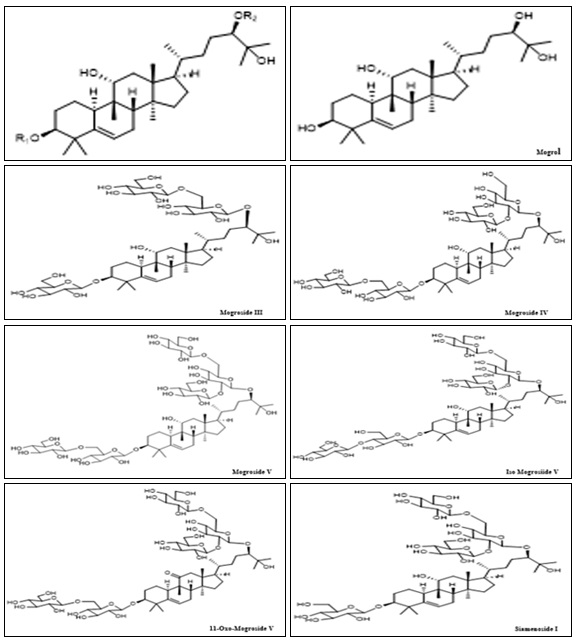
FIG. 1: CHEMICAL STRUCTURES OF VARIOUS MOGROSIDES HIGHLIGHTING DIFFERENCES IN GLYCOSYLATION AND OXIDATION PATTERNS
TABLE 1: R-GROUPS, MOLECULAR FORMULARS, MOLECULAR WEIGHTS AND POTENCIES OF MOGROSIDE SWEETENERS 15
| R-Groups in Backbone Figure Above | |||||||
| Sweetener
|
R1 (at C3)
|
R2 (at C24)
|
Oxidation Pattern | Formula | Molecular Weight (g/mol) | Potency | Ref. |
| Mogrol | -H | -H | C30H52O4 | 476.73 | Bitter | 9 | |
| Mogroside III | -Glc | -Glc-Glc(β 1,6) | C45H82O19 | 963.16 | Slightly sweet | 9 | |
| Mogroside IV | -Glc-Glc(β1,6) | -Glc-Glc(β1,2) | C54H92O24 | 1125.30 | 392* | 6 | |
| mogroside V | -Glc-Glc(β 1,6) | -Glc-Glc(β1,6),-Glc(β1,2) | C60H102O29 | 1287.44 | 425* | 6 | |
| Iso mogroside V | -Glc-Glc(β 1,4) | -Glc-Glc(β1,6),-Glc(β1,2) | C60H102O29 | 1287.44 | 500* | 27 | |
| 11-Oxo mogroside V | -Glc-Glc(β 1,6) | -Glc-Glc(β1,6).-Glc(β1,2) | = O at Carbon 11 | C60H100O29 | 1285.42 | 80* | 9 |
| Siamenoside I | -Glc | -Glc-Glc(β1,6),-Glc(β1,2) | C54H92O24 | 1125.30 | 563* | 6 | |
Glc=Glucose, *based on 5% sucrose, **based on 0.5% sucrose
MATERIALS AND METHODS:
Production and Properties of Siamenoside I: Siamenoside I discussed in this study, was purchased from Chengdu Biopurify company (lot # PRF 8041001) with the purity level of 98%, which was produced from mogroside V (extracted from monk fruit) through a enzymatic bioconversion process, followed by separation and purification steps. Siamenoside I exhibit high water solubility, remaining soluble at 50% (w/w) for up to 3 hours and at a concentration of 7.5% (w/w) for more than 15 days at room temperature 28. Similarly, mogroside V has been reported to possess excellent water solubility and good stability across relatively wide pH ranges and at elevated temperatures within food matrices 29.
In addition, based on a previously published study by Prakash (2026) on the stability and degradation products of Siamenoside I at acidic and thermal conditions, Siamenoside I demonstrated strong chemical stability undergoing minor degradation in mock beverage systems under conditions simulating both typical and extreme commercial beverage storage and handling, including exposure to light. These findings along with its high solubility in water supported its suitability for use in acidic, ready to drink beverage formulations 28.
Sensory Properties of Siamenoside I: According to the literature, Siamenoside I is often referred 300 to 465 times sweeter than sucrose 30-31. However, sweetness potency is strongly dependent on sucrose equivalency level for all high potency sweeteners (HPS). And therefore, it is important to state the sucrose equivalency (SE) level at which sweetness potency has been determined. Sweetness potency is also system dependent and therefore, it is important to also define the medium (e.g. water, phosphoric acid at pH 2.5 etc.). Of these two factors, SE level has a major effect on sweetness potency.
Sensory Panel Evaluation for Determination of C/R Function: In order to determine the concentration of sweetness response function (C/R) of Siamenoside I in water, all samples were served at room temperature and evaluated by at least10-12 Gustatec Descriptive Analysis Panelist(well trained and experienced, of a 3rd party research firm)after signing the informed consent form. Panelists were presented with 1 test sample (24 mL) at a time and were instructed to take the first sip and hold for 5 seconds and ingest sample and rate Sweet attribute only. An 8-minute break was placed between each sample, and panelists were instructed to cleanse their palates with filtered water and unsalted premium crackers. Samples were randomized within each session for each panelist and served to the assessors coded with three‐digit blind codes. Samples were evaluated in triplicate using a 15-cm intensity line scale (0 = no attribute intensity, 15 = very intense). Protocol was repeated for all samples over 3 days.
The data was collected using Fizz software with a complete randomized design across blocks of samples. Mixed-effects regression was performed using the R package lme4 v.1.1-14. For curvilinear models for Siamenoside I, sweet intensity was regressed against the ln (ppm). Least squares means with associated 95% confidence intervals were calculated using Ismeans package v.2.27-61.
Sensory Panel Evaluation for Determination of Time-Intensity Parameters: In order to determine the time intensity profile of Siamenoside I (200 ppm) in water and to compare it to Rebaudioside A (Reb A-97% purity at 311 ppm), Aspartame (507 ppm) and Sucrose (8%) at iso-sweet concentrations (8%), following descriptive analysis was used; Total of 10 Gustatec Descriptive Analysis Panelist (well trained and experienced, of a 3rd party research firm) were served with total of 12 samples (24 ml) at room temperature in monadic order after signing the informed consent form. They were instructed to take the sample in the mouth and hold it for 5 seconds, ingest the sample and begin clicking along the scale as the Sweet attribute only. Continue to click along the scale as the sweetness left or for up to 6 minutes. An 8-minute break was placed between samples, and panelists were instructed to cleanse their palates with filtered water and unsalted premium crackers. Samples were randomized with each session for each panelist and served with assessors coded tree-digit blind codes. Samples were evaluated in triplicate using a 15-cm intensity line scale (0 = no attribute intensity, 15 = very intense). Protocol was repeated for all samples over 3 days.
Data analysis was done by collecting data using Fizz software with a completely randomized block design. The parameters were analyzed using the non-parametric Prentice test (R package muStat v.1.7.0), a variation of the Friedman test for data with replicated blocks.
RESULTS AND DISCUSSION:
Siamenoside I Sensory Attributes: To decipher the potential of Siameoside I as a high potency sweetener, it was first examined against sucrose. Six different concentrations of sucrose solutions, 2%, 3%, 5%, 7%, 10%, and 12% corresponding to different SE values were used in the study and evaluated by the sensory panel as described above. The concentration-response (C/R) function in water determined for Siamenoside I is at 25°C, R=-8.3866+3.0922*ln (ppm) Fig. 2, where R is sweet intensity and C is the concentration (ppm) of the Siamenoside I (determined by mixed-effects regression analysis).
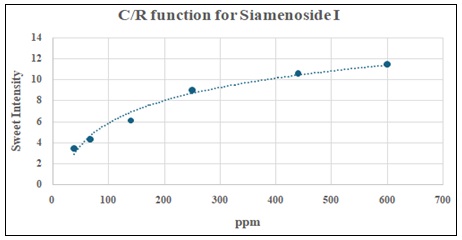
FIG. 2: CONCENTRATION RESPONSE CURVE (C/R FUNCTION) OF SIAMENOSIDE I IN WATER.
From C/R function, the potency of water (Pw) is estimated as Pw (5) =660 and Pw (10) =262. This model estimates that the potency of Siamenoside I is 260-660 times of sucrose, which aligns well with the literature value presented in Table 1 6.
Considering the temporal parameters of sample medians outlined in Table 2, the median Imax values for sucrose and aspartame were both close to 8, whereas the median Imax values for Siamenoside I and RebA-97% were closer to 9. The median Tmax was shortest for sucrose at 5 seconds, while the median Tmax for the other three compounds was approximately 12 seconds. Median duration varied across the four samples, with sucrose exhibiting the shortest duration at 91 seconds and RebA-97% showing the longest duration at 188 seconds. Additionally, sucrose and aspartame had similar median TD50 values, as did Siamenoside I and RebA-97%, indicating that the sweet intensity of aspartame decreases at a rate similar to sucrose, while the sweet intensity of Siamenoside I decreases at a rate comparable to RebA-97%, with sweetness diminishing more rapidly for the former pair.
TABLE 2: SAMPLE MEDIANS 1 OF TEMPORAL PARAMETERS
| Sucrose | Siamenoside I | RebA-97% | Aspartame | |
| Imax* | 8 a | 9 ab | 9.5 b | 8.1 ab |
| Tmax* | 5 a | 11.5 b | 11.5 b | 12.5 b |
| Duration* | 91 a | 154.5 b | 187.5 c | 118 a |
| TD50* | 51.5 a | 62.7 ab | 66.5 b | 55 a |
1Values that share the same letter are not significantly different (Holm method, p<0.05) 32. Asterix = main effect of sample significant (p<0.05). Where, Imax is (maximum intensity); Tmax (time to maximum intensity); Duration (duration of sweetness intensity) and TD50 is the time to reach 50% of the maximum intensity in the decreasing phase.
Blending and Application in Food Systems: Blending certain sweeteners (nutritive as well as non-nutritive) is often found to result in sweetness synergy. Such blends are also generally advantaged by improvements in flavor and temporal profiles as well as cost reductions in sweetener system and, often, improvement in stability 26. To improve the taste quality of Siamenoside I, it can be blended with other natural (Stevia, monk fruit extracts, mogrosides, protein sweeteners) and non-natural (peptide sweeteners like aspartame, neotame, advantame, sucralose, acesulfame-K, saccharin, cyclamate etc.) high potency sweeteners or rare sugars (allulose) and sugar alcohols (e.g. erythritol) to obtain zero beverages. It can also be blended with carbohydrates sweeteners 14.
Considering application, monk fruit extracts are widely used as natural sugar substitutes in the preparation of various food and beverages, such as juices, jellies, candies, ice cream, and pastries 15. Similarly, mogrosides and Siamenoside I have potential to be used typically in soft drinks, flavored waters, dairy and plant-based beverages. It is claimed in a patent published by Prakash et al. 2024, that diet beverages sweetened with a mogroside blend (iso-mogroside V, 11-oxo-mogroside V, mogroside IIE, mogroside V and mogroside IIIE) in different ratios containing Siamenoside I to reduce bitterness, sweetness linger, bitter linger, and metallic taste compared to Siamenoside I only sweetened beverages 14. Typical Siamenoside I concentrations used to sweeten various foods, and beverages are presented in Table 3.
TABLE 3: TYPICAL SIAMENOSIDE I CONCENTRATIONS USED TO SWEETEN VARIOUS FOODS AND BEVERAGES
| Product | Range a (mg/kg or mg/L) |
| Carbonated soft drinks | 200-600 |
| Still beverages | 50-600 |
| Powdered soft drinks (as is) | 200-2000 |
| Tabletop (as is) | 800-4000 |
| Bakery products | 200-1000 |
| Dairy products | 150-1000 |
| Chewing gum | 300-6000 |
| Confections | 100-1000 |
| Cereals | 200-1000 |
| Edible gels | 200-1000 |
| Nutraceuticals | 200-1000 |
| Pharmaceuticals | 50-1000 |
a Typical concentration when used as a single sweetener. Concentrations may vary depending upon formulation, flavor, and target consumer. Data from 26.
Production Technologies: Conventionally, monk fruit extracts available in either powder or liquid form are produced through a series of processing steps that include harvesting, extraction, purification, concentration, drying, and powdering 2. However, reliance on traditional agricultural production presents several limitations, including restricted crop availability and seasonal variability, which can significantly affect both the yield and composition of mogrosides of interest. To overcome these constraints, and driven by advances in biotechnology, there is a growing interest in the production of major mogrosides, such as mogroside V and Siamenoside I, as well as their blends, using fermentation-based technologies. These production strategies follow two main approaches: (i) enzymatic glycosylation of mogrol intermediates and (ii) metabolic engineering of yeast or other suitable microbial hosts to biosynthesize target mogrosides 33. Especially, with emerging gene editing technology such as CRISPR/Cas9 performing rapid precise gene editing, it became a valuable tool in synthetic biology and metabolic engineering to create efficient cell factories capable of producing specific chemicals and products of interest. This technology holds significant potential for the biosynthetic production of natural sweeteners, including mogrosides and Siamenoside I 4, 34.
Such approaches, similar to those developed to produce Rebaudioside M, offer scalable, consistent, and sustainable alternatives for the manufacture of rare and high value mogrosides 1, 4, 9. However, for Siamenoside I in particular, these technologies should be viewed as emerging and developmental rather than established industrial solutions, and further research and validation will be required before large‑scale commercialization.
CONCLUSION: In summary, mogrosides and Siamenoside I are promising non-caloric natural high intensity sweeteners with favorable sensory and safety profiles. Advances in production technologies, particularly biotechnological approaches, are expected to improve cost efficiency and supply reliability, supporting broader adoption in sugar reduced foods and beverages. Siamenoside I particularly stands out as a strong candidate for next generation monk fruit sweeteners, with continued research into sensory optimization and formulation expected to further enhance its application potential.
ACKNOWLEDGEMENT: We gratefully acknowledge Dr Mani Upreti and Dr Goran Petrovic (The Coca-Cola Company) for editing chemical structures.
Contribution by Each Author: IP supervised the work, CT collected data and wrote the manuscript, GP, JH and CM proposed the experiments and collected data.
CONFLICT OF INTEREST: The research described in this manuscript was conducted as part of author’s employment with The Coca-Cola Company. The authors declare no conflict of interest.
REFERENCES:
- Labrador AM, Hernandez OH and Moreno FJ: A review of the state of sweeteners science: the natural versus artificial non caloric sweeteners debate. Stevia rebaudiana and Siraitia grosvenorii into the spotlight. Crit Rev Biotechnol 2024; 44(6): 1080-1102.
- Harshita K: monk Fruit (Siraitia grosvenorii): A comprehensive review of its sweetness, health benefits, and applications as natural sweetener. The Pharma Innov J 2023; 12(6): 3007-3012.
- Sievenpiper JL, Purkayastha S, Grotz VL, Mora M, Zhou J, Hennings K, Goody CM and Germana K: Dietary guidance, sensory, health and safety considerations when choosing low and no-calorie sweeteners. Nutrients 2025; 17: 793.
- Fan B, Liang X, LiY, Li M, Yu T, Qin Y, Li B, An T and Wang G: Biosynthesis and metabolic engineering of natural sweeteners. AMB Express 2025; 15: 50.
- Huang H, Peng Z, Zhan S, Li W, Liu D, Huang S, Zhu Y, and Wang W: A comprehensive review of Siraitia grosvenorii (Swingle) C. Jeffrey: chemical composition, pharmacology, toxicology, status of resources development, and applications. Front. Pharmacol 2024; 15: 1388747.
- Pandey AK and Chauhan OP: monk fruit (Siraitia grosvenori): Health aspects and food applications. Pantnagar J Res 2019; 17(3):191-198.
- Chiu CH, Wang R, Lee CC, Lo YC and Lu TC: Biotransformation of mogrosides from Siraitia grosvenorii swingle by Saccharomyces cerevisiae. J Agric Food Chem 2013; 61: 7127-7134.
- Lee C: Intense sweetener from Lo Han Kuo (Momordica grosvenori). Experientia 1975; 31(5): 533-534.
- Chen N, Cao W,Yuan Y, Wang Y, Zhang X, Chen Y, Yiasmin MN, Tristanto NA and Hua X: Recent advancements in mogrosides: A review on biological activities, synthetic biology, and applications in the food industry. Food Chem 2024; 449: 139277.
- Takemoto T, Arihara S, Nakajima T and Okuhira M: Studies on the constituents of Fructus Momordicae. I. On the sweet principle. Yakugaku Zasshi. J Pharm Society Japan 1983; 103(110): 1151-1154.
- Liu C, Dai L, Liu Y, Dou D, Sun Y and Ma L: Pharmacological activities of mogrosides. Future Med Chem 2018; 10(8): 845-850.
- Kasai R, Nie R, Nashi K, Ohtani K, Zhou J, Tao G and Tanaka O: Sweet cucurbitane glycosides from Siraitia grosvenorii. Agric Biol Chem 1989; 53: 3347–3349.
- Wang R, Chen YC, Lai YJ, LuTJ, Huang ST and Lo YC: Dekkera bruxellensis, a beer yeast that specifically extracts into intense natural sweetener Siamenoside I. Food Chem 2019; 276: 43-49.
- Prakash I, Ma G, Mercogliano C, Higiro J, Juan IL, Heath MH and Bechman A: Siamenoside I sweetened beverages with mogroside blends. PCT Patent Application WO 2024/163463 A1. 8 August 2024.
- Guo Q, Shi M, Sarengaowa, Xiao Z, Xiao Y and Feng K: Recent advances in the distribution, chemical composition, health benefits, and application of the fruit of Siraitia grosvenorii. Foods 2024; 13: 2278.
- Sai V, Chaturvedula P and Prakash I: Cucurbitane glycosides from Siraitia grosvenorii. J. Carbohydrate Chem 2011; 30: 16-26.
- Prakash I, Ma G, Tan X, Zhu G, Woodyer RD, Frohman C and Higiro J: Siamenoside I sweetened compositions and uses of the same. United States Patent US 11, 653, 680 B2/2023. May 23, 2023.
- Li J, Mu S, Yang J, Liu C, Zhang Y, Chen P, Zeng Y, Zhu Y and Sun Y: Glycosyltransferase engineering and multi-glycosylation routes development facilitating synthesis of high -intensity sweetener mogrosides. I Science 2022; 25: 105222.
- Li H, Li R, Jiang W and Zhou L: Research progress of pharmacological effects of Siraitia grosvenorii J. Pharmacy and Pharmacology 2022; 74: 953-960.
- Tu D, Luo Z, Wu B, Ma X, Shi H and Mo C: Developmental, chemical and transcriptional characteristics of artificially pollinated and hormone-induced phartenocarpic fruits of Siraitia grosvenori. RSC Advances 2017; 7: 12419-12428.
- GRAS Notice (GRN) No. 706. Determination of generally recognized as safe (GRAS) status of Siraitia grosvenori Swingle (Luo Han Guo) fruit extract as a food ingredient 2017.
- Younes M, Aquilina G, Engel KH, Fowler P, Frutos Fernandez MJ, Fürst P and Castle L: Safety of use of monk fruit extract as a food additive in different food categories. EFSA Journal 2019; 17(12), Article e05921. https://doi.org/10.2903/j. efsa.2019.5921.
- Food Standard Agency. Non-selective aqueous decoctions of monk fruit: Determination of status of a novel food, pursuant to article 4(2) of assimilated Regulation (EU) 2015/2283.https://www.food.gov.uk/print/pdf/node/23666.
- Kaim U, Gawlik U and Lisiecka K: Why does monk fruit extract remain only partially approved in the EU? Regulatory barriers and policy implications for food innovation. Foods 2025; 14: 2810.
- Roberts A, Cuellar-Kingston N, Townley S, Ormsby T, Johnson S, Van de Light JLG and Eapen AK: Pharmacokinetics and metabolism of Siamenoside I in rats. Toxicol Rep 2026; 16: 102185.
- Prakash I, Markosyan A and Bunders C: Development of next generation stevia sweetener: Rebaudioside M. Foods 2014; 3: 162-175.
- Jia Z and Yang X: A minor sweet cucurbitane glycoside from Siraitia grosvenorii. Natural Product Communication 2009; 4(6): 769-772.
- Prakash I, Ma G, Clos J, Seabrooks L and Tari C: Stability of monk fruit sweetener Siamenoside I under acidic and thermal conditions and its degradation products. Int J Pharm Sci Res 2026; 17(5): 1494-1503.
- Wu Y, Zhang Y, He Q, Qin Y and Nie J: Insight into the interaction and binding mechanism of a natural nonnutritive sweetener mogroside V with soybean protein isolates based on multi-spectroscopic techniques and computational simulations. Food Chem 2024; 453: 39654.
- Lin W, Jiang Q, Dong Y, Xiao Y, WangY, Gao B and Zhu D: Plant endophytic fungi exhibit diverse biotransformation pathways of mogrosides and show great potential in Siamenoside I production. Bioresour Bioprocess 2024; 11: 42.
- Shivani, Thakur BK, Malikarjun CP, Mahjan M, Kapoor P, Malhotra J, Dhiman R, Kumar D, Pal PK and Kumar S: Introduction, adaptation and characterization of monk fruit (Siraitia grosvenorii): a non-caloric new natural sweetener. Nature 2021; 11: 6205.
- Holm S: A simple, sequentially rejective multiple test procedure. Scand J Stat 1979; 6(2): 65–70.
- Lu X, Li J, Huang C, Wang Z, Chen Y, Jiang S, Li J and Xie N: Development of multi-glycosylation routes to facilitate the biosynthesis of sweetener mogrosides from bitter immature Siraitia grosvenorii using engineered Escherichia coli. J Agric Food Chem 2024; 72: 18078-18088.
- Qu G, Song Y, Xu X, Liu Y, Li J, Du G, Liu L, Li Y and Lv X: De novo biosynthesis of mogroside V by multiplexed engineered yeasts. Metab Eng 2025; 88: 160-171.
How to cite this article:
Prakash I, Tari C, Ma G, Higiro J and Mercogliano C: Development of novel monk fruit sweeteners: Siamenoside I. Int J Pharm Sci & Res 2026; 17(9): 2652-59. doi: 10.13040/IJPSR.0975-8232.17(9).2652-59.
All © 2026 are reserved by International Journal of Pharmaceutical Sciences and Research. This Journal licensed under a Creative Commons Attribution-NonCommercial-ShareAlike 3.0 Unported License.
Article Information
9
2652-2659
635 KB
8
English
IJPSR
Indra Prakash *, Canan Tari, Gil Ma, Juvenal Higiro and Christopher Mercogliano
Flavor & Ingredient Research and Applications, The Coca-Cola Company, One Coca-Cola Plaza, Atlanta, GA 30313, Atlanta, Georgia, USA.
iprakash@coca-cola.com
22 April 2026
15 May 2026
19 June 2026
10.13040/IJPSR.0975-8232.17(9).2652-59
01 September 2026
 Download