




ECONOMIC EVALUATION OF AI EARLY INTERVENTION VS. LATE-STAGE ONCOLOGY: A HEALTH-ECONOMIC SCOPING REVIEW
HTML Full TextECONOMIC EVALUATION OF AI EARLY INTERVENTION VS. LATE-STAGE ONCOLOGY: A HEALTH-ECONOMIC SCOPING REVIEW
Mrunali S. Jane *, Atharva G. Chapke and Om P. Khandarkar
Department of Learning & Development, Hetero Healthcare Ltd., Mumbai, Maharashtra, India.
ABSTRACT: Cancer remains a leading cause of global mortality, imposing profound clinical and economic burdens on healthcare systems worldwide. The prevailing paradigm of late-stage oncology is characterised by exponential healthcare costs, intensive multimodal therapies, and severe financial toxicity for patients. Artificial Intelligence (AI) and its subsets, such as Machine Learning (ML), promise to disrupt this unsustainable trajectory by enabling earlier detection, optimising clinical triage, and personalising treatment planning. This article is a scoping review structured around a formal health-economic framework, synthesising evidence retrieved from PubMed, Scopus, and the Cochrane Library and reported in accordance with the PRISMA-ScR extension. It evaluates the comparative economic realities of implementing AI-driven early interventions against late-stage standard-of-care (SOC) oncology across payer, provider, and societal perspectives. While AI theoretically facilitates stage migration and reduces downstream costs associated with advanced disease, its integration is a highly capital-intensive process, introducing substantial upfront infrastructural costs and ongoing operational expenses, including the management of dataset shift and algorithmic bias. Furthermore, the downstream economic burden of false positives and overdiagnosis can weaken AI's financial viability, particularly in complex-triage malignancies such as prostate cancer. Synthesising the current literature reveals a critical gap between modelled, in-silico cost-savings and rigorous Real-World Evidence (RWE). Ultimately, while AI holds transformative potential for reducing late-stage oncology burdens, its long-term cost-benefit profile is highly conditional upon equitable deployment, precise localised validation, appropriate clinical integration, and value-based reimbursement alignment.
Keywords: Artificial Intelligence, Oncology, Health Economics, Cost-Effectiveness Analysis, Cost-Benefit Analysis, Early Detection, Real-World Evidence, Scoping Review
INTRODUCTION: Cancer is a major global health concern characterised by uncontrolled cellular proliferation, comprising more than 200 heterogeneous diseases with distinct biological behaviours, aetiologies, and treatment responses 1.
Despite unprecedented advances in molecular biology, genomics, and computational oncology, an effective universal therapy for advanced malignancies has not yet been achieved, emphasising the urgent need for continued scientific innovation and structural paradigm shifts in how care is delivered 2.
Currently, the macro-level trajectory of oncology care is reaching an unsustainable economic threshold. This review establishes the clinical urgency, economic controversy, and methodological rationale for comparing emerging artificial intelligence (AI)-driven early interventions against the established, resource-intensive pathways of late-stage standard-of-care oncology. To do so transparently, the present work is framed explicitly as a scoping review conducted through a health-economic lens, with its design, search strategy, and synthesis approach detailed in the Materials and Methods section.
The Escalating Economic Burden of Cancer Care: According to the World Health organization, cancer remains a leading cause of mortality worldwide, accounting for nearly 10 million deaths in 2022 3, 4. In addition to its devastating clinical impact, cancer imposes substantial socioeconomic and financial burdens on both sovereign healthcare systems and individual patients. These burdens are driven by escalating treatment costs, prolonged hospitalisations, intensive care requirements, and vastly increased out-of-pocket expenditures, which are particularly concentrated in advanced-stage disease management 5, 6. Cancer constitutes a rapidly growing economic crisis; medical care costs associated with cancer in the United States alone were estimated at USD 183 billion in 2015 and are projected to rise to approximately USD 246 billion by 2030, driven by population ageing and increasing demand for complex care 7. Furthermore, the advent of highly specialised targeted therapies, next-generation biologics, and immunotherapies has fundamentally altered the cost curve of oncology. While these interventions offer life-extending benefits, they possess astronomical unit costs, rendering the current late-stage treatment paradigm increasingly unviable for both commercial payers and national health services 8, 9.
The Promise and Reality of AI in Early Detection:In response to these escalating costs, early cancer diagnosis has been designated an urgent global healthcare priority 10. Artificial intelligence, specifically supervised machine learning (ML), deep learning (DL), and natural language processing (NLP), has emerged as a theoretical catalyst for systemic stage migration 11, 12. By identifying sub-clinical malignancies through advanced imaging recognition, multi-omics risk stratification, and automated workflow triage, AI promises to shift detection from incurable, late-stage presentations to highly treatable, localised disease 13, 14. However, evaluating the impact of AI requires a strict separation of technological hype from translational reality. While in-silico models frequently demonstrate high sensitivity and specificity, the clinical implementation of AI is fraught with operational friction, algorithmic brittleness, and the risk of iatrogenic harm via overdiagnosis 15, 16.
Rationale for a Comparative Economic Analysis: While the clinical metrics of early detection, such as improved progression-free survival and localised stage migration, are heavily scrutinised, these endpoints alone are insufficient for modern health-policy decision-making. To move beyond purely clinical parameters, a rigorous cost-benefit analysis (CBA) is essential to evaluate system-wide budget impact and guide macro-level resource allocation 16. The economic reality of integrating artificial intelligence into oncology pathways demands evaluation through a strict health-economics lens. Consequently, this analysis is anchored by a central economic tension: evaluating whether the upfront, highly capital-intensive innovation costs of AI implementation genuinely offset the massive, avoided downstream treatment burdens of advanced disease, or whether they merely shift the financial weight and utilisation metrics earlier in the diagnostic continuum without delivering proportional societal value 17-19.
MATERIALS AND METHODS:
Study Design and Article Type: This work is a scoping review structured around a formal health-economic framework, undertaken to map the breadth of published economic evidence comparing AI-driven early intervention with late-stage standard-of-care (SOC) oncology and to identify conceptual and methodological gaps. A scoping-review design was selected, rather than a systematic review with meta-analysis, because the underlying evidence base is highly heterogeneous in cancer type, AI modality, economic perspective, and outcome measure, precluding valid quantitative pooling. The review was conducted following the methodological stages of Arksey and O'Malley and is reported in accordance with the Preferred Reporting Items for Systematic reviews and Meta-Analyses extension for Scoping Reviews (PRISMA-ScR) 35, 36.
Search Strategy and Information Sources: Three electronic bibliographic databases, PubMed (MEDLINE), Scopus, and the Cochrane Library, were systematically searched for records published between January 2013 and January 2026. Searches combined controlled vocabulary and free-text terms across three concept blocks, artificial intelligence, oncology, and health economics, joined with Boolean operators. The core PubMed Boolean string was: ("artificial intelligence" or "machine learning" or "deep learning" or "neural network*" or "natural language processing") and ("cancer" or "neoplasm*" or "oncolog*" or "tumour" or "tumor" or "malignan*") and ("cost*" or "economic evaluation" or "cost-effectiveness" or "cost-benefit" or "QALY" or "ICER" or "budget impact" or "health econom*" or "real-world evidence") and ("early detection" or "screening" or "diagnosis" or "triage" or "risk stratification"). Equivalent syntax, adapted for each platform's field tags, was applied in Scopus and Cochrane. Reference lists of included articles and relevant reviews were hand-searched to identify additional eligible records.
Eligibility Criteria:Records were eligible for inclusion if they were peer-reviewed, English-language articles reporting an economic dimension (cost, cost-effectiveness, cost-benefit, budget impact, or resource utilisation) of AI applied to oncology across the screening, diagnostic, prognostic, or triage continuum, and encompassed full economic evaluations, decision-analytic modelling studies, real-world cost analyses, and prior scoping or systematic reviews.
Records were excluded if they addressed non-oncological AI applications; were purely technical or algorithmic papers reporting diagnostic-accuracy metrics without any economic, cost, or care-pathway relevance; were editorials, commentaries, or opinion pieces lacking primary or synthesised data; or were conference abstracts without extractable results.
Study Selection and Data Synthesis:After removal of duplicates, titles and abstracts were screened against the eligibility criteria, and potentially relevant records underwent full-text assessment. The flow of records through identification, screening, eligibility, and inclusion is summarised in Fig. 1.
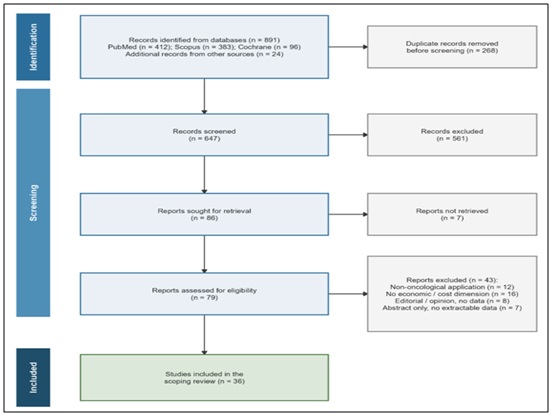
FIG. 1: PRISMA-ScR FLOW DIAGRAM OF RECORDS IDENTIFIED, SCREENED, ASSESSED FOR ELIGIBILITY, AND INCLUDED (N=36)
Owing to the anticipated clinical and methodological heterogeneity, a narrative synthesis was performed and organised according to the predefined health-economic framework described below (comparators, cost inputs, analytic perspectives, time horizon, and evidence grade), rather than statistical meta-analysis. Where relevant, expert-led Boolean retrieval was retained as the reference standard for evidence identification, as AI-based search tools exhibit variable sensitivity in this domain 33, 34.
Operational Definitions and Comparators: Artificial intelligence is not a monolithic intervention; its economic impact and clinical utility vary drastically depending on its precise role within the diagnostic and therapeutic continuum. Consequently, the comparative baseline, late-stage SOC, must also be explicitly defined to avoid analytical confounding.
Typology of AI in Early Intervention: Within this analysis, AI-driven early intervention is categorised into four typological modalities, each carrying a distinct cost structure. The first is population-level screening, using deep learning and convolutional neural networks (CNNs) for broad visual assessment, such as computer-aided detection (CAD) in mammography or low-dose computed tomography (LDCT) for lung nodules 10, 15. The second is definitive diagnostics, encompassing algorithmic digital pathology that autonomously grades tumour biopsies with high sensitivity 12. The third is prognostic risk stratification, leveraging ML to analyse high-dimensional, multi-omics data (integrating genomics, transcriptomics, and clinical history) to predict aggressive phenotypes before they manifest clinically1,14. The fourth involves NLP algorithms deployed within electronic health records (EHRs) to automate triage of unstructured clinical notes, optimising pathway throughput 13. For this economic analysis, "early intervention" denotes not merely the moment of algorithmic screening yield, but the entire optimised diagnostic pathway up to early therapeutic intervention.
Comparator Assumptions-Late-Stage Standard-Of-Care: The comparative baseline is contemporary late-stage SOC, defined as the use of resource-intensive, multimodal interventions deployed with non-curative, life-extending, or palliative intent for advanced (Stage III/IV) malignancies. This includes multiline systemic chemotherapies, next-generation targeted biologics, chimeric antigen receptor (CAR) T-cell therapies, and complex salvage surgery 26. The economic baseline must further account for frequent diagnostic workups, prolonged intensive-care admissions, and continuous management of severe treatment-related toxicities and disease-related complications that define the end-of-life trajectory 27.
The Counterfactual Scenario: To maintain analytical integrity, the model constructs a realistic counterfactual. It is a clinical fallacy to assume AI-driven screening will reduce late-stage incidence to zero. The baseline must acknowledge cancer's biological heterogeneity; highly aggressive tumour biologies (such as specific phenotypes of pancreatic adenocarcinoma or small-cell lung cancer) may continue to present as advanced disease, entirely bypassing the temporal window of early-detection algorithms 2, 11. The evaluation therefore isolates the specific cohort for whom AI-enabled stage migration is biologically plausible, recognising that a substantial baseline of late-stage SOC expenditure remains unavoidable.
Health-Economic Framework: The methodological architecture required to evaluate the trade-offs between AI-driven early intervention and late-stage oncology extends significantly beyond standard comparative-effectiveness research. To capture direct expenditures, indirect burdens, and system-level impacts, the following structured health-economic parameters were applied 33.
Cost-Benefit Analysis (CBA) versus Cost-Effectiveness Analysis (CEA): Cost-Effectiveness Analysis (CEA) measures cost per clinical unit gained, most universally expressed as the Incremental Cost-Effectiveness Ratio (ICER), the additional cost per Quality-Adjusted Life Year (QALY) gained (a QALY being one year of life in perfect health). While CEA is critical for evaluating novel pharmaceuticals, it is structurally insufficient for complex digital-health interventions, whose systemic disruptions are not easily captured by QALYs alone.
This evaluation therefore prioritises Cost-Benefit Analysis (CBA), which translates all clinical and operational outcomes into monetary terms, enabling direct comparison of capital-intensive IT deployment against the monetised value of avoided downstream utilisation, preserved workforce productivity, and optimised workflows 16, 20.
Analytic Perspectives (Payer, Provider, Societal): The economic trade-offs were modelled simultaneously across three perspectives. The payer perspective captures direct medical costs, contrasting reimbursement of a high-volume, low-cost AI screening test against low-volume, astronomically high-cost advanced systemic therapies and hospitalisations 8. The provider perspective captures the operational and structural costs of care delivery, including software-as-a-service (SaaS) licensing, cloud infrastructure, EHR-interoperability costs, and labour costs of workflow disruption 17, 21. The societal perspective monetises the indirect burden of oncology, quantifying preserved human capital, reduced lost productivity, mitigated caregiver burden, and alleviated catastrophic financial toxicity 5, 6, 9.
Time Horizon and Discounting:A fundamental challenge is the temporal mismatch between investment and return. Deployment costs (validation, IT infrastructure, integration) are incurred immediately as upfront capital expenditure, whereas benefits (avoided Stage IV toxicities, deferred mortality, long-term labour preservation) may take years or decades to materialise. The framework therefore mandates longitudinal modelling with extended time horizons, with future costs and health benefits discounted to present value using standard rates (typically 3–5% annually) to prevent overestimation of long-term savings 17, 25.
Evidence-Synthesis Methodology: The framework relies on rigorous, systematic evidence synthesis. Identifying the true economic delta between early and late-stage pathways requires connected treatment networks incorporating high-quality comparative trials within a predefined comparator set 33. While AI-driven search tools may expedite literature identification, expert-led, transparent statistical methods remain the reference standard to ensure no relevant comparative data are omitted, keeping the economic model internally coherent 34.
RESULTS:
Costs and Burdens of Late-Stage Standard-of-Care Oncology: To measure the economic viability of AI, it is necessary first to establish the immense financial baseline of the disease state it seeks to prevent. Late-stage SOC oncology is defined by an exponential cost curve driven by high-cost novel therapeutics, intensive inpatient utilisation, and severe compounding toxicities26. Mean annual and cumulative healthcare costs during the first four years following diagnosis are significantly higher in patients diagnosed at advanced stages than in those diagnosed with localised, early-stage disease 8.
Multimodal Treatment Intensity and Novel Therapeutics: The contemporary management of Stage III and IV malignancies relies heavily on systemic, multimodal paradigms. Unlike early-stage disease, often managed with single-modality definitive local therapy, late-stage disease requires continuous, life-long intervention. Next-generation biologics, immune-checkpoint inhibitors, and CAR T-cell therapies have revolutionised survival metrics but introduced astronomical unit costs. Recent evidence indicates that while some guideline-concordant generic regimens became less expensive between 2017 and 2021, other advanced-stage indications showed sharp cost increases following therapeutic innovation and shifting prescribing patterns toward patented, branded biologics 26. The cumulative cost of these agents, often administered indefinitely until progression or unacceptable toxicity, creates a compounding financial burden that vastly outpaces inflation 7, 8.
Toxicity Burden and Hospital Utilisation: Direct medical costs extend far beyond drug acquisition. Advanced malignancy combined with cytotoxic therapy produces a high incidence of adverse events; a systematic review of retrospective cohorts demonstrated that healthcare utilisation rises sharply in advanced and terminal phases 27. Patients experience high rates of emergency visits, unplanned readmissions (neutropenic fever, sepsis, malignant bowel obstruction), and intensive-care management, with hospital admissions contributing the major share of expenditure. Palliative care is often introduced too late, leaving end-of-life care resource-intensive and economically inefficient 27.
Financial Toxicity and Indirect Societal Costs: The burden is not isolated to institutional payers; it causes catastrophic disruption at societal and individual levels. "Financial toxicity" is a recognised dimension of advanced-cancer care 5. A systematic review found that a substantial proportion of patients experience severe material, psychological, and behavioural hardship during treatment 6. Claims analyses show progressively higher out-of-pocket (OOP) costs with more advanced disease; the highest cumulative OOP cost among commercially insured patients was observed in Stage IV lung cancer, reaching approximately USD 35,243 by year three following diagnosis 9. This distress correlates with poorer outcomes, as patients skip doses of costly oral oncolytics, delay imaging, or face bankruptcy risk. The societal perspective must further account for lost workforce productivity, premature mortality, and the immense opportunity cost borne by unpaid family caregivers 5, 6.
Cost of AI-Driven Early Intervention: While AI promises to mitigate these staggering costs, its integration into healthcare is highly complex and capital-intensive, extending far beyond initial software procurement. The direct, indirect, and intangible costs of AI deployment are frequently underestimated in theoretical models, threatening overall economic value. These implementation costs can be disaggregated into five granular categories, summarised below and quantified against their failure modes in Table 2 16, 17.
Saas Software Licensing:Ongoing SaaS licences for clinical AI are typically priced per-study, per-seat, or via annual enterprise subscription, converting AI from a one-time purchase into a recurring operating expense that must be re-justified in every budget cycle 21.
Hardware, GPU, And Infrastructure: Deep-learning inference on high-dimensional imaging, digital-pathology whole-slide images, and multi-omics data requires graphics-processing-unit (GPU) compute, high-throughput storage, and low-latency networking, provisioned either as on-premises capital expenditure or metered cloud consumption. Interoperability engineering to bridge deeply entrenched legacy EHRs frequently adds cost that can exceed the software licence itself 21.
Cybersecurity and HIPAA/GDPR Compliance: Because clinical AI processes protected health information, deployment must fund encryption, access control, audit logging, penetration testing, and continuous compliance with HIPAA, GDPR, and equivalent frameworks, together with the cyber-insurance and breach-liability provisioning that regulators increasingly expect of Software as a Medical Device 17.
Localised Algorithmic Validation: Before clinical use, algorithms require rigorous localised validation against historical institutional data to confirm population-specific performance and regulatory safety. This demands collaboration among IT specialists, clinical oncologists, and bioinformaticians; the opportunity cost of diverting these highly compensated staff from revenue-generating care is a significant, frequently uncalculated cost 21.
Continuous Model Monitoring and Maintenance:AI models are not static assets. Predictive algorithms are highly vulnerable to "dataset shift" and "diagnostic drift": as a hospital upgrades MRI hardware, alters laboratory assays, or experiences demographic change, real-world data diverge from the training distribution and accuracy silently degrades. Health systems must therefore budget for recurring algorithmic auditing, third-party performance monitoring, and periodic retraining and recalibration 17.
The Economic Burden of False Positives:Perhaps the most significant threat to the cost-benefit ratio of AI in early detection is the economic cascade triggered by false positives. Screening algorithms (such as those for mammography or pulmonary-nodule detection) are frequently tuned for hyper-sensitivity to avoid missing malignancy, which invariably reduces specificity 10. When an AI tool flags a benign lesion or indolent abnormality as high-risk, it triggers unnecessary invasive biopsies, excess sequential imaging (follow-up PET or CT), and pathology costs, alongside severe patient distress and uncompensated counselling time.
In population-level screening, even a marginal rise in the false-positive rate can generate enough downstream utilisation to entirely erase the theoretical savings of early detection 10, 17.
Potential Benefits of Early AI-Enabled Intervention: The fundamental hypothesis supporting AI in oncology is that the substantial upfront capital requirements will be eclipsed by the monetised benefits of stage migration. By identifying high-risk individuals and sub-clinical malignancies sooner, AI theoretically supports "left-shifting" the continuum of care, moving utilisation away from expensive late-stage hospitalisations, complex salvage surgery, and indefinite biologic therapy toward targeted, lower-intensity intervention 23. These benefits are evaluated across three domains: avoided downstream burden, disease-specific heterogeneity, and systemic workflow optimisation. Key applications, their evidence grade, and economic outcomes are summarised in Table 1.
Avoided Downstream Burden and the Economics of Downstaging: The most direct benefit is the mathematical delta in total cost of care between curative-intent early treatment and palliative-intent late-stage treatment. High-performing AI diagnostics can be cost-effective because improved accuracy and timeliness yield downstream savings in unnecessary testing, avoided intensive therapy, and prevented productivity loss 20, 24. Detection of a Stage I localised tumour may require only a single definitive resection or a short adjuvant course, capping the curative pathway cost; a Stage IV presentation of the same malignancy dictates an uncapped, continuous expenditure curve of multi-line systemic therapy, metastatic-complication management, and end-of-life care. Earlier onset also permits less aggressive, lower-toxicity regimens, improving quality of life and mitigating financial toxicity 25.
Disease-Specific Heterogeneity – High-Volume Screening (Lung, Breast, Colorectal): The economic benefits of AI are not uniform; they are highly disease-specific. The clearest cost-benefit profiles arise in high-volume, population-level screening. In pulmonary oncology, AI applied to LDCT or chest radiography has demonstrated economic viability, with retrospective population-health studies and economic models associating AI-enabled early lung-cancer detection with net healthcare cost benefit per patient alongside QALY gains and additional productive workforce years 22, 23. Similarly, economic evaluation of AI within national breast-screening programmes (such as the UK NHS Breast Screening Programme) shows that using AI as an independent mammography reader can reduce radiologist workload while maintaining or improving detection, with long-term modelling confirming cost-effectiveness driven by catching difficult signals early 24, 25.
In colorectal screening, real-time AI computer-aided polyp detection (CADe) at colonoscopy raises adenoma-detection rates, though its net long-term cost offset remains uncertain because increased detection of diminutive polyps can expand surveillance burden 10.
Disease-Specific Heterogeneity – Complex Triage and Overdiagnosis Avoidance (Prostate, Oral): Conversely, the economic case is far more complex where overdiagnosis risk is high, such as prostate or thyroid cancer. A hyper-sensitive model that merely detects more indolent disease does not generate savings; it exacerbates costs by triggering unnecessary biopsies, radical prostatectomies, or thyroidectomies that cause severe iatrogenic harm (incontinence, impotence, lifelong hormone replacement) without extending life. Here the value of AI lies not in detection but in prognostic risk stratification: predictive analytics integrating clinical history, radiology, genomics, and histopathology can forecast therapeutic response, allowing clinicians to escalate aggressive therapy only for high-risk patients while safely recommending active surveillance for lower-risk patients, thereby avoiding the vast economic waste of overtreatment 18, 28.
Workflow Optimisation and Systemic Triage Efficiency: Beyond direct medical costs, AI diagnostics alleviate systemic burdens by automating back-office workflows and expanding access to expert-level care 10, 29, 30. Facing a severe global shortage of pathologists and radiologists, AI serves as an indispensable triage mechanism, pre-screening test results and escalating only high-risk or ambiguous cases for specialist review.
This reduces "time to treatment initiation" (TTI), a metric directly correlated with stage progression and mortality. AI-powered mobile-health and teledentistry applications further extend population-based oral-cancer screening into low-resource settings, bridging the geographic and economic gap between frontline primary care and specialised oncology hubs 18, 28, 30.
TABLE 1: SUMMARY OF KEY AI APPLICATIONS IN ONCOLOGY, BY CANCER TYPE, MODALITY, INTERVENTION POINT, EVIDENCE GRADE, AND ECONOMIC OUTCOME
| Cancer Type | AI Modality | Intervention Point | Evidence Type | Economic Outcome | Key Limitation |
| Breast | DL computer-aided detection / independent mammography reader | Population screening | RWE + modelling | Reduced radiologist workload; cost-effective at screening scale24,25 | Performance varies with breast density; reader–AI integration cost |
| Lung | CNN analysis of LDCT / chest radiography | High-risk / population screening | RWE + economic modelling | Net cost benefit per patient; QALY and productivity gains22,23 | False-positive / incidental-nodule cascade |
| Colorectal | Real-time CADe polyp detection at colonoscopy | Screening / surveillance | RWE (adenoma detection) + modelling | Higher adenoma detection; uncertain net long-term offset10 | Diminutive-polyp detection expands surveillance burden |
| Prostate | ML risk stratification (mpMRI + genomics) | Complex triage / active surveillance | Mostly in silico / retrospective | Value from avoided overtreatment, not detection18,31 | High overdiagnosis risk if tuned to detection |
| Oral | AI mobile / teledentistry image analysis | Community screening (low-resource) | Early RWE / feasibility | Extends specialist reach at low per-scan cost18,30 | Value negated without access to curative surgery |
| Pancreatic | Artificial neural network multi-omics risk prediction | Prognostic risk stratification | In silico / retrospective | Potential to flag high-risk before symptoms14 | Aggressive biology bypasses early-detection window |
AI = artificial intelligence; CADe = computer-aided detection; CNN = convolutional neural network; DL = deep learning; LDCT = low-dose computed tomography; ML = machine learning; mpMRI = multiparametric magnetic resonance imaging; QALY = quality-adjusted life year; RWE = real-world evidence.
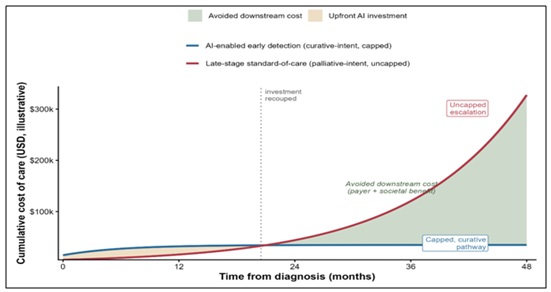
FIG. 2: SCHEMATIC COMPARISON OF THE CAPPED, CURATIVE-INTENT COST TRAJECTORY OF AI-ENABLED EARLY DETECTION VERSUS THE UNCAPPED, ESCALATING COST CURVE OF LATE-STAGE STANDARD-OF-CARE ONCOLOGY
DISCUSSION:
Evidence Synthesis and Methodological Gaps: Interpreting the potential benefits of AI-driven early intervention requires critical appraisal of the underlying evidence. While the theoretical advantages of stage migration are profound, systematic evaluation of the oncology literature reveals a stark division between in-silico modelled benefits and verified Real-World Evidence (RWE). The current consensus on AI cost-effectiveness is heavily skewed by methodological limitations, over-reliance on retrospective datasets, and structurally flawed economic models that fail to capture the operational friction of digital-health deployment. The economic pathway linking early detection to downstream benefit is summarised conceptually in Fig. 3.
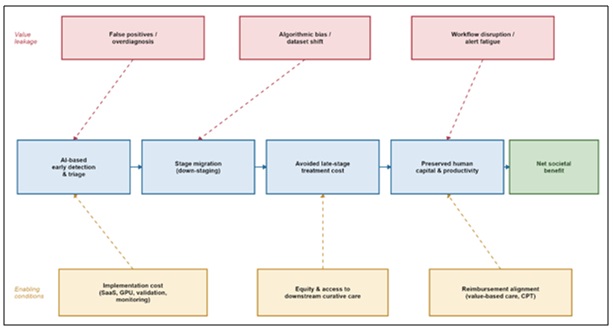
FIG. 3: CONCEPTUAL FRAMEWORK OF THE AI ECONOMIC PATHWAY, TRACING THE ROUTE FROM AI-BASED EARLY DETECTION THROUGH STAGE MIGRATION, AVOIDED LATE-STAGE TREATMENT COST, AND PRESERVED HUMAN CAPITAL TO NET SOCIETAL BENEFIT, CONDITIONED BY IMPLEMENTATION COST, EQUITY, AND REIMBURSEMENT ALIGNMENT
The Illusion of In-silico Perfection and Retrospective Bias: The majority of studies demonstrating superior accuracy and downstream savings rely on retrospective, in-silico validation against curated, historically archived image or slide datasets. Although these controlled environments yield impressive sensitivity and specificity, they suffer severe selection bias. Real-world clinical data are inherently "messy", with imaging artefacts, incomplete records, and ambiguous phenotypes, so performance frequently degrades on transition to live, prospective deployment. Economic models built on inflated retrospective accuracy therefore overestimate downstream benefit and underestimate the real-world costs of false positives and human-in-the-loop triage 31, 32.
The Limitations of Markov Models and Decision Trees: A critical methodological gap is the predominant reliance on static decision trees and Markov models. Markov models project long-term costs and QALYs by moving patients through discrete health states over fixed cycles; while effective for pharmaceuticals with known kinetics, they are structurally inadequate for AI. They assume constant, static transition probabilities and fail to account for dynamic model degradation ("diagnostic drift"), while decision trees frequently treat AI as a one-time fixed cost, omitting SaaS licensing, continuous recalibration, and workflow-disruption labour. By excluding these ongoing operational expenditures, standard models artificially depress the ICER in favour of early AI intervention 31.
The Real-World Evidence (RWE) Gap: Transitioning AI from a theoretical cost-saving mechanism to a proven economic asset requires bridging the RWE gap. There is a critical scarcity of prospective, randomised pragmatic trials evaluating AI within live oncology pathways. Unlike conventional randomised controlled trials in artificial environments, pragmatic trials measure effectiveness in routine practice, capturing natural workflow inefficiencies and diverse populations. Without robust prospective RWE confirming true down staging, verified reductions in late-stage utilisation, and actual workflow efficiencies, the cost-benefit ratio remains speculative and vulnerable to institutional variation.
Methodological Imperatives for Future Evidence Synthesis: Given the conflict between theoretical models and real-world deployment, future comparative-effectiveness research must adopt rigorous synthesis, structuring baseline natural-history models alongside relative treatment-effect models and focusing on a narrowly defined target population to limit heterogeneity33. Pooling economic impact across broadly heterogeneous populations, for example combining AI in breast screening with AI in pancreatic triage, introduces severe statistical inconsistency and undermines validity. Comprehensive, unbiased data retrieval is foundational: although AI is the subject of evaluation, AI search tools themselves show variable sensitivity and a higher "Number Needed to Read" than standard bibliographic methods, so expert-led Boolean searching remains the reference standard 33, 34.
Economic Consequences of AI Failure Modes:The socio-technical failure modes of clinical AI are not merely clinical-safety concerns; each carries a direct, monetisable economic consequence that can invert an otherwise favourable ICER. Table 2 links the principal failure modes, false positives, overdiagnosis, dataset shift, algorithmic bias, and workflow disruption, to their downstream monetised losses.
TABLE 2: ECONOMIC CONSEQUENCES OF AI FAILURE MODES IN ONCOLOGY
| Failure Mode | Mechanism | Direct / Monetised Economic Consequence | Downstream / Illustrative Loss |
| False positives | Hyper-sensitive tuning flags benign or indolent findings | Unnecessary biopsies, repeat imaging (PET/CT), and pathology work-up10,17 | Can erase theoretical screening savings; patient distress; uncompensated counselling time |
| Overdiagnosis | Detection of indolent disease unlikely to progress | Avoidable radical surgery (prostatectomy, thyroidectomy)31,32 | Iatrogenic-harm costs (incontinence, hormone replacement) without survival gain |
| Dataset shift / diagnostic drift | Hardware, assay, or demographic change diverges from training data | Recurring auditing, monitoring, retraining, and recalibration budgets17 | Silent accuracy decay; missed cancers and downstream liability |
| Algorithmic bias | Training on homogenous, non-representative datasets | Excess false negatives and positives in minority cohorts31,32 | Diagnostic waste plus widened, costly survival disparities |
| Workflow disruption / alert fatigue | Poor EHR integration and excessive low-value alerts | Duplicate data entry and clinician time; desensitisation to output21,31 | Neutralised return on investment; sunk software and licence costs |
AI = artificial intelligence; CT = computed tomography; EHR = electronic health record; PET = positron emission tomography.
Ethical, Practical, and System-Level Considerations: Widespread deployment of AI-driven early-intervention pathways carries socio-technical implications that can destabilise system-level economics. Models projecting favourable ICERs frequently assume frictionless clinical integration and uniform access to subsequent care; implementation science reveals that financial viability is inextricably linked to health equity, institutional infrastructure, and human workflow dynamics 21, 28.
Equity Implications and the Risk of a Two-Tiered Oncology System: Advanced AI tools are capital-intensive, so initial deployment is almost exclusively restricted to well-resourced academic centres or affluent urban networks. If high-value analytics are sequestered there, marginalised populations, already suffering higher late-stage diagnosis and mortality, are systematically excluded from stage-migration benefit12,31. Moreover, algorithmic bias poses a direct threat: models trained on homogenous, predominantly affluent datasets exhibit severe performance degradation across diverse cohorts, for example when identifying dermatological malignancies on darker skin tones. Deploying biased algorithms in diverse settings drives disproportionate false negatives and positives among minority groups, increasing diagnostic waste while widening survival disparities 31, 32.
The Paradox of Diagnosis without Downstream Care: The premise of investing in early detection is that it leads to curative intervention; the value of an AI screening tool is entirely negated if identified patients cannot afford or access downstream care 9, 16. Deploying AI-powered teledentistry for oral-cancer screening in rural camps may identify Stage I squamous-cell carcinomas, yet if patients face insurmountable barriers to a high-volume surgical centre, disease progresses to a terminal stage. The system incurs upfront screening costs but still funds the expensive palliative care the AI was designed to prevent. Funding for early-detection algorithms must therefore be paired with subsidised pathways to curative surgery and therapy 9, 28.
Implementation Science In Low-Resource and Public Tertiary Settings: Macro-economic modelling rarely accounts for micro-level infrastructure. While a proprietary algorithm may integrate seamlessly into a modernised private hospital, deploying the same tool in high-volume public tertiary centres, such as safety-net institutions operating under severe resource constraints, presents monumental barriers: legacy, non-interoperable EHRs, fragmented IT architecture, and inconsistent network latency 12, 21. Retrofitting these environments to support high-dimensional data (digital pathology, multi-omics) often exceeds the cost of the software itself, and inadequate infrastructural investment yields implementation failure, abandoned licences, and sunk costs.
Workflow Disruption, Alert Fatigue, and Human Capital: The operational friction of integrating AI into overburdened clinicians' workflows is a major hidden cost. Poorly integrated tools force separate logins, duplicate data entry, or manual overrides, and as systems flag increasingly minute anomalies, clinicians experience severe "alert fatigue", becoming desensitised and ultimately ignoring output, neutralising the tool's utility. Preserving the investment requires substantial human capital for training, change management, and pathway redesign so that AI operates as a seamless cognitive adjunct rather than an administrative burden 31, 32.
Policy, Reimbursement, and Regulatory Dimensions: Theoretical modelling assumes a cost-saving algorithm will naturally be adopted; in reality, health policy, institutional reimbursement, and federal regulation dictate the pace of integration, and structural misalignments frequently disincentivise the very efficiencies AI promises.
The Split-Incentive Problem and Fee-For-Service Disincentives: A fundamental barrier is the prevailing fee-for-service (FFS) architecture, under which providers generate revenue by billing discrete services. Paradoxically, if an AI tool downstages a cancer, it reduces the downstream billable interventions (salvage surgery, intensive admissions) that drive hospital revenue 16, 17. Deployment also creates a "split-incentive" problem: the entity paying the upfront capital cost (a primary-care clinic or frontline hospital) is rarely the entity reaping the reward of avoiding a USD 200,000 late-stage treatment, which accrues to the commercial payer or national scheme. Until resolved, grassroots adoption remains financially unsustainable for individual clinics 19.
The Transition to Value-Based Care (VBC): Aligning incentives with early-detection outcomes requires transition toward value-based care (VBC). Under accountable care organisations (ACOs) or bundled payments, providers are reimbursed on total population health outcomes rather than service volume, so AI-enabled stage migration transitions from a revenue-reducing threat to a profitable asset, letting an ACO keep expenditure below the capitated benchmark and share in generated savings 20. The long-term viability of AI in oncology is thus contingent on the broader shift away from FFS.
Resource Allocation and Short-Term Budget Impact: Even within progressive models, payers operate on short-term actuarial cycles, evaluating budget impact over one to three years, whereas early-detection benefits often require five to ten years to materialise. Because patients frequently switch insurers within five years, commercial payers are structurally disincentivised from funding long-term preventive AI, as a competitor may reap the benefit. Securing specific Current Procedural Terminology (CPT) codes for autonomous "AI-assisted analysis" remains a bureaucratic hurdle, leaving many clinics unable to bill for algorithmic insight 16, 20.
Regulatory Constraints and Software as a Medical Device (SaMD): Beyond reimbursement, AI platforms must navigate restrictive regulation. The FDA and EMA classify diagnostic algorithms as Software as a Medical Device (SaMD), and clearance mandates costly multi-site validation 31, 32. Traditional paradigms approve "locked" devices that perform identically each use, yet the value of deep learning lies in continuous adaptation; if a model updates its internal weights, its outputs change. Frameworks struggle to accommodate "continuous-learning models", and requiring costly re-clearance at every update renders maintenance economically prohibitive. Regulatory modernisation is urgently required to establish streamlined monitoring pathways for adaptive algorithms without crushing viability under continuous compliance costs 31.
Future Directions and Research Priorities: To prove the comparative economic value of AI and move these tools from prototypes to standard of care, a rigorous Health Economics and Outcomes Research (HEOR) roadmap is required to generate the datasets payers and policymakers’ demand.
Bridging the RWE Gap: The most urgent priority is funding prospective, randomised pragmatic trials with integrated health-economic endpoints. Beyond sensitivity or Area under the Receiver Operating Characteristic Curve (AUROC), future trials must incorporate primary economic endpoints such as "incremental cost per stage-shifted patient" and "net reduction in systemic therapeutic utilisation at 36 months", measuring the total pathway cost while actively accounting for false positives, human-in-the-loop over-reads, and exact infrastructural cost.
Enhancing Generalisability and Federated Learning: To mitigate the economic risks of algorithmic bias and poor external validity, future mandates should require multi-institutional validation across socioeconomic strata, with models proving non-inferiority in low-resource and public-hospital settings before reimbursement. To achieve this without compromising privacy, research should prioritise "federated learning" architectures, training across decentralised servers holding localised data without exchanging raw records, thereby producing generalisable models compliant with HIPAA and GDPR.
Refining Economic Models: Finally, health economists must modernise their tools, transitioning from static Markov models and decision trees toward dynamic micro-simulation capable of accounting for real-time algorithmic degradation (diagnostic drift), localised therapeutic pricing, and the non-linear workflow disruptions triggered by AI integration.
CONCLUSION: Cost-benefit analysis is an essential mechanism in modern cancer care, required to evaluate the true clinical value, systemic economic burden, and long-term viability of advanced diagnostic interventions. The current paradigm of late-stage SOC oncology, defined by compounding toxicities, catastrophic patient financial burden, and astronomically expensive life-extending biologics, is reaching an unsustainable threshold for global healthcare systems. While AI-driven early intervention theoretically holds immense potential to disrupt this trajectory by facilitating stage migration, its economic viability is highly conditional.
Artificial intelligence represents a transformative diagnostic tool, not a standalone cure. Its systemic value is easily derailed by the immense upfront capital costs of IT infrastructure, the compounding burden of false positives and overdiagnosis, and the socio-technical friction of integrating algorithms into overburdened workflows. Furthermore, its promise depends entirely on equitable deployment and precise alignment with appropriate downstream clinical action; detecting early-stage disease generates no economic or clinical value if the patient cannot access curative intervention.
Therefore, while the clinical promise of AI is undeniable, policymakers, payers, and health systems must approach its integration with rigorous scrutiny, demanding robust, RWE-backed cost-benefit profiles and ensuring algorithmic equity before committing to widespread adoption. Only through meticulous, patient-centred implementation can AI realise its potential to deliver sustainable, economically viable, and highly effective cancer care.
ACKNOWLEDGEMENT: The authors thank the clinical and administrative staff of the oncology and pathology departments whose insights into the operational realities of cancer-care delivery informed the health-economic frameworks discussed in this review. The authors also acknowledge the maintainers of the PubMed, Scopus, and Cochrane Library databases, which supported the evidence synthesis underpinning this work.
Funding: This scoping review received no specific grant from any funding agency in the public, commercial, or not-for-profit sectors.
Ethical Declaration: As this work is a scoping review based exclusively on previously published, publicly available literature and involved no human participants, human data, or animal subjects, ethical committee approval and informed consent were not required.
CONFLICT OF INTEREST: The authors declare that they have no conflicts of interest relevant to the content of this article.
REFERENCES:
- Li J, Zhang L, Yu Z, Bao Z, Li D and Wang L: The impact of AI on modern oncology from early detection to personalized cancer treatment. NPJ Precision Oncology 2026; 10:1-12.
- Upadhyay A: Cancer: An unknown territory; rethinking before going ahead. Genes and Diseases 2020; 8:655-661.
- World Health Organization: Cancer Fact Sheet. World Health Organization Website 2022.
- Bray F, Laversanne M, Sung H, Ferlay J, Siegel RL and Soerjomataram I: Global cancer statistics 2022: GLOBOCAN estimates of incidence and mortality worldwide for 36 cancers in 185 countries. CA: A Cancer Journal for Clinicians 2024; 74:229-263.
- Bestvina CM, Zullig LL and Zafar SY: The implications of out-of-pocket cost of cancer treatment in the USA: a critical appraisal of the literature. Future Oncology 2014; 10:2189-2199.
- Meeker CR, Geynisman DM, Egleston BL, Hall MJ, Mechanic KY and Bilusic M: Relationships among financial distress, emotional distress, and overall distress in insured patients with cancer. Journal of Oncology Practice 2016; 12:e755-e764.
- Mariotto AB, Enewold L, Zhao J, Zeruto CA and Yabroff KR: Medical care costs associated with cancer survivorship in the United States. Cancer Epidemiology, Biomarkers and Prevention 2020; 29:1304-1312.
- McGarvey N, Gitlin M, Fadli E and Chung KC: Increased healthcare costs by later stage cancer diagnosis. BMC Health Services Research 2022; 22:1155.
- McGarvey N, Gitlin M, Fadli E and Chung KC: Out-of-pocket cost by cancer stage at diagnosis in commercially insured patients in the United States. Journal of Medical Economics 2023; 26:1318-1329.
- Hunter B, Hindocha S and Lee RW: The role of artificial intelligence in early cancer diagnosis. Cancers 2022; 14:1524.
- McPhail S, Johnson S, Greenberg D, Peake M and Rous B: Stage at diagnosis and early mortality from cancer in England. British Journal of Cancer 2015; 112: 108-S115.
- Huang S, Yang J, Fong S and Zhao Q: Artificial intelligence in cancer diagnosis and prognosis: Opportunities and challenges. Cancer Letters 2020; 471:61-71.
- Yim WW, Yetisgen M, Harris WP and Kwan SW: Natural language processing in oncology: A review. JAMA Oncology 2016; 2:797-804.
- Muhammad W, Hart GR, Nartowt B, Farrell JJ, Johung K and Liang Y: Pancreatic cancer prediction through an artificial neural network. Frontiers in Artificial Intelligence 2019; 2:2.
- National Cancer Institute: Artificial Intelligence in Cancer Research. Cancer.gov 2024.
- El Arab RA and Al Moosa OA: Systematic review of cost effectiveness and budget impact of artificial intelligence in healthcare. NPJ Digital Medicine 2025; 8:548.
- Al Meslamani AZ: Beyond implementation: the long-term economic impact of AI in healthcare. Journal of Medical Economics 2023; 26:1566-1569.
- Satheeskumar R: AI-driven diagnostics and personalized treatment planning in oral oncology: Innovations and future directions. Oral Oncology Reports 2025; 13:100704.
- Toscano F, Vera A, Kim E, Golinelli D, Vila-Reyes H and Bteich F: The role of cost-effectiveness analysis in patient-centered cancer care in the era of precision medicine. Cancers 2021; 13:4272.
- Tun HM, Rahman HA, Naing L and Malik OA: Health economics evaluation of artificial intelligence in the field of oncology: a scoping review. Health Economics Review 2026; 16:52.
- Iman H, Reem K, Debbie-Rose D, Kwanyoung J, Lithin Z and Andreas C: Cancer care at the time of the fourth industrial revolution: an insight to healthcare professionals' perspectives on cancer care and artificial intelligence. BMC Health Services Research 2025; 25:120.
- Ricketts W, Gutteridge C, Houston A, Williams S, Tackaberry C and Simon M: AI-based approach to enable proactive identification of early lung cancer: A retrospective population health study and economic model. Thorax 2024; 79:110-118.
- Kim K, Kim JH, Shin J, Kim MS, Park SH and Chang JH: Cost-effectiveness of chest radiography using artificial intelligence for lung cancer screening in South Korea. Scientific Reports 2025; 15:45604.
- Hill H and Roadevin C: Economic evaluation of artificial intelligence for cancer detection in the UK breast screening programme. British Journal of Cancer 2026; 130:100-108.
- Andersen M, Richman IB and Kunst N: Long-term outcomes and cost-effectiveness of artificial intelligence for breast cancer screening: A modeling study. Value in Health 2025; 28:100-112.
- Wang JJ: Cost trends in standard-of-care cancer treatments, 2017-2021. Journal of Clinical Oncology 2024; 42:11073.
- Langton JM: Resource utilization, costs, and quality of end-of-life cancer care: A systematic review of retrospective cohort studies based on routinely collected data (1990-2011). Journal of Clinical Oncology 2013; 31:111.
- Huhulea EN, Huang L, Eng S, Sumawi B, Huang A and Aifuwa E: Artificial intelligence advancements in oncology: A review of current trends and future directions. Biomedicines 2025; 13:951.
- Shimizu H and Nakayama KI: Artificial intelligence in oncology. Cancer Science 2020; 111:1452-1460.
- Garcia-Pola M, Pons-Fuster E, Suarez-Fernandez C, Seoane-Romero J, Romero-Mendez A and Lopez-Jornet P: Role of artificial intelligence in the early diagnosis of oral cancer. A scoping review. Cancers 2021; 13:4600.
- Kolla L and Parikh RB: Uses and limitations of artificial intelligence for oncology. Cancer 2024; 130:2101-2107.
- Rao KN, Fernandez-Alvarez V, Guntinas-Lichius O, Sreeram MP, De Bree R and Kowalski LP: The limitations of artificial intelligence in head and neck oncology. Advances in Therapy 2025; 42:2559-2568.
- Dias S, Welton NJ, Sutton AJ and Ades AE: NICE DSU Technical Support Document 1: Introduction to evidence synthesis for decision making. NICE Decision Support Unit 2011.
- Featherstone R, Walter M, MacDougall D, Morenz E, Bailey S and Butcher R: Artificial intelligence search tools for evidence synthesis: Comparative analysis and implementation recommendations. Cochrane Evidence Synthesis and Methods 2025; 3:e70045.
- Tricco AC, Lillie E, Zarin W, O'Brien KK, Colquhoun H, Levac D, Moher D, Peters MDJ, Horsley T, Weeks Land Hempel S: PRISMA Extension for Scoping Reviews (PRISMA-ScR): Checklist and explanation. Annals of Internal Medicine 2018; 169:467-473.
- Arksey H and O'Malley L: Scoping studies: Towards a methodological framework. International Journal of Social Research Methodology 2005; 8:19-32.
How to cite this article:
Jane MS, Chapke AG and Khandarkar OP: Economic evaluation of AI early intervention vs. late-stage oncology: a health-economic scoping review. Int J Pharm Sci & Res2026; 17(11): 3429-42. doi: 10.13040/IJPSR.0975-8232.17(11).3429-42.
All © 2026 are reserved by International Journal of Pharmaceutical Sciences and Research. This Journal licensed under a Creative Commons Attribution-NonCommercial-ShareAlike 3.0 Unported License.
Article Information
12
3429-3442
263 KB
8
English
IJPSR
Mrunali S. Jane *, Atharva G. Chapke and Om P. Khandarkar
Department of Learning & Development, Hetero Healthcare Ltd., Mumbai, Maharashtra, India.
mrunalijane30@gmail.com
01 June 2026
08 July 2026
23 October 2026
10.13040/IJPSR.0975-8232.17(11).3429-42
01 November 2026
 Download