




ETHOSOMES: A COMPREHENSIVE REVIEW
HTML Full TextETHOSOMES: A COMPREHENSIVE REVIEW
Chetan Ghulaxe * and Ketaki Jawalekar
Department of Pharmaceutics, P. R. Patil Institute of Pharmacy, Talegaon (S.P), Ashti, Wardha, Maharashtra, India.
ABSTRACT: Ethosomes are novel vesicular carriers with high concentrations of ethanol and phospholipids, increasingly investigated for the delivery of drugs through the skin and into the body. Ethosomes are more effective than traditional carriers like liposomes in enhancing skin permeation by disrupting the lipid bilayer of the stratum corneum, allowing efficient delivery of both polar and non-polar drugs into underlying layers of the skin and, eventually, systemic circulation. They are versatile carriers that can entrap drugs of varying physicochemical properties and have advantages such as bypassing first-pass metabolism, improving bioavailability, increasing therapeutic efficacy and drug compliance. However, limitations including vesicle instability, lipid oxidation, and fusion during storage remain challenges. This review was carried out through a systematic review of the literature from databases such as PubMed, Scopus, and Google scholar. Articles were screened according to inclusion and exclusion criteria based on formulation, preparation, mechanism of action and applications of ethosomes. In conclusion, this review offers a systematic and critical review of ethosomal systems, including their composition, preparation, mechanism of permeation, characterization, advantages, limitations and applications.
Keywords: Ethosomes, Vesicular systems, Transdermal delivery, Pliable carriers, Lipid vesicles
INTRODUCTION: The skin is the body's largest organ, and it is a complex barrier that protects against environmental insults and prevents trans-epidermal water loss 1. Due to its structural complexity, the skin performs several physiological functions, including immune defense, thermal regulation, and sensory perception, and supports metabolic processes essential for maintaining homeostasis 2. Skin has three basic layers: the epidermis, dermis, and the subcutaneous layer, which are integral to the protection of the integumentary system 3.
The outer layer of the epidermis, known as the stratum corneum, is the main barrier to drug absorption. This layer is made up of several layers of keratinised corneocytes (cells) embedded in a well-organized lipid matrix of cholesterol, ceramides and free fatty acids. This compact arrangement severely limits the absorption of most drugs, especially high molecular weight and/or hydrophilic compounds 4, 6.
Despite the barrier properties, the skin is an attractive site for drug delivery because it can avoid first-pass effects, systemic toxicity, and improve patient compliance and sustained release of drug 7. While low molecular weight, lipophilic drugs can penetrate the stratum corneum, the compact lipid structure restricts the penetration of many drugs 8. Drugs can diffuse through intercellular lipid domains, intracellular protein domains, or appendageal pathways (hair follicles, sweat glands). Furthermore, drug diffusion may also be affected by physiological and environmental conditions such as age, temperature, hydration, and skin diseases 9.
Tackling the barrier function of the stratum corneum, different chemical and physical approaches like chemical penetration enhancers, iontophoresis, sonophoresis, electroporation, microneedles, and hydration have been developed 10, 11. However, these approaches often have limitations such as high cost, invasiveness, discomfort, and limited clinical acceptance. So, the focus has shifted to newer vesicular nanocarrier systems for transdermal drug delivery. Traditional systems, such as liposomes, niosomes and transferosomes, suffer from low stability and insufficient penetration to the skin 12.
In recent years, ethosomes have been developed as a novel vesicular transdermal drug delivery system. Ethosomes are flexible, soft lipid vesicles, primarily made up of phospholipids, water and ethanol (at high concentration) 13, 14. Ethanol increases bilayer flexibility and alters the lipid structure of the stratum corneum, improving skin penetration and permeability 15, 16. This allows effective penetration of both polar and non-polar drugs into the skin. Because of their high drug entrapment, biocompatibility, better patient acceptance, and ability for mass production, ethosomes are commonly employed in pharmaceutical, dermatological and cosmetic products 17, 18. However, certain limitations such as vesicle instability, possible skin irritation due to ethanol, and storage challenges should be considered.
The unique properties of ethosomes make them promising candidates for non-invasive drug delivery systems. This review focuses on their composition, formulation methods, structural characteristics, mechanisms of skin penetration, advantages, limitations, and applications in modern drug delivery systems.
Ethosomes: Ethosomes are lipid vesicles that consist of phospholipids, propylene glycol, and a large amount of ethanol (30-40%). The vesicles' deformability and flexibility enable them to penetrate deeper into the skin. The amount of ethanol in it is high. This ethanol level will facilitate the drug's penetration by softening the skin 19.
Ethosome Composition: It is made up of various phospholipids, such as glycerol, propylene glycol, and phosphatidylcholine. Its 30– 40% ethanol content will aid in the drug's highly effective delivery across the membrane 20.
There are three types of ethosomes, depending on their composition:
Classical Ethosomes: Contain phospholipids, ethanol, and water. These systems rely mainly on ethanol to enhance membrane fluidity and improve drug permeation.
Binary Ethosomes: These are composed of phospholipids, ethanol and a secondary alcohol (e.g., propylene glycol or isopropyl alcohol) to further enhance the flexibility of vesicles and solubility of drug.
Transethosomes: These are sophisticated systems that contain edge activators (such as surfactants, e.g., Tween or Span) and ethanol. These enhance vesicle flexibility, facilitating skin penetration.
The characteristics of ethosomes are strongly influenced by formulation variables. Higher ethanol content generally reduces vesicle size and enhances membrane fluidity but may lower entrapment efficiency at excessive levels. The type of phospholipid affects vesicle stability and drug loading capacity. Edge activators improve elasticity and permeability, while co-solvents such as propylene glycol can enhance drug solubility and overall penetration efficiency.
Mechanism of Action: Ethosomal drug delivery systems have a dual action of ethanol and soft vesicles to enhance transdermal drug delivery. Ethanol is crucial in disrupting the tightly packed lipid structure of the stratum corneum, enhancing membrane fluidity. This results in reduced barrier resistance of the skin and facilitates easier drug passage.
Meanwhile, the vesicles are made flexible by ethanol, allowing them to adopt a deformable nature. This enables them to penetrate between the cells of the damaged skin. Once in the deeper skin layers, the vesicles rupture, releasing the drug and facilitating better deposit and penetration. The success of the process is dependent on formulation variables such as ethanol content, phospholipid composition and edge activators, which affect the flexibility of the vesicles, drug encapsulation and permeation ability 21, 23.
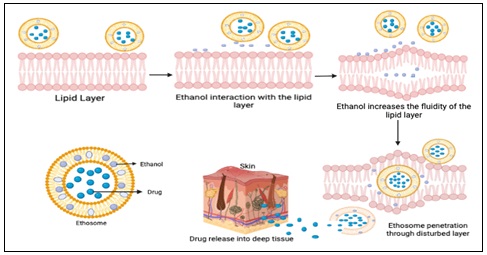
FIG. 1: MECHANISM GOVERNING ETHOSOMAL PENETRATION ACROSS THE SKIN
The Need for Ethosomes: Ethosomes can be as small as 30 nanometers or up to a micron. They are much smaller than liposomes. Due to the high levels of alcohol in the ethosome it shrinks down in size. Ethosomes differ from liposomes in that they contain a higher amount of ethanol, and this property significantly enhances their transdermal penetration potential 24.
TABLE 1: ADVANTAGES AND LIMITATIONS OF ETHOSOMAL SYSTEM 25, 27
| Sr. no. | Advantages | Limitations |
| 1 | Enhanced transdermal penetration due to ethanol mediated lipid fluidization | Ethanol-induced vesicle instability and structural disruption |
| 2 | Improved drug bioavailability via enhanced skin permeation | Vesicle aggregation and fusion during storage |
| 3 | Ability to incorporate drugs with both water-soluble and lipid-soluble properties | Phospholipid oxidation leading to degradation |
| 4 | Bypassing hepatic first-pass metabolism, thereby minimizing systemic adverse effect | Drug leakage from vesicles over time |
| 5 | Protection of labile drugs from external degradation | Sensitivity to storage conditions (temperature and light) |
| 6 | Controlled and sustained drug release profile | Reproducibility challenges during formulation preparation |
| 7 | Non-invasive and patient-compliant delivery approach | Difficulty in large-scale production and process optimization |
| 8 | Good biocompatibility and safety profile | Limited long-term stability and shelf-life concerns |
Common Components Used in Ethosomal Formulations: Phospholipids, ethanol, cholesterol and glycols are the key ingredients of the ethosomal formulations reported in the literature.
Phospholipids like soya lecithin are the major components of the vesicular membrane, whereas ethanol is the primary penetration enhancer which increases membrane fluidity and enhances drug permeation into the skin.
Cholesterol is often used to stabilise the vesicles, while propylene glycol serves as a co-solvent and permeation enhancer. Variations in composition and concentration of these components can have a major impact on the size, drug entrapment, stability and release profiles of the vesicles.
So, choice of formulation ingredients is thought to play a critical role in the development of successful ethosomal drug formulations.
Method of Preparation 28, 31: Although three methods exist for ethosome preparation, the first two are generally preferred in laboratory practice.
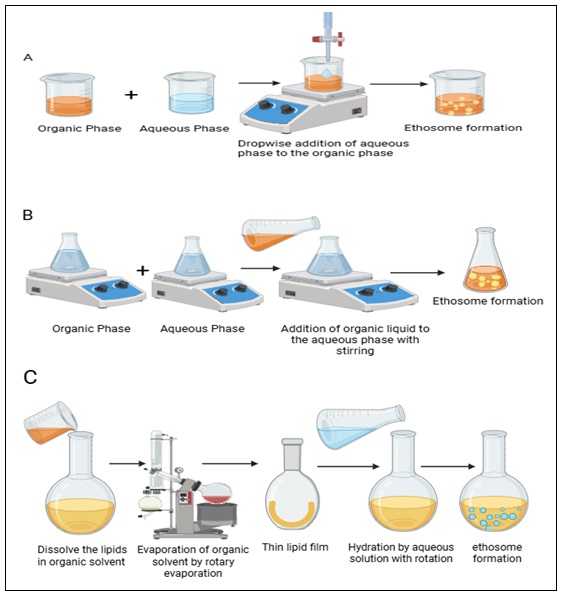
FIG. 2: METHOD OF PREPARATION OF ETHOSOMES
TABLE 2: COMPARATIVE EVALUATION OF DIFFERENT METHODS USED FOR THE PREPARATION OF ETHOSOMES
| Method | Cold Method | Hot Method | Thin-Film Hydration (classical) | Traditional approach |
| Fundamental Basis | Ethanol-mediated lipid solubilization followed by aqueous phase addition at low temperature | Mixing of phase sat elevated temperature to increase lipid fluidity | Lipid film formation using organic solvents followed by hydration | Ethanol-based mixing with controlled hydration and post-processing (e.g., extrusion) |
| Vesicle Characteristics | Small vesicles with moderate uniformity | Larger vesicles with broader size distribution | Large, multilamellar vesicles; requires size reduction | Uniform vesicles with controllable size |
| Scalability | Moderate; scalable with optimization | Moderate; requires strict temperature control | Limited; difficult to scale | Good; suitable for scale-up |
| Solvent-Related Issues | Minimal (no toxic organic solvents) | Low | High (residual solvent risk) | Low |
| Reproducibility | High under controlled conditions | Moderate | Variable | High with standardized conditions |
| Energy Input | Low | Moderate | High | Moderate |
| Drug Suitability | Compatible with both water-soluble and lipid-soluble drugs | Suitable for thermostable drugs | Primarily suitable for lipid-solubledrugs | Broad applicability |
| Limitations | Sensitive to mixing and temperature variations | Not suitable for thermolabile drugs; potential instability | Time-consuming; solvent removal challenges | Requires additional processing; equipment-dependent |
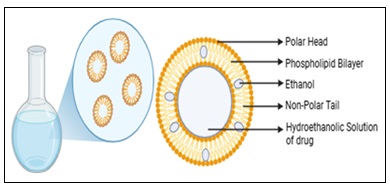
FIG. 3: STRUCTURE OF ETHOSOMES
Characterization and Evaluation:
Vesicle Morphology and Structure: The morphology of ethosomal vesicles should be evaluated using multiple analytical techniques to obtain reliable structural information. While surface imaging using Scanning Electron Microscopy (SEM) provides surface characteristics, Transmission Electron Microscopy (TEM) is more appropriate for confirming vesicle shape and internal structure. Analysis using Atomic Force Microscopy (AFM) can be applied to evaluate surface topography. Ethosomes are generally spherical or slightly irregular vesicles with smooth or mildly undulated surfaces. The use of complementary imaging techniques ensures accurate characterization of vesicular systems 32.
Vesicle size, size Distribution, and Polydispersity Index (PDI): Vesicle size, size distribution and polydispersity index (PDI) the size and size distribution of ethosomes are usually measured by dynamic light scattering (DLS). The polydispersity index (PDI) is a measure of size homogeneity. A PDI value of less than 0.3 indicates a monodisperse system while a higher value suggests a polydisperse system, which may lead to instability. The size of vesicles is crucial in determining skin permeation and drug delivery 33.
Zeta Potential: Zeta potential is a significant indicator of surface charge and stability of ethosomal vesicles. A high absolute zeta potential (typically higher than ±30 mV) ensures stability against aggregation (due to electrostatic repulsion) and storage stability of the vesicles 34.
Deformability Index: Ethosomes deformability is an important factor for improved skin penetration. This is defined as the capacity of the vesicles to squeeze through membranes of a known pore size. The deformability index is determined from:
D = J × (rv / rp) ²
Where, J is the rate of suspension extruded, rv is the vesicle diameter after extrusion, and rp is the diameter of the extrusion membrane pores. The greater the deformability, the greater the deformability and penetration 35.
Drug Content and Encapsulation Efficiency: UV-spectrophotometry or high-performance liquid chromatography (HPLC) are used to measure drug content. Encapsulation efficiency (EE%) is determined to measure the percentage of drug encapsulated in vesicles:
EE (%) = [(Total drug − Free drug) / Total drug] × 100
The free drug is removed by ultracentrifugation or dialysis. High EE indicates good drug loading of ethosomal formulations 36, 37.
In-vitro Drug Release and Release Kinetics: In-vitro drug release is performed in dialysis membrane or Franz diffusion cells. The samples are collected at specified time intervals and quantified spectrophotometrically. The release profiles are correlated with different kinetic models like zero-order, first-order, Higuchi, Korsmeyer-Peppas etc, to find out the drug release mechanism 38.
Ex-vivo Skin Permeation and Deposition Studies: Ex-vivo skin permeation studies are performed using skin from animals or humans in Franz diffusion cells. These can be used to determine the permeation and skin retention of the drug. Ethosomal formulations typically show improved permeation and retention in skin due to the fluidisation effect on skin lipids of ethanol 39.
Compatibility Studies: Drug-excipient compatibility studies are carried out using analytical methods such as Fourier transform infrared spectroscopy (FTIR), differential scanning calorimetry (DSC) and X-ray diffraction (XRD). These ensure the absence of chemical interactions and stability of the formulation.
Stability Studies: Stability studies are conducted under different storage conditions including cold (4°C), room temperature and accelerated conditions. The changes in the vesicle size, PDI, zeta potential, and drug content are tracked. A formulation is deemed stable if there are no substantial changes during the period of study 40.
Phase Transition Temperature: The phase transition temperature of lipid bilayers is measured by differential scanning calorimetry (DSC). Ethanol is present which lowers the transition temperature and increases the fluidity of the membrane and makes the skin more penetrable 41.
Surface Tension Activity: It can be measured by DUNUOY ring tensiometer which will measure the concentration of drug in the aqueous solution 42.
Applications of Ethosomes 43, 48: Ethosomes have been studied for applications in dermatology, infections, hormone delivery, pain management, cancer therapy, cosmeceuticals, vaccination, and gene delivery; however, the current evidence is predominantly derived from preclinical research.
In dermatological disorders and infections, Studies have consistently shown improved permeation in laboratory, ex-vivo, and animal-based experiments; however, strong clinical evidence is still insufficient. For hormone delivery and pain management, improved transdermal transport has been reported, yet clear and consistent clinical benefit over conventional formulations has not been established.
The use of ethosomes in cancer therapy, vaccination, and gene delivery is still at an early investigative stage, with limitations including restricted drug loading, formulation instability, and absence of human studies. In the field of cosmeceuticals, although such systems are commercially available, supporting efficacy data are often limited and lack standardization. Overall, the progression of ethosomes toward clinical application is constrained by limited dose-loading capacity, risk of ethanol-related skin irritation, stability concerns, manufacturing and scale-up challenges, and uncertain regulatory pathways, emphasizing the need for well-designed clinical trials and harmonized evaluation approaches.
TABLE 3: ETHOSOMAL FORMULATIONS FOR VARIOUS DRUGS 49, 57
| Drug | Preparation method | Main solvents | Dosage Form | Model used | Key Performance Outcome |
| Atorvastatin | Cold method | Ethanol | Gel | Ex-vivo skin model | Improved skin permeation and enhanced transdermal delivery |
| Curcumin and Cyclosporine | Ethanol injection method | Ethanol | Gel | In-vivo | Enhanced anti-inflammatory activity and improved therapeutic efficacy |
| Ammonium glycyrrhizinate | Cold method | Water and Ethanol | Gel/Cream | In-vivo | Reduction in inflammatory symptoms in dermatitis and related conditions |
| Salbutamol sulfate (SS) | Thin-film hydration method | Ethanol | Transdermal system | Ex-vivo skin permeation | Sustained drug release with improved bronchodilator effect |
| Curcumin | Cold method | Ethanol | Gel | In-vivo | Enhanced solubility and improved skin penetration |
| Brucine | Thin-film hydration | Ethanol | Gel | In-vivo | Controlled drug release with enhanced anti-inflammatory activity |
| Rosemary and Kiwi | Touitou's method | Ethanol | Topical gel | In-vivo | Improved antioxidant delivery and skin conditioning effect |
| Psoralen | Thin film method | Ethanol | Gel | In-vivo | Enhanced dermal delivery and therapeutic response |
| Aceclofenac | Touitou's/Cold method | Ethanol and isopropyl alcohol | Gel | In-vivo | Improved permeation with prolonged anti-inflammatory action |
Rationale of the Study: Research on ethosomes shows there's a need for more effective transdermal formulations. Traditional drug delivery systems (creams, oral formulations etc.) may not deliver the desired therapeutic effect and can induce systemic toxicity. The stratum corneum is the major barrier to drug transport through the skin. Liposome-based vesicles containing high concentrations of ethanol (called ethosomes) have been widely reported to improve skin permeation. Ethanol is a penetration enhancer and facilitates drug penetration by enhancing membrane fluidity and drug permeation through the skin layers. Numerous studies have reported ethosomal systems to enhance drug delivery either to deeper skin layers or to systemic circulation.
Additionally, literature has shown that these systems could increase drug efficacy and patient adherence as they are non-invasive. However, despite promising results, further investigation is required to optimize formulation variables, understand long-term stability, and evaluate clinical performance across different therapeutic applications.
Prospects: Ethosomes are a promising innovation in transdermal drug delivery, with increasing research backing their capability to improve drug delivery and targeting. The latest research suggests a number of potential avenues for future research.
Advanced Formulations: Emerging research has investigated the design of "smart" ethosomal formulations with ligands or surface modifications to enable targeted drug delivery. This could enhance efficacy and minimise side effects.
Extended Applications: Literature reports suggest that ethosomes are not restricted to topical administration and may also have potential in systemic drug delivery. Their enhanced penetration ability indicates potential applications in conditions such as diabetes, neurological disorders, and other chronic diseases, in addition to dermatological treatments.
Novel Therapeutic Approaches: Emerging research is investigating the role of ethosomes in delivering biomolecules and in advanced therapies, including gene delivery. However, more experimental and clinical data are required to validate these applications.
Translational and Commercial Potential: Although ethosomal systems show strong research potential, their successful commercialization depends on scalability, reproducibility, and regulatory acceptance. Translating laboratory findings into clinically viable and marketable products remains a key challenge.
Overall, ethosomes represents a minimally invasive and patient-compliant system for efficient drug delivery. While current findings are encouraging, further systematic studies and clinical validation are essential to fully establish their role in modern therapeutic strategies.
CONCLUSION: Ethosomes offer an improved, non-invasive delivery system as opposed to traditional topical formulations such as creams and gels, which often don't penetrate the skin barrier. The deformable nature of ethosomes and the penetration enhancing properties of ethanol make them effective in penetrating deeper into the skin and delivering the drug. This technique offers an effective way to deliver a variety of medicinal compounds without the need for injections by greatly increasing medication absorption and bioavailability. In summary, the evaluation demonstrates that ethosomes are a very promising, adaptable, and patient-friendly technology. They represent a major development in pharmaceutical and cosmetic applications since they provide significantly better medication penetration and therapeutic efficacy when compared to conventional techniques.
ACKNOWLEDGEMENTS: Nil
CONFLICTS OF INTEREST: Nil
REFERENCES:
- Udapurkar PP, Kamble SR and Biyani KR: Ethosomes: Novel vesicular carriers for enhancing transdermal drug delivery. Int J Pharm Chem Sci 2015; 4(1): 1–6.
- Prausnitz MR and Langer R: Transdermal drug delivery. Nat Biotechnol 2008; 26(11): 1261-1268. doi:10.1038/nbt.1504.
- Elias PM: Stratum corneum defensive functions: an integrated view. J Invest Dermatol 2005; 125(2): 183-200.
- Proksch E, Brandner JM and Jensen JM: The skin: an indispensable barrier. Exp Dermatol 2008; 17(12): 1063-72. doi: 10.1111/j.1600-0625.2008.00786. x.
- Holbrook KA and Odland GE: Regional differences in the thickness (cell layer) of human stratum corneum: an ultrastructure analysis. JID 1974; 62: 415-422.
- Menton DN and Eisen AZ: Structure and organization of mammalian stratum corneum. J Ultrastruct Res 1971; 35(3): 247-64. doi: 10.1016/s0022-5320(71)80155-7.
- Bos JD and Meinardi MM: The 500 Dalton rule for the skin penetration of chemical compounds and drugs. Exp Dermatol 2000; 9(3): 165-9.
- Barry BW: Novel mechanisms and devices to enable successful transdermal drug delivery. Eur J Pharm Sci 2001; 14(2): 101-14.
- Oliveira G, Hadgraft J and Lane ME: The role of vehicle interactions on permeation of actives through model membranes and human skin. Int J Cosmet Sci 2012; 34(6): 536-45. doi: 10.1111/j.1468-2494.2012.00753. x.
- Potts RO and Francoeur ML: The influence of stratum corneum morphology on water permeability. J Invest Dermatol 1991; 96: 495–499.
- Marwah H, Garg T, Goyal AK and Rath G: Permeation enhancer strategies in transdermal drug delivery. Drug Deliv 2016; 23(2): 564-78. doi: 10.3109/10717544.2014.935532.
- Cevc G and Blume G: Lipid vesicles penetrate into intact skin due to the transdermal osmotic gradients and hydration forces. Biochim Biophys Acta 1992; 1104(1): 226-32.
- Touitou E, Dayan N, Bergelson L, Godin B and Eliaz M: Ethosomes novel vesicular carriers for enhanced delivery. J Control Release 2000; 65(3): 403-18.
- Nainwal N, Jawla S, Singh R and Saharan VA: Transdermal applications of ethosomes—A detailed review. J Liposome Res 2019; 29: 103-113. doi:10.1080/08982104.2018.1517160.
- Godin B and Touitou E: Ethosomes: new prospects in transdermal delivery. Crit Rev Ther Drug Carrier Syst 2003; 20(1): 63-102.
- Zhan B, Wang J, Li H, Xiao K, Fang X, Shi Y and Jia Y: Ethosomes: A Promising Drug Delivery Platform for Transdermal Application. Chemistry 2024; 6(3): 903-910.
- Zahid SR, Upmanyu N, Dangi S, Ray SK, Jain P and Parkhe G: Ethosome: a novel vesicular carrier for transdermal drug delivery. Journal of Drug Delivery and Therapeutics 2018; 8(6): 318-26.
- Jadhav PU, Gujare SG and Shende MA: Ethosomes: A novel tool for vesicular drug delivery. Asian J Pharm Res 2024; 14(1): 45-52. doi:10.52711/2231-5691.2024.00007.
- Elsayed MM, Abdallah OY, Naggar VF and Khalafallah NM: Deformable liposomes and ethosomes: Mechanism of enhanced skin delivery. Int J Pharm 2006; 322(1-2): 60–6.
- Godin B and Touitou E: Mechanism of bacitracin permeation enhancement through the skin and cellular membranes from an ethosomal carrier. J Control Release 2004; 94(2 3): 365–79.
- Paolino D, Lucania G, Mardente D, Alhaique F and Fresta M: Ethosomes for glycyrrhizinate: In skin delivery of vitro percutaneous ammonium permeation through human skin and in-vivo anti-inflammatory activity on human volunteers. J Control Release 2005; 106: 99–110.
- Ghule AR, Shinkar DM and Saudagar RB: Ethosomes: carrier for enhanced transdermal drug delivery system. J Adv Pharm Educ Res 2014; 4(4): 380–387.
- Toll R, Jacobi U, Richter H, Lademann J, Schaefer H and Blume U: Penetration profile of microsphere in follicular targeting of terminal hair follicles. J Invest Dermatol 2004; 123: 168-176.
- Touitou E, Dayan N, Bergelson L, Godin B and Eliaz M: Ethosomes-novel vesicular carriers for enhanced delivery: Characterization and skin penetration properties. J Control Release 2000; 65(3): 403–18.
- Naggar VF and Khalafallah NM: Lipid vesicles for skin delivery of drugs: Reviewing three decades of research. International Journal of Pharmaceutics 2007; 332(1-2): 1-16.
- Laib S and Routh AF: Fabrication of colloidosomes at low temperature for the encapsulation of thermally sensitive compounds. J. Colloid & Interface Sci 2008; 317: 121-129.
- Swarnlata S, Rahul R, Chanchal DK and Shailendra S: Colloidosomes an advanced vesicular system in drug delivery. Asian J Sci Research 2011; 4(1): 1-15.
- Jain S, Jain P, Umamaheshwari RB and Jain NK: Transfersomes: A novel vesicular carrier for enhanced transdermal delivery: Development, characterization and performance evaluation. Drug Dev Ind Pharm 2003; 29: 1013–1026. doi: 10.1081/DDC-120025458.
- Dubey V, Mishra D and Jain NK: Melatonin loaded ethanolic liposomes: Physicochemical characterization and enhanced transdermal delivery. Eur J Pharm Biopharm 2007; 67: 398–405.
- Musielak E and Krajka-Kuźniak V: Liposomes and ethosomes: comparative potential in enhancing skin permeability. Cosmetics 2024; 11(6): 191.
- Jain S, Tiwary AK, Sapra B and Jain NK: Formulation and evaluation of ethosomes for transdermal delivery of lamivudine. AAPS Pharm Sci Tech 2007; 8: 1–9.
- Verma DD and Fahr A: Synergistic penetration enhancement effect of ethanol and phospholipids on the topical delivery of cyclosporin A. J Control Release 2004; 97(1): 55–66.
- Sharma A and Sharma US: Liposomes in drug delivery: progress and limitations. Int J Pharm 1997; 154(2): 123–40.
- Rao Y, Zheng F and Gao J: In-vitro percutaneous permeation and skin accumulation finasteride using vesicular ethosomal carrier. AAPS Pharm Sci Tech 2009; 9: 860-5.
- Cevc G and Blume G: Lipid vesicles penetrate into intact skin owing to the transdermal osmotic gradients and hydration force. Biochim Biophys Acta 1992; 1104(1): 226–32.
- Godin B, Touitou E, Rubinstein E, Athamna A and Athamna M: A new approach for treatment of deep skin infection by an ethosomal antibiotic preparation: An in-vivo study. J Antimicro Chemother 2005; 55: 989-94.
- Donatella P, Giuseppe L, Domenico M, Franco A and Massimo F: Ethosomes for skin delivery of ammonium glycyrrhizinate permeation t activity on human volunteers. Journal of Controlled Release 2005; 106: 99-110.
- Shah VP: "In-vitro release test (IVRT): Principles and applications." International Journal of Pharmaceutics 2022.
- Dragicevic-Curic N, Gräfe S, Gitter B, Winter S and Fahr A: Surface charged temoporfin-loaded flexible vesicles: in-vitro skin penetration studies and stability. Int J Pharm 2010; 384(1-2): 100-8. doi: 10.1016/j.ijpharm.2009.09.020. PMID: 19819321.
- Yadav P, Jain S, Patidar D, Raj R, Kumar A and Yadav R: An innovative method for transdermal medication delivery: ethosomes. Int J Pharm Res Appl 2025; 10(2): 1552-1562. doi:10.35629/4494-100215521562.
- Hu G and Liu J: Advances in studies of phospholipids as carriers in skin topical application. J Nanjug Med Univ 2007; 21: 349–53.
- Torchilin VP and Weissig V: Liposomes a practical approach. (2nd Edition) Oxford University Press, Oxford 2003; 36-39.
- Abdulbaqi IM, Darwis Y, Assi RA and Khan AA: Ethosomal formulations: a novel approach for delivery of drugs topically. Pharmaceutical Development and Technology 2016; 21(1): 101-11.
- Ainbinder D and Touitou E: Testosterone ethosomes for enhanced transdermal delivery. Drug Deliv 2005; 12(5): 297-303. doi: 10.1080/10717540500176910.
- Kumar L, Verma S, Singh M, Chalotra T and Utreja P: Advanced drug delivery systems for transdermal delivery of non-steroidal anti-inflammatory drugs: A review. Curr Drug Deliv 2018; 15(8): 1087-1099.
- Shinde P, Page A and Bhattacharya S: Ethosomes and their monotonous effects on skin cancer disruption. Front Nanotechnol 2023; 5: 1087413. doi:10.3389/fnano.2023.1087413.
- Devvanshi N, Raj K, Gupta AK, Singh S, Chauhan A and Chauhan A: Cosmeceutical: Their role as anti-aging and their future aspects. EJBP S2025; 12(2): 99-106.
- Subhan MA, Filipczak N and Torchilin VP: Advances with Lipid-Based Nanosystems for siRNA Delivery to Breast Cancers. Pharmaceuticals (Basel) 2023; 16(7): 970. doi: 10.3390/ph16070970. PMID: 37513882.
- Agarwal S and Gautam G: Formulation, Development and Characterization of Ethosomes of Atorvastatin. Int J Pharm Investig 2020; 10(2): 156-9.
- Gharat S, Momin M, Panchal U and Omri A: Novel ethosomal gel formulation for enhanced transdermal delivery of curcumin and cyclosporine: a preclinical approach to rheumatoid arthritis management. Drug Deliv 2025; 32(1): 2512620. doi:10.1080/10717544.2025.2512620.
- Paolino D, Lucania G, Mardente D, Alhaique F and Fresta M: Ethosomes for skin delivery of ammonium glycyrrhizinate: in-vitro percutaneous permeation through human skin and in-vivo anti-inflammatory activity on human volunteers. J Control Release 2005; 106(1-2): 99-110.
- Bendas ER and Tadros MI: Enhanced transdermal delivery of salbutamol sulfate via ethosomes. AAPS Pharm Sci Tech 2007; 8(4): 107.
- Rawat V, Dewangan S, Sarwa KK, Dhara M and Prusty SK: Curcumin-loaded gelatinethosomal gel: A novel approach for anti-inflammatory efficacy. Pharmaceutical Science Advances 2025; 3: 100098.
- Abdallah MH, Abu Lila AS, Unissa R, Elsewedv HS and Elghamrv HA: Brucine-loaded ethosomal gel: design, optimization, and anti-inflammatory activity. AAPS Pharm Sci Tech 2021; 22(8): 269.
- Jadaun PS, Rai JP and Singhal AK: Formulation and development of herbal ethosomal gel for anti-aging property using rosemary and kiwi extract. World J Pharm Res 2025; 14(9).
- Zhang YT, Shen LN, Zhao JH and Feng NP: Evaluation of psoralenethosomes for topical delivery in rats by using in vivo microdialysis. Int J Nanomedicine 2014; 9: 669-78. doi:10.2147/IJN.S57314.
- Dave V, Kumar D, Lewis S and Paliwal S: Ethosome for enhanced transdermal drug delivery of aceclofenac. International Journal of Drug Delivery 2010; 2: 81-92.
How to cite this article:
Ghulaxe C and Jawalekar K: Ethosomes: a comprehensive review. Int J Pharm Sci & Res 2026; 17(9): 2643-51. doi: 10.13040/IJPSR.0975-8232.17(9).2643-51.
All © 2026 are reserved by International Journal of Pharmaceutical Sciences and Research. This Journal licensed under a Creative Commons Attribution-NonCommercial-ShareAlike 3.0 Unported License.
Article Information
8
2643-2651
814 KB
4
English
IJPSR
Chetan Ghulaxe * and Ketaki Jawalekar
Department of Pharmaceutics, P. R. Patil Institute of Pharmacy, Talegaon (S.P), Ashti, Wardha, Maharashtra, India.
chetanghulaxe@gmail.com
01 April 2026
30 April 2026
19 June 2026
10.13040/IJPSR.0975-8232.17(9).2643-51
01 September 2026
 Download