




FACTORS INFLUENCING USAGE OF INSULIN IN TYPE 2 DIABETES MELLITUS PATIENTS OF TERTIARY CARE TEACHING HOSPITAL OF GUJARAT
HTML Full TextFACTORS INFLUENCING USAGE OF INSULIN IN TYPE 2 DIABETES MELLITUS PATIENTS OF TERTIARY CARE TEACHING HOSPITAL OF GUJARAT
Manasi K. Dholakia *, Hemal J. Dholakia and Anil P. Singh
Department of Pharmacology, GMERS Medical College & Hospital Junagadh, Gujarat, India.
ABSTRACT: Introduction: Type 2 diabetes mellitus (T2DM) is a rapidly increasing public health problem in India, with many patients eventually requiring insulin therapy due to progressive β-cell dysfunction. Despite strong evidence supporting insulin’s role in achieving glycaemic control and preventing complications, initiation of insulin is frequently delayed because of psychological insulin resistance (PIR). This study aimed to assess knowledge, attitudes, and practices related to insulin therapy and to identify factors influencing insulin usage among patients with T2DM at a tertiary care teaching hospital in Gujarat. Methods: A cross-sectional observational study was conducted over three months (August–October 2023) at P.D.U. Medical College and Hospital, Rajkot, involving 100 adult patients with T2DM. Data were collected using a structured, validated questionnaire covering socio-demographic details, clinical characteristics, and knowledge, attitudes, and behavioural aspects related to insulin therapy. Descriptive statistics were used to analyse the data. Results: Among the 100 participants, 57 were receiving only oral hypoglycaemic agents and 43 were on insulin therapy for durations ranging from one month to ten years. While the majority of patients in both groups recognized that insulin prevents diabetic complications, misconceptions persisted regarding insulin being a last-resort therapy, lifelong dependency, dose escalation, hypoglycaemia, and weight gain. Patients not on insulin reported greater fear of injections, dependency on relatives, and lower trust in physicians when insulin treatment is advised, whereas cost concerns, preference for traditional Indian medicines, and apprehension toward frequent glucose monitoring were common across both groups. Discussion: The findings highlight that although general awareness regarding the benefits of insulin therapy is reasonably good, significant psychological, behavioural, and cultural barriers continue to hinder timely insulin initiation. Misconceptions, economic concerns, and limited physician–patient trust about insulin treatment play a crucial role in perpetuating psychological insulin resistance. Conclusion: Overall, patients demonstrated a relatively positive attitude toward insulin therapy, with minimal social stigma and fear of injections. However, persistent misconceptions, cost concerns, preference for alternative therapies, and lack of trust in physicians about insulin treatment advice particularly among insulin-naïve patients remain key barriers. Addressing these issues through targeted patient education, effective counselling, and strengthening doctor–patient communication is essential to improve acceptance and optimal use of insulin therapy in T2DM.
Keywords: Type-2 diabetes, Insulin, Psychological insulin resistance, Knowledge, Attitude
INTRODUCTION: Diabetes mellitus has emerged as one of the most significant global health challenges of the 21st century and is
currently ranked among the top ten causes of mortality worldwide, alongside cardiovascular disease (CVD), respiratory illnesses, and cancer 1.
Both globally and within India, the prevalence of type 2 diabetes mellitus (T2DM) is increasing at an alarming rate. According to recent estimates from the Non-Communicable Disease (NCD) Risk Factor Collaboration (2022), the global diabetic population has reached approximately 828 million, with more than 95% affected by type 2 diabetes 2. India has seen a dramatic rise in the burden of diabetes over the past two decades. The estimated number of people living with diabetes increased from 32 million in 2000 to 63 million in 2012, further rising to 74 million in 2021, and currently stands at approximately 101 million, as reported by the ICMR–INDIAB Study 3. Type 2 diabetes mellitus is a complex, multisystem metabolic disorder characterized by persistent hyperglycaemia resulting from a progressive decline in insulin secretion, insulin resistance, or a combination of both. Dysfunction of pancreatic β-cells leads to reduced insulin production, impairing the body’s ability to maintain physiological glucose levels. Concurrently, insulin resistance promotes increased hepatic glucose production and reduced glucose uptake in muscle, liver, and adipose tissue, creating a dysfunctional feedback loop between insulin action and secretion that ultimately results in chronic hyperglycaemia 2.
The classical complications of diabetes mellitus include macrovascular and microvascular disorders such as stroke, coronary artery disease, heart failure, peripheral neuropathy, retinopathy, diabetic kidney disease, and peripheral vascular disease. However, with improvements in diabetes management and increased patient survival, additional associations are increasingly being recognized, including links with cancer, infections, liver disease, affective disorders, as well as functional and cognitive impairments 4.
Lifestyle modification remains a cornerstone in the management of T2DM, and non-pharmacological interventions should form an integral part of treatment strategies. Pharmacological therapy is introduced when lifestyle changes alone fail to achieve adequate glycaemic control 2. The introduction of oral antidiabetic drugs (OADs), including insulin secretagogues such as sulfonylureas and biguanides, significantly expanded treatment options for T2DM. Over time, newer therapeutic classes such as α-glucosidase inhibitors, thiazolidinediones, and more recently incretin-based therapies have further diversified diabetes management 5.
It is widely accepted that type 2 diabetes progresses when pancreatic insulin secretion can no longer adequately compensate for the underlying metabolic disturbances. As β-cell function deteriorates progressively over time, the majority of individuals with T2DM eventually require insulin therapy to maintain glycaemic control 6. Several randomized clinical trials have demonstrated that insulin therapy significantly reduces the risk of microvascular complications. Evidence from the U.K. Prospective Diabetes Study (UKPDS) suggested that early initiation of insulin therapy may also reduce macrovascular complications in patients with type 2 diabetes 7. Beyond its glucose-lowering effects, insulin therapy may confer additional metabolic and vascular benefits. Insulin possesses anti-inflammatory and antioxidant properties that may help protect against endothelial dysfunction and vascular disease by suppressing reactive oxygen species (ROS) and reducing the expression of adhesion molecules 5.
Despite its well-established benefits, insulin therapy is often delayed or refused due to psychological insulin resistance (PIR). PIR is defined as a patient’s reluctance or refusal to initiate insulin therapy despite clear clinical indications and physician recommendations 8, 9. This phenomenon has been documented for over two decades and continues to represent a significant barrier to achieving optimal glycemic control in patients with T2DM 8, 10.
Patient resistance to insulin initiation is frequently driven by a range of negative beliefs and misconceptions 8, 11. These concerns broadly encompass technical issues such as fear of injections, pain, difficulties with administration techniques, hypoglycemia, and perceived health risks and experiential concerns, including feelings that insulin signifies disease progression, treatment failure, or personal inadequacy in managing diabetes 12. Additionally, fear of weight gain is commonly reported as a contributing factor to psychological insulin resistance 12, 13.
Other frequently cited barriers to insulin initiation include concerns regarding lifelong dependency on insulin, discomfort associated with self-injection, and the belief that insulin therapy will reduce lifestyle flexibility 14. Evidence suggests that a strong and supportive doctor–patient relationship plays a crucial role in addressing these concerns, improving acceptance of insulin therapy, and enhancing treatment adherence 9.
A Knowledge, Attitudes, and Practices (KAP) study offers valuable insights into the cultural, behavioral, and psychological factors underlying psychological insulin resistance. In the present study, we aimed to explore patients’ concerns contributing to reluctance toward insulin initiation and to propose strategies that may help improve acceptance of insulin therapy and achieve optimal glycaemic control.
MATERIAL AND METHODS:
Study Design and Setting: This was a cross-sectional observational survey conducted at the tertiary care hospital, P.D.U. Medical College and Hospital, Rajkot, Gujarat. The study was conducted for three months from August 2023 to October 2023 including outdoor and indoor patients with type 2 diabetes. Participants were recruited using consecutive sampling during the study period. All eligible patients attending the departments during the study duration were approached for participation.
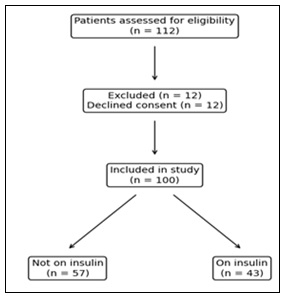
FIG. 1:
Study Population: The study population included total 100 patients with type 2 diabetes mellitus.
Inclusion Criteria:
- Patients aged [≥18 years].
- Diagnosed with type 2 diabetes mellitus.
- Currently receiving either oral hypoglycemic drugsor insulin therapy (with or without oral agents).
- Willing to participate and provide informed consent.
Exclusion Criteria:
- Patients with type 1 diabetes mellitus.
- Pregnant women with gestational diabetes.
Data Collection Tools and Procedure: In this cross-sectional study, data were collected using the questionnaire which was adapted from previously validated tools, including the Insulin Treatment Appraisal Scale (ITAS) and Chinese Attitudes to Starting Insulin Questionnaire (Ch-ASIQ).
It was reviewed by three subject experts (pharmacologist and physician) for content validity and pilot tested in 10 patients for clarity and feasibility. The questionnaire administered by face-to-face interview. A total of 27 questions including demographic details and questions regarding their knowledge, attitude and behaviour towards insulin therapy.
The questionnaire consisted of the following sections:
Socio-demographic Details: Gender, education status, marital status, occupation, and place of residence (urban/rural).
Clinical Details: Duration of diabetes, history of hospitalization, HbA1c values, and duration since initiation of insulin therapy (where applicable).
Knowledge and Attitude toward Insulin Therapy: Questions regarding beliefs about insulin (e.g., whether it prevents complications, necessity of lifelong therapy, perception of weight gain, and risk of hypoglycaemia).
Behavioral and Cultural Aspects: Questions assessing trust in physicians, stigma associated with insulin use, cost-related concerns, impact on social life and diet, religious beliefs, and preference for alternative/traditional therapies. Each question was a closed-ended question with responses recorded in the form of “Agree” or “Disagree.” Clinical data such as HbA1c values were obtained from patients’ medical records. The study protocol was reviewed and approved by the Institutional Ethics Committee of P. D. U. Medical College, Rajkot. Written informed consent was obtained from all participants prior to inclusion in the study. Confidentiality and anonymity of patient data were strictly maintained.
Data Management and Statistical Analysis: The collected data were compiled in Microsoft Excel and analyzed using appropriate statistical in Microsoft Excel. Descriptive statistics (frequency, percentage) were used to summarize demographic and clinical characteristics. A formal composite PIR score was not calculated, and analysis was performed using item-wise responses.
RESULTS:
TABLE 1: SOCIO DEMOGRAPHIC DETAILS
| Not on insulin 57) n(%) | On insulin (43) n(%) | |
| Gender male: female ratio | 0.98:1 | 1.15:1 |
| Male | 28(49.1%) | 23(53.5%) |
| Female | 29 (50.9%) | 20 (46.5%) |
| Education status | ||
| Illiterate | 6 (10.5%) | 16.3% (7) |
| Primary | 9 (15.8%) | 11.6% (5) |
| Secondary | 10 (17.5%) | 16.3% (7) |
| Higher secondary | 14(14%) | 23.3% (10) |
| University | 24(42.1%) | 32.6% (14) |
| Marital status | ||
| Married | 49 (86.0%) | 30 (69.8%) |
| Single | 7 (12.3%) | 10 (23.3%) |
| Divorced | 1 (1.8%) | 3 (7.0%) |
| Localization | ||
| Urban | 43 (75.4%) | 31 (72.1%) |
| Village | 14 (24.6%) | 12 (27.9%) |
| Occupation | ||
| Working | 19 (33.3%) | 18 (41.9%) |
| Housewife | 23 (40.4%) | 13 (30.2%) |
| Retired | 11 (19.3%) | 4 (9.3%) |
| Unemployed | 4 (7.0%) | 8 (18.6%) |
| History of hospitalization | 20 (35.1%) | 20 (46.5%) |
| Last HBA1C value (mean±SD) | 6.34±0.86% | 5.89±0.75% |
| Start of Insulin therapy | n(%) | |
| <1 year | 7(16.27%) | |
| 1-3 years | 13(30.23%) | |
| 3-5 years | 9(20.93%) | |
| >5 years | 14(32.55%) | |
TABLE 2: QUESTIONS REGARDING INSULIN TREATMENT
| Questions | Not on insulin (57) n(%) | On insulin (43) |
| Insulin prevents the complications of diabetes | 40 (70.2%) | 31 (72.1%) |
| Insulin is usually prescribed as a last option in the treatment | 38 (66.7%) | 28 (65.1%) |
| Insulin worsens the diabetes | 11 (19.3%) | 4 (9.3%) |
| The dose of insulin has to be increased once you begin to use it | 39 (68.4%) | 35 (81.4%) |
| Insulin leads to gain weight | 23 (40.4%) | 8 (18.6%) |
| Insulin lowers the blood glucose level too much | 36 (63.2%) | 29 (67.4%) |
| If you start to use insulin, you have to continue to use it | 47 (82.5%) | 38 (88.4%) |
TABLE 3: THE QUESTIONS MEASURING THE KNOWLEDGE ON INSULIN USAGE
| Questions | Not on insulin (57) | On insulin (43) |
| Insulin injection is a painful process | 24 (42.1%) | 13 (30.2%) |
| The self-injection of insulin is difficult | 26 (45.6%) | 17 (39.5%) |
| I do not have any relative to inject insulin. If someone does the injections, I would use it if advised | 42 (73.7%) | -- |
| Insulin injection (self-administration /by relatives) | -- | 29 (67.4%) |
| Hypoglycaemic episodes occur | -- | 27 (62.8%) |
| Any difficulties in adjusting/calculating the dose of insulin | -- | 18 (41.9%) |
TABLE 4: THE QUESTIONS MEASURING THE INSULIN AS SPIRITUALITY ASPECTS
| Questions | Not on insulin (57) | On insulin (43) |
| I do not use insulin due to my religious belief | 3 (5.3%) | -- |
TABLE 5: BEHAVIORAL QUESTIONS
| Questions | Not on insulin (57) | On insulin (43) |
| You don’t trust your doctor for advice of insulin (If given) | 44 (77.2%) | 3 (7.0%) |
| Will you be worried that other people will know about your problem if you start taking insulin | 9 (15.8%) | 6 (14.0%) |
| Insulin is Costly | 38 (66.7%) | 34 (79.1%) |
| Will you be worried that your social life or hobbies will get affected | 17 (29.8%) | 11 (25.6%) |
| Do you believe, you can’t pay close attention to my diet as insulin treatment requires | 23 (40.6%) | 21 (48.8%) |
| If you will be prescribed insulin would you rather want to try Traditional Indian Medicines | 37 (64.9%) | 30 (69.8%) |
| Are you Afraid of insulin therapy thinking of Constant glucose monitoring | 28 (49.1%) | 27 (62.8%) |
A total of 100 patients with type 2 diabetes were surveyed. Of them 57 were on oral hypoglycemic agents and 43 patients were on insulin from 1 month to 10 years. There was almost equal gender representation in patients not receiving insulin while slightly higher male to female ratio seen in patients receiving insulin as treatment of diabetes. Majority of patients were educated, married and living in urban dwelling. History of hospitalization and last HBA1C values received from records were on higher side in patients who were on insulin Table 1.
Majority of patients were aware that insulin prevents complications of diabetes (70.2%-not on insulin & 72.1%- on insulin) and causes hypoglycaemia (63.2%- not on insulin & 67.4% on insulin). Patients on insulin understood after initiation of insulin it has to be continued for life time (88.4%) and dose increase with progression of disease (81.4%). Patients, not on insulin believed more about weight gain (40.6%) and worsening of diabetes (19.3%) due to insulin compared to those who are taking insulin Table 2.
Patients, not on insulin had fear of self-injection (45.6%) and dependency on relatives for that (73.7%). More number of patients on insulin experienced hypoglycemic episodes due to insulin injection (62.8%) Table 3.
In questions regarding behavior towards insulin, majority believed that insulin is costly (66.7%- not on insulin & 79.1% on insulin) and they would try traditional Indian medication (64.9%- not on insulin & 69.8%- on insulin). They were concerned more about constant glucose monitoring (62.8%) and knowledge of other people about their insulin treatment (15.8%- not on insulin & 14%- on insulin) but less regarding their social life and hobbies get affected due to insulin (25.6%). Those who were on insulin had less trust issue (7%) on physician for advice on insulin to start insulin for treatment of diabetes compared to those who are not on insulin (77.2%) Table 5.
DISCUSSION: Insulin plays a central role in the management of both type 1 and type 2 diabetes mellitus. However, inadequate knowledge, misconceptions, and improper practices related to insulin self-administration may lead to suboptimal glycaemic control and an increased risk of insulin-related complications. The present study was undertaken to assess psychological insulin resistance (PIR) among patients with type 2 diabetes mellitus attending inpatient and outpatient departments. External factors like claims of very good control, as well as reversal of diabetes by various treatments in media and information is shared in public by various media, written as well digital media, may contribute to delay uptake of insulin by patients who requires insulin.
In the current study, the majority of patients (70%) believed that insulin therapy could help prevent further complications of diabetes. This finding is comparable with that reported by Almheiri A. et al., where 77% of patients shared a similar perception 15. This positive belief indicates that a substantial proportion of patients recognize the therapeutic benefits of insulin, which may serve as a favourable foundation for patient education and counselling.
Despite this, insufficient information and persistent misconceptions continue to contribute significantly to resistance toward insulin initiation. Approximately 65% of patients in this study believed that insulin represents the final treatment option for type 2 diabetes and that initiation of insulin indicates disease progression. Such perceptions may further increase hesitancy to initiate insulin therapy. Similar findings were reported by Yilmaz A. et al., where 57.4% of patients agreed that insulin is the last treatment option 11.
Patients in the present study were relatively less concerned that insulin therapy could worsen their diabetes, a finding consistent with the observations of Yilmaz A. et al. 11. However, this contrasts with the study by Alomran A.M. et al., in which 45.1% of patients were unwilling to initiate insulin due to the belief that it would worsen their condition 9.
Patients already receiving insulin therapy (81.4%) were more likely to believe that insulin doses would continue to increase once treatment was initiated, compared to those not on insulin therapy (68.4%). This perception may reflect experiences with dose titration and adjustment and may further reinforce apprehension among insulin-naïve patients.
The belief that insulin therapy is a permanent, lifelong commitment was identified as a major contributor to psychological insulin resistance. In the present study, a notably high proportion of patients (88.4%) believed that insulin, once started, must be continued for life. Similar concerns have been documented in studies by Larkin A. et al. 14, Almheiri A. et al. 15, and Polonsky W. H. 16, where 56%, 45%, and 45% of patients, respectively, expressed this belief. The higher prevalence observed in the current study highlights the magnitude of this misconception in the study population. Consistent with previous studies by Fu S. N. et al. 17, Alomran A.M. et al. 9, and Larkin M. E. et al. 14, weight gain associated with insulin therapy was not a major concern among patients in this study. Interestingly, patients not receiving insulin therapy were more concerned about potential weight gain compared to those already on insulin, which contrasts with the findings of Snoek F.J. et al. 18.
Fear of hypoglycaemia was identified as one of the important factors contributing to negative attitudes toward insulin therapy. In the present study, approximately 68% of patients believed that insulin could cause hypoglycaemia. This finding aligns with several previous studies, including those by Almheiri A. et al. 15, Yilmaz A. et al. 11, and Snoek F.J. et al. 18.
Although most patients acknowledged the role of insulin in preventing diabetic complications, concerns regarding pain associated with insulin injections persisted. In this study, 30% of insulin-treated patients reported that insulin injections were painful, compared to 42% of patients not receiving insulin therapy. Comparable findings were reported by Almheiri A. et al., where 42% of patients perceived insulin injections as painful 15. Higher levels of concern were noted in studies by Fu S. N. et al. 17 and Mohamad A.H. et al. 19, where 66.86% and 55.9% of patients, respectively, believed insulin injections to be painful. Patients not receiving insulin therapy also reported greater difficulty with self-injection and expressed concerns about dependency on relatives for administering injections.
Religious and cultural beliefs have been reported as important factors influencing insulin acceptance in various populations. Lee et al. reported that some patients were reluctant to use insulin due to the belief that it is derived from pig products, which is unacceptable in Muslim societies 20. In the present study, however, only a small proportion of patients (5.3%) reported religious reasons for refusing insulin. Similar findings were reported by Yilmaz A. et al., where only 3.2% of patients believed that their religion prohibited insulin use 11.
A positive doctor–patient relationship plays a crucial role in enhancing treatment acceptance and adherence and is influenced by patient perceptions, physician empathy, and communication skills. Initiating insulin therapy remains a challenge for physicians, as acceptance largely depends on how effectively patients’ fears and misconceptions are addressed 9. In the present study, 77% of patients who are not on insulin treatment for diabetes reported lack of trust in their physician when insulin was prescribed for treatment of diabetes, highlighting a significant barrier to insulin initiation and leads to PIR.
Social stigma associated with insulin use was another psychological barrier identified for PIR. Fear of embarrassment and concerns about others becoming aware of their illness contributed to reluctance toward insulin therapy. While Fu S. N. et al. reported that 40% of patients were worried about social stigma 17, only 15% of patients in the present study expressed similar concerns. Additionally, patients were less worried about insulin therapy affecting their daily routines or hobbies.
Economic factors also played an important role in shaping patient attitudes toward insulin therapy. The cost of insulin, syringes, and glucose monitoring supplies was frequently cited as a concern, particularly among patients from lower-income backgrounds. Although cost was not reported as a reason for refusing insulin outright, it influenced coping strategies such as reducing insulin dosage or injection frequency 12. In the present study, 79% of patients already receiving insulin agreed that insulin treatment is expensive.
Dietary restrictions associated with insulin therapy were another contributor to psychological insulin resistance. Nearly half of the patients on insulin (48.8%) believed that insulin treatment requires strict dietary control that they may not be able to follow. A similar finding was reported by Alomran A.M. et al., where 50.46% of patients expressed negative attitudes toward insulin due to perceived dietary constraints 9.
A considerable proportion of patients in the present study (69.8%) reported a preference for trying Traditional Indian Medicines instead of insulin if insulin was prescribed. This reflects a strong cultural inclination toward alternative treatment modalities and highlights the need for culturally sensitive educational interventions. Comparable findings were reported by Fu S. N. et al., where 43% of patients preferred Chinese traditional medicine over insulin therapy 17.
Regular glucose monitoring is essential for appropriate insulin dose adjustment; however, 62% of patients in this study demonstrated a negative attitude toward glucose monitoring. This finding is consistent with the study by Almheiri A. et al., where 68% of patients expressed similar concerns regarding glucose monitoring 16.
CONCLUSION: The reasons for initiating insulin therapy varied across different patient groups. In the present study, the majority of participants were educated, married, and residing in urban areas. Overall, the findings indicate a generally positive attitude toward insulin therapy among the study population.
Social stigma appeared to be minimal, as the majority were not concerned about others knowing about their insulin use or its impact on their social life. Fear of injections, self-administering insulin and feeling confident in adjusting doses according to their requirements was relatively higher in patients not receiving insulin than those who are already receiving insulin. Only a small proportion of patients believed that insulin worsens diabetes. In contrast, the majority acknowledged that insulin helps prevent long-term diabetic complications, while concern regarding weight gain associated with insulin use was reported by a few participants.
Despite these positive perceptions, several issues require attention during discussions about insulin initiation. Approximately 70% of patients expressed willingness to try traditional or alternative medicines instead of insulin when it was prescribed. The cost of insulin remains of concern for some patient; some patients report fear related to regular blood glucose monitoring. Most patients not receiving insulin expressed less trust in their physicians specific regarding the initiation of insulin for treatment of diabetes. Other commonly perceived concerns included the belief that insulin doses must inevitably increase over time and that insulin may cause excessive lowering of blood glucose levels. The perception that insulin is a last resort is a major barrier to acceptance of insulin treatment. Fear of insulin dependency, dependency on relative for usage, further blocks the acceptance. The need to explore patient attitude and behavior is obvious and crucial for counselling, particularly in patients who have been recently prescribed insulin.
Addressing these misconceptions and concerns through targeted patient education and counselling may improve acceptance, adherence, and long-term outcomes of insulin therapy.
ACKNOWLEDGEMENTS: Nil
CONFLICTS OF INTEREST: Nil
REFERENCES:
- Pradeepa R and Mohan V: Epidemiology of type 2 diabetes in India. Indian J Ophthalmol 2021; 69: 2932-8.
- Młynarska, E, Czarnik W and Dzieza N: Type 2Diabetes Mellitus: New Pathogenetic Mechanisms, Treatment and the Most Important Complications. Int J Mol Sci 2025; 26: 1094.doi: https://doi.org/ 10.3390/ijms26031094
- Mohan V and Tiwaskar M: The Unrelenting Epidemic of Diabetes in India: Do the Numbers Matter? J Assoc Physicians India 2025; 73(5): 12–13.
- Tomic D, Shaw JE and Magliano DJ: The burden and risks of emerging complications of diabetes mellitus. Nat Rev Endocrinol 2022; 18(9): 525-539. doi: 10.1038/s41574-022-00690-7. Epub 2022 Jun 6. PMID: 35668219; PMCID: PMC9169030.
- Owens DR: Clinical Evidence for the Earlier Initiation of Insulin Therapy in Type 2 Diabetes. Diabetes Technol Ther 2013; 15(9). DOI: 10.1089/dtt.2013.0081.
- Home P, Riddle M and Cefalu WT: Insulin therapy in people with type 2 diabetes: opportunities and challenges? Diabetes Care 2014; 37(6): 1499-508. doi: 10.2337/dc13-2743. PMID: 24855154; PMCID: PMC5131884.
- Swinnen SG, Hoekstra JB and DeVries JH: Insulin therapy for type 2 diabetes. Diabetes Care 2009; 32(2): 253-9. doi: 10.2337/dc09-S318. PMID: 19875560; PMCID: PMC2811456.
- Allen NA, Zagarins SE and Feinberg RG: Treating psychological insulin resistance in type 2 diabetes. J Clin Transl Endocrinol 2016; 7: 1-6. doi: 10.1016/j.jcte.2016.11.005. PMID: 29067243; PMCID: PMC5651283.
- Alomran AM, Almubarak DA and Alrashed BA: Psychological insulin resistance among type 2 diabetic patients attending primary healthcare centers, Al-Ahsa, Saudi Arabia. J Fam Community Med 2020; 27: 192-9.
- Zhang S, Zhang X and Wang H: Factors associated with psychological insulin resistance among patients with type 2 diabetes in China. Front. Endocrinol 2024; 15: 1368132. doi: 10.3389/fendo.
- Yilmaz A, Muharrem A and Cim A: influencing insulin usage among type 2 diabetes mellitus patients: A study in Turkish primary care. European Journal of General Practice 2016; 22(4): 255-261.
- Hunt LM, Valenzuela MA and Pugh JA: NIDDM patients' fears and hopes about insulin therapy: the basis of patient reluctance. Diabetes Care 1997; 20(3): 292–8. doi: 10.2337/diacare.20.3.292.
- Hanefeld M: Use of insulin in type 2 diabetes: What we learned from recent clinical trials on the benefits of early insulin initiation. Diabetes Metab (2014), http://dx.doi.org/10.1016/j.diabet.2014.08.006
- Larkin ME, Capasso VA and Chen CL: Measuring Psychological Insulin Resistance. The Diabetes Educator 2008; 34(3): 511-517. doi:10.1177/0145721708317869
- Almheiri A, Binjab EA and Albloushi MM: Knowledge, attitude and practices of insulin therapy among patients with type 2 diabetes: a cross- sectional study. BMJ Open 2024; 14: 079693. doi:10.1136/ bmjopen-2023-079693
- Polonsky WH, Fisher L, Guzman S, Villa-Caballero L and Edelman SV: Psychological insulin resistance in patients with type 2 diabetes: the scope of the problem. Diabetes Care 2005; 28(10): 2543-5. doi: 10.2337/diacare.28.10.2543. PMID: 16186296.
- Fu SN, Chin WY and Wong CKH: Development and Validation of the Chinese Attitudes to Starting Insulin Questionnaire (Ch ASIQ) for Primary Care Patients with Type2 Diabetes. PLoSONE 2013; 8(11): 78933.doi:10.1371/journal.pone.0078933
- Snoek FJ, Skovlund SE and Pouwer F: Development and validation of the insulin treatment appraisal scale (ITAS) in patients with type 2 diabetes. Health Qual Life Outcomes 2007; 5: 49. doi:10.1186/1477-7525-5-49.
- Mohamed AH, Abbassi MM and Sabry NA: Knowledge, attitude, and practice of insulin among diabetic patients and pharmacists in Egypt: "cross-sectional observational study". BMC Med Educ 2024; 24: 390. doi:10.1186/s12909-024-05367-5.
- Lee YK, Lee PY and Ng CJ: A qualitative study on health care professionals’ perceived barriers to insulin initiation in a multi-ethnic population. BMC Fam Pract 2012; 13–28.
How to cite this article:
Dholakia MK, Dholakia HJ and Singh AP: Factors influencing usage of insulin in type 2 diabetes mellitus patients of tertiary care teaching hospital of Gujarat. Int J Pharm Sci & Res 2026; 17(8): 2461-68. doi: 10.13040/IJPSR.0975-8232.17(8).2461-68.
All © 2026 are reserved by International Journal of Pharmaceutical Sciences and Research. This Journal licensed under a Creative Commons Attribution-NonCommercial-ShareAlike 3.0 Unported License.
Article Information
20
2461-2468
555 KB
313
English
IJPSR
Manasi K. Dholakia *, Hemal J. Dholakia and Anil P. Singh
Department of Pharmacology, GMERS Medical College & Hospital Junagadh, Gujarat, India.
mk31dholakia@gmail.com
17 March 2026
12 April 2026
23 April 2026
10.13040/IJPSR.0975-8232.17(8).2461-68
01 August 2026
 Download