




INTRANASAL POLYHERBAL NANOEMULSION- BASED DRUG DELIVERY FOR BRAIN TARGETING: A PROMISING STRATEGY FOR MIGRAINE THERAPY
HTML Full TextINTRANASAL POLYHERBAL NANOEMULSION- BASED DRUG DELIVERY FOR BRAIN TARGETING: A PROMISING STRATEGY FOR MIGRAINE THERAPY
M. Archana and G. Prakash Yoganandam *
Department of Pharmacognosy, College of Pharmacy, Mother Theresa Post Graduate and Research Institute of Health Sciences, Gorimedu, Puducherry, India.
ABSTRACT: Migraine is a multifactorial neurovascular disorder involving activation of the trigeminovascular system, cortical spreading depression (CSD), neurogenic inflammation, and dysregulation of calcitonin gene related peptide (CGRP) signaling. Conventional oral and parenteral therapies are limited by brain penetration, first-pass metabolism, and systemic adverse effects. The review highlights a polyherbal nanoemulsion- based intranasal drug delivery system as a targeted and non-invasive strategy for migraine management. The intranasal route enables direct nose-to- brain transport through the olfactory and trigeminal neural pathways, facilitating rapid drug delivery to key brain regions while bypassing the blood brain barrier, minimizes systemic exposure, and enhances drug bioavailability. The proposed nanoemulsion incorporates three bioactive phytoconstituents: thymoquinone (Nigella sativa), withanolides (Withaniya somnifera), and menthol (Mentha piperita), which collectively target multiple interconnected migraine pathways. Thymoquinone exerts potent anti- inflammatory and antioxidant effects by downregulating nuclear factor-kappa B(NF-KB), inhibiting pro-inflammatory cytokines (TNF-α, IL-6). Withanolides demonstrate neuroprotective and anti-stress activity by modulating the hypothalamic- pituitary-adrenal (HPA) axis, reducing cortisol levels, and preventing neuronal apoptosis through antioxidant enzyme upregulation. Menthol activates transient receptor potential melastatin-8 (TRPM8) channels, leading to analgesic effects via modulation of calcium influx and inhibition of trigeminal nociceptive signaling, thereby reducing CGRP release. Nanoemulsion systems enhance solubility, mucosal permeation, and nasal residence time, enabling efficient drug transport across the nasal epithelium. The nanoscale droplet size further supports neuronal uptake and intracellular delivery. Overall, the synergistic combination of these phytoconstituents offers a multi-targeted therapeutic approach addressing neuroinflammation, oxidative stress, and central sensitization. This strategy represents a promising platform for rapid, targeted, and effective migraine therapy with improved patient compliance and reduced systemic toxicity.
Keywords: Nanoemulsion, Intranasal drug delivery, Polyherbal, Brain targeting, Migraine
INTRODUCTION: Migraine is a persistent and disabling neurovascular disorder characterized by recurrent episodes of moderate to serve headache, frequently followed by nausea, vomiting, sensitivity to light, and sensitivity to sound.
It is one of the most prevalent neurological conditions worldwide, significantly affecting the quality of life and daily productivity of patients. According to the world health organization, migraine ranks among the leading causes of disability globally, particularly among young and middle-aged individuals 1.
The pathophysiology of migraine is quite complicated, including triggers the trigeminovascular system, the secretion of neuropeptides such as calcitonin gene-related peptide (CGRP), and neuroinflammatory processes. These events lead to vasodilation of cerebral blood vessels and sensitization of central pain pathways. In addition, oxidative stress and mitochondrial dysfunction are also implicated in the progression and severity of migraine attacks 2.
Despite the availability of various pharmacological treatments, including triptans, nonsteroidal anti-inflammatory drugs, and preventive therapies, effective management of migraine remains challenging. This is mainly due to poor drug penetration into the brain, delayed onset of action, systemic adverse effects, and reduced patient compliance. The presence of the blood–brain barrier (BBB) further restricts the delivery of therapeutic agents to the central nervous system, thereby limiting clinical efficacy 3.
To overcome these limitations, alternative drug delivery strategies have been extensively explored. Among them, intranasal drug delivery has emerged as a promising non-invasive approach for direct nose-to-brain transport, enabling rapid drug absorption and bypassing the BBB. This route provides a unique advantage for targeting neurological disorders such as migraine 4, 5.
In recent years, nanoemulsion-based drug delivery systems have gained considerable attention due to their small droplet size, enhanced solubility, improved stability, and ability to facilitate drug transport across biological membranes 6, 7. Furthermore, the incorporation of herbal bioactive compounds into nanoemulsion systems offers a polyherbal approach with synergistic therapeutic effects, reduced toxicity, and improved safety profiles 8. Bioactives derived from medicinal plants such as Nigella sativa, Withania somnifera, and Mentha piperita have demonstrated significant anti-inflammatory, antioxidant, and neuroprotective properties relevant to migraine management. Therefore, this review aims to provide a comprehensive overview of migraine pathophysiology, limitations of conventional therapies, and the potential of polyherbal nanoemulsion-based intranasal drug delivery systems for effective brain targeting. Additionally, recent advances, formulation strategies, safety considerations, and future perspectives for clinical translation are discussed 9.
Blood–Brain Barrier: The blood–brain barrier (BBB) is a highly selective and dynamic physiological barrier that regulates the transport of substances from the systemic circulation to the central nervous system. It is composed of endothelial cells, astrocytes, pericytes, and a basement membrane, which together maintain cerebral homeostasis while restricting the entry of most therapeutic agents 10. Although the BBB protects the brain from harmful substances, it poses a major challenge for effective drug delivery in neurological disorders such as migraine 11. Overcoming this barrier is therefore critical for achieving efficient brain targeting and improved therapeutic outcomes.
Migraine is associated with central neuro-inflammation, altered neurotransmitter signalling, and activation of the trigeminovascular system, all of which require adequate drug concentrations within specific brain regions for effective therapy 12. However, the BBB restricts the passage of most hydrophilic and high-molecular-weight drugs, permitting mainly small and lipophilic molecules to cross via passive diffusion 13. In addition, efflux transporters such as P-glycoprotein further reduce intracerebral drug accumulation, thereby limiting therapeutic efficacy 11.
Oral drug delivery remains the most common route for migraine treatment, but it is associated with a delayed onset of action, variable absorption, and poor bioavailability 14. During acute migraine attacks, gastrointestinal disturbances such as nausea, vomiting, and gastric stasis further compromise oral absorption, leading to inadequate pain control and poor patient compliance 15.
Frequent and long-term use of conventional anti-migraine drugs, including triptans and ergot derivatives, may result in adverse effects such as cardiovascular complications and medication-overuse headache 14, 16. The need to administer higher doses to overcome BBB limitations further increases the risk of systemic toxicity. Although emerging therapies targeting the calcitonin gene-related peptide (CGRP) pathway have shown significant clinical efficacy, their high cost, injectable mode of administration, and limited availability continue to pose substantial challenges, especially in developing countries 2.
Overall, BBB-associated restrictions, systemic side effects, and inconsistent clinical outcomes highlight significant unmet needs in migraine therapy.
As a result, there is a crucial need for alternative methods that can circumvent the BBB and facilitate prompt targeting of the brain. Utilizing intranasal drug administration, particularly when paired with innovative carrier systems such as nanoemulsions, presents a viable approach to address these challenges and enhance treatment effectiveness in migraine management 17.
Pathophysiology of Migraine: Migraine is a complex neurovascular disorder involving multiple interconnected mechanisms, including neuronal hyperexcitability, activation of the trigeminovascular system, and neuroinflammation. The exact pathogenesis is not fully understood; however, several well-established theories explain the initiation and progression of migraine attacks18.
A key mechanism involved in the development of migraine is the activation of the trigeminovascular pathway. This system comprises trigeminal nerve fibers that innervate cerebral blood vessels and the meninges. Upon activation, these nerve endings release vasoactive neuropeptides, particularly calcitonin gene-related peptide (CGRP), substance P, and neurokinin A. Among these mechanisms, activation of the trigeminovascular system and CGRP signalling are currently considered central events in migraine pathophysiology.
CGRP contributes to pain transmission, neurogenic inflammation, and sensitization of nociceptive pathways, while vascular changes are now considered part of a broader neurovascular process rather than the sole cause of migraine 19, 20.
Neuroinflammation is another key contributor to migraine development. The release of inflammatory mediators from activated trigeminal neurons results in increased vascular permeability and sensitization of peripheral and central nociceptive pathways. This sensitization enhances pain perception and contributes to the recurrence and severity of migraine attacks 21.
Cortical spreading depression (CSD) is also considered an important mechanism, particularly in migraine with aura. CSD is characterized by a wave of neuronal depolarization subsequently leads to suppression of brain activity, which spreads across the cerebral cortex.
This phenomenon is associated with alterations in cerebral blood flow and activation of trigeminal afferents, further contributing to headache generation 22.
Oxidative stress and mitochondrial dysfunction have also been implicated in migraine pathogenesis. Excessive reactive oxygen species (ROS) and impaired mitochondrial energy metabolism can lead to neuronal damage and heightened susceptibility to migraine triggers. Additionally, these factors may exacerbate neuroinflammatory responses and pain signaling pathways 23.
Furthermore, dysfunction of central neurotransmitter systems, including serotonin (5-HT), dopamine, and glutamate, plays a significant role in migraine. Alterations in serotonin levels are particularly associated with the initiation of migraine attacks, which form the basis for the use of triptans in migraine therapy.
Current understanding indicates that migraine involves dysfunction of distributed central neuronal networks responsible for sensory processing, pain modulation, and cortical excitability. Alterations in serotonergic, dopaminergic, and glutamatergic neurotransmission contribute to these complex neuronal mechanisms 24.
Overall, migraine is a multifactorial disorder involving complex interactions between vascular, neuronal, inflammatory, and biochemical pathways. Understanding these mechanisms is essential for the development of effective therapeutic strategies.
In this context, targeting neuroinflammation, oxidative stress, and neuronal signaling through advanced drug delivery systems such as polyherbal nanoemulsion-based intranasal formulations presents a promising approach for improved migraine management 25.
The pathophysiology of migraine is illustrated in Fig. 1 (created using AI tools and modified by author).
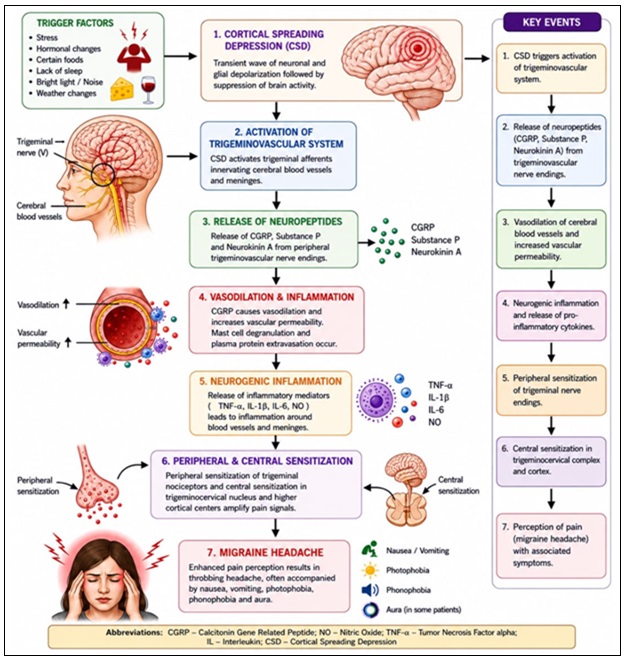
FIG. 1: PATHOPHYSIOLOGY OF MIGRAINE
Intranasal Route for Brain Targeting: The intranasal route is a promising non-invasive approach for delivering therapeutic agents to the central nervous system. This route utilizes the specialized anatomy of the nasal cavity and its neuronal connections with the brain through the olfactory and trigeminal pathways, potentially facilitating nose-to-brain transport 26.
Nasal Cavity Anatomy: Before exploring drug absorption and penetration via this route, it is essential to gain a comprehensive understanding of the anatomy and physiological functions of the nasal cavity, a highly complex structure. The nasal cavity is consists of three main regions: the vestibular region, which has a surface area of approximately 0.6 cm²; the olfactory region, with a surface area ranging from 2 to 12.5 cm²; and the respiratory region, which comprises the largest portion of the cavity and plays a major role in drug absorption.
The nasal cavity has various functions, including respiration and olfaction 27. It plays a role in maintaining the humidity and temperature of inhaled air, along with clearance external pathogens 28. The anatomical basis of intranasal drug delivery is illustrated in Fig. 2.
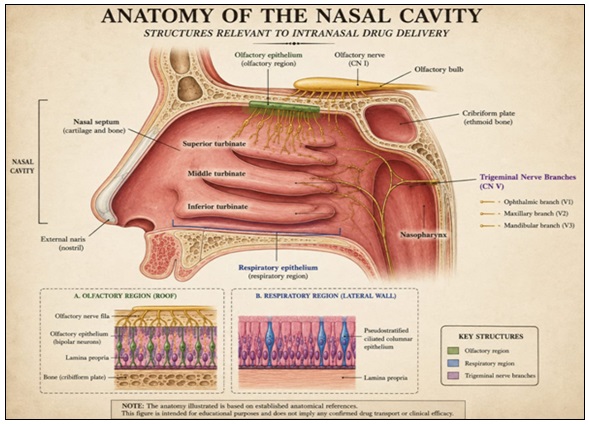
FIG. 2: ANATOMY OF THE NASAL CAVITY HIGHLIGHTING STRUCTURES RELEVANT TO INTRANASAL DRUG DELIVERY, INCLUDING THE OLFACTORY REGION, RESPIRATORY REGION, AND TRIGEMINAL NERVE PATHWAYS. (CREATED USING AI TOOLS AND MODIFIED BY AUTHOR)
The nasal cavity is divided into three key regions:
Vestibular Region: The anterior part is lined with squamous epithelium, serving as a protective barrier. The vestibular region of the nasal cavity acts as a barrier against pathogens and does not participate in absorption in its anterior portion. It contains mucus and nasal hairs, which help trap and filter airborne particles before they enter the nasal passages. Moreover, it is less porous due to limited vascularization and a smaller surface area 29.
Respiratory Region:Among the three regions, this represents the largest part of the nasal cavity and is lined with ciliated pseudostratified epithelium and goblet cells. Its high vascularity enables rapid systemic absorption. The respiratory region accounts for the largest surface area and is composed of ciliated respiratory epithelium along with highly vascularized nasal turbinate composed of erectile and sinusoidal tissues 30.
Olfactory Region: Situated in the superior part of the nasal cavity, this region contains olfactory sensory neurons directly connected to the olfactory bulb, making it a crucial site for direct nose-to-brain drug transport. The olfactory region consists of basal cells, olfactory receptor neurons, and supporting (sustentacular) cells. The olfactory receptor neurons, which are bipolar neurons, transmit signals through the epithelium to the olfactory bulb 31.
Intranasal Pathways for Brain Targeting:
Olfactory Pathway: The olfactory region, situated in the superior part of the nasal cavity, the olfactory pathway is considered one of the principal routes that may contribute to nose-to-brain drug transport following intranasal administration.
This region houses olfactory receptor neurons, whose axons project directly into the olfactory bulb, establishing a unique neuronal connection between the nasal cavity and the central nervous system (CNS) 32. Drugs or nanocarriers administered intranasally can traverse the olfactory epithelium through multiple mechanisms, including transcellular, paracellular, or endocytic transport, followed by axonal transport or perineural diffusion. Once transported, they reach the olfactory bulb and are subsequently distributed to higher brain regions, including the cortex, hippocampus, amygdala, and hypothalamus 33.
A potential advantage of this pathway is that it may facilitate drug transport to the central nervous system while partially avoiding some limitations associated with the blood-brain barrier. However, the extent of brain delivery varies depending on the drug and formulation characteristics. The olfactory pathway is anatomically divided into the olfactory epithelium, olfactory tract, and olfactory bulb, and functionally classified into two main transport routes: intraneuronal (intracellular) and extraneuronal (extracellular) 34. In the intraneuronal pathway, drugs are internalized by olfactory neurons via endocytosis and then transported along axons to the olfactory bulb. In contrast, the extraneuronal pathway involves diffusion of drugs through perineural channels surrounding the olfactory neurons, allowing them to reach the olfactory bulb without entering the neurons 35.
Collectively, these transport mechanisms may contribute to nose-to-brain delivery and support the potential application of intranasal nanoformulations for central nervous system drug delivery. Nevertheless, successful brain targeting should be confirmed through appropriate pharmacokinetic and bio-distribution studies 36.
Trigeminal Pathway: The trigeminal nerve, a major cranial nerve, innervates both the respiratory and olfactory regions of the nasal cavity, offering an additional pathway for nose-to-brain drug transport. Following intranasal administration, drug molecules can be absorbed through the ophthalmic and maxillary branches of the trigeminal nerve, allowing delivery to the brainstem, cerebellum, and spinal cord. This pathway is particularly important for targeting caudal brain regions that may not be efficiently reached via the olfactory route 37.
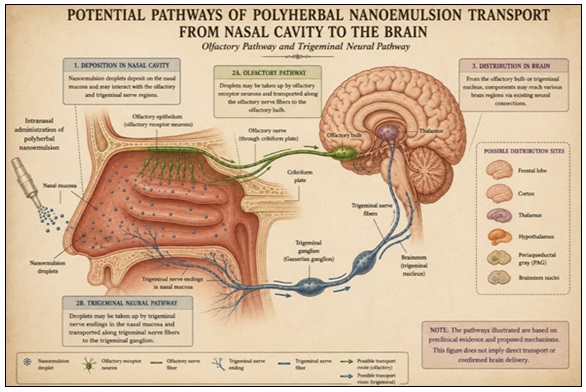
FIG. 3: PROPOSED OLFACTORY AND TRIGEMINAL NEURAL PATHWAYS INVOLVED IN THE POTENTIAL TRANSPORT OF INTRANASALLY ADMINISTERED POLYHERBAL NANOEMULSION FROM THE NASAL CAVITY TO THE BRAIN. THE ILLUSTRATION IS BASED ON PRECLINICAL EVIDENCE AND PROPOSED MECHANISMS. (CREATED USING AI TOOLS AND MODIFIED BY AUTHOR)
Anatomically, the trigeminal nerve has three major branches: ophthalmic, maxillary, and mandibular. Among these, the ophthalmic and maxillary divisions play the most significant role in nasal drug transport because they innervate the nasal mucosa, respiratory epithelium, and meninges 38, 39. After absorption, drugs can travel along these branches and gain direct access to the CNS.
This pathway is also responsible for transmitting sensory information from the nasal cavity, oral cavity, eyelids, cornea, and meninges to the brain 40.
Drug transport through the trigeminal route may occur via axonal transport or perineural diffusion, similar to the olfactory pathway. Importantly, this route enables delivery to deeper structures such as the pons, brainstem, and hindbrain, making it highly valuable for CNS therapeutics that require distribution beyond the forebrain 41. This pathway has been successfully exploited for the delivery of various bioactive molecules and neuropeptides, including insulin, IGF-1, and interferon-1β, to the central nervous system (CNS), highlighting its translational potential for targeted drug delivery systems such as intranasal nanoemulsion-based formulations 42. The mechanisms involved in intranasal nose- to- brain transport of nanoemulsion are illustrated in Fig. 3.
Advantages of Intranasal Delivery in Migraine: Intranasal drug delivery offers several distinct advantages in the management of migraine, particularly for achieving rapid therapeutic action and effective brain targeting. Migraines are characterized by the sudden onset of symptoms and involvement of central neurovascular pathways; therefore, a delivery route that ensures fast and efficient drug transport to the brain is highly desirable.
One of the key benefits of the intranasal route is that it bypasses the blood–brain barrier, allowing for direct nose-to-brain transit via the olfactory and trigeminal nerve pathways. This approach enhances the brain bioavailability of therapeutic agents and reduces the requirement for higher systemic doses, thereby minimizing systemic side effects. Intranasal administration provides a rapid onset of action, which is crucial during acute migraine attacks. Drugs delivered through the nasal cavity can reach the brain within minutes, offering faster relief compared to oral formulations, which are affected by delayed gastric emptying and poor gastrointestinal absorption during migraine episodes. Another significant advantage is improved patient compliance. Migraine attacks are frequently accompanied by nausea and vomiting, which limit the effectiveness of oral medications. Intranasal delivery overcomes these limitations by offering a non-invasive, painless, and patient-friendly alternative to parenteral administration.
Moreover, the intranasal route bypasses first-pass hepatic metabolism, resulting in enhanced drug bioavailability and more predictable pharmacokinetic profiles. This advantage is especially significant for drugs that are extensively metabolized in the liver following oral administration. Additionally, intranasal delivery enables reduced systemic exposure, which lowers the risk of adverse effects associated with conventional anti-migraine therapies, such as cardiovascular complications and medication-overuse headache. This makes intranasal formulations suitable for both acute and long-term management of migraine.
When combined with advanced drug delivery systems such as nanoemulsions, intranasal delivery further enhances drug solubility, stability, and mucosal permeability. Nanoemulsions can prolong nasal residence time and protect bioactive compounds from enzymatic degradation, thereby improving therapeutic efficacy.
Overall, intranasal drug delivery represents a promising approach for migraine management, offering rapid therapeutic effects, targeted brain delivery, enhanced safety, and improved patient compliance. These advantages address several unmet clinical needs associated with conventional migraine therapies 3, 43, 44, 45.
Limitations and Safety Considerations of Intranasal Drug Delivery in Migraine Therapy: Despite several advantages, intranasal drug delivery also has certain limitations and safety concerns. One of the primary limitations is the limited surface area available for drug absorption in the nasal cavity. The small surface area and short residence time can reduce the amount of drug reaching the brain. Another significant restriction is mucociliary clearance. The nasal mucosa constantly eliminates foreign particles, which can cause the drug to be quickly removed. This lowers drug contact time with the nasal epithelium and influences drug absorption. Variations in nasal physiology, such as nasal congestion, inflammation, or pathological conditions, can influence drug absorption and lead to inconsistent therapeutic effects. In migraine patients, nasal irritation and sensitivity may further affect intranasal drug administration. Safety concerns include possible irritation or damage to the nasal mucosa due to repeated drug administration. Certain excipients, preservatives, or surfactants used in formulations may cause local toxicity or discomfort if not properly chosen 46, 47. In nanoemulsion-based intranasal systems, factors such as particle size, surfactant concentration, and formulation composition should be carefully optimized to ensure safety. Furthermore, long-term safety assessment should include evaluation of nasal ciliotoxicity, as repeated exposure to surfactants, preservatives, and bioactive compounds may impair normal ciliary function and mucociliary transport. Histopathological examination of nasal tissues is also important to identify any epithelial damage, inflammation, or structural alterations following repeated intranasal administration. Since the olfactory epithelium plays a crucial role in nose-to-brain transport, potential effects on olfactory function should also be considered during safety evaluation. In addition, formulation parameters such as pH, osmolality, viscosity, and excipient concentration should be carefully optimized to maintain nasal compatibility, minimize irritation, and improve patient acceptability. Intranasal nanoformulations must be thoroughly evaluated for long-term use to prevent toxicity and guarantee biocompatibility. Therefore, proper formulation design, safety evaluation, and clinical studies are essential to minimize risks and ensure the safe and effective use of intranasal drug delivery systems for migraine therapy 48, 33.
Nanoemulsion Drug Delivery Systems: Nanoemulsions are transparent or slightly translucent systems and are suitable for delivering both hydrophilic and lipophilic drugs. They are widely used in pharmaceutical applications due to their ability to improve bioavailability and therapeutic efficacy. Nanoemulsions are especially effective in delivering poorly water-soluble drugs, including herbal bioactive compounds. Many herbal drugs exhibit low bioavailability and instability when administered in conventional dosage forms. Nanoemulsion systems protect bioactive compounds while enhancing their solubility and permeability 49.
Nanoemulsions offer significant advantages for intranasal administration, as their nanosized droplets promote efficient penetration across the nasal mucosa. This, in turn, facilitates direct transport to the brain through the olfactory and trigeminal nerve pathways. Nanoemulsions can also be formulated with mucoadhesive polymers to increase nasal residence time and reduce mucociliary clearance. This results in improved drug retention and enhanced brain targeting 50. Intranasal nanoemulsion-based drug delivery systems offer a rapid onset of action, improved therapeutic efficacy, and reduced systemic side effects in the management of migraine. As a result, nanoemulsions offer a promising strategy for efficient brain-targeted drug delivery 51.
Classification of Nanoemulsions: Nanoemulsions can be classified based on their internal and external phases:
Oil-in-Water (O/W) Nanoemulsions: In this type, oil droplets are homogeneously distributed in a continuous aqueous phase. O/W nanoemulsions are commonly used for delivering lipophilic drugs and are suitable for intranasal and oral drug delivery.
Water-in-Oil (W/O) Nanoemulsions: In W/O nanoemulsions, water droplets are homogeneously distributed in a continuous oil phase. These systems are primarily employed for the delivery of hydrophilic drugs and for achieving sustained drug release 52.
Bi-continuous Nanoemulsions: Bi-continuous nanoemulsions consist of interpenetrating oil and water phases stabilized by surfactants. Both oil and water phases are continuous in this system, allowing simultaneous delivery of hydrophilic and lipophilic drugs 53. Among these O/W systems more favourable for intranasal delivery due to their better compatibility with the aqueous nasal environment and enhanced absorption properties.
Formulation Strategies for Polyherbal Nano Emulsions:
Oil Phase: Poor aqueous solubility of novel molecules is a significant obstacle in the field of drug discovery due to its influence on such critical characteristics of the drug's efficacy as pharmacokinetics and pharmacodynamics.
Therefore, oils are incorporated into NE formulations to improve drug solubility 54. Oil lipophilicity is proportional to its ability to dissolve drugs in the following order: vegetable oils > medium-chain triglycerides > medium-chain mono- and diglycerides 55. Furthermore, total solubility of drugs relies on the quantity of oils used in NE. Increased oil concentration results in the formation of larger globules, thus reducing the ability of drugs to permeate through the nasal mucosa 56.
There exist certain oils, which facilitate absorption of specific drugs only. For example, linolenic acid, polyunsaturated and omega-6 fatty acids, as well as pinolenic acid, are absorbed exclusively 57. It was found that while oleic acid, which possesses only one cis-double bond, is not able to penetrate the BBB, linoleic acid with two cis-double bonds and 18-carbon monocarboxylic acids readily penetrate the BBB after the nasal route 58.
Surfactants: The process of surfactant adsorption occurs on the boundary of the dispersion medium and droplets, creating a flexible monolayer film, which results in a reduction in the surface tension (γ) and surface free energy of nanoemulsions (NEs), thus preventing their coalescence 59. Furthermore, surfactants can affect the structure of mucosa, so the right choice of surfactant concentration is important while preparing nanoemulsions intended for brain targeting. Surfactants are the components of NE formulation, which have a significant effect on reducing surface tension. The surfactants help in stabilizing NEs by avoiding phase separation and globule fusion. Furthermore, surfactants enhance drug solubilization and increase penetration through the nasal mucosa by altering membrane fluidity and disrupting the tight junctions of epithelial layers 60. Studies indicate that increasing the concentration of surfactants leads to a decrease in the globule size of NEs. Smaller globule sizes result in improved permeation and higher drug levels in the brain. However, it is important to carefully select surfactant concentrations, as excessive amounts can compromise the structural integrity of the nasal mucosa, posing safety concerns 61.
Cosurfactants: Surfactants cannot lower the surface tension sufficiently due to the fact that the surfactants employed for the preparation of the NE formulation are usually of the single-chain surfactants 62. Cosurfactants have the capability of increasing fluidity and hence facilitating emulsification through the decrease in interfacial tensions. For a successful preparation of NE, proper selection of surfactant and cosurfactant is necessary. Ternary phase diagrams are commonly used to determine the optimum working concentrations of oil, surfactant, and cosurfactant. An increase in the concentration of cosurfactant normally results in small globules of the nanoemulsion and hence high drug loading and increased drug concentration. The commonly applied cosurfactants for intranasal nanoemulsion formulations are Transcutol P, butan-1-ol, chirality alcohols, sorbitol, and polyethylene glycol55.
Aqueous Phase: The aqueous phase typically consists of distilled or deionized water and may be supplemented with humectants or buffering agents to maintain a pH within the physiological nasal limits (5.5–6.5). The choice of the aqueous phase further influences important formulation characteristics, including droplet size, viscosity, and zeta potential.
Construction of Pseudo-Ternary Phase Diagram: The identification of the area of formation of nanoemulsions and the determination of the ideal concentration of oil, surfactants, and cosurfactants can be made using the pseudo-ternary phase diagram based on the titration technique 63.
In the proposed polyherbal nanoemulsion system, formulation development should also consider the physicochemical characteristics of the selected bioactive constituents. Thymoquinone and menthol are predominantly lipophilic compounds and may be incorporated into the oil phase, whereas withanolides also exhibit limited aqueous solubility and may require suitable lipid-based solubilization strategies. Therefore, the selection of oil phase, surfactant, and cosurfactant should be based on their solubilization capacity, compatibility, stability, and suitability for intranasal administration. Furthermore, analytical methods capable of simultaneous quantification of thymoquinone, withanolides, and menthol would be required during formulation development and evaluation.
Preparation Methods of Nanoemulsion: Nanoemulsions can be prepared using high-energy or low-energy methods. The choice of method depends on the drug, formulation components, and the desired droplet size 49, 50.
High-Energy Methods: The preparation of nanoemulsions is achieved through the utilization of high-energy approaches. High-energy approaches utilize mechanical energy in large quantities to create disruptive forces that disintegrate large-sized droplets in an emulsion into small-size droplets, thus creating kinetically stable nanoemulsions. The disruption force can be created by the use of machines such as ultrasonication, microfluidization, and high-pressure homogenizers. In high energy processes, one can easily control the size of droplets by properly choosing the formulation composition. Moreover, such approaches give better control on factors such as emulsion stability, rheology, and overall appearance. In addition, for the food and biologically active substances, high-energy processes are beneficial as they reduce the chances of microbial contamination and destruction of sensitive substances without altering food safety and its nutritional and sensory qualities.
High-Pressure Homogenization: The high-pressure homogenizer generates considerable mechanical energy by forcing the material under regulated flow rates, which leads to the production of nanoemulsions with uniform and minute droplet sizes. High-pressure homogenizers are commonly used for nanoemulsion formulation due to their effectiveness, efficiency, and accuracy. Nanoemulsion formation occurs when the coarse emulsion passes through a nozzle with a narrow opening at a very high pressure of 500 to 5,000 pounds per square inch. At the same time, various forces like turbulence, hydraulic shear, and cavitation act on the system. Therefore, nanoscale droplets are formed from the large-sized droplets 64.
Microfluidization: Microfluidization is a high-energy mixing technique that employs a specialized device called a microfluidizer to reduce droplet size to the nanoscale. In this process, fluids are forced through microchannels under high pressure, typically ranging from 500 to 20,000 psi, allowing efficient mixing at the microscale. Initially, the oil and aqueous phases are combined to form a coarse emulsion. This macroemulsion is then pumped through the microfluidizer, where it passes through narrow microchannels and is directed into an interaction chamber. Within this chamber, two high-velocity streams of the emulsion collide with each other. The resulting shear forces, cavitation, and impact lead to the formation of stable nanoemulsions with small and uniform droplet sizes 65.
Ultrasonication: Ultrasonication is considered an efficient high-energy method due to its simple operation and ease of cleaning. In this technique, ultrasonic waves generate acoustic cavitation, which breaks coarse emulsions into nanosized droplets. Ultrasonicators consist of a probe that emits high-frequency sound waves into the emulsion system. By adjusting the ultrasonic power and processing time, nanoemulsions with the desired droplet size and stability can be obtained. The implosion of cavitation bubbles generates intense shear forces and turbulence, which facilitate the formation of stable nanoemulsions 66.
Ultrasonic irradiation of an oil–water system generates cavitation forces that supply sufficient energy for the formation of new interfaces, resulting in the production of nanosized emulsion droplets. Nanoemulsions can be prepared using ultrasonication even in the absence of surfactants, depending on the specific formulation conditions. The efficiency of ultrasonic emulsification mainly depends on ultrasound intensity, processing time, and the nature of the surfactant. Ultrasonication has been widely employed for the preparation of nanoemulsions containing pharmaceutical drugs and food ingredients. Food-grade nanoemulsions produced by ultrasonication generally exhibit smaller droplet sizes, improved stability, and require lower energy input compared to other high-energy methods 67.
Low-Energy Methods: Low energy technique uses little external energy for nanoemulsion formation. This method is said to be energy-efficient as it makes use of internal energy of the system through chemistry and involves only mild stirring. Methods used in low energy technique are phase inversion, emulsification, and self-emulsification. Nonetheless, these methods are unsuitable for production of food grade nanoemulsions since it requires large amounts of surfactants 68.
Phase Inversion Emulsification Method: Phase inversion emulsification relies on changes in the spontaneous curvature of surfactants, which trigger phase transitions during the emulsification process. Such changes can be achieved by altering parameters such as temperature or formulation composition. Phase inversion methods are broadly classified into transitional phase inversion (TPI) methods, including phase inversion temperature (PIT) and phase inversion composition (PIC), and catastrophic phase inversion (CPI) methods, which involve the emulsion inversion point (EIP) 69.
Phase Inversion Temperature (PIT) Method: The Phase Inversion Temperature (PIT) method is a low-energy technique for preparing nanoemulsions, relying on temperature-induced changes in surfactant affinity. In this approach, the solubility of non-ionic surfactants changes in response to variations in temperature. At a specific temperature, known as the PIT, the surfactant shows equal affinity toward both oil and water phases, resulting in minimal interfacial tension. Upon rapid cooling or heating through this temperature, the system undergoes phase inversion, leading to the formation of fine nanosized droplets 70.
Phase Inversion Composition (PIC) Method: Phase Inversion Composition (PIC) technique depends upon variation in the composition of the mixture rather than temperature variations. In this process, a phase (generally aqueous phase) is incrementally added to the oil-surfactant system while stirring. With the variation in composition, the surfactant curvature undergoes a change leading to the phase inversion. This process is helpful in producing nanoemulsions 71, 72.
Evaluation and Characterization of Polyherbal Nanoemulsion: Proper evaluation of nanoemulsions is essential to ensure stability, efficacy, and suitability for intranasal delivery. The main parameters include 73:
Droplet Size and Polydispersity Index (PDI): The droplet size is determined by DLS technique. Nanoemulsions with droplet sizes <200 nm is preferred for better nasal absorption and brain targeting. PDI indicates size distribution; a value <0.3 shows uniform droplets.
Zeta Potential: Zeta potential indicates the droplet’s surface charge. The higher zeta potential (>±30 mV) implies electrostatic stability that prevents aggregation of droplets.
pH and Viscosity: pH is adjusted to match the nasal mucosa (usually 5.5–6.5) to avoid irritation. Viscosity is optimized for proper nasal retention and ease of administration.
Drug Content and Entrapment Efficiency (EE%): The total amount of polyherbal bioactives in the nanoemulsion is measured. Entrapment efficiency indicates the proportion of the drug successfully encapsulated within the nanosized droplets.
In-vitro Drug Release: Release studies determine the rate and extent of drug release from the nanoemulsion. Comparison with conventional formulations demonstrates improved solubility and sustained release 74, 75.
Osmolality: Osmolality is an important parameter for intranasal formulations, as it influences nasal tolerability and patient comfort. Formulations with osmolality close to physiological nasal conditions are generally preferred to minimize irritation and maintain normal mucosal function 3.
Mucoadhesive Properties: Mucoadhesive studies are performed to evaluate the ability of the formulation to adhere to the nasal mucosa. Enhanced mucoadhesion may prolong residence time in the nasal cavity, thereby increasing the opportunity for drug absorption.
Storage Stability: Storage stability studies are essential to assess the physical and chemical stability of nanoemulsions during storage. Parameters such as droplet size, phase separation, drug content, and appearance are typically monitored under different storage conditions.
Ex-vivo Nasal Permeation Study: Ex-vivo nasal permeation studies are commonly used to evaluate drug transport across excised nasal mucosal tissues. These studies provide preliminary information regarding the permeability and absorption potential of intranasal formulations.
Pharmacokinetic and Biodistribution Studies: Pharmacokinetic studies help determine the absorption, distribution, and elimination profile of the administered formulation. Biodistribution studies provide information regarding the extent of drug distribution to the brain and other organs following intranasal administration.
Pharmacodynamic Studies: Pharmacodynamic evaluation is important to assess the therapeutic efficacy of the formulation. Migraine-relevant experimental models may be used to investigate the potential effects of the formulation on neuroinflammation, pain signaling, and related pathological mechanisms 3, 27, 28, 75.
Herbal Actives for Migraine:
Bioactive Constituents of Nigella sativa in Migraine Therapy: Black cumin, or Nigella sativa, is a well-known medicinal herb from the Ranunculaceae family that has long been used for its neuroprotective, analgesic, anti-inflammatory, and antioxidant properties. Numerous bioactive components, including thymoquinone (TQ), nigellone, carvacrol, α-hederin, and p-cymene, are found in its seeds; among these, thymoquinone is the primary pharmacologically active substance. These phytoconstituents are essential for controlling inflammatory signaling, oxidative stress, and neural excitability all of which are key processes in the pathogenesis of migraines 76, 77. Neurogenic inflammation, trigeminovascular system activation, and elevated production of inflammatory mediators such as CGRP, prostaglandins, and nitric oxide are hallmarks of migraine 78. Thymoquinone, the major bioactive constituent of Nigella sativa, has demonstrated antioxidant, anti-inflammatory, and neuroprotective activities in several experimental studies. These pharmacological properties may be relevant to migraine pathophysiology, which involves neuroinflammation, oxidative stress, trigeminovascular activation, and altered neuronal excitability. Studies have reported that thymoquinone can inhibit cyclooxygenase, lipoxygenase, and inducible nitric oxide synthase pathways, thereby reducing the production of inflammatory mediators. In addition, thymoquinone has been shown to modulate NF-κB and MAPK signaling pathways and decrease the expression of pro-inflammatory cytokines such as IL-1β, TNF-α, and IL-6. Although direct evidence in migraine-specific clinical studies remains limited, these findings suggest the potential utility of thymoquinone in migraine management 79, 80.
Bioactive Constituents of Withania somnifera in Migraine Therapy: Withania somnifera (Ashwagandha), a member of the Solanaceae family, is one of the most extensively used medicinal herbs in Ayurveda and is well known for its neuroprotective, adaptogenic, antioxidant, and anti-inflammatory properties. The major bioactive constituents of Ashwagandha are withanolides, a group of naturally occurring steroidal lactones that have demonstrated diverse pharmacological activities. Other constituents, including alkaloids, flavonoids, and saponins, may also contribute to its biological effects 81, 82.
Migraine pathophysiology involves multiple mechanisms, including oxidative stress, neuroinflammation, mitochondrial dysfunction, altered neuronal excitability, and dysregulation of stress-related pathways. Several studies have reported that withanolides possess antioxidant and anti-inflammatory activities that may be relevant to these pathological processes. Withaferin A and other withanolides have been shown to modulate inflammatory signaling pathways, including NF-κB, leading to reduced expression of pro-inflammatory cytokines such as TNF-α, IL-1β, and IL-6. These mediators are known to play important roles in neuroinflammatory responses associated with migraine.
In addition, Ashwagandha has been reported to enhance endogenous antioxidant defense systems by increasing the activity of enzymes such as superoxide dismutase, catalase, and glutathione peroxidase, thereby protecting neuronal cells from oxidative damage. Experimental studies have also demonstrated adaptogenic effects through modulation of the hypothalamic–pituitary–adrenal (HPA) axis, which may help regulate stress-related physiological responses. Since psychological stress is a common trigger for migraine attacks, these effects may have potential relevance in migraine management.
Furthermore, neuroprotective effects of Ashwagandha have been observed in several experimental models, where withanolides were found to support neuronal survival, improve mitochondrial function, and maintain neuronal homeostasis. These pharmacological activities suggest that Withania somnifera may influence biological pathways implicated in migraine pathogenesis. However, it is important to note that most available evidence is derived from experimental studies investigating neuroprotection, oxidative stress, inflammation, and stress-related disorders rather than migraine-specific clinical studies. Therefore, the potential role of Ashwagandha and its bioactive constituents in migraine management remains largely exploratory and requires further migraine-specific preclinical and clinical investigations to establish therapeutic efficacy 83, 84, 85, 86, 87, 88.
Bioactive Constituents of Mentha piperita in Migraine Therapy: Mentha piperita (peppermint), a member of the Lamiaceae family, has been widely used in traditional medicine for the management of headache and various pain-related conditions. The major bioactive constituents of peppermint include menthol, menthone, menthyl acetate, limonene, pulegone, and cineole, which contribute to its cooling, analgesic, and anti-inflammatory properties. Among these constituents, menthol is considered the principal compound responsible for many of the reported pharmacological effects 89. The potential relevance of menthol to migraine is primarily attributed to its ability to activate transient receptor potential melastatin-8 (TRPM8) ion channels located on sensory neurons, producing a cooling sensation and modulating pain perception. Experimental studies have suggested that menthol may influence calcitonin gene-related peptide (CGRP)-associated signaling pathways and neurogenic inflammatory responses, which are implicated in migraine pathophysiology. In addition, menthol has demonstrated analgesic, anti-inflammatory, and antioxidant activities in several experimental models 90, 91. Peppermint oil and menthol preparations have also been investigated for their potential effects on headache symptoms. Some studies have reported reductions in headache intensity and associated discomfort following topical application of menthol-containing formulations. Furthermore, experimental evidence suggests that peppermint constituents may reduce the production of pro-inflammatory mediators and enhance endogenous antioxidant defenses, thereby protecting neuronal tissues from oxidative stress. However, it is important to note that much of the available evidence is derived from topical headache preparations, experimental studies, and non-migraine headache models rather than direct investigations of intranasal menthol-based therapy for migraine. Therefore, although menthol exhibits pharmacological activities that may be relevant to migraine pathophysiology, further migraine-specific preclinical and clinical studies are required to establish its efficacy and safety in intranasal migraine therapy 92, 93, 94.
TABLE 1: HERBAL BIOACTIVE COMPOUNDS AND THEIR MECHANISM IN MIGRAINE 95, 88, 90
| S. no. | Herbal source | Bioactive Compound | Evidence type | Experimental model | Mechanism | Reference |
| 1 | Nigella sativa | thymoquinone | Direct migraine evidence(preclinical) | GTN-induced migraine rat model | CGRP modulation, anti-neuroinflammatory activity, mast cell stabilization | Kilinc et al., 2020
|
| 2 | Withania somnifera | withanolides | Indirect mechanistic evidence | Neurological disorder and stress-related models | Neuroprotection, anti-inflammatory activity, antioxidant effects, mitochondrial protection, and modulation of neuronal signaling pathways | Anees A Syed et al., 2021 |
| 3 | Mentha piperita | menthol | Direct migraine evidence(preclinical) | Migraine-like responses in female rats | Analgesic activity, sensory pathway modulation, anti-inflammatory effects Activates TRPM8 receptors and provides rapid pain relief | Laura de Oliveira Koren et al., 2024 |
Polyherbal Nanoemulsion for Migraine Therapy: In this conceptual review, the term “polyherbal nanoemulsion” refers to a nanoemulsion system containing bioactive phytoconstituents derived from multiple medicinal plants, namely thymoquinone from Nigella sativa, withanolides from Withania somnifera, and menthol from Mentha piperita. These phytoconstituents were selected based on their reported pharmacological activities relevant to migraine pathophysiology, including anti-inflammatory, antioxidant, neuroprotective, and analgesic effects.
Migraine is a multifactorial neurological disorder involving neuroinflammation, oxidative stress, and neurotransmitter imbalance. Single-drug therapies often target only one pathway and may not provide complete relief. Therefore, a polyherbal approach is considered more effective due to its multi-target action 1.
Polyherbal formulations combine two or more herbal constituents with diverse pharmacological activities that may be relevant to migraine management. The selection of thymoquinone, withanolides, and menthol in the present review is based on their reported antioxidant, anti-inflammatory, neuroprotective, and analgesic properties. However, the therapeutic advantages of this specific combination have not yet been established through dedicated experimental or clinical studies and therefore require further investigation 4.
Many herbal bioactive compounds exhibit poor aqueous solubility, limited stability, and low bioavailability, which may restrict their therapeutic application. Incorporation into nanoemulsion systems may help overcome some of these limitations by improving solubility, protecting sensitive constituents, and enhancing absorption. Intranasal nanoemulsions have also been investigated as a potential approach for facilitating drug transport through nasal pathways while avoiding certain limitations associated with conventional administration routes. Furthermore, the use of mucoadhesive polymers may increase nasal residence time and improve formulation retention within the nasal cavity 96, 28. Therefore, intranasal polyherbal nanoemulsion-based delivery represents a promising conceptual approach for migraine management. Nevertheless, further formulation development, pharmacokinetic evaluation, safety assessment, and efficacy studies are required to establish its clinical utility.
Recent Advances in Intranasal Nanoemulsion for Brain Targeting: Recent developments in medication delivery systems based on intranasal nanoemulsions have shown great promise for efficient brain targeting. By avoiding the blood–brain barrier and increasing medication bioavailability, this method permits the direct delivery of therapeutic substances from the nasal cavity to the brain via olfactory and trigeminal pathways. The creation of nanoemulsion formulations for intranasal delivery to enhance the therapeutic efficacy of medications used in neurological illnesses, particularly migraine, has been the subject of various studies in recent years. Nanoemulsions nanoscale droplet size improves medication solubility, permeability, and retention in the nasal mucosa, leading to a quick beginning of action and better brain absorption.
Furthermore, the stability and performance of nanoemulsion systems have been further enhanced by developments in formulation tactics, such as the use of biocompatible surfactants, mucoadhesive agents, and optimised preparation techniques. These advancements lead to fewer systemic adverse effects and more effective drug administration.
Research on polyherbal nanoemulsion systems for intranasal brain targeting is still scarce, despite the fact that many experiments employing synthetic medicines have been published. This emphasises the need for more research on polyherbal formulations, which may provide enhanced safety profiles and synergistic medicinal advantages. Most studies summarized in Table 2 were designed to evaluate formulation performance, nasal permeation, and CNS delivery rather than migraine-specific efficacy. Nevertheless, these studies collectively support the feasibility of intranasal nanoemulsion platforms. Direct investigations involving polyherbal intranasal nanoemulsions for migraine remain limited, highlighting an important research gap 97, 98, 99, 100.
TABLE 2: REPRESENTATIVE STUDIES DEMONSTRATING THE FEASIBILITY OF INTRANASAL NANOEMULSION-BASED DELIVERY SYSTEMS FOR CNS APPLICATIONS
| Author | Year | Drug | Delivery system | Route | Key findings |
| Hadi AS | 2022 | Rizatriptan | Nanoemulsion | Intranasal | Enhance permeation and residence time and increase patient compliance. |
| Fatima AR et al. | 2026 | Sumatriptan | Nanoemulsion | Intranasal | Rapid drug release and improved permeation |
| Maryam H. | 2023 | Lomustine | Nanoemulsion | Intranasal | Promising potential drug delivery system may deliver the drug quickly and directly to brain as safe |
| Ebtsam M et al. | 2017 | Zolmitriptan | Nanoemulsion | Intranasal | Enhance the residence time. |
Challenges and Future Prospects: Migraine therapy presents several challenges, primarily ensuring that drugs effectively reach the central nervous system (CNS), the key site of migraine pathology. The blood-brain barrier (BBB) remains a major obstacle, restricting the transport of many therapeutic agents to the brain parenchyma and thereby reducing their efficacy. Developing nanoformulations capable of penetrating the BBB and delivering drugs to specific CNS targets requires innovative design strategies to maximize brain penetration while minimizing off-target effects 101.
A significant consideration for successful clinical translation is ensuring the safety, stability, and biocompatibility of these nanoformulations. Researchers must rigorously evaluate the toxicity, biodegradability, and pharmacokinetics of nanocarriers and their degradation products to guarantee patient safety 102. Equally important are issues of cost-effectiveness, reproducibility, and quality control, which remain critical barriers to scaling up nanoformulations from the laboratory to industrial production. Standardized protocols and Quality-by-Design (QbD) strategies are crucial for ensuring consistent formulation quality and optimal therapeutic performance 103.
Additionally, the choice of manufacturing methods and optimization of formulation parameters significantly influence the stability and efficacy of nanoemulsions. Achieving regulatory approval poses another hurdle due to the novelty and complexity of nanocarrier systems. Establishing bioequivalence, assessing immunogenicity, and evaluating biodistribution are critical steps for successful clinical translation. Moreover, the high production cost of nanomaterials and the need for specialized equipment can limit accessibility, particularly in low-resource settings. Regulatory compliance and safety assessments further add to development costs.
Therefore, maximizing manufacturing efficiency, reducing production expenses, and streamlining regulatory processes are crucial for ensuring that advanced nanoformulations, including polyherbal nanoemulsions, become affordable, scalable, and globally accessible. Moving forward, the integration of computational modeling, green synthesis, and advanced characterization techniques is expected to improve formulation predictability and safety. With continued interdisciplinary efforts, polyherbal nanoemulsion-based intranasal systems hold immense potential for the safe, effective, and non-invasive management of migraine and other CNS disorders 104.
CONCLUSIONS: Polyherbal nanoemulsions represent a novel and promising approach for brain-targeted drug delivery, particularly via the intranasal route. By combining the synergistic therapeutic potential of multiple herbal actives with the enhanced permeability and bioavailability offered by nanoemulsion systems, these formulations can effectively overcome the limitations of conventional CNS therapies. The intranasal route bypasses the blood–brain barrier, allowing rapid drug transport to the brain via the olfactory and trigeminal pathways, making it an excellent alternative to systemic delivery. Despite these advantages, issues such as formulation stability, scalability, regulatory compliance, and limited clinical translation continue to restrict their widespread application. Future research should focus on optimizing nanoemulsion composition, developing standardized polyherbal combinations, ensuring long-term safety, and advancing preclinical studies to clinical translation. With continued interdisciplinary efforts, polyherbalnanoemulsions hold great promise as a sustainable, biocompatible, and effective therapeutic strategy for managing complex neurological disorders.
ACKNOWLEDGEMENTS: Nil
Author Contributions: Archana M conducted the literature review and drafted the manuscript.
Prakash Yoganandam G conceptualized the study, supervised the work, and critically reviewed and edited the manuscript.
All authors have read and approved the final version of the manuscript.
Funding: This research received no external funding.
Data Availability Statement: No new data were created or analysed in this study.
CONFLICT OF INTEREST: The authors declare no conflict of interest.
REFFRENCES:
- Kakde SA, Ayesha S. Mujawar, Kajal S. Khade, Samiksha V. Palkar, Vinod S. Pattankude and D. R. Jadage: Intranasal Polyherbal Formulation for Migraine Treatment. Kronika Journal 2025; 25: 61-73.
- Edvinsson L: The trigeminovascular pathway: role of CGRP and migraine. Headache 2017; 57: 47-55.
- Pagar SA, Shinkar DM and Saudagar RB: A Review on Intranasal Drug Delivery System J Adv Pharm Edu & Res 2013; 3(4): 333-340.
- Chugh Y, Kapoor P and Kapoor AK: Intranasal drug delivery: a novel approach. Indian Journal of Otolaryngology and Head & Neck Surgery 2009; 61(2): 90-94.
- Arora P, Sharma S and Gary S: Permeability issues in nasal drug delivery. Drug Discov Today 2002; 7(18): 967–975.
- Pires A, Fortuna A, Alves G and Falcao A: Intranasal drug delivery: how, why and what for? J Pharm Pharm Sci 2009; 12(3): 288-311.
- McClements DJ: Nanoemulsions versus microemulsions: terminology, differences, and similarities. Soft Matter 2012; 8: 1719-1729.
- Shakeel F, Shafiq S, Haq N, Alanazi FK and Alsarra IA: Nanoemulsions as potential vehicles for intranasal drug delivery. J Drug Target 2012; 20(4): 268-277.
- Lestari U, Muhaimin M, Chaerunisaa AY and Sujarwo W: Improved Solubility and Activity of Natural Product in Nanohydrogel. Pharmaceuticals (Basel) 2023; 16(12): 1701.
- Abbott NJ, Patabendige AAK, Dolman DEM, Yusof SR and Begley DJ: Structure and function of the blood–brain barrier. Neurobiol Dis 2010; 37(1): 13–25.
- Goadsby PJ, Holland PR, Martins-Oliveira M, Hoffmann J, Schankin C and Akerman S: Pathophysiology of migraine: A disorder of sensory processing. Physiol Rev 2017; 97(2): 553–622.
- Wiggers A, Ashina H, Hadjikhani H, Sagare A, Zlokovic BV and Ashina M: Brain barriers and their potential role in migraine pathophysiology. The Journal of Headache and Pain 2022; 23(16): 1-10.
- Banks WA: Characteristics of compounds that cross the blood–brain barrier. BMC Neurol 2009; 9: 1-8.
- Charles A: The pathophysiology of migraine: Implications for clinical management. Lancet Neurol 2018; 17(2): 174–182.
- Tfelt-Hansen P, De Vries P and Saxena PR: Triptans in migraine: A comparative review of pharmacology, pharmacokinetics and efficacy. Drugs 2000; 60(6): 1259–1287.
- Obermann M and Katsarava Z: Management of medication-overuse headache. Expert Rev Neurother 2007; 7(9): 1145–1155.
- Illum L: Nasal drug delivery—Possibilities, problems and solutions. J Control Release 2003; 87(3): 187–198.
- Pietrobon D and Moskowitz MA: Pathophysiology of Migraine. Annu. Rev. Physiol 2013; 75: 365–91.
- Goadsby PJ: Pathophysiology of migraine. Ann Indian Acad Neurol 2012; 15: 15-22.
- Carolina BV: Meningeal afferent signalling and the pathophysiology of migraine. Prog Mol Biol Transl Sci 2015; 131: 537-64.
- Marianna GR, Angelis MV, Melchionda D and Manente G: High risk area for migraine attacks a new concept in migraine pathophysiology. Front Neurol 2025; 16: 1569361.
- Dodick DW: A phase-by-phase review of Migraine pathophysiology. Headache 2018; 58: 4–16.
- Yicheng W, Yongli W, Guangxin Y and Yonglie Z: Energy metabolism disturbance in migraine: From a mitochondrial point of view. Front Physiol 2023; 14: 1133528.
- Su M and Yu S: Chronic migraine: A process of dysmodulation and sensitization. Mol Pain 2018; 14: 1744806918767697.
- Deen M, Christensen CE, Hougaard A, Hansen HD, Knudsen GM and Ashina M: Serotonergic mechanisms in the migraine brain - a systematic review. Cephalalgia 2017; 37(3): 251-264.
- Shivani G, Divyesh H, Shastri, Jigar S, Anroop B and Jacob S: Nasal Delivery to the Brain: Harnessing Nanoparticles for Effective Drug Transport. Pharmaceutics 2024; 16(4): 481.
- Erdo F, Bors LA, Farkas D, Bajza A and Gizurarson S: Evaluation of intranasal delivery route of drug administration for brain targeting. Brain Res. Bull 2018; 143: 155-170.
- Bourganis V, Kammona A, Alexopoulos and Kiparissides C: Recent advances in carrier mediated nose to-brain delivery of pharmaceutics. Eur. J. Pharm. Biophar 2018; 337-362.
- Costa CP, Moreira JN and Lobo MS: Silva. Intranasal delivery of nanostructured lipid carriers, solid lipid nanoparticles and nanoemulsions: A current overview of in-vivo studies. Acta Pharm. Sin. B 2021; 11: 925-940.
- Jones N: The nose and paranasal sinuses physiology and anatomy. Adv Drug Deliv Rev 2001; 51: 5-19.
- Selvaraj K, Gowtham R and Karri R: Nose to brain transport pathways an overview: potential of nanostructured lipid carriers in nose to brain targeting, Artif. Cells, Nanomed Biotechnol 2018; 46: 2088-2095.
- Kozlovskaya L, Kaoud MA and Stepensky D: Quantitative analysis of drug delivery to the brain via nasal route. J. Controlled Release 2014; 189: 133-140.
- Hong SS, Oh, Choi HG and Lim SJ: Liposomal formulations for nose-to-brain delivery: Recent advances and future perspectives. Pharmaceutics 2019; 11: 1-18.
- Hirlekar RS and Momin AM. Advances in Drug Delivery from Nose to Brain: An Overview. Curr Drug Ther 2018; 13: 4-24.
- Witika, Poka MS, Patrick, Hulisani D, Matafwali S and Pedzisai M: Lipid-Based Nanocarriers for Neurological Disorders: A Review of the State-of-the-Art and Therapeutic Success to Date. Pharmaceutics 2022; 14: 836.
- Chattopadhyay S, Das S and Sarma KN: Nose-to-brain drug delivery: An update to the alternative path to success full targeted anti-migraine drugs. IJAP 2021; 13: 67-75.
- Savale S and Mahajan: Nose to brain a versatile mode of drug delivery system. Asian J Biomatter Res 2017; 3: 16-38.
- Johnson NJ, Hanson LR and Frey WH: Trigeminal pathways deliver a low molecular weight drug from the nose to the brain and orofacial structures. Mol Pharm 2010; 7: 884-893.
- Vohra M, Amir M, Sharma A and Wadhwa S: Formulation Strategies for Nose-to-Brain Drug Delivery in Alzheimer’s Disease. Health Sci. Rev 2023; 6: 100075.
- Liu and Zhang Q: Nanoparticle systems for nose-to brain delivery. In: Brain Targeted Drug Delivery System. A Focus on Nanotechnology and Nanoparticulates 2019; 219-239.
- Thorne RJ, Pronk GJ and Padmanabhan, Frey WH: Delivery of insulin-like growth factor-I to the rat brain and spinal cord along olfactory and trigeminal pathways following intranasal administration. Neuroscience 2004; 127: 481-496.
- Hanson LR and Frey WH: Intranasal delivery to the central nervous system: Mechanisms and experimental considerations. J Pharm Sci 2010, 99: 1654-1673.
- Arun KS and Nasal cavit: A promising transmucosal platform for drug delivery and research approach from nasal to brain targeting. Journal of Drug Delivery and Therapeutics 2012; 23: 22-33.
- Chajed S, Sangle S and Barhate S: Advantagious nasal drug delivery system; A review. Int J of Pharmaceutical Science and Research 2011; 2(6): 1322-1336.
- Zaheer A, Sachin and Swamy: Mucoadhesive Polymers: Drug Carriers for Improved Nasal Drug Delivery. Indian Journal of Novel Drug Delivery 2012; 4(1): 2-16.
- Shivam U, Ankit P, Joshi P, Upadhyay UM and Chotai NP: Intranasal drug delivery system- A glimpse to become maestro. Journal of Applied Pharmaceutical Science 2011; 01(3): 34-44.
- Safarov R, Fedotova O, Uvarova A, Gordienko M and Menshutina N: Review of Intranasal Active Pharmaceutical Ingredient Delivery Systems. Pharmaceuticals 2024; 17(9): 1180.
- Lofts A, Hijleh FA, Nicolette R, Mishra RK and Todd Hoare: Using the Intranasal Route to Administer Drugs to Treat Neurological and Psychiatric Illnesses: Rationale, Successes, and Future Needs. CNS Drugs 2022; 36(7): 739–770.
- Gunjan P. Malode, Sarin A. Chavhan, Shivam A. Bartare and Lochana L: A Critical Review on Nanoemulsion: Advantages, Techniques and Characterization. Journal of Applied Pharmaceutical Sciences and Research 2021; 4(3): 6-12.
- Patel RB, Patel MR, Bhatt KK and Patel BG: Formulation considerations and characterization of microemulsion drug delivery system for brain targeting. International Journal of Pharmaceutics 2010; 394(1–2): 1–10.
- Acosta E: Bioavailability of nanoparticles in nutrient and nutraceutical delivery. Current opinion in Colloid & Interface Science 2009; 14(1): 3-15.
- Cerpnjak K, Zvonar A, Gasperlin M and Vrecer F: Lipid based systems as promising approach for enhancing the bioavailability of poorly water-soluble drugs. Acta pharmaceutica 2013; 63(4): 427-445.
- Rehman FU, Shah KU, Shah SU, Khan IU, Khan GM and Khan A: From nanoemulsions to self-nanoemulsions, with recent advances in self-nanoemulsifying drug delivery systems (SNEDDS). Expert Opinion on Drug Delivery 2017; 14(11): 1325-1340.
- Sood S, Jain K and Kuppusamy G: Optimization of curcumin nano emulsion for intranasal delivery using design of experiment and its toxicity assessment. Colloids Surf. B Biointerfaces 2014; 113: 330-337.
- Choudhury H, Gorain B, Karmakar S and Biswas E: Improvement of cellular uptake, in vitro antitumor activity and sustained release profile with increased bioavailability from a nano emulsion platform. IJP 2014; 460: 131-43.
- Fernandes CB, Soni U and Patravale V: Nano-interventions for neurodegenerative disorders. Pharmacol Res 2010; 62: 166-178.
- Edmond J: Essential Polyunsaturated Fatty Acids and the Barrier to the Brain. The Components of a Model for Transport. J Mol Neurosci 2001; 16: 181-194.
- Iskandar B, Mei HC, Liu TW, Lin HM and Lee CK: Evaluating the effects of surfactant types on the properties and stability of oil-in-water Rhodiola rosea nano emulsion. Colloids Surf. B Biointerfaces 2024; 234: 113692.
- Hosny KM and Banjar ZM: The formulation of a nasal nano emulsion zaleplon in situgel for the treatment of insomnia. Expert Opin. Drug Deliv 2013; 10: 1033-1041.
- Lin H, Gebhardt M, Bian S and Kwon: Enhancing effect of surfactants on fexofenadine HCl transport across the human nasal epithelial cell monolayer. Int J Pharm 2007; 330: 23-31.
- Azeem A, Rizwan M, Ahmad, FJ and Iqbal Z: Nano emulsion Components Screening and Selection: A Technical Note. AAPS Pharm Sci Tech 2009; 10: 69-76.
- Kumar M, Misra A, Babbar AK, Mishra AK, Mishra P and Pathak K: Intranasal nano emulsion-based brain targeting drug delivery system of risperidone. Int J Pharm 2008; 358: 285-291.
- Gurpreet and Singh SK: Review of Nanoemulsion Formulation and Characterization Techniques. Indian J Pharm Sci 2018; 80(5): 781-789.
- Wang Y: Preparation of nano-and microemulsions using phase inversion and emulsion titration methods: a thesis presented in partial fulfilment of the requirements for the degree of Master of Food Technology at Massey University, Auckland, New Zealand (Doctoral dissertation, Massey University) 2014.
- Shi Y, Li H, Li J, Zhi D, Zhang X and Liu H: Development, optimization and evaluation of emodin loaded nanoemulsion prepared by ultrasonic emulsification. J Drug Deliv Sci Technol 2015; 27: 46-55.
- Ghosh V, Mukherjee A and Chandrasekaran N: Ultrasonic emulsification of food-grade nano emulsion: characterization, stability and antimicrobial activity. Ultrason Sonochem 2013; 20: 338-344.
- Singh Y, Meher JG, Raval K, Khan FA, Chaurasia M, Jain NK and Chourasia MK: Nanoemulsion: Concepts, development and applications in drug delivery. Journal of controlled release 2017; 252: 28-49.
- Arunkumar N, Deecaraman M and Rani C: Nanosuspension technology and its applications in drug delivery. Asian J of Pharmaceutics (AJP) 2014; 3(3).
- Solans C and Sole I: Nano-emulsions: formation by low-energy methods. Curr Opin Colloid Interface Sci 2012; 17: 246–254.
- Ishak KA and Annuar MSM: Phase inversion of medium-chain-length poly-3-hydroxyalkanoates (mcl-PHA)-incorporated nanoemulsion: effects of mcl-PHA molecular weight and amount on its mechanism. Colloid Polym Sci 2016; 294: 1969–1981.
- Moreira de Morais J, dos Santos ODH, Delicato T, Gonçalves RA and da Rocha-Filho PA: Physicochemical characterization of canola oil/water nano-emulsions obtained by determination of required HLB number and emulsion phase inversion methods. J Dispersion Sci Technol 2006; 27: 109–115.
- Vandamme TF and Anton N: Low-energy nanoemulsification to design veterinary controlled drug delivery devices. Int J Nano-medicine 2010; 5: 867–873.
- Chatterjee B, Gorain B, Mohananaidu K, Sengupta P, Mandal UK and Choudhury H: Targeted drug delivery to the brain via intranasal nano emulsion: Available proof of concept and existing challenges. Int J Pharmaceut 2019; 565: 258-268.
- Prasad D, Mohanta GP and Sudhakar M: A Review on Preparation and Evaluation of Nanoemulsions. Int J Pharma Res Health Sci 2019; 7(1): 2915-22.
- Bipul Nath, Priyanka Das, Bhanu P Sahu, Himanta Biswa Saikia, Manas Jyoti Kapil and Pranabesh Sikdar: Nose-to-Brain Delivery for Migraine: A Review of Recent Technological and Formulation Advances. Acta Pharma Reports 2025; 4(2): 18-25.
- Ahmad A, Husain A and Mujeeb M: A review on therapeutic potential of Nigella sativa: a miracle herb. Asian Pac J Trop Biomed 2013; 3: 337-352.
- Goyal SN, Prajapati CP, Gore PR, Patil CR, Mahajan UB and Sharma C: Therapeutic potential and pharmaceutical development of thymoquinone: a multitargeted molecule of natural origin. Front Pharmacol 2017; 8: 656.
- Sanati, Tahereh F and Samarghandian S: Antidotal effect thymoquinone against neurotoxic agents. Interdiscip Toxicol 2019; 11: 122-128.
- Khan MA, Chen HC, Tania M and Zhang D: Anticancer activities of Nigella sativa (black cumin). Afr J Tradit Complement Altern Med 2011; 8: 226-232.
- Alhebshi AH, Gotoh M and Suzuki I: Thymoquinone protects cultured rat primary neurons against amyloid β induced neurotoxicity via the Nrf2/ARE pathway. PLoS One 2013; 8: 75371.
- Nawab JD, Hamid A and Muzamil A: Pharmacologic overview of Withania somnifera, the Indian Ginseng. Cell Mol Life Sci 2015; 72:4445-4460.
- Mirjalili MH, Moyano E, Bonfill M, Cusido RM and Palazon J: Steroidal lactones from Withania somnifera, an ancient plant for novel medicine. Molecules 2009; 14: 2373-2393.
- Kumar PG, Thanawala S, Venkateswar STS, Satyanarayana R and Sanjaya TC: Efficacy and safety of Ashwagandha root extract in healthy stress and anxiety in adults. Indian J Psychol Med 2021; 30: 825.
- RajaSankar, Thamilarasan, Manikavasagam, Arumugam K and Manikam R: Neuroprotective role of Withania somnifera root extract in MPTP-induced parkinsonism. Neurosci Lett 2007; 12: 473-481.
- Chandrasekhar K, Kapoor J and Anishetty S: A prospective, randomized double-blind, placebo-controlled study of safety and efficacy of a high-concentration full-spectrum extract of Ashwagandha root in reducing stress and anxiety in adults. Indian J Psychol Med 2012; 34: 255-262.
- Gupta M and Gurcharan Kaur: Withania somnifera dunal Ameliorates Neurodegeneration and Cognitive Impairments Associated with Systemic Inflammation Complementary and Alternative. Medicine 2019; 19: 217.
- Sashaina E, Kowshik, Utkarsha G, Kolthur U, Hingorani L, Ashok and Vidya: The role of Withania somnifera in improving mitochondrial health and bioenergetics. Mol Neurobiol 2025; 62:10277-10295.
- Anees A. Syed, Mohammad I. Reza, Pragati Singh, Ganesh K. Thombre and Jiaur R. Gayen: Withania somnifera in Neurological Disorders: Ethnopharmacological Evidence, Mechanism of Action and its Progress in Delivery Systems. Curr Drug Metab 2021; 22(7): 561-571.
- Naveen KL, Anaya Bhattacharjee, Karunakar H and Ramakrishna S: Pharmacological profile of Mentha piperita. Rajiv Gandhi university of health science journal of pharmaceutical sciences 2020; 10(1): 7-11.
- Oliveira LD, vanessa B, Fernanda MR and Juliana: Effect of peppermint essential oil in migraine like response in female rat. Headache Medicine 2024; 15: 78-85.
- Gobel H, Heinze A, Heinze-Kuhn K and Gerber WD: Effectiveness of peppermint oil in the treatment of tension type headache. Phytomedicine 2016; 306-310.
- McKay DL and Blumberg JB: A review of the bioactivity and potential health benefits of peppermint tea (Mentha piperita L.). Phytother Res 2006; 20: 619-633.
- Kennedy DO, Andrew B, NTJ Tidesley and EK Perry: Modulation of mood and cognitive performance following acute administration of single doses of Melissa officinalis. Nutrients 2002; 72: 953-964.
- Darshana S Jain, Amrita N Bajaj, Tiwari and Nimisha: development and evaluation of peppermint oil containing microemulsion for intra nasal delivery. Archives of Pharmacy Practice 2011; 2: 174-185.
- Kilinc E, Tore F and Dagistan Y: Thymoquinone Inhibits Neurogenic Inflammation Underlying Migraine Through Modulation of Calcitonin Gene-Related Peptide Release and Stabilization of Meningeal Mast Cells in Glyceryltrinitrate-Induced Migraine Model in Rats. Inflammation 2020; 43: 264–273.
- Venkata SJ, Patibandla J, Manodhini S, elakkiya, Renu Arya, Aniruddha B Jadhav, Narsingrao SG, Sekar V and M. Kishore Babu: Design and Development of a Polyherbal Nanoemulsion for the Treatment of Diabetes Mellitus 2025; 2197-5248.
- Hadi AS and Ghareeb MM: Rizatriptan Benzoate Nanoemulsion for Intranasal Drug Delivery: Preparation and Characterization. International Journal of Drug Delivery Technology 2022; 12(2): 546-552.
- Fatima A R, Yadav R, Deepak P and Dilend P: Formulation and Evaluation of Intranasal Drug Delivery System of Sumatriptan Succinate. IJIRT 2026; 12(8): 2349-6002.
- Maryam H, Alaayedi Nidhal K and Maraie: Lomustine’s nanoemulsion as nose-to-brain drug delivery system for CNS tumor treatment. Saudi Pharmaceutical Journal 2023; 31(8): 101692.
- Ebtsam M Abdou, Soha M Kandil and Hala MF El Miniawy: Brain targeting efficiency of antimigrain drug loaded mucoadhesive intranasal nanoemulsion. International J of Pharmaceutics 2017; 529(1-2): 667-677.
- Puri V, Nagpal M and Singh I: A comprehensive review on nutraceuticals: therapy support and formulation challenges. Nutrients 2022; 14(21): 4637-4664.
- Buya AB, Mahlangu P and Witika BA: from lab to industrial development of lipid nanocarriers using quality by design approach. Int J Pharm X 2024; 8: 100266.
- Chaurasiya S and Kulhari H: Essential Considerations for Brain Delivery of Nanoformulations 2024; 251-269.doi:10.1007/978-981-99-6807-7-11.
- Ghasemi FM, Kalalinia F, Marouzi S, Salmasi Z and Hahsemi M: Nanoformulation innovations: Revolutionizing precision in migraine therapy. Iran J Basic Med Sci 2025; 28(1): 16-30.
How to cite this article:
Archana M and Yoganandam GP: Intranasal polyherbal nanoemulsion- based drug delivery for brain targeting: a promising strategy for migraine therapy. Int J Pharm Sci & Res 2026; 17(10): 2930-48. doi: 10.13040/IJPSR.0975-8232.17(10).2930-48.
All © 2026 are reserved by International Journal of Pharmaceutical Sciences and Research. This Journal licensed under a Creative Commons Attribution-NonCommercial-ShareAlike 3.0 Unported License.
Article Information
9
2930-2948
1959 KB
6
English
IJPSR
M. Archana and G. Prakash Yoganandam *
Department of Pharmacognosy, College of Pharmacy, Mother Theresa Post Graduate and Research Institute of Health Sciences, Gorimedu, Puducherry, India.
prakashyoganandam@mtpgrihs.ac.in
08 May 2026
09 June 2026
20 June 2026
10.13040/IJPSR.0975-8232.17(10).2930-48
01 October 2026
 Download