




MILK PROTEIN-BASED HYDROGELS: AN OVERVIEW OF THEIR EXTRACTION, SYNTHESIS AND BIOMEDICAL APPLICATIONS
HTML Full TextMILK PROTEIN-BASED HYDROGELS: AN OVERVIEW OF THEIR EXTRACTION, SYNTHESIS AND BIOMEDICAL APPLICATIONS
Reetika Ahuja * and Yash Sharma
Department of Pharmaceutics, Sachdeva College of Pharmacy, Gharuan, Mohali, Punjab, India.
ABSTRACT: Hydrogels are sophisticated category of biomaterials that closely resembles the properties of living tissues. Various polymers have been studied for creating hydrogels that closely mimic the structure and function of the extracellular matrix. Proteins that can be easily modified, have specific biochemical effects, and respond to external stimuli are considered promising for making hydrogels used in biomedical applications. Among these proteins, natural milk proteins stand out due to their high availability, good quality control, low cost, and beneficial biological properties. As a result, they have become a key area of research. However, there is a lack of thorough reviews that specifically focus on milk protein-based hydrogels. In this review, we compile the progress in developing hydrogels based on milk proteins, with a main focus on hydrogels made from milk proteins. We explain the methods used to create these hydrogels and summarize recent advancements in their applications, such as controlled drug delivery and regenerative medicine, along with related preclinical animal studies and an initial clinical pilot trial. Finally, we explore the future potential of milk protein-based hydrogels in biomedical fields. We believe this review will provide a solid theoretical foundation for the use of milk proteins in biomedical applications and serve as a reference for further research and development. For this review, electronic searches were conducted in the Web of Science and PubMed databases to identify literature on the construction methods of milk-protein based hydrogels and their biomedical applications.
Keywords: Hydrogels, Polymers, Milk Proteins, Biomedical fields
INTRODUCTION: Biomaterials are essential in the biomedical field, being used in various applications such as drug releasing agents, wound dressings, surgical sutures, vascular grafts, hip joints, implants, contact lenses, and many other medical devices 1.
Recent advancements have enabled the effective control of material properties, achieving significant success in areas such as therapeutic medicine and tissue engineering 2.
Currently, hydrogels have gained significant attention as key group of materials used in biomedical applications because of their good compatibility, high water content, ability to perform multiple functions, and various ways they can be used 3. Hydrogels are flexible three-dimensional (3D) networks made of polymers that are connected by hydrogen, ionic, or covalent bonds, and they do not dissolve in water 4. Since, hydrogels were first introduced as biomaterials in the 1960s, they have been widely used in areas such as controlled drug delivery, tissue engineering scaffolds, and as bio-inks 5. Importantly, the physical and mechanical characteristics of hydrogels are very similar to those of natural tissues 6.
Hydrogels are a sophisticated category of biomaterials that possess characteristics similar to those of living tissues. Various types of polymers have been studied for creating hydrogels that closely resemble the structure and function of the extracellular matrix. Properties that can be easily modified have particular biochemical effects, and respond to external conditions have shown great potential for use in making hydrogels for medical applications. Among these proteins, natural milk proteins have gained significant attention because they are easily available, can be produced with good quality control, are cost-effective, and have certain beneficial biological properties.
Milk Proteins: Milk proteins are considered to be outstanding materials for altering and creating food structures because they offer good nutrition, can break down naturally, and are compatible with the human body. They are regarded as safe for eating and have many physical, chemical, and biological properties. Milk proteins can generally be divided into two main categories:
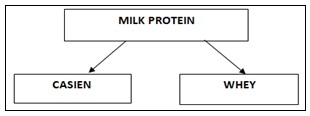
Casien: Casein is an abundant milk protein emerging as a potential nano system for usefulness in therapy and diagnosis. Casein, being a major part of the milk, i.e. approximately 80% in the composition. The amount of casein in cow’s whole milk varies according to the breed of cow and stage of lactation, but is generally in the range 24-29g/L. Casein contains 0.7-0.9% phosphorus, covalently bound to the protein by a serine ester linkage. Casein consists of four major phosphoproteins which includes: αs1, αs2, β, and κ-casein 7.
Whey: Whey is a secondary dairy product that is produced during the making of various cheese types, including cottage cheese, casein, and ultrafiltrates. As a byproduct, it contains a high amount of organic and salt-based materials, which makes it highly nutritious and useful in many different ways 8.
It is composed of several proteins, such as α-lactalbumin (11.3-16.5%), β-lactoglobulin (37.9-49%), glycomacropeptides (15-20%), IgG (5-8%), bovine serum albumin (3-5%), and lactoferrin (1.3-1.8%) 9. The three main types of whey are:
Whey Protein Concentrate (WPC): WPCs are separated by the process of ultrafiltration, where molecules are separated based on their size and size of the pores in the filter.
Whey Protein Isolate (WPI): WPI can be isolated by both ultrafiltration as well as ion exchange technique. Lactose and fats are removed by these techniques, hence WPI can be used in lactose free and fat free products.
Whey Protein Hydrolysate (WPH): WPH is less allergic than other forms of whey and tastes extremely bitter 10.
Methods of Extraction of Milk Proteins:
Extraction of Casein:
Acid Precipitation: This method is the simplest way to extract casein from milk. In acid precipitation, the milk is mixed with an acid such as hydrochloric acid, sulfuric acid, or acetic acid. This lowers the pH of the milk, leading to the precipitation of milk proteins. After the precipitation, the mixture is filtered. Then a neutralizer is added to the filtered liquid to counteract the acid and restore the pH to a neutral level.
Enzymatic Coagulation: In enzymatic coagulation method, milk is treated with certain enzymes also known as rennet for coagulation of milk proteins. Enzymes break down kappa protein, and leads to milk coagulation and form curd.
Ultrafiltration: Ultrafiltration is a membrane based process in which separation of the milk proteins is carried out based on their size. Larger proteins like casein retains on membrane whereas smaller proteins and other components pass through the membrane during filtration.
Ion Exchange Chromatography: This method utilises ion exchange resins to separate out casein, other proteins and impurities present in milk. The milk is made to pass through a column containing ion exchange resins, which selectively binds to casein.
Extraction of Whey Protein: Whey is obtained from milk during the cheese production process. Once the milk passes quality checks, enzymes are added to separate the curd from the liquid whey.
After the separation, the liquid whey is pasteurized, and the protein is isolated in a concentrated form. The two primary methods used for separating whey are membrane filtration and ion exchange technology.
Membrane Filtration: Membrane Filtration, also referred to as the cold temperature separation process, uses porous membranes for filtering.
Because of the different sizes of the pores, these membranes are able to remove bacteria, remove fat from the whey, allow minerals and carbohydrates to pass through, and retain the whey protein.
Ion Exchange: Ion exchange is a method used to selectively separate specific protein components. The raw whey is passed through a column that captures the proteins and separates them according to their net charge.
Other substances such as lactose and minerals are removed and processed into separate products. The whey protein obtained through this process contains less fat and lactose compared to other whey protein isolates available on the market. It also dissolves completely in water and has a mild, neutral flavour.
Applications of Milk Proteins:
- Whey protein partially replaces meat protein and fully replaces soy protein along with other binding agents, fillers, modified starch, and hydrocolloids.
- Calcium caseinate with a low degree of hydrolysis exhibits superior functional properties when compared to highly hydrolysed calcium caseinate and it also has great application in the baking industry.
- In the food sector, casein is used in the production of beverages, such as sports drinks which aims at mineral supplementation.
- Casein can be used as an anti-oxidant as it consists of an amino acid domain with anti-oxidant activity.
- Glycation of casein and its derivatives with polysaccharides enhances casein functionality which results in improved emulsion and foaming properties of casein. Hence, casein is used as an emulsifier and for encapsulating bioactive compounds.
- Fluid whey is occasionally incorporated into fresh milk to reduce pH and speed up the coagulation process.
- The major application of this process is the manufacturing of Parmigiano-Reggiano, an Italian cheese, in which whey from the previous day’s cheese manufacturing is utilized as a source of thermophilic lactic acid bacteria.
- Unprocessed fluid whey is used as fodder for calves and piglets to some extent; however, due to its high lactose content and low dry matter, it is not fed to animals in large amounts.
- Whey is a natural source of proteins, lactic acid, vitamins, and minerals in the cosmetics business, thus is applicable in the cosmetic sectors. They have also been used in the preparation of shower gels, shampoos, creams, lotions, and bubble baths.
- Whey protein has numerous applications in the pharmaceutical sectors. Pharmaceuticals and nutritional supplements use whey proteins as ingredients.
- Lactoferrin, when mixed with extra whey protein lysozyme, is used as an antioxidant in formulating skincare products and as a bacteriostatic agent in antiseptic preparations of mouthwashes and toothpastes.
TABLE 1: APPLICATIONS OF CASEIN AND CASEIN PRODUCTS IN FOOD 11
| Food Category | Use Level | Casein Product | Functions |
| Cheese product | 2-25% | Rennet casein, Acid casein, Caseinates | Fat and water holding, texture, matrix formation |
| Ice cream | 1-5% | Sodium caseinate | Enhance viscosity, emulsion stabilizer |
| Infant foods | 1-25% | Whole and Hydrolysed caseinates | Increase nutrient level |
| Confectionary | 1-25% | Whole and Hydrolysed caseinates | Mouthfeel |
| Meat products | 3-20% | Sodium caseinates | Provides nutrients, fat emulsifier, moisture retention, tenderness |
| Baked products | 1-25% | Casein, Caseinates | Provides nutrition and moisture retaining capacity |
| Pasta and snacks | 5-20% | Casein, Caseinates | Provide nutrients, chewiness |
| Sports drink | 2-20% | Sodium caseinate | Enhancement of nutrient content |
Pharmacological Benefits of Milk Proteins: Bovine milk protein is used as a standard for assessing the nutritional value of proteins found in various food. Milk proteins include a variety of branched-chain amino acids, such as isoleucine, leucine, and valine. Leucine helps reduce the rate of muscle loss or wasting, which can occur when there is an increased breakdown of proteins in the body. Cysteine and methionine, which are found in whey protein and contain a high amount of sulphur-containing amino acids, serve as building blocks for glutathione. This compound supports the immune system and has the ability to fight cancer.
TABLE 2: VARIOUS PHARMACOLOGICAL BENEFITS OF MILK PROTEIN
| Type of protein | Biological function | Mechanism |
| Bioactive peptide Lactoferricin | Immunodulation | Increase in Immunoglobulins (IgA, IgG, IgM) production |
| Inhibits cancer development | Prevents the growth of tumours and causes cancer cells to undergo programmed cell death | |
| Antibacterial activity | Stops the growth of both Gram-positive and Gram-negative bacteria | |
| Glycomacropeptide | Immunodulation | Reduces the inflammation in the intestine by enhancing the body’s ability to fight microorganisms |
| Antiviral activity | Inhibits the human influenza virus and Epstein-Barr virus | |
| Lactorphin | Anti-hypertensive activity | Lowers blood pressure in rats with high blood pressure |
| Casein-phosphopetides | Prevents tooth decay | Helps stabilize calcium phosphate and reduces mineral loss during tooth decay |
| Casomorphin peptides | Anticarcinogenic activity | Decreases the production of prostate cancer cells and encourages cell death in human leukaemia cells (HL-60) |
Hydrogels: Hydrophilic gels, also known as hydrogels, are three-dimensional networks made of polymers that can absorb water and retain a significant amount within their structure without breaking down in it. These materials have unique functional properties that make them useful in many areas, such as biomedical engineering for drug delivery, tissue engineering, and controlled drug release, medical science, agriculture for soil moisture retention, electrical appliances, flocculation, wastewater treatment, sensors, actuators, personal healthcare and hygiene products, and the food industry for safety, nutrition, and food engineering. The chemical structure of hydrogels is formed through various types of interactions, including covalent and non-covalent bonds such as electrostatic interactions, hydrogen bonds, van der Waals forces, and intermolecular hydrophobic interactions. The presence of hydroxyl, amine, carboxyl, ether, and sulfate groups contributes to the soft and flexible nature of hydrogel structures 12. The history of hydrogel development is often divided into three generations: first-generation hydrogels, introduced in 1900, are colloidal gels made from inorganic salts by polymerizing water-soluble monomers with multifunctional cross-linkers or by cross-linking hydrophilic polymers 13. These are known for their strong mechanical properties and high swelling capacity 14. The second generation, introduced in 1970, was developed using environmental stimuli such as light, pH, temperature, and ionic strength, enabling better control over properties like drug release, gel formation, biodegradability, and dissolution, with examples including poly (N-iso-propyl acrylamide) 15. The third generation, introduced in 1990, focused on improving mechanical strength and elasticity 16. Hydrogels have also found applications in environmental engineering, soft robotics, and wastewater treatment 17. Some other important characteristics of hydrogels include biodegradability, biocompatibility, surface modification, responsiveness to stimuli, water retention, lack of antigenicity, stability during storage, ease of preparation, and controlled size 18. Hydrogels can be synthesized from natural sources like proteins and polysaccharides as well as synthetic materials such as polyvinyl alcohol and polyethylene alcohol 19.
Classification of Hydrogels:
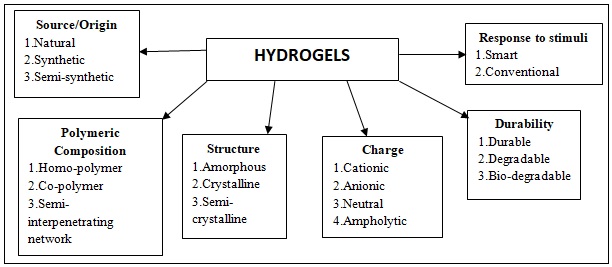
Source/Origin: Hydrogels can be categorized into 3 types depending on their origin:
Natural Hydrogels: Hydrogels which are derivatives of biological polymers are called natural hydrogels. Example; collagen, gelatin, agarose, fibrin, chitosan, etc 20.
Synthetic Hydrogels: These hydrogels are derived by polymerization of synthetic monomers. Example; polyethylene glycol (PEG), polyacrylic acid (PAA), etc 21.
Semi-synthetic Hydrogels: These are a mix of natural and synthetic polymers. An example is hyaluronic acid-PEG (HA-PEG) 22.
Polymeric Composition: Hydrogels are classified into 3 types:
Homopolymer: These are obtained when a monomer reacts with itself and form longer chains with high molecular weight. Example; polyethylene, polypropylene.
Copolymer: These are obtained on reaction of two or more types of monomers. Example; polyethylene terephthalate (PET), styrene-butadiene rubber (SBR), etc.
Semi-interpenetrating Network Hydrogels: Semi-IPN Hydrogel is a complex structured hydrogel which consists of one polymer forming a crosslinked network and other polymer consisting non-crosslinked chains that are linear but entrapped in-between the network. Example; N-carboxyethyl chitosan (Polymer 1) and 2-pHEMA (Polymer-2) hydrogel is used in wound application 23.
Structure: Based on structure, hydrogels can be classified into the following 3 subtypes:
Amorphous Hydrogels: Hydrogels which do not have any defined shape and structure and consists of polymers, water, and other ingredients. Example; McKesson Hydrogel is used in wound dressing 24.
Crystalline Hydrogels: Hydrogels which show crystalline properties are called crystalline hydrogels. These hydrogels are formed by polymer chains arranged in an ordered manner. Example; polyvinyl alcohol (PVA) hydrogels 25.
Semi-crystalline Hydrogels: They are been used for their unique properties like high-stretchability, self-healing properties due to which their application is appropriate in drug delivery and tissue engineering 26.
Charge: Under this category, hydrogels can be classified into 4 subtypes:
Cationic Hydrogels: Positively charged 3-D polymer network is known as cationic hydrogel. Example: polyethyleneimine (PEI), poly L-lysine (PLL).
Anionic Hydrogels: Hydrogels comprising of negatively charged functional groups in their network are known as anionic hydrogels. Example: polyacrylic acid (PAA).
Neutral Hydrogels: These hydrogels do not consist of any charged (ionic) functional group, indicating their neutral behaviour. Neutral hydrogels are stable over wide range of pH. Example: PEG, PVA.
Ampholytic Hydrogels: Ampholytic hydrogels comprise of both cationic as well as anionic functional groups in the network 27.
Durability: Hydrogels on the basis of durability can be classified as:
Durable Hydrogels: These hydrogels are specially designed for the maintenance of the structure and function for prolonged period.
Degradable Hydrogels: They often degrade or break down after a certain time due to a specific environment or some kind of stimuli. Example: polylactic-co-glycolic acid (PLGA) hydrogels.
Bio-degradable Hydrogels: These degrade via certain natural processes which may include enzymatic and microbial break down of the hydrogels. Example: gelatine hydrogels, chitosan hydrogels, etc 28.
Response to Stimuli: Hydrogels under this category can be classified as smart and conventional hydrogels:
Smart Hydrogels: Smart hydrogels are capable of responding to external stimuli also referred as environmental changes which include temperature, light, electric field, etc.
Conventional Hydrogels: Conventional hydrogels do not have in-built stimulus-responsive nature as that of smart hydrogels 29.
Applications of Hydrogel:
Wound Healing: In comparison to traditional bandages, pads, or gauzes, hydrogels are preferred due to their mechanical characteristics which are responsible in increasing the elasticity and flexibility to adapt to wounds and provides immediate relief to the patients in pain. In case of burn, hydrogels serve as a coolant to localized wounds, alter the pain, and recover from resulting damage 30.
Drug Delivery: Hydrogels are useful in targeting specific sites; for example: colon; as a drug delivery agent and are also responsible for timely release of the drug or other nutrients.
Moreover, hydrogels are least interactive with the drug and other dispensed solutes. Therefore, sustained, and prolonged release is observed in a larger fraction comparative to the conventional drug delivery systems 31.
Hydrogel as an Adsorbent: The use of hydrogels is being considered for adsorption-based water refining because of their salient features including high absorption capacity, low crystallinity, presence of functional groups, and porosity in their structure 32.
Agricultural Applications: Superabsorbent Polymeric Hydrogels (SPH) obtained from natural polysaccharides are significantly used in agricultural field due to their remarkable water holding capacity. Soil erosion can be prevented by using hydrogels. They enhance the permeability and water infiltration of the finely textured agricultural soil 33.
Tissue Regeneration and Engineering: Both natural and synthetic hydrogels are utilized as scaffolds in various tissue engineering applications including the restoration of several organs including arteries, skin, heart valves, cartilage, and tendons. Scaffolds are referred to three-dimensional artificial templates in which the reconstruction of targeted tissues is cultured to develop 34.
Synthesis of Milk Protein-Based Hydrogels: Milk proteins have several hydrophilic functional groups such as carboxyl (-COOH), amino (-NH2), hydroxyl (-OH), and peptide bonds (-CO-NH-). Because of these groups, many techniques can be used to create hydrogels based on milk proteins. These methods can be grouped into four main categories: physical, chemical, biological and interpenetrating polymer network 35.
Physical Methods: Physical methods are commonly used for making natural hydrogels. These methods involve physical processes that do not require the use of any chemical or biological agents. The processes work by influencing specific groups on the side chains of protein molecules, allowing them to connect and form larger structures. This results in the crosslinking of milk proteins. Crosslinking can occur through both non-covalent and covalent bonds. Covalent bonds, such as disulfide bonds, are the main type of covalent crosslinking, while non-covalent interactions include electrostatic forces, hydrogen bonds, and entanglement of molecular chains. Examples of physical methods include crosslinking through heat, high pressure, acid and salt.
Heat-induced Crosslinking: Hydrogels created through heat involve the unfolding of polypeptide chains, which exposes previously hidden hydrophobic amino acids. These amino acids then lead to the self-polymerization of protein molecules, forming a three-dimensional network that traps water using capillary forces 36.
Heat induced crosslinking occurs through processes called thermal denaturation and thermal aggregation. Thermal denaturation involves the unfolding of protein molecules and the loss of their helical shape. As heating continues, thermal aggregation begins, where disulfide bonds (which are covalent bonds) and other intermolecular interactions (non-covalent bonds) form, leading to the aggregation of molecules. If the protein concentration is equal to or higher than the minimum required to form a gel network, the resulting aggregates can form a three-dimensional gel structure 37.
High-pressure Induced Crosslinking: Casein and whey proteins react differently to high pressure due to differences in their amino acid sequences, shapes, and ability to form covalent and non-covalent bonds. Whey protein hydrogels primarily form through disulfide bonds. When subjected to pressure, globular whey proteins unfold, releasing sulfhydryl groups, and these groups form disulfide bonds, which enhance aggregation and lead to gelling 38.
Casein hydrogels, on the other hand, mainly rely on non-covalent bonds. During pressure build-up, casein micelles break down into sub-micelles and monomers. When pressure is released, these fragments, micelles, and monomers come together to form new structures, resulting in gelling 39.
Acid-induced Crosslinking: When proteins are exposed to acid, their electrostatic charge decreases as the pH approaches the isoelectric point of milk proteins. This brings the proteins closer together, allowing the formation of initial networks through physical interactions. Later, sulfhydryl groups on the proteins form disulfide bonds via conversion and self-oxidation, creating stable milk protein-based hydrogels 40. This process forms a stable network through the formation of these bonds 41.
Salt-induced Crosslinking: Adding salt ions can cause the aggregation of protein groups and eventually lead to gel formation by reducing electrostatic charges or hydrophobic interactions. Since casein already contains calcium phosphate in its structure, adding salt does not seem to help in forming crosslinks between casein molecules. During salt-induced whey protein hydrogel formation, proteins are denatured thermally to expose hydrophobic groups. The resulting protein condensates form a stable dispersion system due to electrostatic repulsion between the proteins 42. Common salts used in salt-induced crosslinking of whey protein hydrogels include CaCl2 and NaCl along with FeCl2, MgCl2, MnCl2 and ZnCl2 43.
Chemical Methods: Chemical methods involve creating covalent bonds, both within and between molecules, by using chemicals. This process forms a three-dimensional network structure. When it comes to building milk protein-based hydrogels through chemical means, there are two main approaches: direct crosslinking and post-modification crosslinking.
Direct Crosslinking: Direct crosslinking involves using other large molecules to enable the milk proteins to form bonds with themselves without any changes to the milk protein structure. These large molecules act as bridges that link separate protein molecules. Hydrogels made this way tend to be harder than those made using traditional physical methods. Some commonly used large molecule crosslinkers for milk proteins are glutaraldehyde, formaldehyde, tetra phosphonium chloride, hyaluronic acid, 1-(3-dimethylaminopropyl)-3-ethylcarbodiimide (EDC)/N-hydroxy succinimide (NHS), genipin, and citric acid 44.
Post-modification Crosslinking: It involves altering the milk proteins to suit specific crosslinking conditions. One popular method is photoinitiated crosslinking, which uses free radical polymerization. This method is favoured because it allows for precise control over factors such as light intensity, exposure time and distance. When exposed to light, photocleavage creates reactive free radicals that covalently bond with groups within and between molecules 45. Methacrylate and its derivatives are often used to modify milk proteins to enable this type of crosslinking. When exposed to ultraviolet (UV) light and photo initiators, the methacryloyl side chains generates free radicals that quickly form crosslinks with each other 46.
Biological Methods: In recent years, biological methods for the synthesis of protein hydrogels, which are mainly based on enzyme-induced crosslinking, have attracted significant attraction due to several key benefits:
- The crosslinking agents used are naturally produced enzymes by cells, rather than harmful chemicals.
- The process of forming the gel occurs under mild conditions and does not require the use of any harmful organic solvents.
- The resulting hydrogels are biodegradable, and the byproducts, such as amino acids and peptides, are non-toxic, which helps reduce potential adverse reactions or complications when these hydrogels are used in various biomedical and biotechnological applications.
Biological methods can be classified into the following categories:
Transferase Crosslinking: Glutamine transaminase (TG), a type of transferase, is commonly used for crosslinking milk proteins. TG functions effectively across a wide range of pH levels (5-8) and temperature (40–70°C) and does not require specific cofactors for activation 47. TG facilitates an acyl transfer reaction, where the γ-formamide (acyl donor) of the glutamine residue reacts with the ε-amino group (acyl acceptor) of a lysine residue to form the ε-(γ-glutamyl)-lysine peptide bond. In milk proteins, more than half of the functional groups are hydrophilic, including exposed glutamine and lysine residues, making either casein or whey an ideal candidate for TG-based crosslinking. During the TG-crosslinking process, managing enzyme activity (such as pre-incubation, pH and temperature) and the extent of protein fibre unfolding can be effective in enhancing the mechanical strength of the milk protein-based hydrogel 48.
Oxidase Crosslinking: Laccase is known for its broad substrate specificity and can oxidise various phenolic compounds, amines and others, with an optimal pH range of 4-5 49. It causes oxidation by removing electrons, which results in the formation of free radicals. These radicals then undergo polymerisation and hydration, ultimately forming covalent bonds. In the case of milk protein crosslinking, laccase-catalysed covalent bonds include disulfide bonds formed between cysteine residues (commonly found in whey protein hydrogels) and di-tyrosine residues (commonly found in casein hydrogels) 50.
Interpenetrating Polymer Network: The interpenetrating polymer network (IPN) is a combined system made up of two polymers that are intertwined within a network, where at least one of the polymers is chemically linked. This IPN technology is a form of double crosslinking, leading to gels that have more intricate network structures and improved mechanical properties, while still preserving the unique characteristics of each polymer. As a result, it is possible to choose polymers with particular features to address the shortcomings of milk proteins regarding their reactivity and ease of processing, thereby enhancing the capabilities and range of applications for milk protein-based hydrogels 51.
Characterization of Hydrogels:
Swelling Behaviour: Hydrogels are biphasic polymer networks that can absorb large amounts of water due to their hydrophilic polymer chains. Swelling occurs when water penetrates the network, causing the polymer chains to expand. This process is governed by osmotic pressure, polymer-solvent interactions and network elasticity.
Rheology: The relationship between the structure of hydrogels and their rheological properties is crucial for developing materials with targeted properties for specific applications.
Mechanical Strength: The mechanical strength of hydrogels is a critical aspect as a wound dressing material. Hydrogels are designed to be flexible and can withstand the mechanical stresses and strains that occur during the healing processes. The mechanical properties like adhesion, stretchability and self- healing are particularly beneficial for wound healing.
Porosity: Hydrogels with tunable porosity can adapt to the varying needs of wound environments, providing a moist healing environment that facilitates tissue regeneration.
Relevant Preclinical and Clinical Evidence: Preclinical animal experiments are a key method for assessing the safety and effectiveness of new materials by creating animal models. In contrast, a clinical pilot study is an essential first step when examining a new treatment or a novel use of an existing treatment.
The results from a pilot study can help determine whether a treatment is feasible and highlight any necessary changes to the design of a larger study aimed at testing a specific hypothesis. Laboratory research on these hydrogels has been quite extensive, but most of the studies have primarily focused on in-vitro experiments. At present, some preclinical animal experiments have only confirmed the usefulness of various types of milk protein-based hydrogels in cardiac therapy and wound repair in mice. In a significant clinical pilot study, it was evaluated that the safety and effectiveness of a milk protein concentrate hydrogel through epicutaneous immunotherapy, which involves the skin’s immune system. The study used the immunogenic properties of the milk protein concentrate in the hydrogel to trigger an immune response by delivering the allergen to Langerhans cells and/or dermal dendritic cells through the intact skin, with only a small amount of milk protein concentrate being applied to the skin.
It is reviewed that in the aforementioned pilot study, four out of eight participants experienced an increased threshold for symptom induction, allowing them to consume milk. However, a pilot study does not provide a reliable estimate of the treatment’s effect size for planning future trials, as the data from sample sizes is inherently imprecise. Some relevant preclinical animal experiments and an exploratory clinical pilot study applying milk protein-based hydrogels are:
Preclinical Animal Experiment:
Hydrogel Material: Whey Protein-Methacrylicanhydride
Target: Heart
Aim: MI Therapy
Pathway: Operative Treatment
Mechanism: Temporary mechanical support from the hydrogel maintains the cardiac function and attenuates adverse left ventricular remodelling after MI.
Hydrogel Material: Casein
Target: Skin
Aim: Wound Repair
Pathway: Surface Treatment
Mechanism: Decrease the levels of inflammatory factors such as TNF-α, IL-1β and IL-6 and upregulate the levels of TGF-β, which promotes cell proliferation and differentiation.
Clinical Pilot Study:
Hydrogel Material: Milk Protein Concentrate (MPC)
Target: Skin
Aim: Allergy Therapy
Pathway: Surface Treatment
Mechanism: Through epicutaneous immunotherapy, the immunogenicity of MPC that penetrates the skin is utilised to elicit an immune response from the body.
Biomedical Applications of Milk Protein-Based Hydrogels: Milk protein-based hydrogels possess favourable properties such as biodegradability, biocompatibility, and the ability to be modified, making them widely applicable in the biomedical area. For instance, these hydrogels can function as controlled delivery systems, serving as effective carriers for therapeutic agents. This helps in enhancing the flexibility of controlled release, improving the use of therapeutic components, and preventing harmful side effects. Moreover, milk protein-based hydrogels are well-suited for use in regenerative medicine, as they support tissue bonding and facilitate efficient tissue healing and wound repair.
In Controlled Delivery: Controlled delivery systems are designed to prevent the breakdown of sensitive compounds due to digestive enzymes and harsh environmental factors such as oxidation, temperature changes, pH levels, and exposure to light. These systems also enable targeted delivery within the gastrointestinal tract and allow for the controlled release of both water-soluble and water-insoluble nutraceuticals 52. Milk protein-based hydrogels are highly sought after across various industries because of their numerous beneficial characteristics, including high nutritional value, excellent functional properties, the ability to interact with both water and fats (amphiphilicity), compatibility with living tissues (biocompatibility), the ability to break down naturally (biodegradability), and lower toxicity when compared to synthetic polymers. These hydrogels can regulate the release of therapeutic agents by forming strong or weak interactions with them, such as hydrophobic and electrostatic bonds, or by adjusting the level of crosslinking and the rate at which the hydrogel breaks down. Additionally, these hydrogels respond to changes in pH, allowing for controlled release of therapeutic components 53.
Inorganic Minerals: Whey protein hydrogels are effective carriers for inorganic minerals, as they can be formed through a process called salt-induced crosslinking. In this method, whey protein hydrogels can encapsulate and protect micronutrients within their structure. Besides commonly used salts like calcium and sodium, other dietary elemental salts can also be used to create milk protein hydrogels and enhance their nutritional benefits.
Probiotics: Probiotics contribute to human health by maintaining a balanced gut microbiome, lowering cholesterol levels in the blood, and supporting immune function. They are also widely used in the pharmaceutical industry. To effectively treat and manage gastrointestinal disorders, probiotics must survive the acidic environment of the stomach and reach the small intestine in sufficient quantities, ideally at least 1 × 10⁶ colony forming units (CFU)/g. Using hydrogels embedded with probiotics helps to improve their stability during processes, storage, and when taken orally. In the case of milk protein-based hydrogels are typically used to load probiotics because whey protein can encourage the production of exopolysaccharides by probiotic strains 54.
Antioxidants: Natural antioxidants are used to maintain product quality and extend their shelf life. However, directly incorporating them into formulations is difficult because of their unpleasant taste, tendency to participate in enzymatic browning reactions, instability under environmental conditions such as light, oxygen and temperature, and limited ability to be absorbed by the body. Encapsulating antioxidants in milk protein-based hydrogels is an effective way to improve their stability and bioavailability.
Drugs: When taken orally, drug molecules are ideally designed to concentrate in the affected area to enhance treatment effectiveness and minimise side effects. However, many drugs lack sufficient targeting ability and have low bioavailability. Therefore, specific drug carriers are typically used to achieve targeted delivery. One example is the development of a novel hybrid hydrogel by combining casein and chondroitin sulphate, which was used to encapsulate the drug levodopa 55.
Regenerative Medicine: In recent years, regenerative medicine has become a vital field for repairing and regenerating damaged tissues, with scaffolding materials being a key factor in supporting the growth, multiplication, and transformation of stem cells 56. Natural milk protein-based hydrogels are often considered ideal scaffold material due to their low cost, excellent compatibility with the body, and ability to break down safely within the body.
Tissue Engineering: In tissue engineering, cells are regarded as the “seeds” that are grown on scaffolds and then multiply in large quantities in a laboratory setting 57. Traditional two-dimensional culture methods are not efficient for expanding cells on a large scale, often leading to poor cell function, limited growth, and early aging after repeated cell divisions. The survival, growth, movement, and other functions of cells largely depend on their interactions with both cells and the surrounding matrix, which necessitates a three-dimensional environment 58. Methods that use three-dimensional culture, especially hydrogel-based systems, are more effective in promoting cell expansion. Milk proteins, particularly whey proteins, have been found to enhance the growth and transformation of stem cells 59. Therefore, whey protein hydrogels offer distinct advantages for cell culture applications in tissue engineering.
Bone Regeneration: Bones have the natural ability to repair small cracks and fractures. However, when a bone defect exceeds 2cm, the body’s natural healing process is inadequate. Although conventional methods such as autografts, allografts, and xenografts are widely used, they have certain limitations that hinder their use in clinical settings. Despite the development of various biomaterials, such as metal implants, calcium phosphate cement, and hydroxyapatite, these materials have not yet achieved the desired therapeutic outcomes. At present, polymer scaffolds, especially hydrogels, are receiving significant attention due to their unique structure and ability to be turned for specific physical and chemical properties 60.
Cardiac Therapy: Regenerative medicine also plays an important role in treating heart diseases, such as myocardial infarction (MI), where a large amount of functional tissue is lost and the heart’s natural ability to repair itself is limited. MI occurs when the major coronary arteries become blocked, leading to a significant reduction in blood supply to the left ventricle of the heart 61. To compensate for the limited regenerative capacity of the adult heart, regenerative strategies using hydrogels have gained much attention. Three-dimensional hydrogels can be implanted into the body to provide mechanical support to damaged heart tissue, promoting recovery and tissue rebuilding. Milk protein-based hydrogels may be suitable for treating MI due to their safety, compatibility with the body, and ability to break down.
Wound Repair: Milk protein-based hydrogels are recognized for their good compatibility with the body, ability to break down, and capacity to carry and release various antibacterial and anti-inflammatory drugs in a controlled manner, making them suitable for wound treatment. The time needed to form a hydrogel must be as short as possible because wounds often involve continuous bleeding. Based on this characteristic, photo-crosslinked milk protein-based hydrogels, which can be made right at the wound site, are ideal choices for wound dressings.
Current Challenges and Future Directions: Milk protein based hydrogels show numerous merits namely high biocompatibility, tunable mechanical properties, well-defined composition and biodegradability. Nevertheless, there are still some challenge that limit the development and applications of the hydrogels. However, with rapid advancement in technology and protein engineering, new developments of tools provides various opportunities to explore novel designs of hydrogels that offer superior mechanical characteristics, biological functions and responsiveness. Certain challenges are:
Stability and Biodegradability: It is difficult to match the rate of new tissue formation and the rate of degradation of hydrogel which often leads to premature failure or maybe chronic inflammation.
Uniform Dispersion: Introducing bioactive molecules, drugs often result in poor dispersion which do not give the required therapeutic effect.
Mechanical Brittleness: Various hydrogels lacks the adequate toughness for load-bearing applications like bone regeneration. This limits the use of hydrogels to soft tissue applications and coatings.
Lack of Anisotropy in Protein Hydrogels: Some natural tissues have aligned protein fibres and exhibit anisotropic mechanical behaviour that are critical for their functioning. Hence, it is crucial to develop strategies to fabricate structurally anisotropic protein hydrogels.
To address these challenges, research is focused for developing complex and hybrid hydrogels that combine natural and synthetic substances to achieve high bioactivity as well as bioavailability. The application of nanotechnology in hydrogels may lead to the design and creation of more bioactive and robust tissues to produce multi-skills with biological, mechanical and electrical characteristics that are unachievable previously.
CONCLUSION: Milk proteins are an interesting group of polymeric materials because they are affordable, have good compatibility with living tissues, can break down naturally in the body, and perform specific functions in the body. This article provides an overview and summary of different ways to create milk protein-based hydrogels and their recent progress in biomedical uses. Depending on their structure and characteristics, milk protein-based hydrogels can be made using physical, chemical, or biological methods. Choosing the right method helps control features like how quickly the material breaks down, its strength and how well it supports the growth of cells, making these hydrogels suitable for various biomedical purposes. Milk protein-based hydrogels offer several benefits, such as:
- Offering good compatibility with the body and the ability to break down safely
- Acting as carriers that deliver active ingredients in a controlled way and help preserve the effectiveness of sensitive substances in different conditions
- Being useful in regenerative medicine by creating a stable environment for moist tissues or organs
Although the development of milk protein-based hydrogel materials is growing rapidly, research in this area is not fully developed or well-organised, and there are still some challenges ahead.
As the need for new and personalised biomaterials increases, genetic engineering is offering new ways to design biopolymers with specific functions. For example, scientists have used microinjection to insert genes that improve calcium binding into silkworm eggs, resulting in silk proteins that can bind calcium more effectively, which can be used in bone repair materials. In the future, similar approaches could be used to modify milk proteins at the molecular level with genetic engineering techniques, leading to new versions of milk proteins with enhanced functions. In short, as more research is done on improving and making milk protein-based hydrogels more functional and smart, their use in the biomedical field is expected to become more advanced.
ACKNOWLEDGEMENT: The authors acknowledge the support of their institution, Department of Pharmaceutics, Sachdeva College of Pharmacy, Mohali (India) for the encouragement in the preparation of this manuscript.
CONFLICT OF INTEREST: The authors declare no conflict of interest.
REFERENCES:
- Han X, Alu A and Liu H: Biomaterial-assisted biotherapy: A brief review of biomaterials used in drug delivery, vaccine development, gene therapy, and stem cell therapy. Bioact Mater 2022; 17: 29–48.
- Han S, Fisher JP, Mikos AG and Hogan KJ: Polymeric nanomaterials in 3D bioprinting for tissue engineering and drug delivery applications. Bioprinting 2024; 40: 00345.
- Guo WY, Wang WH, Xu PY, Kankala RK and Chen AZ: Decellularized extracellular matrix-based injectable hydrogels for tissue engineering applications. Biomater Transl 2024; 5: 114–128. doi: 10.12336/biomatertransl.2024.02.003.
- Nath PC, Debnath S, Sridhar K, Inbaraj BS, Nayak PK and Sharma M: A comprehensive review of food hydrogels: Principles, formation mechanisms, microstructure, and its applications. Gels 2022; 9: 1.
- Wichterle O and Lím D: Hydrophilic gels for biological use. Nature 1960; 185: 117–118.
- Daly AC, Riley L, Segura T and Burdick JA: Hydrogel microparticles for biomedical applications. Nat Rev Mater 2020; 5: 20–43.
- Sawale PD: “Casein and caseinate: methods of manufacture” Encycl Food Health 2016; 1: 676-682.
- Borba KKS, Gadelha TS, Sant’Ana AMS, Pacheco MTB, Pinto LS, Madruga MS, Medeiros AN, Bessa RJB, Alves SPA and Magnani M: Fatty Acids, Essential Amino Acids, Minerals and Proteins Profile in Whey from Goat Cheese: Impacts of Raising System. Small Rumin Res 2022; 217: 106842.
- Gangurde HH, Chordiya MA, Patil PS and Baste NS: “Whey protein.” Scholars’ Research Journal 2011; 1: 69-77.
- Kassem JM: “Future Challenges of Whey Proteins.” International Journal of Dairy Science 2015; 10(4): 139-159.
- Southward CR: “Casein Product.” Consumer and Applications Science Section, New Zealand.
- Ahmad Z, Salman S, Khan SA, Amin A, Rahman ZU, Al-Ghamdi YO, Akhtar K, Bakhsh EM and Khan SB: Versatility of Hydrogels; From Synthetic Strategies, Classification, and Properties to Biomedical Applications Gels 2022; 8: 167.
- Laftah WA, Hashim S and Ibrahim AN: Polymer hydrogels: A review. Polym -Plast. Technol Eng 2011; 50: 1475-1486.
- Buwalda SJ, Boere KW, Dijkstra PJ, Feijen J, Vermonden T and Hennink WE: Hydrogels in a historical perspective: From simple networks to smart materials. J Control Release 2014; 190: 254-273.
- Raman R and Langer R: Biohybrid design gets personal: new materials for patient-specific therapy. Adv Mater 2020; 32: 1901969.
- Omidian H, Rocca JG and Park K: Advances in superporous hydrogels. J Contrl Rel 2005; 102: 3-12.
- Migliorini L, Santaniello T, Yan Y, Lenardi C and Milani P: Low-voltage electrically driven homeostatic hydrogel-based actuators for underwater soft robotics. Sens Actuators B Chem 2016; 228: 758-766.
- McClements DJ: Designing biopolymer microgels to encapsulate, protect and deliver bioactive components: Physicochemical aspects. Adv Colloid Interface Sci 2017; 240: 31-59.
- Zhao W, Jin X, Cong Y, Liu Y and Fu J: Degradable natural polymer hydrogels for articular cartilage tissue engineering. J Chem Technol Biotech 2013; 88: 327-39.
- Xu K, Narayanan K, Lee F, Bae KH, Gao S and Kurisawa M: Acta Biomater 2015; 24: 159.
- Tibbitt MW and Anseth KS: Biotechnol. Bioeng 2009; 103: 655.
- Messing R and Schmidt AM: Polym Chem 2011; 2: 18.
- Wang Min and Duan Bin: Encyclopaedia of Biomedical Engineering 2019.
- Tavakoli S and Klar A: Advanced Hydrogels as Wound Dressings. Biomolecules 2020; 10: 1169.
- Nathaniel P. Skillin, Lorin Danielsen, Bruce E. Kirkpatrick, Jonathan D. Hoang, Leas Pearl Hibbard, Kristi S. Anseth and Timothy J. White: Anisotropic Liquid Crystalline Hydrogels Direct 2D and 3D Myoblast Alignment. Advanced Functional Materials 2025; 6.
- Esra Su, Cigdem Buse Oral and Oguz Okay: Quadruple Shape-Memory Organohydrogels with Adjustable Trigger Temperatures. ACS Omega 2025; 10(33): 37950-37960.
- Oishi M and Nagasaki Y: Stimuli-Responsive Smart Nanogels for Cancer Diagnostics and Therapy. Nanomedicine 2010; 5(3): 451–468.
- Ravve A: Physical properties and physical chemistry of polymers. In: Ravve A., editor. Principles of Polymer Chemistry. 3rd ed. Springer; New York, NY, USA: 2012; 17–67.
- Ahmed EM: Hydrogel: Preparation, characterization, and applications: A review J Adv Res 2015; 6: 105–121.
- Cuttle L, Pearn J, McMillan JR and Kimble RM: A Review of First Aid Treatments for Burn Injuries. Burns 2009; 35 (6): 768–775.
- Ahmad S, Ahmad M, Manzoor K, Purwar R and Ikram S: A Review on Latest Innovations in Natural Gums Based Hydrogels: Preparations & Applications. Int J Biol Macromol 2019; 136: 870–890.
- Naushad M, Sharma G, Kumar A, Sharma S, Ghfar AA, Bhatnagar A, Stadler FJ and Khan MR: Efficient removal of toxic phosphate anions from aqueous environment using pectin based quaternary amino anion exchanger. Int J Biol Macromol 2018; 106: 1–10.
- Silberbush M, Adar E and De Malach Y: Use of a hydrophilic polymer to improve water storage and availability to crops grown in sand dunes I. corn irrigated by trickling. Agric Water Manag 1993; 23(4): 303–313.
- Ma PX: Scaffolds for Tissue Fabrication. Mater Today 2004; 7(5): 30–40.
- Wang Z, Deng Y and Zhang Y: Fibrous whey protein mediated homogeneous and soft-textured emulsion gels for elderly: Enhancement of bioaccessibility for curcumin. Food Chem 2024; 437: 137850.
- Twomey M, Keogh MK, Mehra RAJ and O'Kennedy BT: Gel characteristics of ß-lactoglobulin, whey protein concentrate and whey protein isolate. J Texture Stud 1997; 28: 387–403.
- Nicolai T and Chassenieux C: Heat-induced gelation of plant globulins. Curr Opin Food Sci 2019; 27: 18–22.
- Pastore A and Temussi PA: Unfolding under pressure: An NMR perspective. Chem Bio Chem 2023; 24: 202300164.
- Ravash N, Peighambardoust SH, Soltanzadeh M, Pateiro M and Lorenzo JM: Impact of high-pressure treatment on casein micelles, whey proteins, fat globules, and enzymes activity in dairy products: A review. Crit Rev Food Sci Nutr 2022; 62: 2888–2908.
- Kakati N, Ahari D, Parmar PR, Deshmukh OS and Bandyopadhyay D: Lactic acid-induced colloidal microrheology of synovial fluids. ACS Biomater Sci Eng 2024; 10: 3378–3386.
- Alting AC, Weijers M and de Hoog EH: Acid-induced cold gelation of globular proteins: Effects of protein aggregate characteristics and disulfide bonding on rheological properties. J Agric Food Chem 2004; 52: 623–631.
- Li H, Zhang Y and Liu T: Transglutaminase, glucono-δ-lactone, and citric acid-induced whey protein isolation-milk fat emulsion gel embedding lutein and its application in processed cheese. J Dairy Sci 2023; 106: 6635–6645.
- Mohammadian M and Madadlou A: Cold-set hydrogels made of whey protein nanofibrils with different divalent cations. Int J Biol Macromol 2016; 89: 499–506.
- Farjami T, Madadlou A and Labbafi M: Characteristics of the bulk hydrogels made of the citric acid cross-linked whey protein microgels. Food Hydrocolloids 2015; 50: 159–165.
- Moon SH, Hwang HJ, Jeon HR, Park SJ, Bae IS, Yang YJ: Photocrosslinkable natural polymers in tissue engineering. Front Bioeng Biotechnol 2023; 11: 1127757.
- Mu X, Sahoo JK, Cebe P and Kaplan DL: Photo-crosslinked silk fibroin for 3D printing. Polymers (Basel) 2020; 12: 2936.
- Ouyang Y, Xu J and Ji F: Properties of transglutaminase-induced myofibrillar/wheat gluten gels. J Food Sci 2021; 86: 2387–2397.
- Nieuwenhuizen WF, Dekker HL, de Koning LJ, Gröneveld T, de Koster CG and de Jong GA: Modification of glutamine and lysine residues in holo and apo alpha-lactalbumin with microbial transglutaminase. J Agric Food Chem 2003; 51: 7132–7139.
- Scheibel DM, Gitsov IPI and Gitsov I: Enzymes in “green” synthetic chemistry: Laccase and lipase. Molecules 2024; 29: 989.
- Færgemand M, Otte J and Qvist KB: Cross-linking of whey proteins by enzymatic oxidation. J Agric Food Chem 1998; 46: 1326–1333.
- Cona C, Bailey K and Barker E: Characterization methods to determine interpenetrating polymer network (IPN) in hydrogels. Polymers (Basel) 2024; 16: 2050.
- Ouwehand AC and Salminen SJ: The health effects of cultured milk products with viable and non-viable bacteria. Int Dairy J 1998; 8: 749–758.
- Simão AR, Fragal VH and Lima AMO: pH-responsive hybrid hydrogels: chondroitin sulfate/casein trapped silica nanospheres for controlled drug release. International J of Biological Macromolecules 2020; 148: 302–315.
- Wang H, Guo Y and Jiang Y: Exosome-loaded biomaterials for tendon/ligament repair. Biomater Transl 2024; 5: 129–143.
- Seo JY, Park SB, Kim SY, Seo GJ, Jang HK and Lee TJ: Acoustic and magnetic stimuli-based three-dimensional cell culture platform for tissue engineering. Tissue Eng Regen Med 2023; 20: 563–580.
- Yin S and Cao Y: Hydrogels for large-scale expansion of stem cells. Acta Biomater 2021; 128: 1–20.
- Douglas TEL, Vandrovcová M and Krocilová N: Application of whey protein isolate in bone regeneration: Effects on growth and osteogenic differentiation of bone-forming cells. J Dairy Sci 2018; 101: 28–36.
- Elkhoury K, Morsink M, Sanchez-Gonzalez L, Kahn C, Tamayol A and Arab-Tehrany E: Biofabrication of natural hydrogels for cardiac, neural, and bone tissue engineering applications. Bioact Mater 2021; 6: 3904–3923.
- Murphy A and Goldberg S: Mechanical complications of myocardial infarction. American Journal of Medicine 2022; 135: 1401–1409.
- Zou Y, Li L and Li Y: Restoring cardiac functions after myocardial infarction-ischemia/reperfusion via an exosome anchoring conductive hydrogel. ACS Applied Materials & Interfaces Interfaces 2021; 13: 56892–56908.
- Wang S, Zhang Y and Yang M: Characterization of transgenic silkworm yielded biomaterials with calcium-binding activity. PLoS One 2016; 11: 0159111.
How to cite this article:
Ahuja R and Sharma Y: Milk protein-based hydrogels: an overview of their extraction, synthesis and biomedical applications. Int J Pharm Sci & Res 2026; 17(8): 2298-11. doi: 10.13040/IJPSR.0975-8232.17(8).2298-11.
All © 2026 are reserved by International Journal of Pharmaceutical Sciences and Research. This Journal licensed under a Creative Commons Attribution-NonCommercial-ShareAlike 3.0 Unported License.
Article Information
5
2298-2311
584 KB
546
English
IJPSR
Reetika Ahuja * and Yash Sharma
Department of Pharmaceutics, Sachdeva College of Pharmacy, Gharuan, Mohali, Punjab, India.
reetikaahuja24@gmail.com
26 February 2026
23 April 2026
24 April 2026
10.13040/IJPSR.0975-8232.17(8).2298-11
01 August 2026
 Download