




NITROSAMINE IMPURITIES IN PHARMACEUTICALS: ANALYTICAL METHODS, REGULATORY FRAMEWORK, AND RISK CONTROL– A REVIEW
HTML Full TextNITROSAMINE IMPURITIES IN PHARMACEUTICALS: ANALYTICAL METHODS, REGULATORY FRAMEWORK, AND RISK CONTROL– A REVIEW
Kartik Lonkar * and Shrikrishna Baokar
Delonix Society’s Baramati College of Pharmacy, Barhanpur, Baramati, Pune, Maharashtra, India.
ABSTRACT: Nitrosamine impurities have emerged as a major global concern in pharmaceutical quality due to their well-established mutagenic and carcinogenic potential. Since the detection of N-nitrosodimethylamine (NDMA) in angiotensin receptor blockers in 2018, regulatory agencies worldwide have implemented risk-based control frameworks for nitrosamine impurities in drug substances and finished products. Nitrosamines may form through interactions between amines and nitrosating agents during active pharmaceutical ingredient synthesis, solvent reuse, raw material contamination, manufacturing conditions, or storage. Recent attention has also focused on nitrosamine drug substance related impurities (NDSRIs), which are structurally derived from APIs and may arise through degradation or side reactions. Due to extremely low acceptable intake limits, highly sensitive analytical techniques such as LC–MS/MS, GC–MS, and high-resolution mass spectrometry are required. This review summarizes nitrosamine formation mechanisms, analytical detection strategies, regulatory frameworks, case studies, and mitigation approaches, with emphasis on ensuring pharmaceutical safety.
Keywords: NDMA, NDSRIs, Genotoxic impurities, LC–MS/MS, Risk assessment, Nitrosamine impurities, Regulatory framework, Pharmaceutical impurities
INTRODUCTION: Nitrosamine impurities are a class of genotoxic and potentially carcinogenic compounds that have become a major concern in pharmaceutical quality and safety. Regulatory attention intensified in 2018 following the detection of N-nitrosodimethylamine (NDMA) in angiotensin II receptor blocker products, which led to widespread product recalls and global regulatory investigations 2,3,22. Subsequent findings confirmed the presence of nitrosamines in multiple drug classes, including metformin and ranitidine 15, 21, 23, highlighting the broader impact of this issue across pharmaceutical systems.
Nitrosamines are generally formed through reactions between nitrosatable amines and nitrosating agents such as nitrite 17, 19, 20, 33 under favorable conditions, including acidic pH and elevated temperatures 19, 24, 25. In addition to classical nitrosamines, recent attention has focused on nitrosamine drug substance related impurities (NDSRIs) 16, which are structurally derived from the active pharmaceutical ingredient and present additional analytical and toxicological challenges.
Importantly, nitrosamine impurities can be broadly classified into classical small nitrosamines and nitrosamine drug substance related impurities (NDSRIs), which differ significantly in their formation mechanisms, analytical detection strategies, and toxicological evaluation. Classical nitrosamines are typically small, volatile compounds formed through well-understood nitrosation reactions, whereas NDSRIs are structurally derived from the active pharmaceutical ingredient and often exhibit greater complexity. This distinction is central to modern regulatory frameworks and should be consistently considered throughout risk assessment and control strategies.
Given their low acceptable intake limits and associated health risks, effective detection, control, and regulatory management of nitrosamine impurities are essential. This review provides an overview of nitrosamine formation pathways, analytical detection strategies, regulatory considerations, representative case studies, and current mitigation approaches in pharmaceutical systems.
Literature Search Strategy: A literature search was conducted using databases such as PubMed, Scopus, Web of Science, and Google Scholar, along with regulatory sources including FDA, EMA, and ICH. Publications from 2000 to 2025 were considered, with emphasis on studies published after 2018. Relevant articles were selected based on their focus on nitrosamine formation, analytical detection, regulatory guidance, and pharmaceutical risk assessment.
Classification of Nitrosamine Impurities: Classical Nitrosamines vs Nitrosamine Drug Substance Related Impurities (NDSRIs): Nitrosamine impurities identified in pharmaceutical products can be broadly classified into two categories: 8, 16 classical small nitrosamines and nitrosamine drug substance related impurities (NDSRIs). This classification has gained significant importance in recent regulatory and scientific discussions, as it reflects fundamental differences in formation mechanisms, analytical detection strategies, and toxicological risk assessment approaches.
Classical nitrosamines are typically low molecular weight compounds formed through well-established nitrosation reactions involving secondary amines and nitrosating agents such as nitrite under acidic or oxidative conditions. Common examples include N-nitrosodimethylamine (NDMA), N-nitrosodiethylamine (NDEA), and related volatile nitrosamines. These compounds are generally associated with external contamination sources during pharmaceutical manufacturing, including the use of nitrite-containing reagents, amine impurities in solvents, raw material contamination, and process conditions that favor nitrosation reactions. Because their chemical structures and toxicological profiles are relatively well characterized, compound-specific acceptable intake limits are often available or can be derived with higher confidence.
In contrast, nitrosamine drug substance related impurities (NDSRIs) are structurally derived from the active pharmaceutical ingredient itself and may arise through degradation pathways, intramolecular transformations, or interactions involving API-specific functional groups.
Unlike classical nitrosamines, NDSRIs are often non-volatile, structurally complex, and may not be included in predefined analytical target lists. Their formation is closely linked to the intrinsic chemical properties of the drug substance, including the presence of nitrosatable amine moieties within the molecular structure. As a result, identification and quantification of NDSRIs often require advanced analytical techniques such as LC–MS/MS or high-resolution mass spectrometry.
The toxicological assessment of NDSRIs presents additional challenges compared to classical nitrosamines. In many cases, compound-specific carcinogenicity data are not available, and acceptable intake limits must be derived using structure–activity relationship (SAR) modeling, read-across approaches 29, 30, or conservative default thresholds. This introduces uncertainty into risk assessment and necessitates a more cautious and case-by-case regulatory approach.
From a regulatory perspective, the emergence of NDSRIs represents a significant expansion of the nitrosamine risk paradigm. While early regulatory efforts focused primarily on controlling small, volatile nitrosamines such as NDMA and NDEA, recent guidance emphasizes the need for comprehensive evaluation of API structures to identify potential nitrosamine formation risks. This includes the use of in-silico tools, targeted analytical screening, and enhanced lifecycle risk management strategies. Overall, distinguishing between classical nitrosamines and NDSRIs is essential for developing appropriate analytical, toxicological, and regulatory control strategies. This classification provides a framework for understanding the evolving challenges associated with nitrosamine impurities in pharmaceutical systems and supports more effective risk assessment and mitigation approaches.
TABLE 1: COMPARISON OF CLASSICAL NITROSAMINES AND NDSRIS
| Feature | Classical Nitrosamines | NDSRIs |
| Typical Examples | NDMA, NDEA, NDPA | Nitroso-varenicline, MNP (rifampicin-related) |
| Source of Formation | External (amines + nitrosating agents) | API structure-related |
| Molecular Characteristics | Small, low molecular weight, often volatile | Larger, structurally complex, typically non-volatile |
| Formation Mechanism | Intermolecular nitrosation reactions | Intramolecular or API-specific transformations |
| Analytical Detection | GC–MS, Headspace GC–MS, LC–MS/MS | Primarily LC–MS/MS, HRMS |
| Toxicological Data | Often available | Frequently limited |
| Acceptable Intake (AI) | Compound-specific AI values often established | SAR/read-across-based or conservative limits |
| Regulatory Focus | Initial regulatory priority (post-2018) | Increasing regulatory focus (recent guidance) |
The principal pathways through which nitrosamine impurities may be introduced across the manufacturing lifecycle are summarized in Fig. 1.
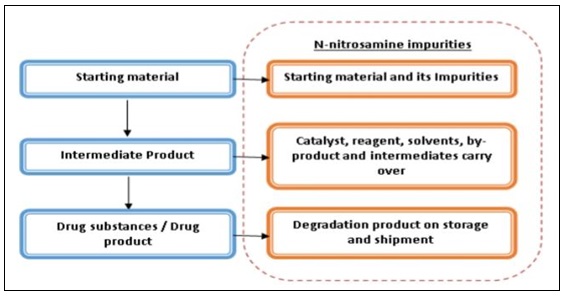
FIG. 1: MAJOR SOURCES OF NITROSAMINE IMPURITIES IN DRUG SUBSTANCES AND PRODUCTS
Formation Pathways: Nitrosamine formation in pharmaceutical systems is governed by well-established chemical reactions as well as process-specific conditions encountered during manufacturing and storage. Nitrosamine formation typically occurs 17, 19, 20 through reactions between secondary or tertiary amines and nitrosating agents such as nitrite under favorable conditions, including acidic pH and elevated temperature. These reactions may occur during drug manufacturing, storage, or degradation processes. Common contributing factors include contaminated raw materials, solvent degradation (e.g., dimethylformamide forming dimethylamine), and process conditions that promote nitrosation reactions 6, 33. Water systems and packaging materials may also contribute indirectly 18. While several theoretical pathways of nitrosamine formation have been proposed based on chemical principles, only a subset has been confirmed through pharmaceutical case investigations. This distinction is essential for differentiating established risks from potential but less well-documented mechanisms, thereby improving the accuracy of risk assessment 17, 19, 20.
Among the contributing factors, nitrite contamination and the presence of secondary or tertiary amines are considered the primary drivers of nitrosamine formation, particularly under acidic conditions. The chemical structure of the amine precursor plays a key role in determining nitrosation potential. Process parameters such as pH and temperature influence reaction kinetics, while solvent choice and reuse practices, especially those involving amine-containing solvents, represent significant industrial risk factors. In contrast, environmental and packaging-related contributions are generally secondary but may become important under specific conditions. Therefore, nitrosamine formation is governed by both chemical reactivity and process design considerations.
General pathways are illustrated in Fig. 2.
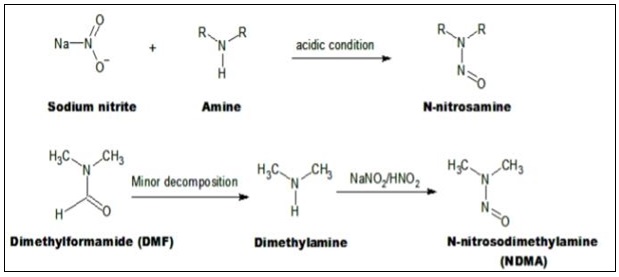
FIG. 2: GENERAL MECHANISM OF NITROSAMINE FORMATION AND REPRESENTATIVE NDMA FORMATION PATHWAYS
TABLE 2: AMINES AND CORRESPONDING NITROSAMINES
| Amines | Corresponding Nitrosamine |
| Dimethylamine | N-nitrosodimethylamine (NDMA) |
| Diethylamine | N-nitrosodiethylamine (NDEA) |
| Dipropylamine | N-nitrosodi-n-propylamine (NDPA) |
| Diisopropylamine | N-nitrosodiisopropylamine (NDIPA) |
| Dibutylamine | N-nitrosodi-n-butylamine (NDBA) |
| Ethylmethylamine | N-nitrosomethylethylamine (NMEA)
|
| N-methyl-4-aminobutyric acid | N-nitroso-N-methyl-4-aminobutyric acid (NMBA) |
Analytical Detection Strategies: The detection of nitrosamine impurities requires highly sensitive and selective analytical methods due to their ultra-trace presence. LC–MS/MS is the most widely used technique, particularly for non-volatile nitrosamines and NDSRIs, due to its high sensitivity and selectivity 26, 28. GC–MS is suitable for volatile nitrosamines such as NDMA and NDEA and is commonly used in regulatory testing 11, 27. HRMS is valuable for identifying unknown or emerging nitrosamines, especially NDSRIs 9, 28.
A key challenge is the potential for false-positive results due to in-situ formation during sample preparation 19, 20, which must be controlled through careful method validation. Analytical methods should comply with ICH guidelines to ensure accuracy and reliability 1, 34, 35. From a comparative perspective, LC–MS/MS offers the best balance of sensitivity and applicability for NDSRIs and non-volatile nitrosamines, whereas GC–MS remains superior for volatile nitrosamines due to its robustness and lower matrix interference. HRMS provides unique advantages in identifying unknown impurities but requires more complex validation and is less suitable for routine quantification. Therefore, no single technique is universally optimal, and method selection must be tailored to the analytical objective.
Liquid Chromatography–Tandem Mass Spectrometry (LC–MS/MS): LC–MS/MS is the most widely used technique for determination of nitrosamine impurities, particularly for non-volatile compounds and nitrosamine drug substance related impurities (NDSRIs). The technique offers high sensitivity and selectivity, making it suitable for trace-level quantification in complex pharmaceutical matrices.
LC–MS/MS methods typically require minimal sample preparation and are compatible with a wide range of analytes, including thermally labile compounds that cannot be analyzed by gas chromatography. Overall, LC–MS/MS remains the method of choice for routine quantitative analysis of both classical nitrosamines and NDSRIs.
Gas Chromatography–Mass Spectrometry (GC–MS): Gas chromatography–mass spectrometry (GC–MS) is particularly well suited for the analysis of volatile and semi-volatile nitrosamines such as NDMA and NDEA. The technique offers excellent chromatographic resolution, low background noise, and well-established performance characteristics, making it widely used in regulatory and pharmacopeial methods. Headspace GC–MS is often preferred for pharmaceutical applications because it minimizes matrix interference and reduces the risk of sample contamination. Therefore, GC–MS is best applied in targeted analysis of small, volatile nitrosamines rather than comprehensive screening of all potential impurities.
High-Resolution Mass Spectrometry (HRMS): High-resolution mass spectrometry (HRMS) plays a critical role in the identification and characterization of unknown or emerging nitrosamine impurities. HRMS provides accurate mass measurements and high resolving power, enabling structural elucidation and retrospective data analysis.
This capability is particularly valuable for the detection of NDSRIs, which may not be included in predefined target analyte lists. HRMS allows for non-targeted screening and post-acquisition data interrogation when new impurity risks are identified. However, compared with triple-quadrupole LC–MS/MS systems, HRMS methods may exhibit lower sensitivity for quantitative analysis and require more extensive validation. As a result, HRMS is typically used as a complementary tool for impurity identification and method development rather than routine quality control.
Analytical Artifact Formation and False Positives: False-positive nitrosamine results due to in-situ formation during sample preparation represent a significant analytical challenge. Such artifacts can occur when trace amines react with nitrite impurities under acidic conditions or elevated temperatures, leading to overestimation of impurity levels and potential misinterpretation of risk. This issue has important regulatory implications, as it may result in unnecessary product recalls or incorrect risk assessment conclusions. To minimize this risk, sample preparation procedures must carefully control pH, temperature, and reagent purity, and incorporate appropriate blanks, controls, and isotopically labeled internal standards. Robust method development is therefore essential to ensure accurate and reliable quantification of nitrosamine impurities.
Method Validation: Analytical methods for nitrosamine detection must be validated to ensure accuracy, precision, specificity, and sensitivity at trace levels. Limits of detection and quantification should meet regulatory thresholds, and matrix effects must be carefully evaluated. Validation should be performed in accordance with established guidelines such as ICH recommendations.
TABLE 3: COMPARATIVE EVALUATION OF MAJOR ANALYTICAL TECHNIQUES FOR NITROSAMINE DETECTION
| Technique | Best Analytes | Strengths | Limitations | Best Use Case |
| LC–MS/MS | Non-volatile nitrosamines, NDSRIs | Very high sensitivity, high selectivity | Matrix effects possible | Routine QC and quantification |
| GC–MS | Volatile nitrosamines | High resolution, low background noise | Not suitable for non-volatile compounds | Targeted analysis of small nitrosamines |
| Headspace GC–MS | Highly volatile nitrosamines | Minimal matrix interference | Limited analyte range | Finished product testing |
| HRMS | Unknown impurities, NDSRIs | Accurate mass, structural identification | Complex validation, lower quantitative sensitivity | Screening and identification |
Regulatory Framework and Risk Assessment: Regulatory control of nitrosamine impurities has evolved significantly following global contamination incidents, leading to harmonized risk-based frameworks across major agencies. Acceptable intake limits for nitrosamine impurities are derived based on carcinogenicity data and correspond to a lifetime cancer risk of approximately 1 in 100,000 1, 29, 30. These limits are typically established using compound-specific toxicological data or the threshold of toxicological concern (TTC) approach. In cases such as NDSRIs, where experimental data are limited, structure–activity relationship (SAR) models and read-across approaches are applied to estimate risk.
However, these predictive approaches introduce uncertainty, particularly for newly identified impurities, emphasizing the need for continued toxicological evaluation and refinement of risk assessment methodologies. Nitrosamine risk management is a lifecycle requirement, requiring continuous monitoring and reassessment throughout product development and manufacturing 2, 3, 34, 35. The U.S. FDA adopts a more flexible, science-based approach, whereas the EMA often provides more structured timelines and defined expectations. Differences are also observed in acceptable intake derivation methods and treatment of NDSRIs, highlighting the need for harmonization across jurisdictions. A comparison of regulatory approaches is shown in Table 4.
Risk-Based Regulatory Approach: Current regulatory frameworks are centered on a structured, risk-based three-step approach that is implemented across pharmaceutical development and manufacturing to operationalize regulatory expectations.
Step 1: Risk Evaluation: Manufacturers are required to conduct a comprehensive scientific assessment of potential nitrosamine formation risks. This includes evaluation of active pharmaceutical ingredient (API) structure, synthetic route design, reagent selection, solvent systems, and the presence of nitrosatable amines and nitrosating agents. Additional considerations include raw material impurity profiles, water system quality, packaging interactions, and storage conditions. Emphasis is placed on identifying structural alerts that may lead to nitrosamine drug substance related impurities (NDSRIs).
Step 2: Confirmatory Testing: Where a potential risk is identified, confirmatory analytical testing must be performed using validated, high-sensitivity methods capable of detecting nitrosamines at or below regulatory reporting thresholds.
Mass spectrometry-based techniques, including LC–MS/MS and GC–MS, are generally required. Analytical methods must demonstrate specificity, sensitivity, and robustness, with appropriate use of internal standards and control of matrix effects. If nitrosamines are detected or a formation risk is confirmed, manufacturers must implement corrective and preventive measures. These may include process redesign, substitution of reagents, tightening of impurity specifications, control of solvent quality and reuse, enhanced supplier qualification, packaging modifications, and strengthened cleaning validation. Regulatory agencies emphasize that mitigation strategies should prioritize prevention of formation rather than reliance solely on downstream analytical detection. Although regulatory agencies such as the US FDA and EMA adopt similar risk-based approaches for nitrosamine control, important differences exist in their implementation. The FDA generally follows a more flexible, science-driven framework, whereas the EMA provides more structured timelines and clearly defines regulatory expectations. Differences are also observed in acceptable intake derivation methods, classification and evaluation of NDSRIs, and lifecycle risk management obligations. These variations highlight the need for continued international harmonization to ensure consistent and effective control of nitrosamine impurities across global pharmaceutical systems. A comparative overview of major regulatory approaches is presented in Table 4.
TABLE 4: COMPARISON OF MAJOR REGULATORY APPROACHES FOR NITROSAMINE CONTROL
| Agency | Key Approach | Acceptable Intake Strategy | NDSRI Consideration | Lifecycle Expectations |
| FDA | Risk-based, flexible | Compound-specific AI, SAR where needed | Increasing emphasis | Continuous monitoring and updates |
| EMA | Structured, timeline-driven | Defined AI frameworks, class-based approaches | Strong regulatory focus | Mandatory reassessment timelines |
| Health Canada | Like FDA | Case-based AI derivation | Case-specific evaluation | Ongoing risk evaluation |
| MHRA / TGA | Aligned with EMA/FDA | Harmonized approaches | Included in guidance updates | Lifecycle management required |
Representative Case Studies: Since 2018, multiple pharmaceutical products have been affected by nitrosamine impurities, leading to global recalls, regulatory investigations, and significant changes in impurity risk management strategies. These cases provide valuable insight into the diverse mechanisms of nitrosamine formation and highlight the importance of process understanding, analytical control, and lifecycle risk management. Reported nitrosamine contamination cases can be systematically categorized into process-related contamination, degradation-induced formation, and API-structure-related NDSRI formation. These categories reflect distinct mechanistic origins and have different regulatory and risk management implications. Process-related contamination typically arises from manufacturing conditions such as nitrite impurities or solvent interactions, degradation-related formation occurs during storage or stability conditions, and NDSRIs originate from structural features of the API itself.
| Drug | Nitrosamine Detected | Cause |
| Valsartan | NDMA/NDEA | Nitrite reaction with solvents |
| Metformin | NDMA | Process variability |
| Ranitidine | NDMA | Degradation during storage |
| Rifampicin | MNP (NDSRI) | API structural transformation |
| Varenicline | Nitroso impurity | API-related formation |
These cases demonstrate that nitrosamine formation may arise from manufacturing processes, degradation pathways, or API-specific structural features 6, 10, 15, 24, 25.
Key Insights from Case Studies: Collectively, these case studies demonstrate that nitrosamine impurities in pharmaceutical products can arise from multiple, distinct mechanisms, including process-related contamination, degradation during storage, and API-structure-related transformations. Importantly, no single control strategy is universally applicable, and effective risk mitigation requires a tailored approach based on the specific formation pathway involved.
These findings highlight the need for integrated risk assessment strategies that combine process understanding, analytical detection, regulatory compliance, and lifecycle monitoring to ensure effective control of nitrosamine impurities in pharmaceutical systems.
Control and Mitigation Strategies: Nitrosamine risk can be minimized through process optimization, including avoidance of nitrosating conditions and control of raw materials and solvents 31-33. Solvent quality and reuse should be carefully monitored to prevent accumulation of amine impurities.
Analytical monitoring using validated LC–MS/MS or GC–MS methods is essential for confirming impurity levels, although prevention remains more effective than reliance on end-product testing 26, 28. Continuous lifecycle risk assessment and regulatory compliance are required to ensure sustained control of nitrosamine impurities 2, 3, 34.
In practical pharmaceutical manufacturing, effective nitrosamine risk mitigation prioritizes prevention through process design optimization, strict control of raw materials, and careful management of solvent quality and reuse. Preventive strategies are complemented by analytical monitoring to confirm compliance with regulatory limits. A balanced approach integrating proactive risk control and confirmatory testing is essential for maintaining product quality and ensuring patient safety.
Limitations and Knowledge Gaps: Although significant regulatory and scientific progress has been made in understanding nitrosamine impurities, several knowledge gaps remain. Long-term human exposure data for many nitrosamine drug substance related impurities (NDSRIs) 16 remain limited, and acceptable intake limits are often based on predictive or read-across models rather than compound-specific carcinogenicity studies. Analytical detection capability varies among laboratories, and ultra-trace measurement near regulatory thresholds may introduce inter-laboratory variability 26, 28. In addition, predictive in-silico carcinogenicity models for complex NDSRIs continue to evolve and require further validation. These limitations indicate that nitrosamine risk assessment remains an active and developing scientific area.
CONCLUSION: Nitrosamine impurities have emerged as a critical concern in pharmaceutical quality and regulatory science due to their potent carcinogenic potential at extremely low exposure levels. Since the initial identification of these impurities in 2018, substantial progress has been made in understanding their formation mechanisms, improving analytical detection strategies, and establishing comprehensive regulatory frameworks for risk assessment and control.
This review highlights that nitrosamine formation in pharmaceutical systems is a multifactorial process involving the interaction of nitrosatable amines, nitrosating agents, and process-specific conditions. A key advancement in recent years has been the recognition of nitrosamine drug substance related impurities (NDSRIs), which extend the scope of risk beyond classical small nitrosamines and introduce additional analytical and toxicological challenges. Effective control of these impurities requires a clear understanding of both established and potential pathways.
Advances in analytical methodologies, particularly LC–MS/MS, GC–MS, and high-resolution mass spectrometry, have enabled reliable detection of nitrosamines at trace levels consistent with regulatory acceptable intake limits. However, challenges such as matrix effects, analytical artifact formation, and inter-laboratory variability continue to require careful method development and validation. From a regulatory perspective, global agencies have adopted risk-based approaches emphasizing lifecycle management, proactive risk assessment, and preventive control strategies. Importantly, experience from pharmaceutical case studies demonstrates that no single mitigation strategy is universally applicable. Instead, effective risk control requires an integrated approach combining process design optimization, raw material and solvent control, analytical monitoring, and robust quality systems. Prevention of nitrosamine formation remains more effective than reliance on end-product testing alone.
Despite significant progress, ongoing challenges remain, particularly in the toxicological evaluation of NDSRIs, standardization of analytical methods, and harmonization of regulatory expectations. Future advancements are expected to focus on predictive risk assessment tools, improved mechanistic understanding, and enhanced collaboration between industry and regulatory agencies.
In conclusion, the management of nitrosamine impurities is evolving toward a proactive, science-based, and lifecycle-oriented framework. Continued innovation in analytical science, regulatory policy, and pharmaceutical process design will be essential to ensure effective long-term control of nitrosamine impurities and to safeguard patient safety.
ACKNOWLEDGEMENT: The authors acknowledge the support of the teaching and non-teaching staff of Delonix Society’s Baramati College of Pharmacy for academic encouragement and institutional assistance during the preparation of this review.
CONFLICTS OF INTEREST: The authors report no financial or any other conflicts of interest in this work.
REFERENCES:
- Guideline M7(R2): Assessment and control of DNA reactive (mutagenic) impurities in pharmaceuticals to limit potential carcinogenic risk. International Council for Harmonisation 2023.
- S. Food and Drug Administration. Control of nitrosamine impurities in human drugs: Guidance for industry. Silver Spring (MD): FDA 2023.
- European Medicines Agency. Questions and answers for marketing authorization holders/applicants on nitrosamine impurities in human medicinal products. EMA; 2023.
- Health Canada. Nitrosamine impurities in medications: Guidance for sponsors. Ottawa: Health Canada 2022.
- Therapeutic Goods Administration. Nitrosamine impurities in medicines: Regulatory guidance. Canberra: TGA 2022.
- Parr MK and Joseph JF: NDMA impurity in valsartan and other pharmaceutical products: Analytical methods for determination of N-nitrosamines. J Pharm Biomed Anal 2019; 164: 536–549.
- Shaik KM, Sarmah B, Wadekar GS and Kumar P: Regulatory updates and analytical methodologies for nitrosamine impurities detection in sartans, ranitidine, nizatidine, and metformin. Crit Rev Anal Chem 2020; 50(5): 802–822.
- Zmysłowski A and Szpot P: Nitrosamines in pharmaceuticals: Occurrence, analytical methods, and regulatory perspectives. TrAC Trends Anal Chem 2022; 148: 116553.
- Djintchui N and Servais AC: Analysis of nine N-nitrosamines using LC-HRMS. Anal Methods 2015; 7: 5748–5759.
- Yong DL, Selbes M, Zhong R and Karanfil T: Formation mechanism of NDMA from ranitidine and other amines. Environ Sci Technol 2014; 48: 8653–8663.
- Tsutsumi T, Akiyama H and Demizu Y: Analysis of NDMA in valsartan drug substances using GC-MS. Biol Pharm Bull 2019; 42(4): 547–551.
- Berrido A and Byrd JB: Angiotensin receptor blockers and cancer risk: Insights from recalls. Curr Hypertens Rep 2020; 22: 1–8.
- Gunasekaran P, Chertow GM, Bhalla V and Byrd JB: Status of angiotensin receptor blocker recalls. Hypertension 2019; 73: 928–933.
- Shephard EA and James J: Nitrosamine impurities in angiotensin receptor blockers. Cardiol Rev 2020; 28(5): 262–265.
- Ajith KPV and Deepa M: Metformin and nitrosamine impurities. Int J Res Med Sci 2020; 8: 3778–3784.
- Schlingemann J: Nitrosamine drug substance related impurities (NDSRIs): Scientific and regulatory considerations. Regul Toxicol Pharmacol 2023.
- Nanda KK and Tannenbaum SR: Nitrosamine formation mechanisms and prevention. ACR 1987; 20(9): 319-25.
- Krasner SW, Mitch WA, McCurry DL, Hanigan D and Westerhoff P: NDMA in drinking water: Occurrence, formation, and treatment. Environ Sci Technol 2013; 47: 10715–10728.
- Mitch WA and Sedlak DL: Formation of N-nitrosodimethylamine (NDMA) from dimethylamine during chlorination. Envir Sci Technol 2002; 36: 588–95.
- Le Roux J, Gallard H and Croue JP: Formation of NDMA and halogenating DBPs by chloramination of tertiary amines. Water Res 2011; 45: 3164–3174.
- S. Food and Drug Administration. Laboratory tests show NDMA forms in ranitidine products over time. FDA Safety Communication 2020.
- European Medicines Agency. Lessons learned from presence of N-nitrosamine impurities in sartan medicines. EMA 2020.
- S. Food and Drug Administration. Updates on nitrosamine impurities in metformin products. FDA 2020.
- S. Food and Drug Administration. Nitrosamine risk assessment for rifampicin and rifapentine. FDA 2021.
- S. Food and Drug Administration. Nitrosamine impurity in varenicline. FDA 2021.
- Kocijan I: Trace determination of nitrosamines by LC-MS/MS in pharmaceuticals. J Chromatogr A 2021; 1653: 462–470.
- González M, Barceló D, Beíza A and Marce RM: Development of headspace SPME-GC-MS method for determination of nitrosamines. J Chromatogr A 2018; 1548: 66–74.
- Li Y, Zhang W, Fan X and Ding X: Ultra-trace quantification of N-nitrosamines using LC-HRMS. Anal Chem 2019; 91(13): 8186–8194.
- Bercu JP: Risk assessment of mutagenic impurities in pharmaceuticals. Regul Toxicol Pharmacol 2015; 72(3): 527–533.
- Müller L: A rationale for determining acceptable limits for genotoxic impurities. Regul Toxicol Pharmacol 2006; 44(3): 198–211.
- Teasdale A and Elder DP: Control of genotoxic impurities: A pharmaceutical industry perspective. Org Process Res Dev 2011; 15(3): 567–572.
- Elder DP and Snodin DJ: Strategies for control of DNA-reactive impurities. J Pharm Sci 2009; 98(9): 3059–3067.
- Krammer G: Nitrosamine risk evaluation in API synthesis. Org Process Res Dev 2022; 26(1): 12–24.
- United States Pharmacopeia. General chapter <1469> Nitrosamine impurities. USP–NF 2021.
- European Pharmacopoeia Commission. General chapter 2.5.42 N-nitrosamines in active substances. EDQM latest edition.
How to cite this article:
Lonkar K and Baokar S: Nitrosamine impurities in pharmaceuticals: analytical methods, regulatory framework, and risk control– a review. Int J Pharm Sci & Res 2026; 17(8): 2351-59. doi: 10.13040/IJPSR.0975-8232.17(8).2351-59.
All © 2026 are reserved by International Journal of Pharmaceutical Sciences and Research. This Journal licensed under a Creative Commons Attribution-NonCommercial-ShareAlike 3.0 Unported License.
Article Information
9
2351-2359
700 KB
378
English
IJPSR
Kartik Lonkar * and Shrikrishna Baokar
Delonix Society’s Baramati College of Pharmacy, Barhanpur, Baramati, Pune, Maharashtra, India.
kartiklonkar7781@gmail.com
09 March 2026
22 April 2026
23 April 2026
10.13040/IJPSR.0975-8232.17(8).2351-59
01 August 2026
 Download