




NSAIDS AS EMERGING PHARMACEUTICAL POLLUTANTS: IMPACTS ON ENVIRONMENTAL MICROBIAL COMMUNITIES
HTML Full TextNSAIDS AS EMERGING PHARMACEUTICAL POLLUTANTS: IMPACTS ON ENVIRONMENTAL MICROBIAL COMMUNITIES
Kashish Noor, Rojina Khatun and Malavika Bhattacharya *
Department of Biotechnology, Techno India University, EM 4, Salt Lake, Sector V, Kolkata, West Bengal, India.
ABSTRACT: One of the widely prescribed medicines around the world is NSAIDs, which may continuously contaminate the environment as a result of domestic wastewater, hospital effluents, and pharmaceutical industry effluents owing to poor efficacy in removing such pollutants from the environment by the applied treatment methods. It results in pollution of both soil and aquatic environments, thereby increasing the risk of harmful impacts of NSAIDs on the composition of microbial populations. Bacteria have been recognized as essential for nutrient cycling, organic matter mineralisation, and maintaining ecosystem stability. Therefore, disturbances to the microorganisms caused by pharmaceutical residues may significantly impact the proper functioning of ecosystems. The present study will be a narrative review on topics associated with the frequency of occurrence, fate, persistence, degradation, and ecological impacts of NSAID pollution. The up-to-date information concerning the occurrence, transformation products, and biodegradation of the most prevalent NSAIDs, e.g., ibuprofen, diclofenac, naproxen, and ketoprofen, will be addressed in this paper. It is equally vital to know about the effects of NSAIDs on the microbial structure, enzyme activities, biodegradation process, and ecology of the microbes. Bacteria, fungi, and algae play significant roles in the biotransformation of NSAIDs and elimination of their toxic effects. However, certain areas still require more research, which include low-level chronic exposure, toxicity of metabolites, and the effect of NSAIDs on the ambient environment of the microbes.
Keywords: NSAIDs, Pharmaceutical Pollution, Environmental Microbiology, Microbial Degradation, Wastewater Treatment, Ecotoxicology, Diclofenac, Ibuprofen
INTRODUCTION:
Pharmaceutical Pollutants as an Emerging Environmental Concern: Another kind of contaminants which has been newly discovered in the environment is pharmaceuticals. With increased prescriptions and consumptions of pharmaceuticals for medicinal purposes of both animals and humans, there are many active compounds released in the environment.
There are many different ways in which pharmaceuticals can be introduced into the environment, including excretion by animals and humans, disposal of pharmaceutical products, hospital effluents, and agricultural wastes.
Incomplete metabolism within living things can result in the release of large amounts of pharmaceutical compounds into the bodies of humans and animals, resulting in the introduction of these compounds to the sewage system. There is no method used in the wastewater treatment process which can help remove pharmaceuticals from the effluent. For this reason, effluents from wastewater treatment plants usually contain high levels of pharmaceuticals 1.
The types of pharmaceutical pollutants include various ones; for example, one of them is non-steroidal anti-inflammatory drugs (NSAIDs). This type has been subjected to great attention by scientists due to its widespread application and presence almost everywhere in the environment. The frequent disposal of the substances into the water and soil environment raises concerns about the effect of the pollutants on the microorganisms responsible for stabilizing the environment 2.
NSAIDs as Environmental Pollutants: The non-steroidal anti-inflammatory drugs are the types of pharmaceutical products used most frequently in the whole world in order to treat inflammation and pain, even in case of surgical operation. Ibuprofen and naproxen are examples of such drugs. The substances can be found everywhere since their use is widespread not only in hospitals but also at home.
But how do they end up there? For starters, not all of the drugs can be metabolized; therefore, we excrete the rest via urine and feces. In addition, drug manufacturing companies discharge them, and people illegally dispose of extra medication in their environment. These are some of the reasons for their relatively high concentrations in waters 3.
Furthermore, the composition of NSAIDs is the main reason for their persistence in the environment because acidity and hydrophobicity make them resistant to decomposition. Although they may undergo biodegradation and photodegradation, they will take time before becoming non-threatening substances. This makes them very persistent, interfering with the lives of other species. That is why currently, NSAIDs are considered one of the main problems of pharmaceutical contamination. We have to constantly monitor these substances to observe the effects on the environment 4.
Environmental Occurrence and Persistence of NSA-IDs: Various forms of NSAIDs have appeared in various environmental locations globally. A major contributor to the presence of these pharmaceuticals in the environment is their presence in wastewater. These chemicals cannot be effectively broken down by the conventional treatment processes employed in wastewater treatment plants and hence find themselves in rivers, lakes, estuaries, and soil. The time taken by different types of NSAIDs to decompose varies. Ibuprofen does not always decompose, and therefore, it tends to be persistent under such conditions. Naproxen does not easily decompose since it is structurally stable. Diclofenac persists in water bodies due to persistence and poor filtration 5.
Decomposition of NSAIDs heavily relies on factors like temperature, light, pH, and reaction materials. These medications may be degraded via microbially mediated processes, photolysis, hydrolysis, or oxidation. However, care should be taken since these reactions may result in the formation of metabolites with high potential for environmental toxicity.
Therefore, it implies continuous introduction of these pharmaceuticals into the environment, resulting in low-level exposures for organisms in the ecosystem 6.
Importance of Studying Environmental Microbial Populations: The ecological system is dependent on microorganisms that maintain our environmental conditions. These microorganisms include bacteria, fungi, archaea, and microalgae which are involved in various processes including nutrient cycling, decomposition, pollution degradation, carbon storage and maintenance of soil fertility. Any changes in their population structure may negatively affect ecosystems. Additionally, these microorganisms are capable of naturally degrading drug pollutants mainly due to NSAIDs. Numerous bacterial and fungal species have been shown to degrade these pharmaceutical pollutants by using enzymes responsible for hydrolysis and oxidation reactions.
However, exposure of these microorganisms to NSAID medications results in several negative effects on their populations. In particular, it alters species diversity, lowers activity of some enzymes in the organism and may even lead to a reduction in environmental resilience of the affected areas. Hence, knowing the effect of NSAIDs on microorganism populations is vital for further research of their influence on ecology. Moreover, it allows estimating the risk of contamination of ecological systems with these chemicals and improving water quality. In conclusion, more research into the topic is necessary to assess risk to environment and find effective treatments for pharmaceutical pollution 7.
Review Methodology: In the current study, a narrative review will be performed to examine the incidence, presence, persistence, breakdown, and ecotoxicity of NSAIDs in respect to their interactions with microbial communities in the environment. Literature on the topic to be investigated will be collected through searching electronic databases like PubMed, Scopus, Web of Science, Science Direct, and Google Scholar.
Some key terms to be used during literature search in period from January 2005 to March 2025 can include such as "NSAIDs", "pharmaceutical contaminants", "environmental pollution", "ibuprofen biodegradation", "diclofenac degradation", "naproxen fate in the environment", "effects of soil microorganisms on pharmaceutical products", "microbial communities in water ecosystems", "pharmaceutical pollution and microbial ecology", and "biodegradation of NSAIDs". The relevant studies conducted by researchers in journal papers or articles, reviews, or environments about the incidence, presence, persistence, transformation, and ecotoxicology of NSAIDs will serve as the eligibility criteria for selecting papers to be reviewed in particular studies on the effects of NSAIDs on microbial communities in soils and water bodies. Non-English studies and conference papers in abstract form only will be excluded from this review. Firstly, 135 papers were selected based on the title and abstracts. After evaluating the eligibility criteria and exclusion of duplicates, 76 relevant papers were chosen for discussion in this review. We have synthesised information related to several major themes, such as environmental occurrence, persistence, degradation pathways, microorganisms involved, analytical detection techniques, and potential areas for future research.
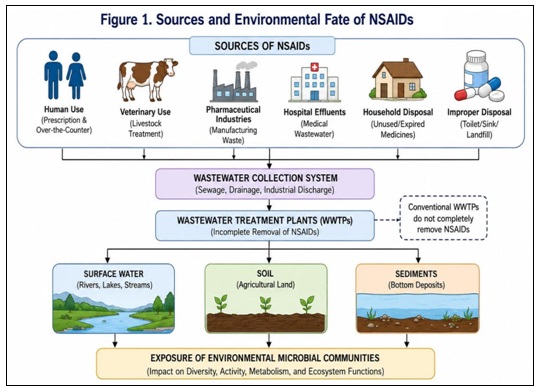
FIG. 1: MAJOR SOURCES, ENVIRONMENTAL PATHWAYS, AND DISTRIBUTION OF NSAIDS IN AQUATIC AND TERRESTRIAL ECOSYSTEMS, LEADING TO EXPOSURE OF ENVIRONMENTAL MICROBIAL COMMUNITIES
Major NSAIDs Detected in the Environment:
Ibuprofen: Ibuprofen, an anti-inflammatory drug, is an emerging contaminant due to its presence in various environmental compartments (similar to soils and water bodies) at attention that negatively impact submarine organisms through cytotoxic and genotoxic damage, high oxidative cell stress, and mischievous goods on growth, reproduction, and development. Ibuprofen is a developing environmental issue due to its high consumption rate and slow environmental degradation. Ibuprofen accumulates in natural environmental matrices after entering the environment from colourful sources. The issue of medicinals, especially ibuprofen, as contaminants is complex since many results take them into account or use effective technology to remove them in a controlled and effective way. Ibuprofen's release into the environment is a neglected pollution issue in a number of nations. It's a concern for our environmental health system that requires further attention. Ibuprofen's physicochemical properties make it tough for microbes or the terrain to break it down 8.
Naproxen: One well-known medication in the class of non-selective, nonsteroidal anti-inflammatory medications is naproxen, a derivative of bicyclic propionic acid. Because, in contrast to diclofenac and other NSAIDs, including the selective ones, it poses a lower vascular risk when used in large dosages, it is the recommended medication for treating osteoarthritis in people with a high cardiovascular risk 9. Naproxen's success on the pharmaceutical market is a result of these benefits as well as the fact that it is available without a prescription. In comparison to other NSAIDs, it has maintained a dominant position for over 40 years. Nearly 3000 tons of naproxen were manufactured worldwide in 2003. Relatively little is known about the microbiological breakdown of naproxen, despite recent increases in interest in the breakdown of nonsteroidal anti-inflammatory medications, including ibuprofen, ketoprofen, and diclofenac. This is because naproxen has two condensed rings, which contribute to its comparatively high stability and resistance to microbial destruction. The study that has been done thus far has corroborated this. These demonstrate that naproxen typically undergoes only a microbiological transition, with no cleavage of the aromatic rings. The issue of medicines as possible environmental pollutants is currently the subject of experimental research. This research, however, is not enough to address this ecological problem globally. The information about ibuprofen as a possible new environmental contaminant and the possibility of employing bacteria for its biodegradation as a substitute technology is the main topic of this review 10.
Diclofenac: Persistence of diclofenac in the environment, particularly in water resources, brings about many negative implications to the ecosystem, especially the aquatic ecosystem. Diclofenac refers to an environmental pharmaceutical compound whose pollution affects aquatic species as well as other non-target species. Furthermore, the field of environmental pharmacology stresses the need to control these chemicals within the environment since there is the need to understand their interactions within the environment. Because of varying efficiency among these methods, drug elimination strategies are crucial in mitigating such negative implications. It is important to manage the environmental hazards that result from diclofenac in order to preserve aquatic ecosystem integrity 11.
TABLE 1: PROPERTIES OF NSAIDS, WHICH ARE COMMONLY FOUND IN THE ENVIRONMENT
| NSAID | Major Sources | Environmental Occurrence | Persistence | Major Environmental Concern |
| Ibuprofen | Domestic wastewater, hospital effluents, and pharmaceutical industries | Frequently detected in surface water, ground water, and wastewater treatment plant effluents | Moderate | Toxic effects on
Aquatic microorganisms and disruption of microbial activity |
| Naproxen | Municipal wastewater, household disposal, and hospital discharge | Commonly detected in rivers, lakes, and sediments | High | Resistant to microbial degradation and long- term environmental persistence |
| Diclofenac | Hospital wastewater, pharmaceutical manufacturing, and domestic sewage | Widely detected in aquatic ecosystems worldwide | Very high | Toxicity to aquatic organisms, bioaccumulation, and ecological disturbances |
Effects of NSAIDS on Soil Microbes Depending on Concentration: The elevated concentration of NSAIDS affected soil biological activities, such as soil respiration, as well as enzymatic reactions. The variations observed in the number of bacteria and fungi showed that some microbes were able to utilise NSAIDs for the purpose of obtaining energy and carbon. Such changes occurred exclusively when the NSAID concentration was high, and had no effect at low concentrations. In general, the presence of NSAIDS can affect soil microbes' actions 12.
Environmental Impact of NSAIDS: Non-steroidal anti-inflammatory drugs (NSAIDs) are commonly found environmental contaminants that exert significant biological activity and persist in the soil, water, and sediment environments. The primary means of entering the environment for NSAIDs is through wastewater release; in the natural environment, their concentrations do not exceed 1 μg/L 13. For their environmental disposition, the following complex mechanisms are responsible:
Bacterial Degradation: NSAIDs can be degraded by bacterial strains through oxidation, hydroxylation, and decarboxylation.
Environmental Effects: NSAIDs affect the reproductive capacity, upset the hormone balances, are cytotoxic, and genotoxic.
Long-term Pollution: It is difficult to remove them via conventional wastewater treatment processes. From this investigation, it can be concluded that NSAIDs are a new threat to the environment, which requires sophisticated approaches to eliminate and monitor these drugs.
Chirality Behavior and Degradation: In the environment, NSAIDs, including naproxen, ibuprofen, and ketoprofen, experience the chiral inversion and enantioselective degradation process. Hence, the process will assess environmental risk much more complicated because less toxic enantiomers convert into highly toxic forms 14.
Special Effects on the Environment:
Impact on Wildlife: NSAIDs cause thinning of the eggshell among birds by inhibiting cyclooxygenase, thereby preventing the production of prostaglandins. This will lead to the need for fewer calcium ions necessary for mineralisation.
Aquatic System: Small amounts of NSAIDs have adverse effects on the fish and hinder their behavioral, reproductive, and endocrine functions.
Patterns of Global Distribution: Acetaminophen, diclofenac, ibuprofen, and naproxen are some of the commonly occurring NSAIDs; however, maximum concentrations are reported to exist in the rivers that discharge untreated effluents. Research related to NSAIDs is mostly conducted in Europe and Asia.
Removal: While every method has strengths and limitations, new developments in the realm of advanced oxidation processes, biotransformation, and adsorption are underway. Biodegradation is critical since NSAIDs are mostly resistant to biotransformation.
Biodegradation: Enzymes such as dioxygenase, oxidoreductase, and dehydrogenase play a major role in microbial biodegradation while cytochrome P450 mediates hydroxylation 15.
Effects of Physical-Chemical Properties on Persistent Behavior: According to literature data, the following physical-chemical properties influence NSAIDs persistence in the environment:
Acidic Nature: These drugs exhibit weak acidic nature with the acid dissociation constant (pKa) value of 3.7-4.9. At normal physiological pH values, which vary between 6.5-8.0, NSAIDs exist as ionised and negatively charged substances that can participate in electrostatic interactions with positively charged molecules/surfaces in their surroundings.
Lipophilicity: The log D_OW values of the NSAIDs, which represent the ratio of the distribution of these agents between the aqueous phase and octanol (lipophilic phase), vary between -1.13-1.64 at pH 7.
Chirality of Drugs: As per Petrie et al. (2020), some NSAIDs, including ibuprofen, naproxen, ketoprofen, and flurbiprofen, exist in the form of chiral compounds. Although being identical, enantiomers show different behavior in their biological milieu due to their chirality, leading to:
- Enantioselective degradation during treatment of waste water.
- An enantiomer may convert into another through enantioselective degradation by chiral inversion methods.
- Differences in persistence properties of each enantiomer.
Distribution in the Environment: Being ionic substances, NSAIDs can be found both in the particulate and dissolved phases of sewage water, sludge, soil, and sediments. Their persistence is also influenced by their redox state, since different bacteria consortia will act in anoxic and oxic environments.
Vulnerability to Biodegradation: Enzyme activities like that of dehydrogenase, oxidoreductase, and dioxygenase, are major contributors to the persistence of NSAIDs; Cytochrome P450 is critical for the hydroxylation reaction. Persistence increases dramatically with a decrease in temperature, i.e., it was much greater at 4°C than 18°C 16.
Adsorption, Leaching, and Transport in Soil: Processes such as adsorption, leaching, and transport involved in the fate of NSAIDs in the environment include complex mechanisms, which are affected by the physicochemical characteristics of NSAIDs as well as their environment in soil.
Sources of Contamination: Biosolids-based fertiliser use and re-use of wastewater as a source for irrigation in agriculture have been identified as two sources of contamination of NSAIDs in the soil.
Adsorption Process: The adsorption process of NSAIDs is affected by their physicochemical characteristics.
Ionic Form: At the commonly known pH levels of soil, the ions of NSAIDs, such as ibuprofen and naproxen, have pKa values ranging from 3.7 to 4.9, implying that they can be in the form of anions in the soil.
Distribution Properties: The equilibrium distribution between soil solution and soil matrix phase is influenced by the partition coefficients of NSAIDs (log D_OW=-1.13 to 1.64 at pH 7).
Transportation and Persistence: In studies conducted in soil microcosm systems, it has been demonstrated that transportation of NSAIDs is influenced by various factors, such as:
Temperature: Transport of NSAIDs decreases with low temperatures (4°C relative to 18°C).
Enantioselective Behaviour: S (+) - naproxen and R (-)-ibuprofen are more persistent than other enantiomers.
Biodegradation: Both substances go through bidirectional chiral inversion and can last for a long time (ibuprofen breaks down in 28 days, whereas naproxen takes at least 56 days) 17.
Photodegradation and Hydrolysis: Although there is little knowledge on these particular pathways, photodegradation and hydrolysis are significant abiotic transformation processes influencing the environmental destiny of NSAIDs.
Photo-degradation: Photolytic degradation is demonstrated by studies on river water microcosms. An image of ketoprofen. After five days of exposure to light in both biotic and abiotic environments, 98% of the medication was eradicated in river water microcosms using both biodegradation and photolysis.
Conditions of Light Versus Dark: Photolysis can be a key tactic to eliminate certain NSAIDs, according to research comparing exposure to light and shade.
Abiotic vs. Biotic Processes: Abiotic controls are used in research to differentiate between biological and chemical deterioration.
Abiotic Controls: Autoclaved or sterilised controls are frequently used in studies to distinguish between biological degradation and abiotic processes, such as photolysis and hydrolysis.
Biotic Confirmation: For instance, naproxen inversion was demonstrated to be biologically caused when autoclaved abiotic controls showed no alterations 18.
Environmental Factors: Several factors influence abiotic degradation processes:
Temperature Effects: Significantly reduced degradation and transformation at 4°C compared to 18°C suggest temperature-dependent abiotic processes.
pH Conditions: The ionisation state of NSAIDs (pKa 3.7-4.9) at different environmental pH values affects their susceptibility to various degradation pathways.
Research Limitations: From the sources available, a lot of research is needed regarding the exact kinetics of photodegradation and hydrolysis of most of the NSAIDs. Most of the degradation studies are focused on biological degradation processes while there is limited information regarding the abiotic degradation of NSAIDs in the environment.
Advanced Degradation Processes for Treatment Purposes: Photo-degradation techniques and advanced oxidation methods have been considered as potential removal technologies in which photo-degradation may play an important role in such treatment systems 19.
Biodegradation by Microbial Communities: By using different enzyme-based approaches, microbial communities play a vital role in the biodegradation process of NSAIDs.
Degradation Processes of NSAIDs by Bacteria: Different bacteria can break down NSAIDs through various biochemical reactions:
Hydroxylation by cytochrome P450 enzymes (demonstrated by decreased drug concentrations in fungal cultures of Phanerochaete sordida YK-624 when incubated with 1-aminobenzotriazole).
Additional Processes: Decarboxylation, dehydrogenation, dichlorination, subsequent oxidation, and demethylation.
Key Enzymes Involved: A wide array of enzymes is upregulated during NSAID degradation, indicating their involvement in microbial breakdown:
- Dehydrogenase
- Oxidoreductase
- Dioxygenase
- Monooxygenase
- Decarboxylase
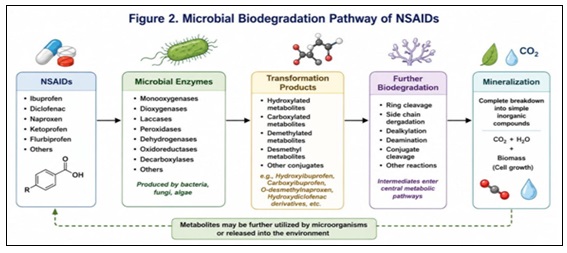
FIG. 2: GENERAL MICROBIAL BIODEGRADATION PATHWAY OF NSAIDS IN ENVIRONMENTAL SYSTEMS. NSAIDS ARE TRANSFORMED BY MICROBIAL ENZYMES INTO VARIOUS METABOLITES, WHICH UNDERGO FURTHER DEGRADATION AND ARE ULTIMATELY MINERALIZED INTO CO2, H2O AND BIOMASS
TABLE 2: MICROBIAL DEGRADATION OF MAJOR NSAIDS BY DIFFERENT MICROORGANISMS
| NSAID | Microorganism | Enzymes involved | Major metabolites | Reported degradation efficiency |
| Ibuprofen | Sphingomonas sp.Ibu-2 | Monooxygenases, deoxygenases | Hydroxyibuprofen,carboxyibuprofen | Upto 99% under laboratory conditions |
| Bacillus thuringiensis B1 | oxygenases | Hydroxylated derivatives | Significant degradation within several days | |
| Naproxen | Stenotophomonas maltophilia KB2 | Laccases, monooxygenases | O-desmethylnaproxen | More than 80% degradation reported |
| Diclofenac | White-rot fungi | Laccase, manganese peroxidase | Hydroxydiclofenac derivatives | Greater than 90% degradation |
NSAIDs biodegrade by microbes is considered to be one of the natural approaches for removing pollutants from contaminated environments. Several types of bacteria, fungi, and algae possess the potential to decompose or demineralize these pollutants. The bacteria (Sphingomonas, Bacillus, Pseudomonas, and Stenotrophomonas), and the fungi (Trametes versicolor) that degrade the substances through the action of extracellular enzymes – laccases and peroxidases, can break down the complex molecules of the medicines. Algae play a significant role in the decomposition of NSAIDs by means of bio accumulation and bio transformation.
Environmental Factors that Impact the Bio degradation Process: The process of microbial degradation is greatly influenced by such environmental factors as follows:
The State of the Environment: Some bacterial groups were observed as having activity both in the aerobic and anaerobic states; thus, leading to a different degradation effectiveness of these compounds.
Differences in the Type of Treatment System: Inactivated sludge and trickling filters demonstrate a dissimilarity in the Enantioselectivity due to the different communities of microbes.
Temperature: Reduction in the temperature leads to a reduction in microbial activity (4°C compared to 18°C) 20.
Applications of Wastewater Treatment Systems:
Low Efficiency in Conventional Systems: Despite the microbial action, the removal process of NSAIDs is relatively inefficient in conventional wastewater plants. Actuated sludge, membrane bioreactors, and trickling pollutants possess different levels of enantioselectivity due to the difference in microbial population in each of them.
Challenges in Research: While bacterial strains can be used in NSAID declination, research on algae and fungi remains limited. With regard to diverse microbial populations in wastewater systems, various declination pathways might be possible; nevertheless, several issues will be encountered when all these pathways are followed at once 21.
Transformation Products of NSAIDs and Their Toxicity: Metamorphosis products of NSAIDs present toxicological challenges due to their greater toxicity in comparison with the original molecules.
Major Transformation Products: Several key metabolites are formed during NSAID environmental transformation:
Ibuprofen Metabolites: Carboxyibuprofen and 2-hydroxyibuprofen.
Ketoprofen Metabolites: Dihydroketoprofen
Naproxen Metabolites: O-desmethylnaproxen
TABLE 3: MAJOR TRANSFORMATION PRODUCTS OF NSAIDS AND THEIR ENVIRONMENTAL SIGNIFICANCE
| Parent NSAID | Major Transformation product | Formation Pathway | Persistence | Reported toxicity |
| Ibuprofen | Hydroxyibuprofen | Hydroxylation | Moderate | Lower than the parent compound, but may remain biologically active |
| Carboxyibuprofen | Oxidation | Moderate | Reduce toxicity compared with the parent drug | |
| Naproxen | O-desmethylnaproxen | Demethylation | Moderate to high | Potential ecological effects reported |
| Diclofenac | 4’-Hydroxydiclofenac | Hydroxylation | High | may exhibit toxicity towards aquatic organisms |
| Diclofenac quinone imine | Oxidation | high | Potentially reactive and toxic metabolites |
Environmental Formation and Occurrence: Transformation products are formed through multiple pathways:
Microbial Processes: Hydroxylation, decarboxylation, dehydrogenation, and demethylation create various metabolites.
Environmental Detection: NSAIDs are commonly found with their metabolites in aquatic environments.
Wastewater Treatment: Many metabolites are pharmacologically active and have been reported in river waters 22.
Toxicological Implications: The toxicity of transformation products presents several concerns:
Enhanced Toxicity Potential:
Chiral Inversion: The conversion of less toxic enantiomers into more toxic forms can be significant if more harmful enantiomers are formed.
Metabolite Activity: Many metabolites retain pharmacological activity, potentially contributing to environmental toxicity.
Specific Toxic Effects:
Eggshell Thinning: NSAIDs and potentially their metabolites cause eggshell thinning in birds through cyclooxygenase inhibition, affecting prostaglandin conformation and calcium deficiency.
Aquatic Toxicity: Transformation products can contribute to cytotoxic and genotoxic effects, endocrine disruption, and reproductive impairment in aquatic organisms.
Enantiospecific Toxin: Chiral metabolites parade different toxicological biographies:
- Studies report lower than an order of magnitude difference in enantiomer toxin, but this can still be environmentally significant.
- The conformation of specific enantiomers through environmental metamorphosis can alter overall toxicity profiles 23.
Limitations of the Research: Some Important Limitations Associated with the Toxin Produced through the Metamorphosis Process Include:
- Lack of sufficient information about the toxin in individual metabolites relative to the parents.
- The lack of commercially available pure enantiomers of metabolites reduces the potential for conducting tests on the toxin.
- Environmental threat assessments focus mainly on the parent compounds; hence, there could be an underestimation of potential hazards posed by the metamorphosed compounds.
Environmental Relevance: The continuous nature and various conditions under which NSAIDs as well as their metabolites occur in water, soil, and deposition systems indicate that the metamorphosed compounds play a significant role in environmental toxin formation.
Detection and Quantification of NSAIDS in the Environment: The detection and quantification of NSAIDs in the environment require advanced methods.
Primary Analytical Techniques:
Liquid Chromatography (LC): The detection method that is frequently employed to determine the presence of NSAIDs and their metabolites in the environment is liquid chromatography combined with mass spectrometry (LC-MS/MS).
Gas Chromatography (GC): The method used most commonly for NSAID detection and metabolism identification in environmental samples is liquid chromatography coupled to mass spectrometry (LC-MS/MS) owing to its high sensitivity and specificity. Gas chromatography–mass spectrometry (GC-MS) can also be employed; yet, this approach cannot be used extensively due to the presence of non-volatile NSAIDs.
Supercritical Fluid Chromatography (SFC): LC-MS/MS, the method that involves coupling liquid chromatography and mass spectrometry (LC-MS/MS), is considered to be the most common one employed for NSAID detection and quantification, as well as the determination of NSAID metabolites due to its high sensitivity and selectivity. Gas chromatography-mass spectrometry (GC-MS) could be another technique used for NSAIDs analysis; yet, its usage is restricted owing to the fact that a lot of NSAIDs are not volatile and have to be derivatised before analysis. SFC is a new analytical method combining features of LC and GC 24.
Sample Preparation Methods:
Extraction Techniques:
Solid-phase Extraction (SPE): Most common for aqueous samples.
Pressurised Liquid Extraction: For solid matrices (sediments, soils, sludge).
Matrix Considerations: Different approaches needed for wastewater, surface water, groundwater, and solid matrices.
Detection Systems:
Mass Spectrometry (MS): Essential for environmental analysis due to matrix complexity and low attention.
Limits of System Discovery: Lower limit of detection for matrixes without water, ng L⁻¹; for solid matrixes, ng g⁻¹.
Matrix Effects: Enhancement or reduction of the signal which needs to be compensated using deuterated internal standards.
Analytical Performance:
Detection Abilities:
Concentrations: μg L⁻¹ for raw effluents, ng L⁻¹ to μg L⁻¹ for surface waters.
Chromatographic Resolution: Rs should be above 1.5 for baseline separation. Rs ≥ 1.0 is good enough for quantification.
Times: 16 to 90 minutes, depending on the style and number of compounds.
Current Global Trends: More sensitive and simple styles have been developed since 2010, when research activities were initiated and intensified. Publications mostly originate from Asia and Europe. The most frequently observed NSAIDs include acetaminophen, diclofenac, ibuprofen, indomethacin, ketoprofen, naproxen, mefenamic acid, and salicylates.
Quality Assurance Issues:
Storage of Samples: Might result in the degradation of one enantiomer.
Strategies for Quantification: Ideal strategy – employ matrix matching along with the use of surrogate compounds.
Method Validation: Required where matrix composition is complex.
Newer Requirements for Analytical Techniques: There is a need for advancement in techniques that have the capacity for multi-residue and enantioselective analyses at the same time 25.
It becomes essential to conduct proper monitoring and quantification of these NSAIDs in environmental samples so as to understand their distribution and potential impact on the microorganisms in the ecosystem. Analytical techniques such as LC-MS/MS and GC-MS provide important information about the level of contamination in the environment.
Impacts of NSAIDS on Environmental Microbial Populations: The effects of NSAIDs on environmental microbial populations have not been thoroughly studied to date; only very few specific results have been published in the existing literature.
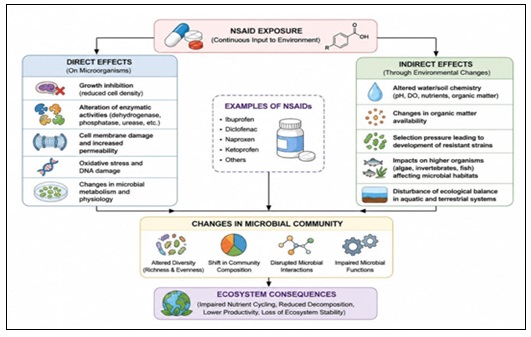
FIG. 3: EFFECTS OF NSAIDS ON ENVIRONMENTAL MICROBIAL COMMUNITIES
Effects on Microbial Communities (Directly Antimicrobial): According to toxicological data, NSAIDs may have direct effects on bacterial populations:
- Bacterial toxin. Enantiomers of ibuprofen parade toxin against marine bacterium Photobacterium leiognathid with an EC50 of 3.1 and 2.8 mg L-¹ for S(-) -ibuprofen and R(-) - ibuprofen respectively.
- Flurbiprofen goods. Has an enantioselective toxin towards P.leiognathi with a 1.7 fold difference between its enantiomers (EC50 1.2 vs 2.1 mg L⁻¹).
Gap Between Environmental and Effect Concentrations: There is considerable gap between concentrations of NSAIDs in the environment and effect concentrations.
- In environmental exposure conditions, NSAIDs generally attract mg/L to μg L⁻¹ concentrationin natural waters.
- Effect concentrations. Studies on bacterial toxin show goods attracting mg L⁻¹ of attention. This suggests that toxin is unlikely in the current environmental conditions 26.
Potential Ecological Implications: The widespread environmental distribution of NSAIDs raises several concerns:
Ubiquitous Impurity: NSAIDs are extensively distributed in water, soils, and sewage sediments, posing substantial pitfalls to ecosystem health.
Habitual Exposure Effects: Long- term, low- position exposure impacts on microbial community structure and function remain largely unknown.
Ecosystem Services: Implicit dislocation of microbial processes essential for nutrient cycling, organic matter decomposition, and other ecosystem functions.
Research Limitations: Critical knowledge gaps exist regarding NSAID impacts on environmental microbial populations:
Limited Microbial Toxin Data: Most environmental toxin studies concentrate on advanced organisms (fish, algae, pets) rather than bacteria and other microorganisms.
Community- Position Goods: Studies examining impacts on microbial community diversity, structure, and function are lacking.
Habitual Exposure Studies: Long- term goods of environmentally relevant attention on microbial populations are understudied.
Indirect Effects: NSAIDs may laterally affect microbial populations through
Ecosystem Dislocation: goods on advanced organisms may trickle down to affect microbial communities.
Habitat Revision: Changes in water chemistry or organic matter availability could alter microbial territories.
Selection Pressure: nonstop exposure may select for resistant microbial strains 27.
Future Research Needs: There is need for an assessment of the environmental significance of NSAIDs with regards to:
- Community-level studies involving toxic effects of the compounds.
- Long-term effects of the exposure to goods by microorganisms in relation to microbial community structure and diversity.
- Development of biological tools that would help assess the purity of the drugs in the environment.
Current Status: Although there is evidence on how NSAIDs can affect certain bacteria individually in laboratory conditions, it is still not clear how these chemicals can influence communities of microorganisms found in the environment, making this area very promising for future research 28.
General Microbial Community Structure and Function:
Toxicity Effects on Bacteria: Current toxicity data indicates that NSAIDs have a direct effect on bacteria.
Bacterial Toxicity: Ibuprofen racemates produce a toxic effect against the marine bacterium P. leiognathid, with EC50 values of 3.1 and 2.8 mg L ⁻¹ for S(-)-ibuprofen and R()-ibuprofen respectively.
Flurbiprofen Toxicity: Produces an enantioselective toxic effect towards P. leiognathi with a 1.7 fold disparity between enantiomers (EC50 1.2 vs 2.1 mg L ⁻¹).
Gap between Environmental Concentration and Effect Levels:
Environmental Concentration: Generally occurs in ng L ⁻¹ to μg L ⁻¹ ranges in the environment.
Effects: Studies on the effects of a toxin of bacterial toxins demonstrate that environmental exposure occurs at mg L⁻¹, suggesting that the acute toxin is unlikely to surpass present environmental exposures.
Implicit Ecological Controversies: The wide presence of NSAIDs within the environment raises many issues:
Ubiquitous Contamination: NSAIDs are found ubiquitously in water, soils, and sewage sludge, posing a substantial threat to ecological health.
Chronic or Low-Level Exposure Effects: The possible effects of exposure to chronic or low levels of NSAIDs on microbial communities have yet to be studied.
Ecological Functions: Implicit disruption of ecosystem functions provided by microbial functions that perform biogeochemical cycling and other ecological processes.
Limitations of Research: Crucial information concerning the effects of NSAIDs on microorganisms in the environment still remains unknown:
Limited Microbial Toxin Research: Environmental toxin research has mainly focused on the effects on more complex organisms, such as fish, algae, and pets, rather than bacteria.
Studies on Communities: It is necessary to conduct research on the effects of NSAIDs on microbial community structure and functions.
Chronic exposure studies at environmentally relevant concentrations are necessary 29.
Indirect Effects: NSAIDs may indirectly affect microbial populations through:
Ecosystem Disruption: Effects on higher organisms may cascade down to affect microbial communities.
Habitat Modification: Any modification in the chemistry of water or organic materials may result in a modification in the habitat of microbes.
Selective Pressure: Continuous exposure of organisms to the compounds can be under selective pressure to become resistant to these compounds.
Further Research Needed: Further research is needed to understand the environmental consequences of NSAIDs, and that would require an extensive study on how these compounds impact the microorganisms, as follows:
Community: Arrangement of toxins to assess the impacts of these toxins on bacteria in the natural concentration.
Consequences of long-term exposure of products to the microbial community.
Indicators of microorganisms for determining the purity of NSAIDs.
Existing Knowledge: While NSAIDs possess properties that can modify individual species of bacteria, the effects of NSAIDs on microbes in the environment have not been explored thoroughly 30.
Effects on Soil Microorganisms: Impacts of NSAIDs on soil microorganisms still lack proper scientific literature in the field.
Exposure to Soil: Introduction of NSAIDs in soil systems could develop implicit exposure scenarios of NSAIDs for the soil microorganisms.
Operation of Biosolids: Introduction of sewage sludge that could carry NSAIDs and act as toxins in agrarian soils.
Irrigation by Reclaimed Water: Introduction of wastewater for irrigation purposes may influence the scenario of NSAIDs introduction in soil systems.
Amendments: Naproxen and ibuprofen are found in amended soils.
Knowledge gaps that need to be considered in research: Some critical knowledge gaps concerning NSAIDs impact on soil microorganisms include:
Toxin Impacts: It seems to be no studies on the toxin effects of NSAIDs on soil microbial community structures and functioning.
Functional Impacts: Impacts of NSAIDs on soil microbial functional processes like nitrogen fixation, organic matter decomposition, and plant-soil interaction need to be studied more.
Microbial Community Impacts: Changes in the soil microbial community structure and functioning following NSAID introduction should also be considered.
General Knowledge: Given the fact that NSAIDs are toxic to the ecological system, producing some toxins in other environments, it may be important to study their impacts on the soil microorganism community 31.
Effects of NSAIDs on Soil Microbial Activity: Compliance with regulations, environmental consciousness, and proper disposal of medicinal drugs are required for reducing contamination. Summary In summary, there is need for a combination of innovation in science together with policy implementation that would help to address the issue of microbial population and reduce the risk posed by NSAID pollution. Effects of NSAID Pollution on Soil Microbial Activity it has been scientifically documented that soil microbes can be impacted by NSAID pollution. Research conducted by various scholars indicates that exposure to ibuprofen, diclofenac, and naproxen has resulted in changes in soil respiration rates and thus a modification of microbial metabolism. It is also evident that exposure to NSAIDs may lead to an increase or decrease in soil enzyme activity, namely dehydrogenase, phosphatase, and urease enzymes. There may also be a disruption of the soil nitrification process due to interference with nitrogen-fixing microbes. There could be changes in microbial population and microbial biomass, including bacteria and fungi. Despite the difference in effects that depend on the type of soil and environment, further research is needed in order to understand the potential impact on soil health.
TABLE 4: REPORTED EFFECTS OF NSAIDS ON SOIL MICROBIAL PARAMETERS
| Soil parameter | Reported Effects of NSAIDs |
| Soil Respiration | Altered microbial metabolic activity |
| Dehydrogenase Activity | Often reduced at higher NSAID concentrations. |
| Phosphatase Activity | May be inhibited depending on the exposure level |
| Urease Activity | Variable response depending on soil conditions |
| Nitrification | Potential disruption of nitrogen cycling |
| Bacterial Counts | Changes in abundance and diversity |
| Fungal counts | Shifts in community composition reported |
Research Needs: The environmental significance of NSAIDs in soil systems requires a comprehensive assessment of their impacts on soil microbial populations, including:
Community- level toxin studies with environmentally applicable attention.
Effect on soil microorganism diversity and ecosystem processes.
Studies of long-term exposure to NSAIDs in various soils.
Knowledge Status: It is well documented that soil microorganisms can interact with NSAIDs very easily (as indicated by the findings of biodegradation studies), but the detrimental effect of these drugs on the well-being of soil microorganism communities has not been studied extensively enough 32.
Impacts on Aquatic Microbial Communities: NSAIDs may affect aquatic microbial communities not only through direct toxicity but also by modifying the overall community composition as well as the functioning of ecosystems. Though there are several laboratory experiments that show the toxic effect on particular microorganisms, only a few of them focus on the community level.
Direct Effects on Aquatic Bacteria: Specific toxicity data exist for aquatic bacterial species:
Photobacterium Leiognathi: Ibuprofen enantiomers exhibit toxicity with EC50 values of 3.1 and 2.8 mg L ⁻¹ for S (-)- ibuprofen and R (-)- ibuprofen independently.
Flurbiprofen Toxicity: Flurbiprofen exhibits enantiospecific toxic effects on Photobacterium leiognathi, with EC50 values of 1.2 and 2.1 mg L⁻¹ for different enantiomers.
Naproxen Effects: Naproxen exhibits toxicity towards Photobacterium leiognathi, with slight enantiospecific differences in EC50 values (0.93 vs 0.75 mg L⁻¹).
Environmental Exposure Scenario: Aquatic microbial communities face widespread NSAID exposure:
Global Occurrence: NSAIDs are found at ng L⁻¹ to μg L⁻¹ concentrations in surface waters worldwide.
Continuous Input: Incomplete removal during wastewater treatment results in constant discharge to aquatic environments.
Multiple Compounds: Acetaminophen, diclofenac, ibuprofen, ketoprofen, naproxen, and other NSAIDs are frequently detected together.
The use of NSAIDs can affect aquatic microbial communities via toxic action as well as via indirect means of influencing the structure and function of the community.
Although many studies have shown that there are toxic effects on individual microbes, few studies have looked at effects at the community level within environmentally realistic concentrations.
The above toxicity values are based on laboratory results for individual strains of bacteria. However, the concentrations of NSAIDs in the environment will likely be much lower than what is seen in the laboratory studies. As such, although there may be acute toxicity observed in the lab, their ecological significance is not well understood.
Broader Aquatic Ecosystem Effects: NSAIDs produce multiple effects in aquatic ecosystems that may indirectly impact microbial communities:
Cytotoxic and Genotoxic Effects: These compounds induce cellular damage in aquatic organisms.
Endocrine Disruption: Effects on the hormonal systems of aquatic life may alter ecosystem dynamics.
Behavioural Changes: Impacts on fish and other organisms can affect ecosystem interactions.
Concentration-Effect Relationships: There’s a significant gap between environmental concentrations and observed direct effects:
Environmental Levels: Typically, ng L⁻¹ to μg L⁻¹ in natural waters.
Effective Concentrations: Bacterial effects have been reported as mg L⁻¹.
Consequences of Chronic Exposure: Effects of long-term, low-level exposure on microbial communities are still poorly understood.
Research Gaps: Major research gaps include the effects of NSAIDs on microbial communities in aquatic environments:
Community-position Approaches: Most research effort is directed at single species rather than the community as a whole.
Long-term Effects: Long-term consequences of exposure in environmentally relevant conditions are not well studied.
Functionality: Impact of drugs on important microbial functional processes remains largely unstudied.
Mixture Effects: Impacts of mixtures of NSAIDs require further study.
Evaluation and Monitoring: The potential of bioindicators, especially microorganisms, in evaluation of NSAID pollution of aquatic systems has been stressed, but further methodological development is needed 33.
Acute Toxicity versus Community-level Effects:
Acute Toxicity in Laboratory Conditions and Ecological Effect in Natural Conditions: It is important to point out the difference between acute toxicity in laboratory experiments, performed with regard to single bacterial cultures, and ecological effects on groups of bacteria functioning in the natural habitat.
Specifically, in laboratory experiments for determining the effect of any substance on bacteria, acute toxicity for single bacterial species will be expressed in mg/L, whereas in water environment in the natural conditions, the concentration of NSAIDs is measured in ng/L to µg/L. Thus, the information about acute toxicity provided by experiments is not relevant to environmental conditions and cannot be considered evidence that the given substances can be toxic in natural surroundings.
Nevertheless, prolonged effects of some chemical substances in relatively low concentrations can alter the structure of bacteria colonies.
The Present Situation: Although it has become clear what effect toxins have on individual bacteria, the question of the impact of NSAIDs on the structure and diversity of microbial communities in an aqueous environment still requires investigation 34.
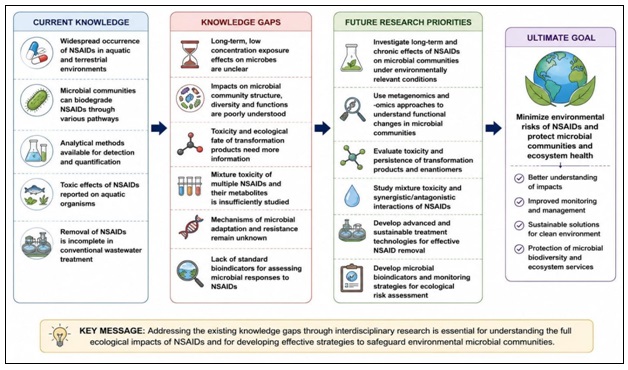
FIG. 4: KNOWLEDGE GAPS AND FUTURE RESEARCH DIRECTIONS ON NSAID POLLUTION AND MICROBIAL COMMUNITIES
CONCLUSION: NSAIDs have become important owing to their application, their discharge into the environment, and inadequate removal from the sewage effluents. The occurrence of NSAIDs in the environment may affect the microbial community concerning aspects like microbial diversity, biochemical processes, enzyme activity, and many others. Some microbes are capable of breaking down these compounds; however, incomplete breakdown results in the formation of transformation products that are hazardous to the environment. Based on the current review, it can be concluded that Future studies require further research into the effect of long-term exposure, toxicity of transformation products, and the effect on the microbial community.
ACKNOWLEDGEMENTS: We want to express our heartfelt gratitude to the Chancellor of Techno India University.
Author Contributions: Kashish Noor: Data Collection, Formal Analysis, Writing – Original Draft, Rojina Khatun: Resources, Writing-Editing, Dr Malavika Bhattacharya: Conceptualisation, Supervision.
CONFLICTS OF INTEREST: Nil
REFERENCES:
- Zampelli S and Verna R: Environmental pollution from pharmaceuticals. Life MDPI 2025; 15(9): 1341.
- Pozzebon EA and Seifert L: Emerging environmental health risks associated with the land application of biosolids: a scoping review. Environ Health 2023; 22(1): 57.
- Mohd Hanafiah Z, Wan Mohtar WHM, Abd Manan TS, Bachi NA, Abu Tahrim N, Abd Hamid HH, Ghanim A, Ahmad A, Wan Rasdi N and Abdul Aziz H: Determination and risk assessment of pharmaceutical residues in the urban water cycle in Selangor Darul Ehsan, Malaysia. Peer J 2023; 11: 14719.
- Tartaro Bujak I, Klarić D, Lučić B, Bojanić K, Bujak M and Galić N: Radiolytic elimination of nabumetone from aqueous solution: degradation efficiency and degradants' toxicity. Molecules 2024; 30(1): 64.
- Lin J, Zhang Y, Bian Y, Zhang YX, Du RZ, Li M, Tan Y and Feng X: Non-steroidal anti-inflammatory drugs (NSAIDs) in the environment: recent updates on the occurrence, fate, hazards and removal technologies. Sci Total Environ 2023; 904: 166897.
- Jiang C, Geng J, Hu H, Ma H, Gao X and Ren H: Impact of selected non-steroidal anti-inflammatory pharmaceuticals on microbial community assembly and activity in sequencing batch reactors. PLoS One 2017; 12(6): e0179236.
- Caracciolo AB, Topp E and Grenni P: Pharmaceuticals in the environment: biodegradation and effects on natural microbial communities. A review. J Pharm Biomed Anal 2015; 106: 25-36.
- Chopra S and Kumar D: Ibuprofen as an emerging organic contaminant in environment, distribution and remediation. Heliyon 2020; 6(6): e04087.
- Mokhtariazar A, Hassani AH, Borghei M and Massoudinejad M: A comparative study on performance of the conventional and fixed-bed membrane bioreactors for treatment of naproxen from pharmaceutical wastewater. Sci Rep 2024; 14(1): 9944.
- Hashim NH and Khan SJ: Enantioselective analysis of ibuprofen, ketoprofen and naproxen in wastewater and environmental water samples. J Chromatogr A 2011; 1218(29): 4746-4754.
- Gamarra JS, Godoi AFL, de Vasconcelos EC, de Souza KMT and de Oliveira CMR: Environmental risk assessment (ERA) of diclofenac and ibuprofen: A public health perspective. Chemosphere 2015; 120: 462-469.
- van den Broek S, Nybom I, Feola Conz R, Sun Y, Bucheli TD, Doetterl S, Hartmann M and Garland G: Soil microbial and plant responses to increasing antibiotic concentration: a case study of five antibiotics. Appl Environ Microbiol 2026; 92(3): e01581-25.
- Praveenkumarreddy Y, Vimalkumar K, Ramaswamy BR, Kumar V, Singhal RK and Basu H: Assessment of non-steroidal anti-inflammatory drugs from selected wastewater treatment plants of Southwestern India. Emerging Contaminants 2021; 7: 43-51.
- Marmon P, Owen SF and Margiotta-Casaluci L: Pharmacology-informed prediction of the risk posed to fish by mixtures of non-steroidal anti-inflammatory drugs (NSAIDs) in the environment. Environ Int 2021; 146: 106222.
- Banerjee S and Maric F: Mitigating the environmental impact of NSAIDs - physiotherapy as a contribution to One Health and the SDGs. Eur J Physiother 2023; 25(1): 51-55.
- Sallam NA, Alrefaeay K, ElZayat EM, Fahim IS, Hosney H, Lens PN and Youssef AF: A review on environmental impacts and advanced removal strategies of non-steroidal anti-inflammatory drugs. Int J Environ Res 2025; 19(6): 1-27.
- Xu J, Wu L, Chen W and Chang AC: Leaching potential of nonsteroidal anti-inflammatory drugs in soils. Environ Toxicol Chem 2010; 29(4): 800-807.
- Ledezma-Espinoza A, Challis JK, Roa-Gutierrez F, Sánchez-Kopper A, Castellón E and Wong CS: Photolysis of the nonsteroidal anti-inflammatory drug sulindac: elucidation of kinetic behaviour and photodegradation pathways in water. Environ Sci Process Impacts 2021; 23(9): 1405-1417.
- Wojcieszyńska D and Guzik U: Naproxen in the environment: its occurrence, toxicity to nontarget organisms and biodegradation. Appl Microbiol Biotechnol 2020; 104(5): 1849-1857.
- Wittich RM, Haïdour A, Aguilar-Romero I, de la Torre-Zúñiga J and van Dillewijn P: Biodegradation of microtoxic phenylpropanoids (phenylpropanoic acid and ibuprofen) by bacteria and the relevance for their removal from wastewater treatment plants. Genes 2023; 14(2): 442.
- Pirvu F, Covaliu-Mierlă CI, Paun I, Paraschiv G and Iancu V: Treatment of wastewater containing nonsteroidal anti-inflammatory drugs using activated carbon material. Materials 2022; 15(2): 559.
- Singh DS and Pflugmacher S: Ecotoxicological assessments of over-the-counter NSAID (diclofenac, ibuprofen, aspirin) and antipyretic (acetaminophen) pharmaceuticals: a review of their toxicity effects on aquatic crustaceans. Integr Environ Assess Manag 2026; 22(1): 47-83.
- de Solla SR, King LE and Gilroy ÉAM: Environmental exposure to non-steroidal anti-inflammatory drugs and potential contribution to eggshell thinning in birds. Environ Int 2023; 171: 107638.
- Rodriguez-Saldana V, Castro-Garcia C, Rodriguez-Maese R and Leal-Quezada LO: Advances in the extraction methods for the environmental analysis of non-steroidal anti-inflammatory drugs (NSAIDs). Trends Anal Chem 2023; 169: 117409.
- Reinholds I, Pugajeva I, Zacs D, Lundanes E, Rusko J, Perkons I and Bartkevics V: Determination of acidic non-steroidal anti-inflammatory drugs in aquatic samples by liquid chromatography-triple quadrupole mass spectrometry combined with carbon nanotubes-based solid-phase extraction. Environ Monit Assess 2017; 189(11): 568.
- Cycoń M, Borymski S, Żołnierczyk B and Piotrowska-Seget Z: Variable effects of non-steroidal anti-inflammatory drugs (NSAIDs) on selected biochemical processes mediated by soil microorganisms. Front Microbiol 2016; 7: 1969.
- Pinto I, Simões M and Gomes IB: An overview of the impact of pharmaceuticals on aquatic microbial communities. Antibiotics 2022; 11(12): 1700.
- Tyumina EA, Bazhutin GA, Cartagena Gómez ADP and Ivshina IB: Nonsteroidal anti-inflammatory drugs as emerging contaminants. Microbiology 2020; 89(2): 148-163.
- Bier RL, Bernhardt ES, Boot CM, Graham EB, Hall EK, Lennon JT and Wallenstein MD: Linking microbial community structure and microbial processes: an empirical and conceptual overview. FEMS Microbiol Ecol 2015; 91(10): 113.
- Rastogi G and Sani RK: Molecular techniques to assess microbial community structure, function and dynamics in the environment. In: Microbes and Microbial Technology: Agricultural and Environmental Applications. Springer, New York 2011: 29-57.
- Kovacs ED, Kovacs MH, Barcelo D and Paulo P: Nonsteroidal anti-inflammatory drugs impact the microbial community in three different soil types—A laboratory experiment. Case Stud Chem Environ Eng 2024; 10: 100833.
- Yan Q, Xu Y, Yu Y, Zhu ZW and Feng G: Effects of pharmaceuticals on microbial communities and activity of soil enzymes in mesocosm-scale constructed wetlands. Chemosphere 2018; 212: 245-253.
- Świacka K, Maculewicz J, Kowalska D and Grace MR: Do pharmaceuticals affect microbial communities in aquatic environments? A review. Front Environ Sci 2023; 10: 1093920.
- Yang D, Hou Y, Wei C, Ling J and Zheng X: Aquatic microcosms in ecotoxicology: the community-level ecological risk assessment of pollutants. Toxics 2025; 13(8): 694.
How to cite this article:
Noor K, Khatun R and Bhattacharya M: NSAIDS as emerging pharmaceutical pollutants: impacts on environmental microbial communities. Int J Pharm Sci & Res 2026; 17(10): 2867-83. doi: 10.13040/IJPSR.0975-8232.17(10).2867-83.
All © 2026 are reserved by International Journal of Pharmaceutical Sciences and Research. This Journal licensed under a Creative Commons Attribution-NonCommercial-ShareAlike 3.0 Unported License.
Article Information
5
2867-2883
1378 KB
6
English
IJPSR
Kashish Noor, Rojina Khatun and Malavika Bhattacharya *
Department of Biotechnology, Techno India University, EM 4, Salt Lake, Sector V, Kolkata, West Bengal, India.
malavikab@gmail.com
22 April 2026
10 June 2026
20 June 2026
10.13040/IJPSR.0975-8232.17(10).2867-83
01 October 2026
 Download