




PHARMACOGNOSTIC STANDARDIZATION, PRELIMINARY PHYTOCHEMICAL, AND EVALUATION OF IN-VITRO ANTIDIABETIC AND ANTI-INFLAMMATORY PROPERTIES OF SYNGONIUM WENDLANDII SCHOTT LEAVES
HTML Full TextPHARMACOGNOSTIC STANDARDIZATION, PRELIMINARY PHYTOCHEMICAL, AND EVALUATION OF IN-VITRO ANTIDIABETIC AND ANTI-INFLAMMATORY PROPERTIES OF SYNGONIUM WENDLANDII SCHOTT LEAVES
Simran Giri, Ganesh Dey and Bapi Ray Sarkar *
Department of Pharmaceutical Technology, University of North Bengal, Darjeeling, West Bengal, India.
ABSTRACT: There are no recognized pharmacopoeial standards for the plant Syngonium wendlandii Schott, a member of the Araceae family. This study was conducted to evaluate potential pharmacological and physicochemical profiles and to generate comprehensive quality control measures in compliance with WHO guidelines (2002). To verify plant identity and quality, pharmacognostic evaluation was carried out using macroscopic, microscopic, physicochemical, and fluorescent tests. According to preliminary phytochemical screening, alkaloids, flavonoids, tannins, glycosides, steroids, proteins, and carbohydrates were found in the successive extracts, which were further evaluated for C and anti-inflammatory activity. The α-amylase inhibition assay was used to assess antidiabetic activity in-vitro, and the protein denaturation method was used to assess anti-inflammatory activity. Compared with the standard acarbose (IC50 = 100.98 ± 0.579 μg/mL), the hydroalcoholic extract exhibited notable α-amylase inhibitory activity, with an IC50of 133.52 ± 2.568 μg/mL. Comparable to acetylsalicylic acid (IC50 = 77.025 ± 0.335 μg/mL), the extract demonstrated a significant reduction in protein denaturation in the anti-inflammatory experiment, with an IC50 of 76.345 ± 0.025 μg/mL. Other extracts showed a moderate activity. These results provide preliminary pharmacognostic and bioactivity data for S. wendlandii and suggest that the plant may be a potential source of bioactive compounds for further research.
Keywords: Syngonium wendlandii Schott, Anti-inflammatory, Antidiabetic, Phytochemical, Quality Control
INTRODUCTION: Hyperglycemia is a characteristic featureof diabetes mellitus (DM), a chronic, non-communicable metabolic disorder 1. Hyperglycemiain DM patients is primarily caused by changes in insulin synthesis or secretion, as well as in signal transduction 2.
Excess glucose molecules cause oxidative stress by damaging mitochondria and glycating macromolecules, which in turn causes chronic inflammation3.
The associated problems of diabetes mellitus, including cardiovascular disorders, neurological and neurodegenerative diseases, nephropathy, and male infertility, are explained by the consequences of hyperglycemia. Some medicinal plants, such as those containing phytochemicals such as antioxidants and anti-inflammatory substances, are used to treat diabetes mellitus, according to the literature 1, 4.
Nevertheless, few investigations have examined the phytochemical profiles and assessed the antidiabetic properties of these plants; most studies have merely identified the plants (ethnobotanical studies).
People have traditionally used medicinal substances to treat illnesses. As per the World Health Organization (WHO), medicinal plants are plants of any kind that possess therapeutic properties or serve as precursors to pharmaceutical medications 5. Plants are an important source of essential components for manufactured medications, regardless of the pharmaceutical industry's tremendous advancements 6. Araceae, sometimes referred to as Aroids, comprises 114 genera and over 3,750 species that have been identified 7. In terms of its potential medical uses, S. wendlandii is relatively unknown, as is much of the Araceae family. Flavonoids, alkaloids, terpenoids, and phenolic compounds all of which are known to have significant biological activity have been found in related Syngoniums pecies. It is still unknown whether S. wendlandii has similar ingredients to those found in other members of the genus Syngonium 8. These secondary metabolites contribute to important pharmacological properties, including antioxidant, anti-inflammatory, antimicrobial, and antidiabetic effects 8, 9. Despite the well-documented therapeutic relevance of related species, there is a lack of scientific evidence and systematic studies on S. wendlandii. Therefore, exploring its phytochemical profile and bioactivity could provide valuable insights into its potential as a source of natural therapeutic agents.
Study Objective: The current study aims to fill these gaps by assessing the pharmacognostic traits, phytochemical profile, and in-vitro antidiabetic and anti-inflammatory properties of Syngonium wendlandii leaves. This will provide a scientific basis for potential therapeutic uses.
MATERIALS AND METHODS:
Plant Collection: In September 2022, fresh leaves of the Syngonium wendlandii Schott were collected from the rural village of Terai-Dooars Region of West Bengal. Under voucher number NBU/DBT/COG-06, the voucher specimen was deposited in the Department of Botany's NBU Herbarium. It is a member of the family Araceae.
Extract Preparation: The successive extraction was carried out with the dried leaf powder of S. wendlandii. Petroleum ether, chloroform, ethyl acetate, methanol, and a hydroalcoholic solvent[ethanol: water (30:70)] were used to extract around 50 g of powdered plant material in a solvent-to-material ratio of 1:3 (w/v). For five days, the extraction was done by maceration at room temperature. To ensure effective extraction during maceration, the mixture was periodically agitated. After extraction, the extract was concentrated in a rotary evaporator under low pressure after being filtered through Whatman No. 1 filter paper. After being further dried to produce a semi-solid residue, the concentrated extract was kept at 4 °C for further investigation 10.
Evaluation of Pharmacognostical Parameters:
Macroscopic Evaluation: According to the standard approach provided by the data in the relevant book, the color, shape, odor, taste, size, and other surface properties of dried leaves powder of Syngonium wendlandii (PSW) were examined 11.
Microscopic Evaluation:
Transverse Section: To do a microscopic analysis, fresh leaves were immersed in formalin, acetic acid, and 70% alcohol (5:5:90) for a whole day12. The blade-and-razor method was then used to cut the leaves transversely. The leaf was stained with freshly made safranin dye13.
Powder Microscopy: Following the instructions, slides of powdered leaves were produced for microscopy, and a 75% chloral hydrate solution was used as a cleaning reagent before the evaluation of the powdered drugs 14.
Physicochemical Evaluation: Two essential indicators that demonstrate the quality and purity of medicinal products obtained from the herb are total ash and acid-insoluble ash. The powdered sample was gradually heated from 500 to 600 degrees Celsius until it turned white, enabling calculation of the total ash value. After that, it was dried out and weighed. The amount of acid-insoluble ash was determined by dissolving the portion of total ash in hot hydrochloric acid, collecting it, and then washing it on filter paper. Once the sample had cooled in a desiccator, its ultimate weight was recorded.
Likewise, measurements of water-soluble ash were conducted. Two grams of the coarsely ground sample were macerated with solvents of varying polarities and shaken on a shaker for six hours to determine the extractive yield. After filtering and drying off the extracts, they were weighed. The material (2–5 g) was air-dried at 100–105 °C to calculate the weight loss during drying. Drying went on until there was no 5 mg difference between the two subsequent weighings. The loss on drying, extractive yield, and ash were calculated according to the WHO recommendations (2002) 15.
Fluorescence Evaluation: Powdered samples were examined under ultraviolet light at short (254 nm) and long (365 nm) wavelengths. After treating the samples with various reagents and solvents, they were observed 16.
Phytochemical Screening: The existence of key groups of secondary metabolites was qualitatively identified by a preliminary phytochemical examination of the Syngonium wendlandii leaf extract. Bhandary et al. reported the usual qualitative phytochemical methodologies used in the screening process 17.
In-vitro Assay:
Antidiabetic Assay (α-Amylase Inhibitory Assay): With minor modifications, the α-Amylase Inhibitory assay for S. wendlandii extracts was performed using the methodology described in 18. In sodium phosphate buffer (pH 6.8), an extract and an acarbose solution were made at a concentration of 1mg/mL. The stock was diluted to 100–800 μg/ml, and 500 μL was taken from each dilution tube and mixed with an equal volume of α-amylase solution (13 U/mL). The tube mixture was then incubated at 37 °C for 30 minutes. Each tube was then filled with 500 μl of starch solution (1%), and the tubes were incubated for 10 minutes at 37 °C. To halt the process, 1 mL of DNSA solution was added to each tube, and the tubes were then placed in the water bath to boil for 10 minutes. Following cooling, 10 milliliters of distilled water was added to each tube, and the absorbance was measured at 540 nm, using a phosphate buffer blank and a control solution of enzyme activity. The following equation was used to determine the percent of α-amylase inhibition:
% inhibition = (Ab(c) - Ab(s) / (Ab(c) × 100
Where the absorbance of the standard or sample is denoted by Ab(s) and the absorbance of the control by Ab(c), the proportion of inhibition is plotted against concentration (μg/ml) to get the IC50 (inhibitory concentration). IC50 is the sample or acarbose concentration (μg/ml) required to inhibit α-amylase by 50%.
Anti-inflammatory Assay (Protein Denaturation Assay): With minor modifications, the Protein Denaturation Assay of the Syngonium wendlandii extracts was determined using the methodology19. Egg albumin (0.2 mL) was mixed with 2.8 mL phosphate-buffered saline (PBS, pH 6.4) with 2 mL of different plant extracts with various concentrations (100–500 µg/mL).
The following mixture was incubated in a BOD incubator at 37°C for 15–20 minutes, then heated in a water bath at 70 °C for 8–10 minutes. The samples were then cooled for 5 minutes, and the absorbance value was measured at 660 nm using a UV–VIS spectrophotometer. The standard drug, acetylsalicylic acid, was used at similar concentrations. The following formula calculated the inhibition:
% Inhibition = (Ab(c) - Ab(s) / (Ab(c) × 100
Where the absorbance of the standard or sample is denoted by Ab(s) and the absorbance of the control by Ab(c), the proportion of inhibition is plotted against concentration (μg/ml) to get the IC50 (inhibitory concentration).
Statistical Analysis: The data are displayed as mean ± standard deviation (SD), and each experiment was carried out in triplicate (n = 3). For statistical analysis, GraphPad Prism version 10.6.1 (GraphPad Software, USA) was utilized. Dose-response curves for anti-inflammatory and anti-diabetic studies were made using nonlinear regression analysis.
IC50 values were then calculated using the fitted curves. One-way analysis of variance (ANOVA) was used to compare the various extracts, and Tukey's post hoc test was used to identify statistically significant group differences.
RESULTSAND DISCUSSIONS:
Pharmacognostic Evaluation:
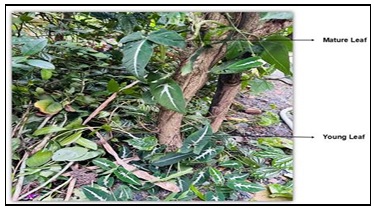
FIG. 1: PHOTOGRAPH OF S. WENDLANDII TAKEN AT THE COLLECTION SITE
Macroscopic and Microscopic Evaluation: S. wendlandii, a perennial evergreen climber in the Araceae family, is known for its attractive foliage. The juvenile leaves are sagittate with an arrowhead shape, whilst mature leaves are trilobed. They are set alternately, about 10-18 cm long and 4-8 cm wide. The abaxial side seems lighter, while the adaxial surface is velvety and dark green with a noticeable silvery-white midrib. The leaves have a long, slightly flattened, sheathing petiole and a leathery yet soft texture. The plant contains crystals of calcium oxalate, which give it a grassy scent and a slight bitterness Fig. 1. Anatomically, a thick cuticular layer covers the epidermis, and the palisade tissue beneath is composed of chloroplast-rich cells that carry out photosynthesis. Collenchyma, with thicker walls, resides immediately beneath the epidermis and provides mechanical support. The vascular bundle, encircled by a unique endodermis, has thin-walled phloem and thick-walled xylem, which contain oval pith cells. The lamina is supported by loosely packed parenchyma with thin walls, which also helps with nutrient storage. These epidermal and anatomical characteristics are taxonomically functional in differentiating Syngonium wendlandii at both the genus and species levels Fig. 2A. Key diagnostic characteristics of the leaf powder were found using powder microscopy utilizing a light microscope and differential staining with phloroglucinol and safranin. Lignified components were stained red with safranin, making them easier to identify. Lignified fibers (F), stone cells (SC), prismatic crystals (PC), starch granules (SG), vessels (V), xylem vessels (X), palisade parenchyma (PP), tracheids (T), lobed sclereids (LS), and needle-shaped raphides (R) were among the microscopic characteristics seen Fig. 2B. At the genus and species levels, these anatomical traits function as trustworthy taxonomic identifiers for S. wendlandii. As shown in Table 1, the physicochemical characteristics evaluated help to ascertain the purity and quality of the medication.
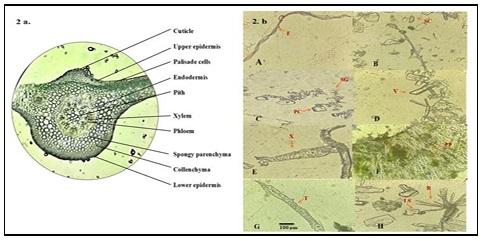
FIG. 2: MICROSCOPIC EVALUATION OF S. WENDLANDII LEAVES; (A) TRANSVERSE SECTION OF THE MIDRIB OF THE LEAF OF S. WENDLANDII. (B) POWDER MICROSCOPY OF THE LEAF POWDER OF S. WENDLANDII IS SHOWN IN REPRESENTATIVE LIGHT MICROSCOPY IMAGES (100×)
Physicochemical Parameters: The physicochemical characteristics of Syngonium wendlandii leaves offer valuable baseline information for crude drug authentication and quality assurance. While the relatively low acid-insoluble ash value (1.47% w/w) shows little contamination with siliceous materials, such as sand, or earthy impurities, the total ash value (6.73% w/w) reveals the total amount of inorganic residue contained in the sample. The percentage of naturally occurring water-soluble inorganic components in the plant material is indicated by the water-soluble ash value (3.6% w/w). Relatively low moisture content is indicated by the loss on drying value (4% w/w), which may be advantageous for storage stability and lower the danger of microbial development or decomposition during storage20, 21. The somewhat acidic pH (5.9) could affect the stability and extraction behavior of several phytoconstituents and be used as an additional identifying criterion.
Higher extractive yield in hydroalcoholic (7.5% w/w) and methanolic (7.9% w/w) solvents were observed, indicating the presence of polar compounds in the leaves. Following treatment with various chemicals, fluorescence analysis showed distinctive color changes under visible and UV light. This might be used as a straightforward diagnostic tool for quick identification, adulteration detection, and quality evaluation of powdered leaf material.
TABLE 1: RESULT OF PHYSICOCHEMICAL PARAMETERS
| Sl. no. | Test | Result |
| 1 | Total Ash | 6.73% w/w |
| 2 | Acid Insoluble Ash | 1.47% w/w |
| 3 | Water-soluble Ash | 3.6% w/w |
| 4 | pH | 5.9 |
| 5 | Loss on Drying | 4% w/w |
| 6 | Petroleum ether extractive yield | 3.1% w/w |
| 7 | Chloroform extractive yield | 3.78 % w/w |
| 8 | Ethyl acetate extractive yield | 5.1% w/w |
| 9 | Methanolic extractive yield | 7.9% w/w |
| 10 | Hydroalcoholic extractive yield | 7.5% w/w |
Fluorescence Evaluation: A variety of chemical components found in plant material exhibit fluorescence. Specific components exhibit visible-range fluorescence during the day. Many natural chemicals that do not glow noticeably in daylight, such as alkaloids like berberine, are made to fluoresce by ultraviolet light22. As a result, this is a standard qualitative assessment method for some crude medications and a crucial pharmacognostical evaluation criterion. The results are summarized in Table 2.
TABLE 2: RESULT OF FLUORESCENCE ANALYSIS OF POWDER OF S. WENDLANDII
| Sl. no. | Treatment Of Powder/Test | Visile Rays | UV Rays | |
| Short Wave | Long Wave | |||
| 1 | Powder as such | Yellowish green | Brown | Green |
| 2 | Powder + 50% H2So4 | Greenish black | Greenish black | Greenish black |
| 3 | Powder + 50% HNo3 | Brown | Brownish black | Green |
| 4 | Powder + 5% KOH | Brown | Brownish black | Greenish black |
| 5 | Powder + Methanol | Dark brown | Dark green | Blackish |
| 6 | Powder + 1N HCl | Yellowish brown | Blackish brown | Green |
| 7 | Powder + Picric acid | Yellowish green | Brownish black | Light green |
| 8 | Powder + Hot water | Greenish brown | Brown | Light green |
| 9 | Powder + Cold water | Yellowish green | Brown | Green |
| 10 | Powder + Pet ether | yellowish | Yellowish brown | Light green |
| 11 | Powder + Fecl3 | Yellowish green | Brownish black | Light green |
| 12 | Powder + 5% I2 | Brownish black | Brownish black | Greenish black |
| 13 | Powder + Chloroform | Yellowish green | Yellowish brown | Light green |
| 14 | Powder + Glacial acetic acid | Brownish black | Yellowish | Blackish green |
| 15 | Powder + Ammonium solution | Yellowish green | Brown | Light green |
Phytochemical Evaluation: Several kinds of secondary metabolites, including alkaloids, flavonoids, glycosides, tannins, steroids, carbohydrates, and proteins, were indicated to be present according to preliminary qualitative phytochemical screening of successive solvent extracts of S. wendlandii leaves Table 3. Although these data are qualitative and should be treated cautiously, they provide a preliminary indication of the plant's phytochemical composition Table 3. To confirm their level of content, important categories like tannins, flavonoids, and total phenolics must be quantitatively measured 23, 24.
TABLE 3: IT PRESENTS PHYTOCHEMICAL SCREENINGS OF SUCCESSIVE EXTRACTS FROM THE POWDERED LEAVES OF S. WENDLANDII SCHOTT
| Test | Petroleum ether extract | Chloroform | Ethyl acetate | Methanolic | Hydro-alcoholic |
| Alkaloid | + | + | + | + | + |
| Glycoside | - | - | - | + | + |
| Tannin | - | - | - | + | + |
| Steroid (Cholesterol) | + | + | + | + | + |
| Flavonoid | + | + | + | + | + |
| Protein | - | - | + | + | + |
| Carbohydrate | - | + | + | + | + |
* “+” indicates presence & “-” indicates absence.
Antidiabetic Activity: An initial in-vitro model of carbohydrate digestion was used to assess the α-amylase-inhibitory activity of S. wendlandii leaf extracts. Comparing the hydroalcoholic extract to the reference inhibitor acarbose (IC50: 100.98 ± 0.579 µg/mL), the hydroalcoholic extract demonstrated the greatest inhibition among the studied extracts, with an IC50 value of 133.52 ± 2.568 µg/mL. As shown in Fig. 3A, the Petroleum ether, ethyl acetate, and methanolic extracts exhibited mild inhibitory effects. Phenolic components, which have been shown to interact with digestive enzymes such as α-amylase, may be responsible for the observed activity. These results, however, are preliminary and based on a single enzyme assay; more research, such as in-vivo studies, glucose absorption models, and α-glucosidase inhibition, is needed to validate antidiabetic potential.
Anti-inflammatory Activity: The protein denaturation assay was used as a preliminary in-vitro screening tool to evaluate the anti-inflammatory properties of S. wendlandii leaf extracts.
As shown in Fig. 3B, with an IC50 of 76.345 ± 0.025 µg/mL, the hydroalcoholic extract exhibited the strongest inhibitory action. This value was similar to acetylsalicylate (ACA) under the assay conditions (IC50: 77.025 ± 0.335 µg/mL). Methanolic and ethyl acetate extracts exhibited moderate efficacy. These data are preliminary and assay-specific, but they suggest potential inhibitory effects on protein denaturation.To validate anti-inflammatory relevance, more research utilizing cell-based and in-vivo inflammatory models is required 25.
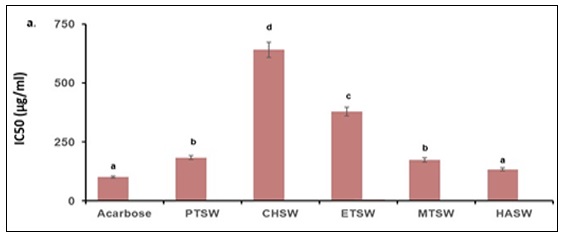
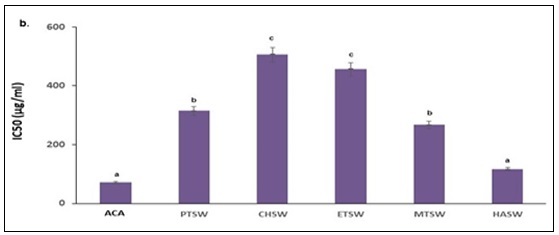
FIG. 3: IN-VITRO ACTIVITIES OF S. WENDLANDII EXTRACTS: A. ANTIDIABETIC ACTIVITY OF PLANT EXTRACTS AND ACARBOSE, AND B. ANTI-INFLAMMATORY ACTIVITY OF PLANT EXTRACTS AND ACETYLSALICYLIC ACID. Values are mean ± SD (n = 3). Tukey's test indicates that distinct letters differ significantly (P < 0.05). Where HASW - Hydroalcoholic extract, MTSW - Methanolic extract, ETSW - Ethyl acetate extract, CHSW - Chloroform extract, PTSW - Pet ether extract and ACA - Acetylsalicylate
CONCLUSION: Syngonium wendlandii's identity, quality, and authentication are supported by the available pharmacognostic data. Despite morphological similarities, the qualitative and quantitative data might help distinguish this plant from closely related Syngonium species and variations. Fluorescence analysis and physicochemical properties offer additional benchmarks for raw material quality control.The anti-inflammatory and antidiabetic properties of S. wendlandii leaf extracts were assessed in-vitro. These observed activities may be attributed to the presence of several secondary metabolites. Compared to other extracts, methanolic and hydroalcoholic extracts exhibited greater α-amylase inhibitory and anti-inflammatory effects. These primary findings indicate that S. wendlandii warrants further phytochemical, mechanistic, and in-vivo research, as it may be a source of bioactive compounds.
ACKNOWLEDGMENTS: The authors sincerely acknowledge the support and guidance received during this research. We are also thankful to our institution for providing the necessary facilities and support to carry out this study.
CONFLICT OF INTEREST: The authors declare that there is no conflict of interest regarding the publication of this research paper.
REFERENCES:
- Adel-Mehraban MS, Tabatabaei-Malazy O, Manayi A, Alatab S, Mohseni S and Fana SE: Antioxidative and anti-inflammatory effects of plant-derived hypoglycemic medicines: an in-vivo/in-vitro systematic review. Current Topics in Medicinal Chemistry 2024; 24(16): 1408-50.
- Fatima N, Anwar F, Saleem U, Khan A, Ahmad B and Shahzadi I: Antidiabetic effects of Brugmansia aurea leaf extract by modulating the glucose levels, insulin resistance, and oxidative stress mechanism. Frontiers in Nutrition 2022; 9: 1005341.
- Pan X, Olatunji OJ, Basit A, Sripetthong S, Nalinbenjapun S and Ovatlarnporn C: Insights into the phytochemical profiling, antidiabetic and antioxidant potentials of Lepionurus sylvestris Blume extract in fructose/streptozotocin-induced diabetic rats. Frontiers in Pharmacology 2024; 15: 1424346.
- Daneshvar-Ghahfarokhi S, Ahmadinia H, Sadeghi T, Basirat E and Mohammadi-Shahrokhi V: Achillea millefolium capsule improved liver enzymes and lipid profile compared to placebo in patients with type 2 diabetes: a double-blind randomized clinical trial. BMC Nutrition 2025; 11(1): 21.
- Chaachouay N and Zidane L: Plant-derived natural products: a source for drug discovery and development. Drugs and Drug Candidates 2024; 3(1): 184-207.
- Riaz M, Khalid R, Afzal M, Anjum F, Fatima H and Zia S:Phytobioactive compounds as therapeutic agents for human diseases: A review. Food Science & Nutrition 2023; 11(6): 2500-29.
- Xu Z and Chang L:Araceae Identification and Control of Common Weeds 2017; 3: 765-85.
- Hossain MS, Uddin MS, Kabir MT, Begum MM, Koushal P and Herrera-Calderon O: In-vitro screening for phytochemicals and antioxidant activities of Syngonium podophyllum: An incredible therapeutic plant. Biomedical and Pharmacology Journal 2017; 10(3): 1267-77.
- Ahmed YR, El-Hagrassi AM, Nasr NN, Abdallah WE and Hamed MA: Chemical composition and therapeutic potential of Syngonium podophyllum leaves against hypercholesterolemia in rats: liver, kidney, and heart crosstalk. Current Bioactive Compounds 2024; 20(6): 48-63.
- Mamoona, Nosheen S, Riaz S, Shah SI and Shahid S: Optimizing extraction methods: the role of solvent polarity in enhancing phenolic content and antioxidant activity in biowaste. Biomass Conversion and Biorefinery 2024; 1-16.
- Evans WC: Trease and Evans' pharmacognosy: Elsevier Health Sciences 2009.
- Chieco C, Rotondi A, Morrone L, Rapparini F and Baraldi R: An ethanol-based fixation method for anatomical and micro-morphological characterization of leaves of various tree species. Biotechnic & Histochemistry 2013; 88(2): 109-19.
- Yeung EC: A guide to the study of plant structure with emphasis on living specimens. Plant microtechniques and protocols: Springer; 2015; 3-22.
- Aslam I and Afridi MSK: Pharmacognostic characterization of Beaumontia grandiflora (Roxb.) Wall. leaf for taxonomic identification for quality control of a drug. Journal of Applied Research on Medicinal and Aromatic Plants 2018; 8: 53-9.
- Baravalia Y, Nagani K and Chanda S: Evaluation of pharmacognostic and physicochemical parameters of Woodfordia fruticosa Flowers. Pharmacognosy Journal 2011; 2(18): 13-8.
- Kavitha R: Fluorescence, FT-IR and GC-MS determination of bioactive constituents of leaf extract of Clitoria ternatea. Int J Pharma Bio Sci 2017; 8: 299-307.
- Bhandary SK, Bhat VS and Bekal MP: Preliminary phytochemical screening of various extracts of Punica granatum peel, whole fruit and seeds. Journal of Health and Allied Sciences NU 2012;2(04):34-8.
- Apostolidis Eand Lee C: In-vitro potential of Ascophyllum nodosum phenolic antioxidant‐mediated α‐glucosidase and α‐amylase inhibition. Journal of Food Science 2010; 75(3): H97-H102.
- Banerjee S, Chanda A, Adhikari A, Das AandBiswas S: Evaluation of phytochemical screening and anti inflammatory activity of leaves and stem of Mikania scandens (L.) wild. Annals of Medical and Health Sciences Research 2014; 4(4): 532-6.
- Hait M, Kashyap NK, Chandel SS and Vaishnav M: Proximate analysis of herbal drugs: methods, relevance, and quality control aspects. Herbal Medicine Phytochemistry: Applications and Trends 2023; 1-30.
- Al-Harrasi A, Bhatia S, Kaushik D, Behl Tand Chigurupati S: Standardization and quality control of crude drugs. Recent Advances in Natural Products Science: CRC Press 2022; 211-34.
- Al Amir SZ, Derayea SM, Nagy DM and Oraby M: Evaluation of the on–off fluorescence method for facile measurement of vilazodone in pharmaceutical dosage form; application to content uniformity testing and greenness evaluation. Spectrochimica Acta Part A: Molecular and Biomolecular Spectroscopy 2024; 319: 124519.
- Alabri THA, Al Musalami AHS, Hossain MA, Weli AMand Al-Riyami Q: Comparative study of phytochemical screening, antioxidant and antimicrobial capacities of fresh and dry leaves crude plant extracts of Datura metel Journal of King Saud University-Science 2014; 26(3): 237-43.
- Gul R, Jan SU, Faridullah S, Sherani Sand Jahan N: Preliminary phytochemical screening, quantitative analysis of alkaloids, and antioxidant activity of crude plant extracts from Ephedra intermedia indigenous to Balochistan. The Scientific World Journal 2017; 2017(1): 5873648.
- Akbari B, Baghaei‐Yazdi N, Bahmaie M and Mahdavi Abhari F: The role of plant‐derived natural antioxidants in reduction of oxidative stress. Bio Factors 2022; 48(3): 611-33.
How to cite this article:
Giri S, Dey G and Sarkar BR: Pharmacognostic standardization, preliminary phytochemical, and evaluation of in-vitro antidiabetic and anti-inflammatory properties of Syngonium wendlandii schott leaves. Int J Pharm Sci & Res2026; 17(9): 2775-82. doi: 10.13040/IJPSR.0975-8232.17(9).2775-82.
All © 2026 are reserved by International Journal of Pharmaceutical Sciences and Research. This Journal licensed under a Creative Commons Attribution-NonCommercial-ShareAlike 3.0 Unported License.
Article Information
22
2775-2782
729 KB
6
English
IJPSR
Simran Giri, Ganesh Dey and Bapi Ray Sarkar *
Department of Pharmaceutical Technology, University of North Bengal, Darjeeling, West Bengal, India.
brspublication@gmail.com
25 March 2026
28 August 2026
30 August 2026
10.13040/IJPSR.0975-8232.17(9).2775-82
01 September 2026
 Download