




PHYSICOCHEMICAL CHARACTERIZATION OF DWIGUNA BALIJARITA RASASINDURA (MERCURY SULPHIDE) PREPARED BY TWO METHODS
HTML Full TextPHYSICOCHEMICAL CHARACTERIZATION OF DWIGUNA BALIJARITA RASASINDURA (MERCURY SULPHIDE) PREPARED BY TWO METHODS
Shubham Gadekar * and Bharti Umretia
Department of Rasashastra and Bhaishajya Kalpana, Government Ayurved College, Vadodara, Gujarat, India.
ABSTRACT: Introduction: Rasashastra (Iatrochemistry) transforms raw minerals into therapeutically potent formulations such as Rasasindura (mercury sulphide). Gandhaka Jarana (sulphur digestion) is the key pharmaceutical process governing its formation and quality. Objectives: This study compares the pharmaceutical and physicochemical effects of Single-Stage versus Two-Stage (Sequential) Gandhaka Jarana in the preparation of Dwiguna Rasasindura. Methods: Dwiguna Rasasindura was prepared from purified mercury and Sulphur using the two pharmaceutical methods in which Single-Stage Gandhaka Jarana used Kajjali (black sulfide of mercury) was prepared with double the quantity of sulphur, and the Two-Stage (Sequential) Gandhaka Jarana involved the preparation of Samaguna Rasasindura followed by additional sulphur. Both preparations were processed by the Kupipakwa method under controlled heating conditions. Five distinct samples comprising Samaguna Rasasindura (SR), Single-Stage Dwiguna Rasasindura (SDR), Two-Stage Dwiguna Rasasindura (TDR), and their corresponding Kajjali intermediates (KJ-SDR and KJ-TDR), were analyzed using X-ray Diffraction (XRD) for crystallographic characterization and X-ray Fluorescence (XRF) for elemental analysis. Result: XRD analysis confirmed that all pharmaceutical methods resulted in the formation of crystalline cinnabar (HgS), although the Kajjali intermediates exhibited lower crystallinity. XRF analysis demonstrated mercury and sulphur as the principal elements in all preparations, with minor differences in elemental composition. Overall, the findings indicate that irrespective of the Gandhaka Jarana method employed, successful conversion of the formulation into crystalline Rasasindura (HgS) was achieved. Conclusion: The analytical findings alone cannot establish therapeutic equivalence, and further pharmacological and clinical studies are required to evaluate their biological and therapeutic properties.
Keywords: Kupipakwa, XRD, Sulphur, Jarana, Rasayana
INTRODUCTION: Ayurveda employs medicinal substances derived from plant, animal, and mineral sources 1.
Rasashastra (Iatrochemistry), the branch of Ayurveda dealing with mineral and metal-based formulations, involves specialized pharmaceutical procedures to process raw materials into formulations intended for therapeutic use. Among these, mercury occupies a central position and is subjected to procedures such as Shodhana (purification) 2, Murchana (potentiation) 3, and Jarana (digestion/incorporation) 4 to modify its physicochemical properties before incorporation into herbo-mineral formulations. These pharmaceutical processes are considered essential because crude mercury is not used directly for therapeutic purposes due to its known toxicity 5.
Gandhaka Jarana (sulphur digestion) is one of the most important pharmaceutical procedures in the preparation of mercurial formulations. Classical texts emphasize that even properly purified mercury should not be administered therapeutically without undergoing adequate Gandhaka Jarana 6. It is stated that mercury processed with sulphur acquires enhanced stability, therapeutic potency, and disease-curing capability, whereas inadequately processed mercury may produce undesirable effects 7. During this process, mercury interacts with sulphur, leading to physicochemical transformations that contribute to the formation of mercury sulphide (HgS). Rasasindura, prepared through the Kupipakwa Rasayana process, is one of the most widely used mercurial formulations described in Rasashastra 8. Classical texts describe several varieties of Rasasindura based on the quantity of sulphur incorporated, including Samaguna, Dwiguna, Triguna, Chaturguna, and Shadaguna Rasasindura, with onefold threefold, fourfold, and sixfold quantities of sulphur, respectively 11, indicating the pharmaceutical importance of sulphur proportion during preparation. Modern analytical techniques facilitate the scientific evaluation and quality assessment of traditional Ayurvedic formulations. X-ray Diffraction (XRD) enables characterization of crystalline phases, while X-ray Fluorescence (XRF) provides quantitative elemental analysis, thereby supporting the standardization and comparative evaluation of mineral-based formulations. Although classical texts describe different approaches for preparing Dwiguna Rasasindura, comparative analytical studies evaluating the influence of Single-Stage and Two-Stage (Sequential) Gandhaka Jarana on the physicochemical characteristics of the final product remain limited. In the Single-Stage method, the entire quantity of sulphur is incorporated during Kajjali preparation, whereas the Two-Stage (Sequential) method involves the preparation of Samaguna Rasasindura followed by incorporation of an additional equal quantity of sulphur and a second Kupipakva process. Whether these pharmaceutical approaches produce differences in the crystallographic and elemental characteristics of the final formulation has not been adequately investigated. Therefore, the present study was undertaken to prepare Dwiguna Rasasindura by Single-Stage and Two-Stage (Sequential) Gandhaka Jarana, document the pharmaceutical observations during preparation, and compare the resulting Rasasindura and their corresponding Kajjali intermediates using X-ray Diffraction (XRD) and X-ray Fluorescence (XRF). The study aimed to evaluate the influence of the two pharmaceutical approaches on the crystallographic and elemental characteristics of Dwiguna Rasasindura.
MATERIALS AND METHODS:
Procurement of Raw Material: Purified mercury (Parada), purified sulphur (Gandhaka), and fresh Vatankura (Ficus benghalensis Linn.) required for the preparation of Rasasindura were procured from the pharmaceutical laboratory of the Upgraded Department of Rasashastra and Bhaishajya Kalpana, Government Ayurved College, Vadodara, Gujarat, India. The raw materials were authenticated according to the standards of the Ayurvedic Pharmacopoeia of India before use.
Shodhana of Parada: Parada was purified according to the procedure described in Rasatangini 12. Ashuddha Parada (unpurified mercury) (500 g) was triturated with an equal quantity of Sudha Churna (lime powder) (500 g) in a Khalva Yantra (iron mortar) for three days, followed by washing with hot water to separate the mercury, which was then filtered through a double-folded cotton cloth. The collected Parada (452 g) was subsequently triturated with an equal quantity of Nistusha Rasona (Allium sativum Linn.) (452 g) and half its quantity of Saindhava Lavana (rock salt) (226 g) until a blackish Kalka (paste) was formed. This Kalka was washed with warm water, and the purified Parada was carefully collected, filtered through a double-folded cotton cloth, weighed, labelled, and stored in a glass container.
Shodhana of Gandhaka: Gandhaka was purified according to the procedure described in Rasatangini 13. Ashuddha Gandhaka (unpurified sulphur) (1 kg) was powdered using an iron mortar and pestle. Godugdha (cow milk) (6 L) was poured into a stainless-steel vessel, the mouth of which was covered with a cotton cloth smeared with Goghrita (cow ghee) (100 g) and securely tied. Ashuddha Gandhaka was melted in Goghrita over mild heat and carefully poured into the vessel containing Godugdha. The solidified Gandhaka was collected, washed with warm water, and the process was repeated three times in total. Finally, the purified Gandhaka was dried, weighed, and stored in a labelled airtight container for further pharmaceutical procedures.
Preparation of Dwiguna Rasasindura: All three variations of batches of Rasasindura and itsKajjali intermediates were prepared in the pharmaceutical laboratory of the Upgraded Department of Rasashastra and Bhaishajya Kalpana, Government Ayurved College, Vadodara, Gujarat, India.
Dwiguna Rasasindura prepared by Single-Stage Gandhaka Jarana: Kajjali was prepared by triturating Shuddha Parada (66 g) with Shuddha Gandhaka (132 g) in an iron mortar until Nischandratva (absence of metallic lustre) was attained. Trituration was continued for approximately 36 hours. The Kajjali was then levigated with freshly prepared Vatankura Svarasa (60 mL) for about 8 hours until a homogeneous paste was obtained. The resulting paste was subsequently dried and powdered
The dried Kajjali was filled up to one-third of a seven-layered mud-smeared Kupi (glass bottle). The bottle was prepared by applying seven successive layers of cloth coated with Fuller's earth (Kapadmitti), allowing each layer to dry before applying the next. The Kupi was placed in a Valuka Yantra with its neck exposed above the sand level and heated according to the classical Kupipakwa procedure under continuous pyrometric monitoring.
The heating schedule consisted of Mridu Agni (mild heat) (room temperature to 150 °C for 1 h and 150 °C to 250 °C for 5 h), Madhyama Agni (moderate heat) (250 °C to 300 °C for 2 h, 300 °C to 350 °C for 3 h, 350 °C to 400 °C for 4 h, and 400 °C to 450 °C for 5 h), and Tivra Agni (intense heat) (450 °C to 650 °C for 8 h and 650 °C to 700 °C for 2 h). Endpoint observations, including disappearance of the flame, complete cessation of sulphur fumes, development of a red-colored base of the Kupi, and a positive copper coin test, were recorded before corking. The apparatus was then allowed to cool naturally. The final Rasasindura was collected after self-cooling Fig. 1 Table 2.
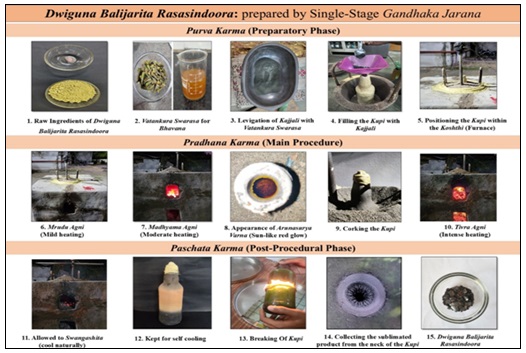
FIG. 1: STANDARD OPERATIVE PROCEDURE FOR DWIGUNA RASASINDOORA PREPARED BY SINGLE-STAGE GANDHAKA JARANA
Dwiguna Rasasindura prepared by Two-Stage (Sequential) Gandhaka Jarana:
Stage 1: Preparation of Samaguna Rasasindura: Kajjali was prepared by triturating purified mercury 100 g and purified sulphur 100 g until Nischandratva was attained. Trituration was continued for approximately 30 hours, followed by levigation with 80 mL of Vatankura Svarasa. After drying, the Kajjali was processed by the Kupipakwa method using the same Kupi preparation, heating schedule, and endpoint observations described above to obtain Samaguna Rasasindura.
Stage 2: Preparation of Dwiguna Rasasindura: The prepared Samaguna Rasasindura (63 g) was triturated with purified sulphur (100 g) until Nischandratva was achieved. The mixture was levigated with Vatankura Svarasa (80mL, dried under 43 h, filled into a seven-layered mud-smeared Kupi, and subjected to a second Kupipakwa process following the same heating schedule and endpoint observations as described above. The final Dwiguna Rasasindura was collected after natural cooling Fig. 2.
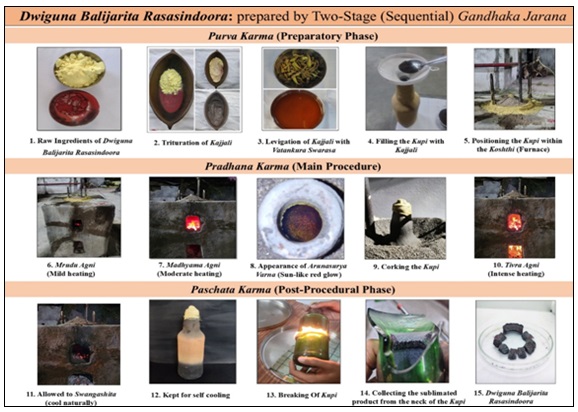
FIG. 2: STANDARD OPERATIVE PROCEDURE FOR DWIGUNA RASASINDURA PREPARED BY TWO-STAGE (SEQUENTIAL) GANDHAKA JARANA
Physicochemical Characterization: Five samples were subjected to physicochemical characterization:
Sample 1: Samaguna Rasasindura (SR)
Sample 2: Dwiguna Rasasindura prepared by Single-Stage Gandhaka Jarana (SDR)
Sample 3: Dwiguna Rasasindura prepared by Two-Stage (Sequential) Gandhaka Jarana (TDR)
Sample 4: Kajjali prepared for Single-Stage Dwiguna Rasasindura (KJ-SDR)
Sample 5: Kajjali prepared for Two-Stage Dwiguna Rasasindura (KJ-TDR)
Crystallographic identification by X-ray Diffraction (XRD): Crystallographic characterization of all samples was carried out using X-ray Diffraction (XRD) on an Empyrean X-ray Diffractometer. The analysis was performed under the following conditions: Cu Kα radiation source, wavelength 1.5406 Å, voltage 40 kV, current 30 mA, scanning range 5.03°–79.96° (2θ), step size 0.026°, and continuous scan mode with a scan step time of 125.715 s per step. Phase identification was performed using the PDF-2 database of the International Centre for Diffraction Data (ICDD), while crystallographic information was verified using the American Mineralogist Crystal Structure Database (AMCSD).
Quantitative Elemental Determination by X-ray Fluorescence (XRF): Quantitative elemental analysis was carried out using X-ray Fluorescence (XRF) on an EDXRF spectrometer. Samples were prepared by finely grinding the powdered samples to obtain a homogeneous particle size and loading them into XRF sample cups fitted with polypropylene film, ensuring a flat and uniform sample surface for analysis. Instrumental conditions included energy-dispersive X-ray fluorescence operated under vacuum with automatic selection of excitation conditions using multiple secondary targets, an X-ray tube voltage of 50 kV, tube current adjusted automatically by the instrument, and optimized counting time for quantitative elemental analysis.
The concentrations of mercury, sulphur, and other inorganic elements were determined and expressed as percentage composition for comparative evaluation of all samples.
RESULTS:
TABLE 1: PHARMACEUTICAL OBSERVATIONS AND PERCENTAGE YIELD OF RASASINDURA PREPARED BY DIFFERENT METHODS
| Parameter | SR | SDR | TDR |
| Initial Kajjali weight (g) | 200 | 200 | 163 |
| Final Rasasindura obtained (g) | 69 | 85 | 48 |
| Material loss (g) | 131 | 115 | 115 |
| Colour | Crimson red | Crimson red | Crimson red |
| Yield (%) = Final Rasasindura weight / Initial Kajjali weight × 100 | 34.5 | 42.5 | 29.44 |
TABLE 2: COMPARATIVE TEMPERATURE, TIME, AND PHARMACEUTICAL OBSERVATIONS DURING THE PREPARATION OF SAMAGUNA RASASINDURA (SR), SINGLE-STAGE DWIGUNA RASASINDURA (SDR), AND TWO-STAGE DWIGUNA RASASINDURA (TDR)
| Observations | SR | SDR | TDR | |||
| Time
(h: min) |
Temperature
(°C) |
Time
(h: min) |
Temperature
(°C) |
Time
(h:min) |
Temperature
(°C) |
|
| Heating started | 00:00 | 27 | 00:00 | 21 | 00:00 | 33 |
| Appearance of white fumes | 00:30 | 122 | 00:30 | 120 | 00:30 | 83 |
| Smell of sulphur perceived | 01:30 | 156 | 02:00 | 163 | 02:00 | 120 |
| Appearance of sulphur fumes | 02:00 | 175 | 02:15 | 175 | 02:15 | 160 |
| Melting of Kajjali started | 03:30 | 220 | 05:00 | 206 | 05:00 | 283 |
| Complete melting of Kajjali | 06:00 | 410 | 06:30 | 442 | 06:30 | 452 |
| Appearance of Blue flame | 15:15 | 480 | 16:00 | 564 | 17:00 | 540 |
| Flame disappeared | 19:10 | 524 | 20:10 | 576 | 20:40 | 502 |
| Appearance of Red coloured base of Kupi | 19:30 | 550 | 21:50 | 580 | 21:30 | 540 |
| Corking | 20:00 | 600 | 22:00 | 590 | 22:00 | 590 |
| Heating stopped | 30:00 | 710 | 30:00 | 702 | 30:00 | 708 |
TABLE 3: HEATING PROFILE AND CORRESPONDING PHARMACEUTICAL OBJECTIVES DURING THE PREPARATION OF DIFFERENT RASASINDURA SAMPLES
| Heating phase | SR | SDR | TDR | Objectives | |
| Hrs | Time | Temperature | |||
| Mridu Agni | 1 | 00:00 to 01:00 | Room temperature to 150 °C for 1 h | To melt the Kajjali and initiate uniform heating. | |
| 5 | 01:00 to 06:00 | 150 °C to 250 °C for 5 hr | |||
| Madhyama Agni | 2 | 06:00 to 08:00 | 250 °C to 300 °C for 2 hr | To complete the evaporation of excess sulphur and obtain a clear red molten base at the bottom of the Kupi. | |
| 3 | 08:00 to 11:00 | 300 °C to 350 °C for 3 h | |||
| 4 | 11:00 to 15:00 | 350 °C to 400 °C for 4h | |||
| 5 | 15:00 to 20:00 | 400 °C to 450 °C for 5h | |||
| Tivra Agni | 8 | 20:00 to 28:00 | 450 °C to 650 °C for 8 h | To complete sublimation and obtain a well-deposited, crystalline Rasasindura in the neck of the Kupi | |
| 2 | 28:00 to 30:00 | 650 °C to 700 °C for 2 h | |||
Physicochemical Characterization:
Crystallographic Identification (XRD): X-ray diffraction (XRD) analysis was performed to identify the crystalline phases present in all Rasasindura samples. The XRD pattern of Samaguna Rasasindura revealed the presence of hypercinnabar, cinnabar (HgS), and cyclo-decasulphur. Dwiguna Rasasindura prepared by Single-Stage Gandhaka Jarana exhibited characteristic peaks corresponding to cinnabar along with orthorhombic sulphur and rosickyite. Dwiguna Rasasindura prepared by Two-Stage Gandhaka Jarana showed the presence of cinnabar and orthorhombic sulfur. The XRD pattern of Kajjali of Single-Stage Gandhaka Jarana demonstrated the presence of metacinnabar and monoclinic sulphur, whereas Kajjali of Two-Stage Gandhaka Jarana showed peaks corresponding to cinnabar (HgS) and α-sulphur (S8). Overall, mercury sulfide (HgS) and sulphur were identified as the major crystalline phases in all Rasasindura samples, with variations in their crystallographic forms.
Sample 1: Samaguna Rasasindura
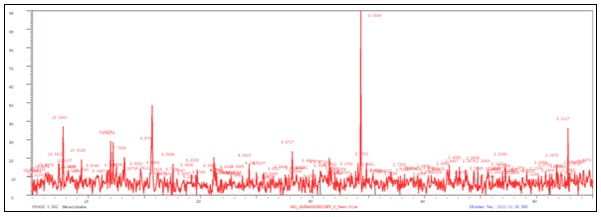
FIG. 3: XRD SPECTRUM OF SAMAGUNA RASASINDURA
TABLE 4: DETAILS OF XRD REPORTS OF SAMAGUNA RASASINDURA (SR)
| Compound | Hyper cinnabar, Mercury Sulfide | Cinnabar Mercury Sulfide | Cyclo-decasulfur Sulfur |
| Composition | Hg S | Hg S | S10 |
| Crystal shape | Hexagonal axis | Hexagonal axis | Monoclinic |
| 2 theta | 14.671
31.102 37.077 |
30.770
50.936 53.453 |
13.150
26.483 33.315 |
| D spacing | 7.0056
3.3364 2.8133 |
3.3715
2.0802 1.9889 |
7.8120
3.9051 3.1205 |
| Intensity % | 13.8
10.6 9.1 |
12.6
6.4 5.0 |
7.2
9.7 10.3 |
Sample 2: Dwiguna Rasasindura prepared by Single-Stage Gandhaka Jarana (SDR)
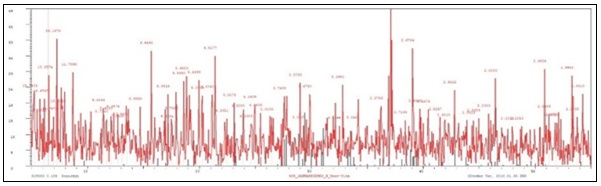
FIG. 4: XRD SPECTRUM OF DWIGUNA RASASINDURA PREPARED BY SINGLE-STAGE GANDHAKA JARANA
TABLE 5: DETAILS OF XRD REPORTS OF DWIGUNA RASASINDURA PREPARED BY SINGLE-STAGE GANDHAKA JARANA (SDR)
| Compound | Cinnabar: Mercury Sulfide | Sulphur | Rosickyite |
| Composition | Hg S | S | S |
| Crystal shape | Hexagonal axis | Ortho rhombic | Mono clinic |
| 2 theta | 30.743
36.220 50.936 |
27.562
33.481 38.848 |
29.913
33.979 46.427 |
| D spacing | 3.3745
2.8776 2.0802 |
3.7551
3.1054 2.6898 |
3.4659
3.0612 2.2694 |
| Intensity % | 15.6
35.3 20.4 |
40
19.2 19.8 |
37.9
16.7 19.8 |
Sample 3: Dwiguna Rasasindura prepared by Two-Stage Gandhaka Jarana (TDR)
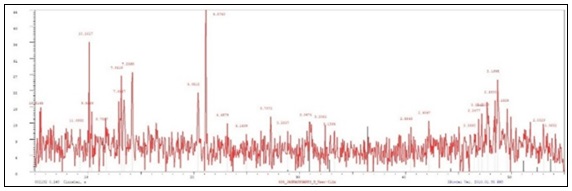
FIG. 5: DETAILS OF XRD REPORTS OF DWIGUNA RASASINDURA PREPARED BY TWO-STAGE GANDHAKA JARANA (TDR)
TABLE 6: DETAILS OF XRD REPORTS OF DWIGUNA RASASINDURA PREPARED BY TWO-STAGE GANDHAKA JARANA (TDR)
| Compound | Cinnabar: Mercury Sulfide | Sulphur |
| Composition | Hg S | S |
| Crystal shape | Hexagonal axis | Orthorhombic |
| 2 theta | 30.936
32.900 51.157 |
27.562
33.481 38.848 |
| D spacing | 3.3539
3.1587 2.0718 |
3.7551
3.1054 2.6898 |
| Intensity % | 30.7
22.6 23.3 |
40
19.2 19.8 |
Sample 4: Kajjali of Dwiguna Rasasindura prepared by Single-Stage Gandhaka Jarana
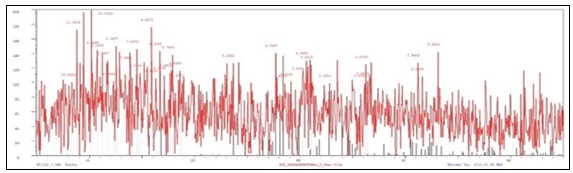
FIG. 6: XRD SPECTRUM OF KAJJALI OF DWIGUNA RASASINDURA PREPARED BY SINGLE-STAGE GANDHAKA JARANA
TABLE 7: DETAILS OF XRD REPORTS OF DWIGUNA RASASINDURA PREPARED BY SINGLE-STAGE GANDHAKA JARANA (KJ-SDR)
| Compound | Cinnabar: Mercury Sulfide | Sulphur |
| Composition | Hg S | S |
| Crystal shape | Cubic | Monoclinic |
| 2 theta | 30.383
35.279 50.659 |
23.661
28.032 32.707 |
| D spacing | 3.4135
2.9518 2.0908 |
4.3629
3.6933 3.1769 |
| Intensity % | 35.5
33.1 17.7 |
63.3
38.0 38.6 |
Sample 5: Kajjali of Dwiguna Rasasindura prepared by Two-Stage Gandhaka Jarana (KJ-TDR)
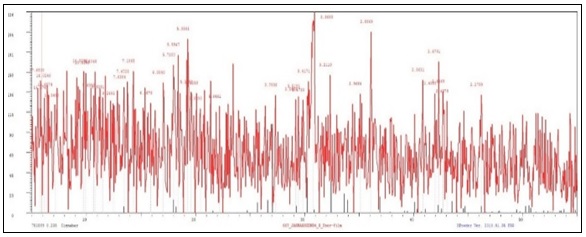
FIG. 7: XRD SPECTRUM OF KAJJALI OF DWIGUNA RASASINDURA PREPARED BY TWO-STAGE GANDHAKA JARANA
TABLE 8: DETAILS OF XRD REPORTS OF DWIGUNA RASASINDURA PREPARED BY TWO-STAGE GANDHAKA JARANA (KJ-TDR)
| Compound | Cinnabar: Mercury Sulfide | Syn Alpha Sulfur |
| Composition | Hg S | S8 |
| Crystal shape | Hexagonal axis | Orthorhombic |
| 2 theta | 30.743
36.220 50.963 |
13.426
17.908 26.593 |
| D spacing | 3.3745
2.8776 2.0791 |
7.6517
5.7472 3.8892 |
| Intensity % | 93.5
45.4 22.5 |
62.4
41.0 41.6 |
Quantitative Elemental Determination (XRF): XRF analysis was carried out to determine the elemental composition of the prepared Rasasindura samples. Mercury (Hg) and sulfur (S) were found to be the predominant elements in all samples. Samaguna Rasasindura contained 76.05% Hg and 20.50% S. Dwiguna Rasasindura prepared by Single-Stage Gandhaka Jarana showed 67.99% Hg and 19.47% S, along with a detectable amount of iron (1.136%). Dwiguna Rasasindura prepared by Two-Stage Gandhaka Jarana contained 76.02% Hg and 20.21% S. Trace quantities of elements such as Si, P, Ti, Ni, Cu, As, Rb, Zr, Nb, Mo, Sn, Sb, Pb, and Th were detected in varying amounts across all samples. The elemental profiles of Samaguna Rasasindura and Dwiguna Rasasindura prepared by two-Stage Gandhaka Jarana were found to be comparable, whereas Dwiguna Rasasindura prepared by Single-Stage Gandhaka Jarana showed relatively lower mercury content and the presence of iron.
DISCUSSION: The pharmaceutical observations demonstrated that all three preparations successfully yielded crimson-red Rasasindura, indicating successful completion of the Kupipakwa process and formation of mercuric sulphide (HgS). Although identical heating schedules were employed, considerable variation was observed in the percentage yield. Single-Stage Dwiguna Rasasindura (42.5%) produced the highest yield, followed by Samaguna Rasasindura (34.5%), whereas Two-Stage Dwiguna Rasasindura showed the lowest yield (29.44%). The factor contributing to the lower recovery in TDR is the use of previously prepared Samaguna Rasasindura rather than fresh Kajjali. Since a portion of mercury has already been converted into crystalline HgS after the first heating cycle, further sulphur incorporation during the second stage primarily affects the surface of existing HgS particles rather than initiating an entirely new mercury-sulphur reaction. Therefore, yield alone should not be considered an indicator of pharmaceutical quality, as greater recovery does not necessarily correspond to greater chemical conversion or improved crystallinity.
The initial white fumes were probably due to the evaporation of residual moisture from Kajjali and Vatankura Svarasa during heating. The subsequent appearance of sulphur odour and fumes corresponded to the melting and volatilization of sulphur as the temperature increased. Kajjali melting occurred later in SDR and TDR than in SR, probably because the higher sulphur content increased the viscosity of the molten mass and delayed the formation of a homogeneous liquid phase. The appearance of the blue flame indicated combustion of sulphur vapours, while its delayed occurrence in SDR may be attributed to the larger quantity of sulphur available for volatilization. Disappearance of the flame suggested depletion of free sulphur vapours, and the subsequent development of a red molten base indicated predominant formation of mercury sulphide (HgS). XRF analysis demonstrated that mercury and sulphur were the predominant elements in all three Rasasindura preparations, while XRD analysis confirmed the presence of crystalline mercury sulphide (HgS), indicating successful preparation of Rasasindura by both pharmaceutical methods. Samaguna Rasasindura (SR) and Two-Stage Dwiguna Rasasindura (TDR) exhibited comparable mercury concentrations (76.05% and 76.02%, respectively), suggesting that sequential Gandhaka Jarana produced an elemental composition similar to that of classical Samaguna Rasasindura. In contrast, Single-Stage Dwiguna Rasasindura (SDR) showed a relatively lower mercury content (67.99%), which may be attributed to the higher proportion of sulphur incorporated during the initial Kajjali preparation. Since XRF expresses elemental concentrations as normalized percentages of the total sample mass, a relatively higher sulphur content can decrease the apparent percentage of mercury without necessarily indicating mercury loss. Overall, the analytical findings indicate that all three preparations were successfully converted into HgS, with only minor variations in elemental composition arising from differences in the pharmaceutical sequence of sulphur incorporation.
CONCLUSION: The present physicochemical and crystallographic findings confirm the formation of cinnabar-HgS in all three preparations, but these analytical similarities alone cannot establish therapeutic equivalence. Further pharmacological and well-designed clinical studies are required to evaluate whether differences in Jarana methodology influence the therapeutic efficacy and clinical outcomes of Rasasindura.
ACKNOWLEDGEMENTS: Nil
CONFLICTS OF INTEREST: Nil
REFERENCES:
- Aacharya Yadavaji T: Charaka Samhita. Chawkhambha Surabharati Prakashana, Varanasi, Edition 1, Sutrasthana, Chapter 1, Verse 68, 2019: 20.
- Shastri K: Rasatarangini. Motilal Banarasidas, Edition 1, Chapter 5, Verse 21, 2012: 78.
- Shastri K: Rasatarangini. Motilal Banarasidas, Edition 1, Chapter 6, Verse 1, 2012: 102.
- Mishra G: Ayurveda Prakasha. Chawkhambha Bharati Academy, Varanasi, Chapter 1, Verse 129, 2020: 73.
- Bernhoft R: Mercury Toxicity and Treatment: A Review of the Literature. Journal of Environmental and Public Health 2012; 2012: 1–10. DOI: 10.1155/2012/460508.
- Shastri K: Rasatarangini. Motilal Banarasidas, Edition 1, Chapter 2, Verse 52, 2012: 22.
- Shastri K: Rasatarangini. Motilal Banarasidas, Edition 1, Chapter 6, Verse 1, 2012: 102.
- Shastri K: Rasatarangini. Motilal Banarasidas, Edition 1, Chapter 5, Verse 100, 2012: 96.
- Mishra G: Ayurveda Prakasha. Chawkhambha Bharati Academy, Varanasi, Chapter 1, Verse 129, 2020: 73.
- Mishra G, Ayurveda Prakasha; Varanasi: Chawkhambha Bharati Academy, Chapter 1, Verse 129. 2020; 73.
- Shastri K: Rasatarangini. Motilal Banarasidas, Delhi, Chapter 6, Verse 168–189, 2012: 136-140.
- Shastri K: Rasatarangini. Motilal Banarasidas, Delhi, Chapter 5, Verse 27-30, 2012: 79.
- Shastri K: Rasatarangini. Motilal Banarasidas, Delhi, Chapter 6, Verse 7-12, 2012: 176.
How to cite this article:
Gadekar S and Umretia B: Physicochemical characterization of Dwiguna balijarita Rasasindura (mercury sulphide) prepared by two methods. Int J Pharm Sci & Res 2026; 17(11): 3523-32. doi: 10.13040/IJPSR.0975-8232.17(11).3523-32.
All © 2026 are reserved by International Journal of Pharmaceutical Sciences and Research. This Journal licensed under a Creative Commons Attribution-NonCommercial-ShareAlike 3.0 Unported License.
Article Information
19
3523-3532
1751 KB
7
English
IJPSR
Shubham Gadekar * and Bharti Umretia
Department of Rasashastra and Bhaishajya Kalpana, Government Ayurved College, Vadodara, Gujarat, India.
drshubhamgadekar@gmail.com
21 June 2026
19 July 2026
25 July 2026
10.13040/IJPSR.0975-8232.17(11).3523-32
01 November 2026
 Download