




PHYTOCHEMICAL CHARACTERIZATION ANDANTI-BACTERIAL EFFICACY OF MULTI-SOLVENT EXTRACTS OF WOODFORDIA FRUTICOSAL AGAINST ANTIMICROBIAL RESISTANT KLEBSIELLA PNEUMONIAE
HTML Full TextPHYTOCHEMICAL CHARACTERIZATION ANDANTI-BACTERIAL EFFICACY OF MULTI-SOLVENT EXTRACTS OF WOODFORDIA FRUTICOSAL AGAINST ANTIMICROBIAL RESISTANT KLEBSIELLA PNEUMONIAE
Suraj V. Kombe, Namrah Ameen Abdul Mateen, Subhash R. Somkuwar, Amol M. Kanampalliwar and Alok R. Rai *
Department of Microbiology, Seth Kesarimal Porwal College, Kamptee Nagpur, Maharashtra, India.
ABSTRACT: The current research focused on the extraction of phytochemical compounds form Woodfordia fruticosa using n-hexane, methanol, ethanol, chloroform, water, petroleum ether and acetone. The presence of bioactive compounds in different extracts was determined by the thin layer chromatography. The antimicrobial activity of various extract at different concentration was assayed by disc diffusion assay. The results revealed that ethanol, methanol and chloroform extracts of Woodfordia fruticosa inhibited the growth of K. pneumoniae AMR strains. Ethanol and methanol extract showed good antioxidant activity of IC50 375 ug/mL and 2938 ug/mL respectively. The molecular docking analysis also revealed that ellagic acid binds with OmpA with binding energy of -7.1 Kcal/mol and myricetin with MrkD with -6.9Kcal/mol.
Keywords: Phytochemical, AMR, K. pneumonia, Woodfordia fruticosa, molecular docking, OmpA, MrkD
INTRODUCTION: Herbal medicines represent one of the most important fields of traditional medicine all over the world because of their potential as sources for new drugs. The investigation of natural compounds has increased interest till past 20 years ago as new source of new antibacterial molecules 1. The Woodfordia fruticosa, plant is plentifully present throughout India and also in the majority of the countries like South East and Far East Asia like Malaysia, Indonesia, Sri Lanka, China, Japan and Pakistan 2.
This plant were also known as Dhataki, Dhawi, Jargi, Dhai etc. 3, 4. A popular drug ‘Sidowaya’ of Indonesia and Malaysia were prepared from dried flowers of Woodfordia fruticosa 5.
It was also used in treatment of dysentery and sprue, bowel compliant, rheumatism, dysuria and hematuria in many South East Asian countries. It was also used as a ingredient of a preparation used to make barren women fertile 5, 6.
Tribal people of Chhattisgarh district of India, has used fresh flowers to stop bleeding in emergency cuts. Powdered bark was also used in managing diarrhoea.
Successful treatment of otorrhoea by dried powdered flowers in tribal areas of Chhattisgarh is reported to be popular 7.
MATERIALS AND METHODS:
Chemicals and Growth Media: Basic chemicals and solvents were procured from Hi Media, SRL and CDH. All growth media such as nutrient broth, muller hinton agar, Klebsiella selective agar was procured from HiMedia, India.
Collection and Extraction of Plant Material: The plant of Woodfordia fruticosa was collected from Salaimendha Forest, Mandavghorad, Ta. Hingna, District Nagpur (MS) India and the plant were identified by Dr. Somkuwar (taxonomist) associate professor Dr. Ambedkar College Nagpur. Freshly collected leaves, stems and branches of Woodfordia fruticosa were washed under running tap water for removal of dirt particles and disinfected by using 10% Sodium hypochlorite solution and air dried. The dried partswere pulverized to fine powder and stored at room temp into airtight container with proper labeling until further analysis.
Different parts of plants were kept in container and menstrrum was poured onto it till completely covered. The container was kept for 24 hours. Then the micelles were separated by evaporation in boiling water bath and evaporated extract was dissolved in 1ml of DMSO and refrigerated Fig. 1.
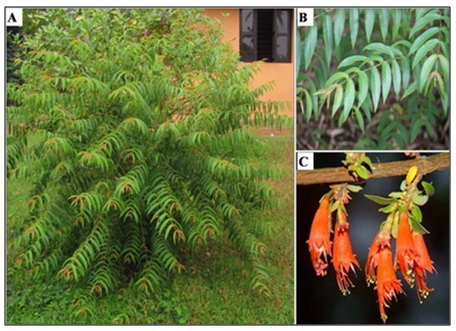
FIG. 1: DIFFERENT PART OF SELECTED PLANT WOODFORDIA FRUTICOSA, (A) TREE, (B) LEAVES, (C) FLOWERS
Percentage Yield (PY): The 1gm of dried powder of plant material was then mixed with 10ml of various solvents such as n-hexane, petroleum ether, chloroform, acetone, ethanol, methanol and water; mixture was kept at room temperature and then filtered via Whatmann No. 1 filter paper. The percentage yield of plant extract was calculated with following equation8.
Extractive value (%) = Weight of dried extract /Weight of plant material × 100
Phyto-chemical Characterization: Freshly prepared plant extracts were analyzed for the presence of different phytochemicals such as alkaloids, flavanoids, saponins and tannins. Thin Layer Chromatography (TLC) was performed to determine the bioactive compound in plant extract. Chemical constituents of the extract were separated on aluminium-backed thin layer chromatography plates (Merck, silica gel 60 F254). The TLC plates were developed under saturated conditions with appropriate eluent system prepared in our laboratory, i.e. ethyl acetate/methanol/water (40:5.4:5) [EMW] (polar); benzene/ethanol/ammonium hydroxide (18:2:0.2) [BEA] (non-polar). Developed plates are dried and the Rf values of the separated bands are measured with the help of zone measurement scale 9, 10.
Detection of Antimicrobial Metabolite by TLC-Bioautographic Assay: The identification of phytochemical constituent from TLC plates were carried out agar overlay method using Muller-Hinton agar 11, 12. The TLC plates developed were used for this study. The TLC plates were dried in oven under ascetic condition. The developed TLC plates were overlaid with MHA and bacterial culture with OD of 0.5 McFarlnad density was uniformly spread on MHA agar with sterile cotton swab. The plates were then incubated at 37oC of 24 hours. Inhibition zones were observed as clear spots and active bands Rf values was measured.
Bacterial Strain: The test organism includes a gram negative Klebsiella pneumoniae, this microorganism was collected from pathology lab which was previously isolated from UTI sample was identified and stored in the Department of Microbiology 13, 14.
Disc Diffusion Assay: The antibaterial activity of plant extract was accessed by disc diffusion assay. The OD of overnight grown culture of K. pneumoniae were adjusted to 0.5 McFarland solution and spread on sterile Muller-Hinton agar plates with cotton swab. The disc with different concentration of plant extracts were prepared by pouring extracts on sterile discs. The extracts soaked discs were then kept on inoculated petri plates and incubated at 37oC for 24 hours. The experiments were carried out in triplicates and mean of zone of inhibition was measured 15.
DPPH Assay: The free radical scavenging property efficacy of plant extracts were measured using DPPH assay as described earlier with mobile phase of Ethyl acetate, methanol and distilled water (40:5.4:5 ml v/v) 16, 17. TLC chromatograms were developed by spraying 0.2% methanolic solutionof DPPH. After spraying light yellow areas were detected against dark green in band with antioxidant activity.
Molecular Docking Analysis: The molecular docking analysis of different phytochemicals found in extract of W. fruticosa such as beta-sorbitol, ellagic acid, gallic acid, myceritin and quercetin against the virulent protein such as ompA and MrkD from K. pneumoniae was performed using Autodock Vina (1.2.0). The 3D structure of these proteins were downloaded from alphafold18.
The strucutures of different phytochemicals such as β-sitosterol, ellagic acid, gallic acid, myricetin and quercetin found in W. fruticosa was downloaded from pubchem. The protein structure was prepared by adding polar hydrogen bonds and kollaman charges.
RESULTS: Woodfordia fruticosa was traditionally well known for its medicinal value and maintenance of human health such as gastrointestinal disorers, wound healing and mestrual disorders. The aim of this study is to find out the medicinal importance of Woodfordia fruticosa plant extracts against gram negative Klebsiella pneumoniae bacteria. The extraction was carried out in polar and non-polar solvents such as n-hexane, petroleum ether, chloroform, acetone, ethanol, methanol and aqueous. The percentage yield was calculated and found that methanol and ethanol extracts showed highest % yield (4%), acetone, aqueous and chloroformextracts showed (3%) yields while the pteroleum ether showed (2%) of yield and lowest yield was found in chloroform extract (2%) Fig. 2.
Anti-bacteial Activity of Plant Extract: The antibacterial activity of plant extract was carried out by disc diffusion assay and zone of inhibition was measured as shown in Fig. 3 and Fig. 4. Different concentrations of plant extract showed different diameter of zone of inhibition. At high concentration of 10000µg/mL ethanol (17mm), methanol (15mm) and chloroform(14 mm) plant extracts shows maximum antibacterial activity. Seven solvents extract are taken for antibacterial activity including ethanol, methanol, chloroform, petroleum ether, n-hexane, acetone and water, of this ethanol extract stock shows the maximum antimicrobial activity against Klebsiella pneumoniae an AMR specific strain while the stock of chloroform, acetone and water extracts does not show any antimicrobial activity against Klebsiella pneumoniae an AMR specific strain.
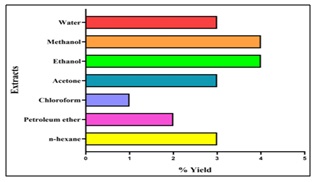
FIG. 2: GRAPHICAL REPRESENTATION OF PERCENTAGE YIELD OF DIFFERENT EXTRACTS
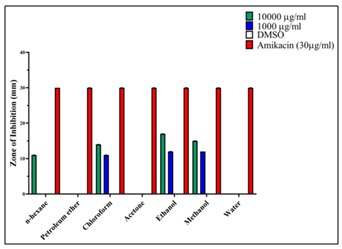
FIG. 3: ZONE OF INHIBITION OBTAINED FROM VARIOUS EXTRACT OF WOODFORDIA FRUTICOSA
Phytochemical Screening: The preliminary screening of detection of bioactive compounds present in Woodfordia fruticosa plant extract was carried out as described (Tabl S1). In present study we found plant extract of Woodfordia fruticosa of ethanol and methanol extract exhibits maximum inhibitions compare to other non polar solvent (n-hexane). The results obtained indicated the presence of antimicrobial compounds in the crude ethanol, methanol and chloroform extracts and which showed a good correlation between the reported uses of the Woodfordiaf ruticosa plant in medicine against different diseases and the experimental data of such extracts toward the most common pathogens. Ethanol, methanol and chloroform showed larger zone of inhibition and hence selected for TLC. The TLC chromatogram of ethanol extract exhibited six different spots having Rf values (a = 0.0545, b = 0.1818, c = 0.7272, d = 0.8, e = 0.9090, f = 0.9818) but of those only two chromatograms (a and e) shows white bands which indicates the presence of bioactive compounds Fig. 5A and the TLC chromatogram of methanol extract exhibited seven spots having Rf values (a = 0.0714, b = 0.1818, c = 0.3035, d = 0.375, e = 0.6964, f = 0.9642 and g = 1) of those two chromatograms (a and f) indicates the presence of bioactive compounds Table 1, Fig. 5B. Whereas the TLC chromatogram of chloroform extract exhibited two spot having Rf value (a = 0.3272 and b = 1) which are visible and both shows white bands which indicates the presence of bioactive compounds Fig. 5C. Those spots are scraped out and taken for further investigation.
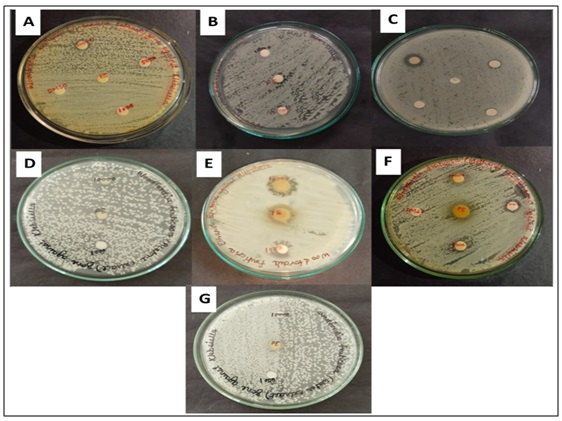
FIG. 4: DISC DIFFUSION ASSAY OF DIFFERENT EXTRACT OF WOODFORDIA FRUTICOSA(A) N-HEXANE, (B) PETROLEUM ETHER, (C) CHLOROFORM, (D) ACETONE, (E) ETHANOL,(F) METHNAOL, (G) WATER
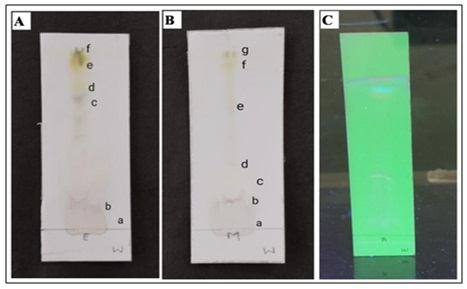
FIG. 5: TLC CHROMATOGRAM OF DIFFERENT EXTRACTS OF PLANT, (A) ETHANOL EXTRACT, (B) METHANOL EXTRACT, (C) CHLOROFORM EXTRACT
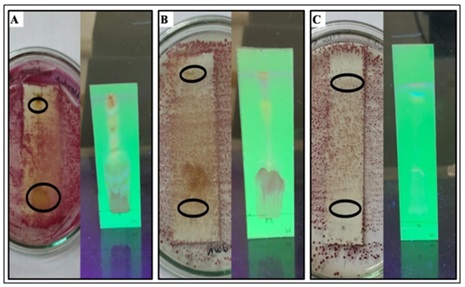
FIG. 6: BIOAUTOGRAPHY ASSAY OF W. FRUTICOSA EXTRACTS AGAINST K. PNEUMONIA AT 37°C 24 H, (A) ETHANOL EXTRACT, (B) METHANOL EXTRACT, (C) CHLOROFORM EXTRACT
TABLE 1: TLC RESULTS OF DIFFERENT EXTRACTS OF WOODFORDIA FRUTICOSA
| Name of plant | Solvent extract | Solvent system | Dist. travelled by solvent (cm) | Dist. travelled by solute (cm) | Rf values (cm) |
| Woodfordia fruticosa | Ethanol | Acetate/methanol/water (40:5.4:5) |
5.5
|
a = 0.3 | 0.0545 |
| b = 1 | 0.1818 | ||||
| c = 4 | 0.7272 | ||||
| d = 4.4 | 0.8 | ||||
| e = 5 | 0.9090 | ||||
| f = 5.4 | 0.9818 | ||||
| Methanol | acetate/methanol/water (40:5.4:5) | 5.6 | a = 0.4 | 0.0714 | |
| b = 1 | 0.1818 | ||||
| c = 1.7 | 0.3035 | ||||
| d = 2.1 | 0.375 | ||||
| e = 3.9 | 0.6964 | ||||
| f = 5.4 | 0.9642 | ||||
| g = 5.6 | 1 | ||||
|
n-hexane |
benzene/ethanol/ammonium hydroxide (18:2:0.2) |
5.5 |
a = 1.8 | 0.3272 | |
| b = 5.5 | 1 |
TLC of ethanolic extracts of W. fruticosa was carried out and distinct band were then characterized by GC MS analysis. The different Rf values of band corresponds to different compounds. The Rf value of 0.05-0.18 were corresponds to gallic acid and derivatives, quercetin and aglycone showed the Rf values of 0.72-0.85. The β-sitosterol exhibited Rf value of 0.58-0.62 while the flavanoids such as quercetin and myricetin showed the Rf values of 0.75-0.82 and 0.90-0.96. The methanolic showed distinct the Rf values of 0.0714, 0.1818, 0.3035, 0.375, 0.6964, 0.9642 and 1and each belonged to different bioactive compound. The lower Rf values of 0.0714-0.3035 signifies the presence of highly polar compounds such as tannins and gallic acid derivatives. The Rf values of range 0.3035-0.6964 showed the presence of ellagic acid, glycosides and quercetin while the Rf values of 0.69-1.00 showed the presence of terpenoids and phytosterols. Chloroformextract showed less complex profile as compared to that of methanolic and ethnolic extracts. The Rf value of 0.3272 showed the presence of terpenoids and long chain hydrocarbons while Rf value of 1.00 signifies the presence of lipids and other pigments 19–21.
Detection of Antimicrobial Metabolite by TLC-Bioautographic Assay: Among those six spots, two spots of ethanol extract and two spots of methanol extract are taken for rechecking the maximum antibacterial activity against Klebsiella pneumoniae an AMR specific strain. Among these four spots, one spot of methanol extract have highest zone of inhibition of 15mm was more active than the other three spots. The agar overlay method of ethanolic extracts showed the zone of inhibition of K. pneumoniae at Rf value of 0.017 cm and 0.69 cm indicating the antimicrobial phytochemical Fig. 6A. These Rf values were corresponds to gallic acid and flavanoids such as quercetin and myricetin respectively. The methanolic extracts with Rf value of 0.0714 cm and 0.964 cm showed clear zone after incubation with K. pneumoniae showing inhibition of growth of bacteria Fig. 6B. These Rf values were found to belonged to tannins and terpenoids respectively. The chloroform extract of plant showed only two bands at Rf value 0.32 cm and 1.0 cm which also showed the clear zone of inhibition in agar overlay method and these Rf values were found to belonged to terpenoids and lipids Fig. 6C.
These results indicated that different extracts of W. fruticosa contains different phytochemicals having antibacterial activity.
TLC-DPPH Assay: DPPH assay was performed to determine the antioxidant efficacy of different extracts of plant. The presence of antioxidant was confirmed by spraying DPPH on TLC plate’s chromatogram and change in color was considered as positive results. In this study, ethanol, methanol was used to determine antioxidant potential. The both methanolic and ethanolic extracts showed 95% efficacy of radial scavenging ability with IC50 for 375 µg/mL for ethnaolic extract Fig. 7A and methanolic extract of 2938 µg/mLFig. 7B. The standard of ascorbic acid was used at same concentration of plant extracts. The Rf value of clear zone in methanolic extract was obtained at0.17 cm and for ethanolic extract at 0.26 m indicating the presence of antioxidant phytochemial in respective extracts of W. fruticosa.
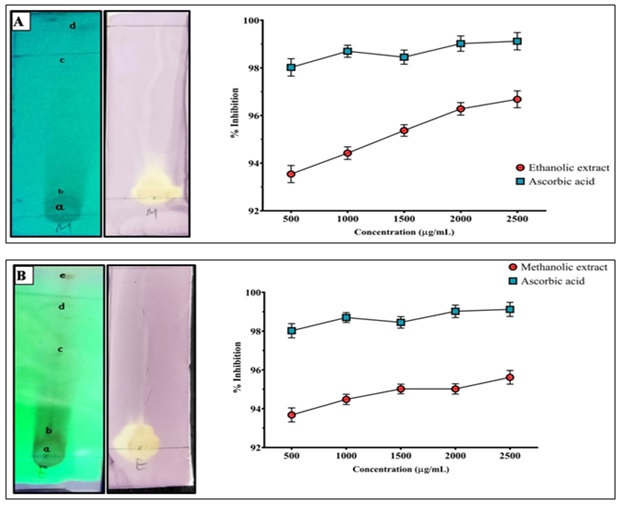
FIG. 7: THIN LAYER CHROMATOGRAPHY PLATES STAINED WITH 2.5 MM OF 1,1-DIPHENYL-2-PICRYL-HYDRAZYL (DPPH), METHANOL SOLUTION VISUALIZED UNDER UV-LIGHT WITH RESPECTIVE GRAPHICAL REPRESENTATION OF DIFFERENT CONCENTRATION OF PLANT EXTRACT, (A) ETHANOL EXTRACT , (B) METHANOL EXTRACT.
Molecular Docking Analysis: K. pneumoniae is a Gram negative bacterium and opportunistic pathogen which can cause wide different kinds of infection in humans such as bacteremia, pneumonia and urinary tract infections. The outer membrane protein A (OmpA) was found to be conserved in Enterobacteriaceae family, it acts as important structural anchor molecules helps in adhesion of pathogen. It helps in invasion to host cells, evade immune response, helps to cross blood brain barrier and also protects bacteria against host defense22. Another protein selected for docking study is MrkD, which helps in bacterial colonization and attachment of bacterial cell to various surfaces. It also helps in formation of biofilm of bacteria. MrkD specifically targets host tissues and cells. It is considered as primary virulent factor in hospital acquired infections23, 24. As both proteins are important virulent factors and helps in attachment of bacterial pathogen to host surface inhibiting the activity of these protein would help in prevention of infection caused by K. pneumoniae.
For OmpA five different phytochecmicals were used to study molecular docking which are actively found in crude extract of W. fruticosa such as as β-sitosterol, ellagic acid, gallic acid, myricetin and quercetin. The molecular docking analysis clearly showed that ellagic acid showed highest binding with OmpA with binding energy of -7.1 Kcal/mol forming nine hydrogen bonds with P248, A253, L243, Y240, K292, G251, P289, S252 and I288 Fig. 8, Table 2. While the protein MrkD binds with all selected phytochemical in different manner and most strong binding was shown with myricetin forming nine hydrogen bonds with binding energy of -6.9 Kcal/mol Fig. 9, Table 3 interacting with V6,F5,N8,A10,R152,K12,Q191,P11 amino acids.
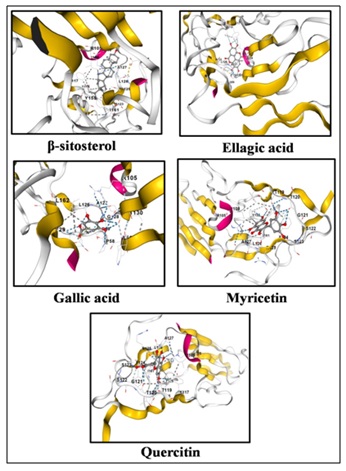
FIG. 8: MOLECULAR DOCKING ANALYSIS OF OMPA WITH VARIOUS PHYTOCHEMICALS
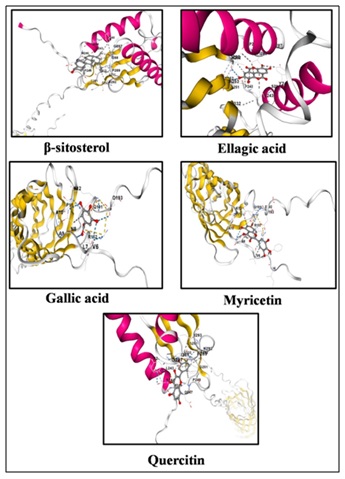
FIG. 9: MOLECULAR DOCKING ANALYSIS OF MRKD WITH VARIOUS PHYTOCHEMICALS
TABLE 2: MOLECULAR DOCKING ANALYSIS OF OMPA
| Sr. no. | Ligand Molecule | Protein | Binding energy(Kcal /mol) | Interacting amino acid |
| 1 | β-sitosterol
(CID-222284) |
OmpA |
-6.5 | M246, D247,I288, G287,Y240,S252,A253, G251,P289 |
| 2 | Ellagic acid
(CID-5281855) |
-7.1 | P248, A253, L243, Y240, K292, G251, P289, S252 and I288 | |
| 3 | Gallic acid
(CID-370) |
-5.3 | A10,A9,N8,K12, V6,R152,L7,R152,D193,Q191 | |
| 4 | Myricetin
(CID-5281672) |
-6.7 | V6,F5,N8,A10,R152,K12,Q191,P11 | |
| 5 | Quercetin
(CID-5280343) |
-6.6 | S244,Y240,D247,M246,P289,G287,S252,Y240, |
TABLE 3: MOLECULAR DOCKING ANALYSIS OF MRKD
| Sr. no. | Ligand Molecule | Protein | Binding energy (Kcal /mol) | Interacting amino acid |
| 1 | β-sitosterol
(CID-222284) |
mrkD |
-6.7 | A127,T119,V65,F124,D59,A108,F124, |
| 2 | Ellagic acid
(CID-5281855) |
-5.7 | T119,A127,G125,A108,G128, D59, | |
| 3 | Gallic acid
(CID-370) |
-6.2 | L162,Y29,A127,Y64,D59,N60,R115,L126, S128, | |
| 4 | Myricetin
(CID-5281672) |
-6.9 | T119,R125,A127,L126,S123,G121,S122,T120,I109 | |
| 5 | Quercetin
(CID-5280343) |
-5.8 | A127,L126,T120,T119,G121,S123,I161,S75,Y155, |
DISCUSSION: Phytochemical screening revealed the presence of diverse chemical components in the various extracts of the plant. Chougale et al., (2009) reported that acetone fraction showed larger zone of inhibition. The TLC chromatogram of acetone extract demonstrated four different spots which were crosschecked for antibacterial activity against B. subtilis to validate their role. Out of four, the three spots revealed positive result against B. subtilis. Among these three spots, one was more active than the other two spots hence selected for GC-MS analysis. The result of present study shows ethanol and methanol have larger zone of inhibition against K. pneumoniae.By using various solvent systems, compound with a wide range of polarities can be separated. The TLC chromatogram of ethanol extract exhibited six different spots but of those only two chromatograms shows white bands which indicates the presence of bioactive compounds and the TLC chromatogram of methanol extract exhibited seven spots of those two chromatograms shows white bands which indicates the presence of bioactive compounds. Among these four spots such as (2 spots of ethanol and 2 spots of methanol) these spots were crosschecked for antibacterial activity against K. pneumoniae. One spot of methanol extract have highest zone of inhibition of 15mm was more active than the other three spots.
In present study, we are focused on the antimicrobial activity of Woodfordia fruticosa plant against Klebsiella pneumoniae an AMR specific strain; and the isolation and evaluation of bioactive compounds. Seven solvent extracts viz. n-hexane, petroleum ether, chloroform, acetone, ethanol, methanol and water are taken for study and efficacy of three solvent extract methanol, ethanol and chloroform against Klebsiella pneumoniae an AMR specific strain. Parekh and Chanda, (2007) reported that the antibacterial activity of the crude methanol extract of the Woodfordia fruticosa was most active against P. pseudoalcaligenes in comparison to all the microorganisms tested 26. But the result of present study shows that the ethanol plant extract of Woodfordia fruticosa is more effective than methanol and chloroform extracts. Gram negative Klebsiella pneumoniae an AMR specific strain sensitive for ethanol extract with maximum zone of inhibition 17mm at stock and 10000 µg/ml while methanol extract shows maximum zone of inhibition 15mm at stock and 13mm at 10000 µg/ml. Rahman et al., (2023) also showed that dichloromethane extract of bark and leaves has maximum antimicrobial activity against S. boydii (15mm), S. paratyphi (12mm) while the crude methanol extract of were found to inhibit the growth of S. paratyphiiand S. dysenteriae 27.
CONCLUSION: The above results showed that ethanol, methanol and chloroform extracts contains various bioactive compounds as obtained in chromatograms. It can be concluded that Woodfordia fruticosa plant mostly contains phyto constituents which has great antimicrobial potential for killing Klebsiella pneumoniaean AMR specific strain. The stock of ethanol, methanol and chloroformextracts were more effective than the petroleum ether, acetone, chloroform and water extracts. These extracts also showed antioxidant potential. The molecular docking of different phytochemicals suggested different candidate molecules did showed inhibitory potential. The high binding of ompA with ellagic acid and mrkD with myricetin suggested that the crude extract does inhibit the activity of these proteins inhibiting the binding of pathogen on host surface.
TABLE 4: LIST OF VARIOUS PHYTOCHEMICAL PRESENT IN EXTRACTS OF WOODFORDIA FRUTICOSA
| Sr. no. | Phytochemical Group | Test Name | Chloroform | Acetone | Ethanol | Methanol |
| 1 | Alkaloids | Picric acid test | + | - | + | + |
| Iodine test | + | – | + | + | ||
| 2 | Carbohydrates | Molisch’s test | + | + | + | + |
| Seliwanoff’s test | + | + | – | – | ||
| 4 | Glycosides | General test (Concentrate) | - | + | + | + |
| 6 | Proteins & Amino Acids | Biuret test | – | – | + | + |
| Xanthoproteic test | - | + | + | |||
| 7 | Flavonoids | Alkaline reagent test | + | + | + | + |
| Ammonia test | + | + | + | + | ||
| Conc. H₂SO₄ test | + | + | – | + | ||
| 8 | Phenolic Compounds | Gelatin test | – | + | + | + |
| Lead acetate test | – | + | – | + | ||
| Potassium dichromate test | - | + | + | + | ||
| 10 | Saponins | Foam test | - | - | - | - |
| NaHCO₃ test | – | - | – | - | ||
| 11 | Phytosterols | Salkowski’s test | – | + | + | – |
| 18 | Resins | Turbidity test | – | – | - | – |
| 19 | Oils & Fats | Saponification test | + | + | + | + |
(+ present, - absent).
ACKNOWLEDGEMENT: The author thanks Dr. Sonkuvar (Ambedkar College, Nagpur) for plant authentication and the SalaiMenda Forest authorities for collection permissions.
CONFLICT OF INTEREST: Authors don’t have any conflict of interest
REFERENCES:
- Pathak A, Gupta AP and Pandey P: Herbal Medicine and Sustainable Development Challenges and Opportunities. In: Herbal Medicine Phytochemistry. Springer Cham 2024; 1457-1482. doi:10.1007/978-3-031-43199-9_48
- Thakur S, Kaurav H and Chaudhary G: A Review on Woodfordia fruticosa Kurz (Dhatki): Ayurvedic, Folk and Modern Uses: Woodfordia fruticosa. Journal of Drug Delivery and Therapeutics 2021; 11(3): 126-131. doi:10.22270/jddt.v11i3.4839
- Khare CP: Encyclopedia of Indian Medicinal Plants: Rational Western Therapy, Ayurvedic and Other Traditional Usage, Botany Springer 2004.
- Shome U, Mehrotra Sand Sharma HP: Pharmacognostic studies on the flower of Woodfordia fruticosa Proc Indian Acad Sci (Plant Sci) 1981; 90(4): 335-351. doi:10.1007/BF03052932
- Shah AS and Juvekar AR: In-vitro and in-vivo immunostimulatory activity of Woodfordia fruticosa flowers on non-specific immunity. Pharmaceutical Biology 2010; 48(9): 1066-1072. doi:10.3109/13880200903490497
- Dey Kand Bahadur R: The Indigenous Drugs of India. PamaPrimlane Publishers, New Delhi 1958;1.
- Kafle MR, Kunwar RM, Jan HA, Abbasi AM, Bussmann RW and Paniagua-Zambrana NY: Woodfordia fruticosa (L.) Kurz. Lythraceae. In: Ethnobotany of the Himalayas. Springer Cham 2021; 2147-2158. doi:10.1007/978-3-030-57408-6_260
- Adam OAO, Abadi RSMand Ayoub SMH: The Effect of Extraction method and Solvents on yield and Antioxidant Activity of Certain Sudanese Medicinal Plant Extracts. J Phytopharmacol 2019; 8(5): 248-252. doi:10.31254/phyto.2019.8507
- Abubakar AR and Haque M: Preparation of Medicinal Plants: Basic Extraction and Fractionation Procedures for Experimental Purposes. J Pharm Bioallied Sci 2020; 12(1): 1-10. doi:10.4103/jpbs.JPBS_175_19
- Sisodiya and Shrivastava P: Phytochemical screening, thin layer chromatography and quantitative estimation of bioactive constituents in aqueous extract of Manilkara hexandra (roxb.) Dubard. International Journal of Scientific Research 2018; 9: 23242-23245.
- Adegun A: Thin Layer Chromatography Bio-autography guided identification of Antibacterial constituents of leaf extract of Stereospermum kunthianum (Bignoniaceae). The Nigerian Journal of Pharmacy 2023; 57. doi:10.51412/psnnjp.2023.18
- Rakshith DPS and Pradeep T: Application of Bioassay-Guided Fractionation Coupled with a Molecular Approach for the Dereplication of Antimicrobial Metabolites. Chromatographia 2016; 79: 1625-1642. doi:10.1007/s10337-016-3188-8
- A MPP, Maheshwarappa YD and GK: A retrospective study of the antimicrobial susceptibility patterns of Klebsiella pneumoniae isolated from urine samples over a decade in South India. Front Microbiol 2025; 16. doi:10.3389/fmicb.2025.1553943
- Worku M, Belay S, Molla T, Aynalem M and Assefa M: Prevalence and antimicrobial susceptibility pattern of Klebsiella pneumoniae isolated from various clinical specimens at the University of Gondar Comprehensive Specialized Hospital, Northwest Ethiopia. BMC Infect Dis 2024; 24: 917. doi:10.1186/s12879-024-09811-1
- Bauer AW, Kirby WM, Sherris JC and Turck M: Antibiotic susceptibility testing by a standardized single disk method. Am J Clin Pathol 1966; 45(4): 493-496.
- Jesionek W, Choma IM, Majer-Dziedzic B and Malinowska I: Screening Bacterial and Radical Scavenging Properties of Chosen Plant Extracts Using Thin-Layer Chromatography–Direct Bioautography. Journal of Liquid Chromatography & Related Technologies 2014; 37(20): 2882-2891. doi:10.1080/10826076.2014.907103
- Ramesha KP, Mohana NC, Nuthan BR, Rakshith D and Satish S: Antimicrobial metabolite profiling of Nigrospora sphaerica from Adiantum philippense J Genet Eng Biotechnol 2020; 18(1): 66. doi:10.1186/s43141-020-00080-4
- Fleming J, Magana P and Nair S: AlphaFold Protein Structure Database and 3D-Beacons: New Data and Capabilities. Journal of Molecular Biology 2025; 437(15): 168967. doi:10.1016/j.jmb.2025.168967
- Dey G, Ghosh N, Pradhan S, Giri S and Ray Sarkar B: Isolation, Characterization and quantification of gallic acid from hydro alcoholic flower extract of Woodfordia fruticosa (L.) kurz along with fingerprinting analysis by HPTLC, HPLC, FT-IR, and NMR ( 1 H and 13 C) spectroscopy. Published online June 24, 2025.
- Grover N, Meena R and Patni V: Hptlc method for quantification of ellagic acid in in-vivo and in-vitro samples of Woodfordia fruticosa (linn.) Kurz. IJP 2019; 7(1).
- Harborne JB: Methods of Plant Analysis. In: Harborne JB, ed. Phytochemical Methods: A Guide to Modern Techniques of Plant Analysis. Springer Netherlands 1984; 1-36. doi:10.1007/978-94-009-5570-7_1
- March C, Moranta D and Regueiro V: Klebsiella pneumoniae outer membrane protein is required to prevent the activation of airway epithelial cells. J Biol Chem 2011; 286(12): 9956-9967. doi:10.1074/jbc.M110.181008
- Gerlach GF, Clegg Sand Allen BL: Identification and characterization of the genes encoding the type 3 and type 1 Fimbrial adhesins of Klebsiella pneumoniae. J Bacteriol 1989; 171(3): 1262-1270. doi:10.1128/jb.171.3.1262-1270.1989
- Jagnow J and Clegg S: Klebsiella pneumoniae MrkD-mediated biofilm formation on extracellular matrix- and collagen-coated surfaces. Microbiology (Reading) 2003; 149(9): 2397-2405. doi:10.1099/mic.0.26434-0
- Chougale A, Padul M, Arfeen S and Kakad SL: Antibacterial Activity Directed Fractionation of Woodfordia fruticosa Leaves. Journal of Medicinal Plants 2009; 8: 75-81.
- Parekh J and Chanda S: In-vitro antibacterial activity of the crude methanol extract of Woodfordia fruticosa flower (Lythraceae). Braz J Microbiol 2007; 38: 204-207. doi:https://doi.org/10.1590/S1517-83822007000200004
- Rahman MdM, Soma MA and Sultana N: Exploring therapeutic potential of Woodfordia fruticosa (L.) Kurz leaf and bark focusing on antioxidant, antithrombotic, antimicrobial, anti-inflammatory, analgesic, and antidiarrheal properties. Health Science Reports 2023; 6(10): e1654. doi:10.1002/hsr2.1654
How to cite this article:
Kombe SV, Mateen NAA, Somkuwar SR, Kanampalliwar AM and Rai AR: Phytochemical characterization and anti-bacterial efficacy of multi-solvent extracts of Woodfordia fruticosaL against antimicrobial resistant Klebsiella pneumoniae. Int J Pharm Sci & Res2026; 17(11): 3585-95. doi: 10.13040/IJPSR.0975-8232.17(11).3585-95.
All © 2026 are reserved by International Journal of Pharmaceutical Sciences and Research. This Journal licensed under a Creative Commons Attribution-NonCommercial-ShareAlike 3.0 Unported License.
Article Information
25
3585-3595
1884 KB
7
English
IJPSR
Suraj V. Kombe, Namrah Ameen Abdul Mateen, Subhash R. Somkuwar, Amol M. Kanampalliwar and Alok R. Rai *
Department of Microbiology, Seth Kesarimal Porwal College, Kamptee Nagpur, Maharashtra, India.
suraj.kombe@gmail.com
16 July 2026
05 October 2026
25 October 2026
10.13040/IJPSR.0975-8232.17(11).3585-95
01 November 2026
 Download