




PROSTHETIC CHALLENGES AND REHABILITATION STRATEGIES IN AN ELECTRICAL BURN SURVIVOR WITH MULTIPLE LIMB AMPUTATIONS: A CASE STUDY
HTML Full TextPROSTHETIC CHALLENGES AND REHABILITATION STRATEGIES IN AN ELECTRICAL BURN SURVIVOR WITH MULTIPLE LIMB AMPUTATIONS: A CASE STUDY
Gargi Khare * and Utkarsh Mohan Awasthi
Department of Prosthetics and Orthotics, Dr. Shakuntala Misra National Rehabilitation University, Lucknow, Uttar Pradesh, India.
ABSTRACT: Background: Electrical injuries are a common cause of traumatic amputations in developing countries, especially among adolescents. High voltage electrical accidents often result in loss of both upper and lower limbs on the same side, leading to major physical and psychological difficulties during rehabilitation. Objective: To describe the prosthetic challenges, multidisciplinary management, and functional outcomes in an adolescent with multiple limb amputations following high voltage electrical injury. Methodology: This case study reports a 17-year-old male with right transfemoral and transradial amputations managed through a phased multidisciplinary rehabilitation program. Functional and psychological outcomes were assessed using the Functional Independence Measure (FIM), 6-Minute Walk Test (6MWT), ABILHAND questionnaire, and Generalized Anxiety Disorder-7 (GAD-7) scale over a 6-month follow-up period. Results: After 6 months of prosthetic use and rehabilitation, FIM improved from 85/126 to 110/126, 6MWT increased from 250 m to 450 m, ABILHAND score reached 75% bimanual function, and GAD-7 anxiety score reduced from 15/21 to 6/21. Conclusion: Early and customized prosthetic rehabilitation supported by a multidisciplinary team can significantly improve functional independence, mental health, and school reintegration in adolescents with multiple amputations due to electrical trauma.
Keywords: Electrical trauma, Multiple amputations, Adolescent amputee, Transfemoral amputation, Transradial amputation, Prosthetic rehabilitation
INTRODUCTION: Electrical burns contribute significantly to burn-related hospital admissions in developing countries, with reported rates of up to 27%. High-voltage electrical injuries commonly cause deep muscle and nerve damage, often leading to limb amputations along the path of the electric current 1, 2. In adolescents, such injuries affect not only physical mobility but also emotional well-being, education, and social participation.
Psychological problems such as post-traumatic stress disorder and anxiety are seen in nearly 30% of burn survivors 3. Managing patients with both upper and lower limb amputations on the same side is particularly challenging. These patients experience higher energy expenditure during walking, difficulty performing two-handed activities, and problems related to irregular burn-scarred residual limbs 4, 10. Limited literature from India focuses on long-term prosthetic rehabilitation in adolescents. This case study presents a simple and practical rehabilitation approach in a resource-limited setting 7, 11.
Case Presentation: A 17-year-old right-handed male studying in 10th class sustained a high-voltage electrical injury (approximately 7,200 volts) on 15 June 2025 while climbing a tree near overhead power lines. He immediately lost consciousness and suffered cardiac arrest, followed by extensive electrical burns to the right upper and lower limbs 1, 2.
The patient was resuscitated and shifted to a tertiary care hospital where Advanced Trauma Life Support protocols were followed. He sustained approximately 25% total body surface area burns, with deep tissue damage along the electrical entry and exit points. The Mangled Extremity Severity Score for the right lower limb was 9, indicating the need for primary amputation as scores of 7 or higher are traditionally used as the cutoff for this recommendation 2, 12.
On the second day after injury, a right transradial amputation (14 cm below the olecranon) and a right transfemoral amputation (14 cm above the knee joint line) were performed. Myodesis and myoplasty were done to improve stump stability, and nerves were divided proximally to reduce neuroma formation. Wound healing was supported with rigid dressings and vacuum-assisted closure. Phantom limb pain and minor infections were managed conservatively 5, 13.
The patient also showed signs of psychological distress, including anxiety, nightmares, and fear of electrical objects, affecting his confidence and school attendance 3.
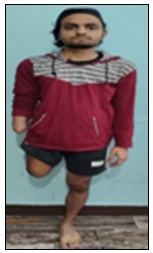
FIG. 1: PATIENTS WITH TRANSRADIAL AND TRANSFEMORAL AMPUTATION
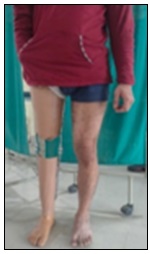
FIG. 2: PATIENTS WITH TRANSFEMORAL PROSTHESIS
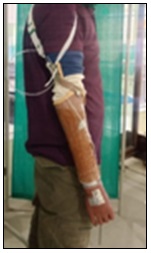
FIG. 3: PATIENTS WITH TRANSRADIAL PROSTHESIS
Clinical Assessment:
Residual Limb Examination: The right transradial stump was well healed with supple skin, no contractures, full elbow movement, with adequate muscle strength. The right transfemoral stump had a rounded end, full hip range of motion, mild muscle weakness, and no bony complications 1.
Functional Assessment: The pre-prosthetic FIM score was 85/126, indicating moderate dependence. ABILHAND assessment showed difficulty in bimanual activities such as writing and tying laces. The 6-Minute Walk Test distance was 250 meters using crutches 4, 5.
Psychological Assessment: The GAD-7 score was 15/21, suggesting moderate to severe anxiety 3, 14.
Prosthetic Management: A multidisciplinary rehabilitation team including a prosthetist, physiotherapist, occupational therapist, and psychologist planned the prosthetic intervention 8, 9.
For the upper limb, a transradial socket was fabricated using plaster casting with the elbow at 90°. A body powered voluntary opening hand was selected to improve functional use during school activities and daily tasks 6. For the lower limb, an ischial containment transfemoral socket was fabricated using plaster casting technique. A single axis knee joint was prescribed to provide better stability and improve safety in an adolescent amputee 4, 6.
Rehabilitation Protocol: Rehabilitation focused on stump care, muscle strengthening, balance and gait training, prosthetic hand training, and practice of activities related to daily living and school participation. Psychological counseling helped reduce anxiety, improve body image, and support peer reintegration 8, 9, 15.
RESULTS: At 6-month follow-up, the patient showed significant improvement. The FIM score increased to 110/126, the 6MWT distance improved to 450 meters, and ABILHAND score reached 75% functional use. The GAD-7 score reduced to 6/21, indicating mild anxiety. The patient returned to full-time schooling with assistive accommodations and reported high satisfaction with prosthetic use 6, 7, 15.
DISCUSSION: This case demonstrates that adolescents with multiple amputations due to electrical trauma can achieve good functional and psychological outcomes with early prosthetic fitting and multidisciplinary rehabilitation. Prosthetic components play an important role in improving independence and participation in daily life 4, 6, 16.
CONCLUSION: Early, individualized prosthetic management combined with comprehensive rehabilitation can restore functional independence, improve mental well-being, and support educational reintegration in adolescents with multiple limb amputations, even in resource-limited settings 8, 9, 11.
Ethical Considerations: Written informed consent was obtained from the patient and his parents for publication of this case study. All procedures followed institutional ethical standards and the Declaration of Helsinki. Patient confidentiality was strictly maintained 17.
ACKNOWLEDGEMENTS: Nil
CONFLICTS OF INTEREST: Nil
REFERENCES:
- Gupta A, Gupta S and Singh H: Complications and outcome of electrical burns in Manipal, India: 6-year institutional report. Burns Open 2020; 4(2): 50-55. doi:10.1016/j.burnso.2020.02.002.
- Sharma S, Parashar A and Sharma A: High voltage electrical burn injuries in teenage children: case studies with similarities (an Indian perspective). Indian J Plast Surg 2014; 47(1): 92-96. doi:10.4103/0970-0358.129636.
- Model Systems Knowledge Translation Center. Post-Traumatic Stress Disorder (PTSD) Following Burn Injuries: A Comprehensive Clinical Review. Burn Model System 2021.
- Huang CT, Jackson JR and Moore NB: Energy expenditure of transfemoral amputees during floor and treadmill walking with different speeds. Prosthet Orthot Int 2015; 39(6): 476-482. doi:10.1177/0309364614552019.
- Gailey RS, Roach KE and Applegate EB: The amputee mobility predictor: an instrument to assess determinants of the lower-limb amputee’s ability to ambulate. Arch Phys Med Rehabil 2002; 83(5): 613-627. doi:10.1053/apmr.2002.32376.
- Highsmith MJ, Kahle JT and Klenow DA: C-Leg® improves function and quality of life in an adolescent traumatic trans-femoral amputee: a case study. Prosthet Orthot Int. 2014; 38(5): 417-423. doi:10.1177/0309364613502354.
- Kumar P, Singh R and Sharma S: A paradigm shift in amputee rehabilitation: an experience from level I Trauma Centre of India. J Orthop Trauma Rehabil 2021; 24(1): 1-7.
- Singh R, Kumar P and Sharma S: Amputation clinic: Need for an Umbrella care approach. Physiother J Indian Assoc Physiother 2021; 15(1): 45-50. doi:10.4103/PJ.PJ_8_21.
- Sharma S, Gupta A and Parashar A: Psychosocial Impact of Electrical Burn in Children: A Follow-Up Study Conducted at a Tertiary Care Hospital. Cureus 2022; 14(1): e20950. doi:10.7759/cureus.20950.
- Lake DA: Residual limb assessment and prosthetic fitting in burn patients. J Burn Care Res 2005; 26(4): 327-332. (DOI needs verification).
- Pandey AK, Kumar P and Singh R: Lower limb amputation rehabilitation status in India: A review. J Family Med Prim Care 2023; 12(10): 2345-2352. doi:10.4103/jfmpc.jfmpc_1064_23.
- Johansen K, Daines M and Howey T: Objective criteria accurately predict amputation following lower extremity trauma. J Trauma 1990; 30(5): 568-572. doi:10.1097/00005373-199005000-00007.
- Holliday R and Robinson ME: Phantom limb pain management in amputees. Curr Pain Headache Rep 2017; 21(3): 12. doi:10.1007/s11916-017-0615-5.
- Spitzer RL, Kroenke K, Williams JB and Löwe B: A brief measure for assessing generalized anxiety disorder: the GAD-7. Arch Intern Med 2006; 166(10): 1092-1097. doi:10.1001/archinte.166.10.1092.
- Sinha R, van den Heuvel WJA and Arokiasamy P: Psychosocial and functional outcomes after amputation. Indian J Phys Med Rehabil 2011; 22(1): 1-6.
- Cochrane H, Salkeld G and Davis A: Outcomes in upper limb prosthetics – A review. Prosthet Orthot Int 2001; 25(3): 173-182. doi:10.3109/03093640109080359.
- World Medical Association. World Medical Association Declaration of Helsinki: ethical principles for medical research involving human subjects. JAMA 2013; 310(20): 2191-2194. doi:10.1001/jama.2013.281053.
How to cite this article:
Khare G and Awasthi UM: Prosthetic challenges and rehabilitation strategies in an electrical burn survivor with multiple limb amputations: a case study. Int J Pharm Sci & Res 2026; 17(8): 2543-46. doi: 10.13040/IJPSR.0975-8232.17(8).2543-46.
All © 2026 are reserved by International Journal of Pharmaceutical Sciences and Research. This Journal licensed under a Creative Commons Attribution-NonCommercial-ShareAlike 3.0 Unported License.
Article Information
32
2543-2546
531 KB
260
English
IJPSR
Gargi Khare * and Utkarsh Mohan Awasthi
Department of Prosthetics and Orthotics, Dr. Shakuntala Misra National Rehabilitation University, Lucknow, Uttar Pradesh, India.
gk.valkyrie@gmail.com
23 March 2026
22 June 2026
15 July 2026
10.13040/IJPSR.0975-8232.17(8).2543-46
01 August 2026
 Download