




ROLE OF WILD VEGETABLES IN NUTRITIONAL ENRICHMENT: A COMPREHENSIVE REVIEW WITH SPECIAL REFERENCE TO KARJAT TEHSIL
HTML Full TextROLE OF WILD VEGETABLES IN NUTRITIONAL ENRICHMENT: A COMPREHENSIVE REVIEW WITH SPECIAL REFERENCE TO KARJAT TEHSIL
Supriya Gawade * and Sangita Kulkarni
Department of Botany, Dada Patil Mahavidyalaya, Karjat, Ahilyanagar, Maharashtra, India.
ABSTRACT: The indigenous flora thrives naturally without the need for cultivation or maintenance. This flora is favored by the local population as a viable alternative for essential dietary sustenance, offering nutritional balance and medicinal benefits. An extensive survey of wild edible vegetables from the Karjat Tehsil in the Ahilyanagar District was conducted in year 2023-24 to assess the significance of these wild plants in the local diet. The findings revealed that these plants are chosen for their flavor, accessibility, and nutritional value throughout various seasons mostly during rainy season. These plants are recognized for their medicinal and nutritional significance, contributing to enhanced health and immunity, improved digestibility, and blood purification, among other benefits. The medicinal attributes of these plants are related to their abundant phytochemical content, including phenols, flavonoids, alkaloids, antioxidants, and vitamins. Therefore, it can be concluded that the popularity of wild edible vegetables arises from their superior nutritional value, making them viable alternatives to commercially available hybrid vegetables.
Keywords: Karjat, Medicinal, Nutritional, Wild vegetables
INTRODUCTION: Since ancient times, wild fruits are edible and play vital role in human diet. Initially, hunter-gatherers gathered vegetables as wild plants, which later began to be cultivated in various regions, leading to the development of a new agricultural lifestyle. The world's population is growing significantly every day and the natural resources are getting limited, making it challenging to feed every member of the population on a regular basis. People are malnourished as a result of food shortages. New hybrid varieties are created to fulfil the food demand.
It has sufficed to overcome the problem of food shortage for large populations but has an impact on human health to some extent over the years. The hybrids which are substitute to conventional diets resulted into burden of food insecurity and chronic diseases in course of time due to changing lifestyles and food habits across the world (Laddha and Itankar, 2015). Consequently, it is necessary to employ advantageous long term substitutes for these types like wild edible vegetables.
Indiginous groups or local populations regularly incorporate wild edibles into their daily diets. The local markets shows majority of the wild vegetables during different seasons as per their availability. The wild edible plants serve as a longstanding source of daily nutrition along with the diet. The Tribal or local peoples of a particular region have vast knowledge about wild vegetables, their use as a source of vegetables, food and medicine 1. They are known to be consumed due to their nutrient content, high vit. C, A and carotenes content, help to maintain healthy body and prevent diseases occurring due to oxidative damage 2. During the adverse environmental conditions or when there is food shortage, the people mainly depend on fresh or dry types of wild edible plants 3.
The use of specific wild plants like Cassia tora, Chenopodium album, Coccinia grandia, Trianthema portulacastrum as food and medicinal potentials of Amarannthus viridis, Amaranthus spinosus, Launaea procumbens from different regions of the world has been suggested beneficial through reports by many researchers 1, 4, 6, 7.
A report suggest that Amaranthus viridis and A. spinosus leaves contain a variety of phytochemicals of medicinal relevance, including alkaloids, flavonoids, terpenoids, carbohydrates, glycosides, cardiac glycosides, amino acids, xanthoproteins. The wild plants plants produce a variety of beneficial goods, including fibre, medicine, colors, and feed. The study of edible wild plants has become promising or varieties for domestication and identifying possible sources that could be used as substitute food. They supply dietary fibre and are important sources of essential vitamins, minerals and trace elements 5. The medicinal attributes of these plants are related to their abundant phytochemical content, including phenols, flavonoids, alkaloids, antioxidants, and vitamins 2, 3, 5.
Numerous wild edible plants are utilized in a sustainable way in many parts of Maharashtra state during the rainy season. The study area was undertaken as Karjat tehsil, Ahilyanagar (Ahmednagar) district, situated in the central part of Maharashtra, India. Karjat tehsil one of the tehsil in the south region with 155,774.35 acres. General climate is very hot and dry. It is a drought prone area with very less annual rainfall. Area has average temperature throughout the year range from 35-40 oC. The wild vegetation is abundant in black cotton soil during the rainy season (July to November) and many of the wild edible plant species grow and are preferred as edible vegetables (food) by locals. The present study was undertaken to survey and investigate the edible wild plants used as food during the year 2023-24 and to understand their preference related to medicinal and nutritional value. Studies reveal that the wild edible plants are used as good alternative vegetables with nutritional and medicinal benefits compared to the commercially grown hybrid vegetables. These plants are known to be rich in several primary metabolites including proteins, carbohydrates, vitamins, sterol and lipids, low in fat and calories which are essential for its survival and they help to provide basic nutrition to the populations 8, 9, 10.
MATERIAL AND METHODS: The initial assessment of the wild flora began with a list of plants obtained by consulting newspapers, books, and videos on social media, as well as by conducting a broad survey among local residents. The study focused on 60 locals, the majority of whom were farmer families. The field survey included the field photography, semi-structured interviews (questionnaire) and plant collection. A questionnaire was created that included details such as the local name, source, parts used, and mode of growth, collection season and reasons for preference.
It was completed by the participants. According to the survey, classification of the wild vegetables was done as follows - if the total responses from residents or farmers exceeded 60%, it was classified as popular, useful, and beneficial. If the responses fell between 30 and 60%, it was deemed moderately useful and known, while any figure below 30% indicated it was unfamiliar with the benefits. The surveys and data collection were conducted over a three-month span across 10 different villages in Karjat Tehsil from August 2023 to December 2023. The most popular wild flora was selected and quoted. The plants were identified and authenticated by Taxonomic experts, Flora of Bombay Presidency, Flora of Ahmednagar District and Standard Plant herbariums at Department of Botany, SPPU, Pune.
RESULT AND DISCUSSION: According to a survey of wild edible vegetables from the Karjat Tehsil study region some of the wild plants that sprout during the rainy season are eaten as green vegetables, either fresh, raw or cooked due to their taste, availability, and nutritional value. The leaves, stems, flowers, and fruits are eaten as food.
The identification and description of eleven plant species that the people generally accepted as food is provided in the Table 1. The popular plant families included Amaranthaceae, Fabaceae, Malvaceaceae, and Solanaceae. All of these are preferred because of their nutritional and therapeutic significance, also lowers blood sugar, cholesterol levels and improves health.
TABLE 1: LIST OF WILD EDIBLE VEGETABLES USED AS FOOD FROM KARJAT
| Sr. no. | Plant name | Common name (Marathi) | Locality | Family | Plant part used | Nutritional value | Medicinal value |
| 1 | Celosia argentea L. | Kurdu | Kuldharan | Amaranthaceae | Leaves, seeds | Rich in minerals like Iron and calcium and flavonoids. | Shows Antidiabetic, anti-inflammatory properties and used against diarrhoea. |
| 2 | Solanum anguivi Lam. | Ranvangi | Mahijalgaon | Solanaceae | fruit | Rich in antioxidants, flavonoids, alkaloids. | Used against hypertension, diabetes, infections, inflammation, and pain |
| 3 | Amaranthus viridus L. | Math | Kolavadi | Amaranthaceae | leaves | Rich in amino acids, magnesium, potassium. | Traditional medicine for fever, inflammation, and digestive issues |
| 4 | Hibiscus radiatus Cav | Ambadi | Kaprewadi | Malvaceae | leaves | Rich in minerals like Iron and calcium and polyphenols. | Medicine for fever, blood purification, inflammation, and wounds |
| 5 | Mucuna pruriens (L.) DC. | Kali koeri | Baradgaon | Fabaceae | fruit | Rich in antioxidants, polyphenols. | Stress relief, and as an antioxidant, reducing tremors, and balancing mood. |
| 6 | Portulaca oleracea L. | Ghol | Patharwadi | Portulacaceae | Leaves and stem | Rich in minerals like Magnesium and calicum, also contain fatty acids. | Treating issues like high cholesterol, digestive problems, headaches, and skin conditions, and is also used in beauty for skin hydration |
| 7 | Senna tora(L.) Roxb. | Takla | Baradgaon | Fabaceae | leaves | Rich in flavonoids, glycosides, also contain amino acids, zinc and iron. | Treat fever, respiratory issues (asthma, cough), and eye health |
| 8 | Solanum nigrum L. | Amoni Kamoni | Kuldharan | Solanaceae | Fruit | Rich in saponons, polyphenols, vitamins and calcium. | Used to treat cough, asthma, liver disorder, bacterial infection. |
| 9 | Sesbania grandiflora (L.) Poir. | Hadga | Rashin | Fabaceae | flowers | Rich in antioxidants, vitamins, minerals like iron and phosphorus. | Treat fever, shows antifungal, antidiebatic activity and rich in antioxidants. |
| 10 | Abelmoschus manihot (L.) Medik | Ranbhendi | Ganeshwadi | Malvaceae | Fruit | Rich in flavonoids and amino acids. | Rich in phytochemicals and help regulate blood sugar. |
* References - 1, 3, 5, 8, 9, 10.
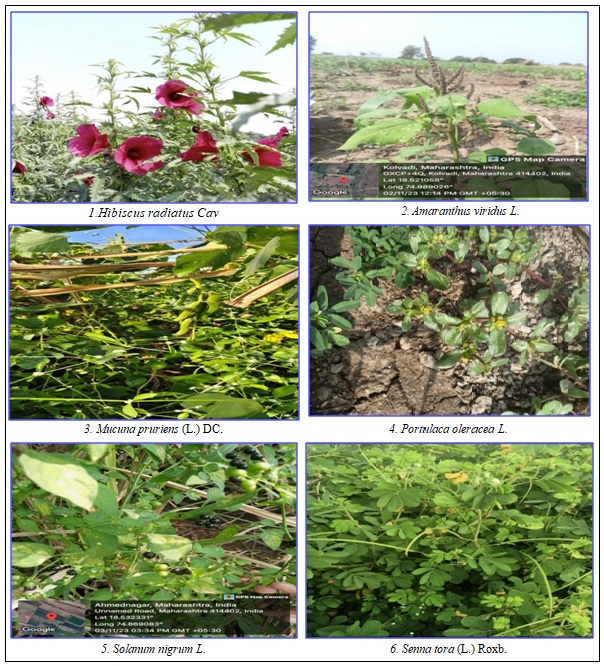
FIG. 1: PHOTOGRAPHS OF WILD PLANTS FROM KARJAT
CONCLUSION: The wild flora is abundantly found during the rainy season and is considered nutritionally rich vegetable. The case study from Karjat Tehsil during the year 2023-24 revealed that a total of 11 wild plants were identified , recorded as local vegetables during the study which are popular, easily available, seasonal and cheap. They are delicacies due to their nutritional and medicinal properties contributed to their phytochemical content including flavonoids, phenols, glycosides, antioxidants, minerals and vitamins. These qualities make the wild vegetables as preferential and good substitutes to commercially available hybrid vegetables mostly during rainy seasons. The aim of the present study is to create awareness and popularize the wild vegetables among people regarding their nutritional benefits.
ACKNOWLEDGEMENTS: Nil
CONFLICTS OF INTEREST: Nil
REFERENCES:
- Bayang JP, Laya A, Kolla MC and Koubala BB: Variation of physical properties, nutritional value and bioactive nutrients in dry and fresh wild edible fruits of twenty-three species from Far North region of Cameroon. J Agric Food Res 2021; 4: 1-10.
- Faruq O, Rahim A and Ghosh GP: Phytochemicals screening, nutritional assessment and antioxidant activities of viridis L. and A. spinosus L. leaves : A comparative study. J Agric Food Res 2024; 18(2): 101341. 1-11.
- Jadhav GS, Bagwan RA, Sati SI and Shahbandar RW: Phytochemical Analysis of Some Wild Edible Fruits. International Journal of Advanced Research in Science, Communication and Technology May 2024; 4(8): 39-44.
- Kissanga R, Sales J and Moldão M: Nutritional and Functional Properties of Wild Leafy Vegetables for Improving Food Security in Southern Angola. Front Sustain. Food Syst 2021; 5: 1-13.
- K PV and M: Phytochemical Screening of Selected Vegetables from Akola District. Iconic Res Eng Journals. 2018; 1(10): 80-86.
- Sachin K and RD S: Wild Edible Plants Used By Kokni Tribe of Nasik District, Maharashtra. J Glob Biosci 2019; 8(2): 5936-5945.
- Seal T: Nutritional evaluation of some wild edible plants of Meghalaya State in India and their ethnobotanical importance. J Chem Pharm Res 2015; 7(3): 2296-2301.
- Supriya Gawade and Sangita Kulkarni: Nutritional Prospecting of Wild Edible Vegetables-A Review International Journal of Research and Analytical Reviews July 2024; 3(11): 2349-5138.
- Supriya Gawade and Sangita Kulkarni: Ethnobotanical Studies on Wild Vegetables from Karjat Tehsil, Ahmednagar, M.S., India Eco Env & Cons 2025; 98-103. ISSN 0971–765X.
- Unuofin JO, Otunola GA and Afolayan AJ: Nutritional evaluation of Kedrostis africana (L.) Cogn: An edible wild plant of South Africa. APJTB 2017; 7(5): 443-449.
How to cite this article:
Gawade S and Kulkarni S: Role of wild vegetables in nutritional enrichment: a comprehensive review with special reference to karjat tehsil. Int J Pharm Sci & Res 2026; 17(8): 2360-64. doi: 10.13040/IJPSR.0975-8232.17(8).2360-64.
All © 2026 are reserved by International Journal of Pharmaceutical Sciences and Research. This Journal licensed under a Creative Commons Attribution-NonCommercial-ShareAlike 3.0 Unported License.
Article Information
10
2360-2364
1177 KB
313
English
IJPSR
Supriya Gawade * and Sangita Kulkarni
Department of Botany, Dada Patil Mahavidyalaya, Karjat, Ahilyanagar, Maharashtra, India.
Supugawade12@gmail.com
10 March 2026
18 April 2026
23 April 2026
10.13040/IJPSR.0975-8232.17(8).2360-64
01 August 2026
 Download