




STANDARDIZATION OF SIDDHA POLY HERBAL FORMULATION VILVATHY LEGIUM
HTML Full TextSTANDARDIZATION OF SIDDHA POLY HERBAL FORMULATION VILVATHY LEGIUM
A. Divya *, V. Priyadharshini, P. Arul Mozhi and M. Meenakshisundaram
Department of Kuzhandhai Maruthuvam, National Institute of Siddha, The Tamil Nadu Dr. M.G.R Medical University, Chennai, Tamil Nadu, India.
ABSTRACT: The standardization of Siddha formulations is a critical step for establishing consistent chemical profiles and ensuring quality control in the commercial manufacturing of herbal drugs. Vilvathy Legium is a Siddha polyherbal formulation in the Siddha Sastric textbook, Athmarakshamirtham Ennum Vaidhiya Sarasangiragam, authored by Kandhasamy Mudhaliyar and indicated for conditions such as gastrointestinal disorders and respiratory tract diseases. To ensure safety and therapeutic efficacy, the current study aimed to standardize Vilvathy Legium according to PLIM guidelines through organoleptic evaluation, physicochemical analysis, and safety testing. Safety assessments confirmed that heavy metals (Pb, Hg, As, Cd), microbial loads, and mycotoxins were well within permissible limits, while all targeted pesticide residues were below the limit of quantification. Preliminary HPTLC fingerprinting at 254 nm, 366 nm, and 580 nm identified distinct chemical peaks for phenolics, flavonoids, and saponins. This study provides quality-indicating physiochemical and chemical fingerprints necessary for the routine quality assurance of Vilvathy Legium.
Keywords: Vilvathy Legium, Standardization, Siddha medicine, HPTLC fingerprint
INTRODUCTION: The Siddha System of Medicine is one of the oldest traditional healthcare systems in the world, originating from the ancient Tamil civilization of South India. The global resurgence of herbal medicine has sparked a renewed interest in the Siddha system of medicine and is now seeing large-scale commercial production. However, one of the impediments in the acceptance of the ancient systems of medicine preparation is the lack of standard quality control profiles 1. Because Siddha pharmacology relies on a diverse range of herbal, mineral, and metallic preparations, the high demand for raw plant materials has led to frequent issues with adulteration.
Establishing standard quality management guidelines is therefore critical; it ensures the safety, purity, and reproducibility of formulations. In Siddha system medicines are categorized into 32 internal and 32 external types. One notable internal medicine preparation is Legium, a semisolid medicinal paste created by blending powdered herbs with honey, ghee, or jaggery to enhance both its shelf life and therapeutic delivery 2.
Vilvathy legium is one of the herbal preparation mentioned in the Classic Siddha Sastric text book, Athmarakshamirtham Ennum Vaidhiya Sarasangiragam, Authored by Kandhasamy Mudhaliyar. Vilvathy legium is indicated for Vayitru vali (abdominal discomfort), Kunmam (gastric ulcer), Neerettram (sinusitis), Irumal (cough), Eelai (expectorant/asthma), Kaasam (respiratory tract diseases), Nenjerivu (dyspepsia), Vaayukirani (intestinal malabsorption), Athisaaram (diarrhea), Pithakaasam (bilious cough), Thegakanthal (burning sensation of thebody), Vikkal (hiccups), Vishapandu (anemia), Uppisam (abdominal bloating), Vayitruulaichal (intestinal griping pain), Vaanthi (vomiting), Pitham (biliousness), and Malakattu (constipation) 3 in a dosage of Kottaipakkalvu which is 10 to 12 gram 4. The plants Milagu (Piper nigrum), Sevviyam (Piper nigrum root), and Thippili (Piper longum) hold a major part in medicinal preparation of Vilvathy legium. These herbs are characterized by the presence of alkaloids (specifically piperine), steroids, sugars, phenolics, flavonoids, saponins, and tannins 5, 6. They are collectively recognized as potent rejuvenating (Karpam) drugs, they work synergistically to enhance bioavailability, strengthen the digestive system, and clear the respiratory tract.
In recent years, the global demand for Siddha formulations has grown significantly. This surge in interest has brought the commercial manufacture of Siddha medicines into the spotlight both in domestic and international markets. To ensure widespread acceptance, it is imperative to establish rigorous standards for quality control and safety. The aim of this study is to analyse Vilvathy Legium according to PLIM (Pharmacopeial Laboratory of Indian Medicine) guidelines through detailed physicochemical analysis, Test for microbes, Test for heavy metals, Test for pesticides as well as High-Performance Thin Layer Chromatography (HPTLC) 7. By establishing these parameters, this study aims to create a comprehensive fingerprint for Vilvathy Legium, providing a vital reference for future research and quality assurance.
MATERIALS AND METHODS:
Raw Drugs: All the ingredients of Vilvathy legium were purchased from reputed local raw drug supplier shop and authenticated by the Medicinal Botanist of National Institute of Siddha, Tambaram Sanatorium, Chennai.
Preparation of Vilvathy legium: Purification of raw drugs 8, 9 and preparation of Vilvathy Legium was done at the Department of Gunapadam [Pharmaceutical Laboratory], National Institute of Siddha, Chennai. Purification of raw drugs was done as mentioned in Table 1. Following the purification of raw drugs and the test drug Vilvathy legium was prepared with the ingredients in the ratio as mentioned in Table 2. Following purification, 87.5 grams of Vilvaver was crushed and placed in a pot filled with Thoonineer (10.75 litre), then boiled to create a 1/4-part decoction, which is subsequently filtered. To this decoction, 3 palam (105g) of sugar is added and mixed thoroughly. Then, finely ground Elam, Ilavanagam, Chukku, Sirunagapoo, Thalisapathiri, Milagu, Sevviyam, Thippili, Sathipathiri, Kirambu powders are incorporated. Then finally, 1/16 padi (81.25ml) of cow's ghee is introduced and thoroughly stirred, then 1/16 padi (81.25ml) of honey is added and thoroughly stirred until the concentrated herbal mass becoming completely non-sticky to the touch when rolled firmly between the fingers. The finished Legium is stored in a clean, air-tight glass container to maintain its quality and efficacy.
The preparation was carried out in using a precise half-measure scale of the formulation's baseline criteria as per reference textbook, yielding an initial raw drug batch size of 1005 g of dry ingredients (comprising 87.5 g Vilvaver root, 162.5 g Milagu, 162.5 g Sevviyam, 162.5 g Thippili, 17.5 g each of Elam, Ilavangam, Chukku, Sirunagapoo, and Thalisapathiri, 8.75 g each of Saathipathiri and Kirambu, and 105 g of Sarkarai sugar) along with 81.25 ml of cow’s ghee and 81.25 ml of honey and the final yield of Vilvathy legium obtained was 1100grams.
To ensure reproducible batch processing in a modern pharmaceutical setting, classical Siddha units were converted to metric units in strict accordance with the standards of the Siddha Pharmacopoeia of India (SPI) and the standard metrics outlined in the authoritative text Siddha Marunthakaviyal Vidhigalum Seimuraigalum by Dr. I. Swarnamariammal (Published by the Department of Indian Medicine and Homeopathy, Chennai, p. 173).
TABLE 1: PURIFICATION OF RAW DRUGS
| S. no. | Raw drug name | Botanical name | Purification process |
| 1 | Vilvam | Aegle marmelos | Washed in fresh water and dried in Sunlight |
| 2 | Milagu | Piper nigrum | Soaked in buttermilk for 3 hours and dried |
| 3 | Sevviyam | Piper nigrum | The outer layer is removed and made into small pieces and dried under sunlight |
| 4 | Thippili | Piper longum | Soaked in lemon juice and dried |
| 5 | Elam | Elettaria cardamomum | Cleaned and dried under sunlight |
| 6 | Ilavangam | Cinnamomum verum | Dried under sunlight |
| 7 | Chukku | Zingiber officinale | Soaked in Sunna neer and dried |
| 8 | Sirunagapoo | Cinnamomum wightii | Cleaned and dried under sunlight |
| 9 | Thalisapathiri | Abies webbiana | Cleaned and dried under sunlight |
| 10 | Saathipathiri | Myristica fragrans | Cleaned and dried under sunlight |
| 11 | Kirambu | Syzygium aromaticum | Cleaned and dried under sunlight |
TABLE 2: INGREDIENTS OF THE VILVATHY LEGIUM
| S. no. | Raw drug name | Botanical name | Part used | Quantity |
| 1 | Vilvam | Aegle marmelos | Root | 175g |
| 2 | Milagu | Piper nigrum | Fruit | 325g |
| 3 | Sevviyam | Piper nigrum | Root | 325g |
| 4 | Thippili | Piper longum | Fruit | 325g |
| 5 | Elam | Elettaria cardamomum | Fruit | 35g |
| 6 | Ilavangam | Cinnamomum verum | Bark | 35g |
| 7 | Chukku | Zingiber officinale | Dried Rhizome | 35g |
| 8 | Sirunagapoo | Cinnamomum wightii | Flower | 35g |
| 9 | Thalisapathiri | Abies webbiana | Leaf | 35g |
| 10 | Saathipathiri | Myristica fragrans | Aril | 17.5g |
| 11 | Kirambu | Syzygium aromaticum | Flower bud | 17.5g |
| 12 | Sarkarai | Saccharum officinarum | Crystallized stem juice | 210g |
| 13 | Cow’s ghee | 162.5 ml | ||
| 14 | Honey | 162.5 ml |
Quality Evaluation and Standardization Procedures: Standardization is a tool in the quality control process. As a preliminary work, the parameters mentioned in the Pharmacopeial Laboratory of Indian Medicine for Ilagam (Confectionary/ Semi solid) were studied 7. All the following studies were accomplished at Interstellar testing Centre Pvt Limited, Haryana.
Physiochemical Analysis of Vilvathy Legium 7:
Organoleptic Characters of Vilvathy Legium: Colour, Odour, and Texture were noted. Organoleptic evaluation of Vilvathy legium was carried out using standard techniques.
Loss on Drying: A sample of the test drug was accurately weighed into an evaporating dish. The sample was subsequently dried at 105ºC for 5 hours and then re-weighed to determine the loss on drying.
Determination of Total Ash: The test drug was accurately weighed into a silica dish and incinerated in a furnace at 400°C. The process was continued until the residue turned white, indicating the complete absence of carbon. The percentage of total ash was calculated with reference to the weight of the air-dried drug.
Determination of Acid Insoluble Ash: The ash obtained from the total ash determination was boiled with 25 ml of dilute hydrochloric acid for 6 minutes. The resulting insoluble matter was collected in a crucible, washed with hot water, and ignited to constant weight. The percentage of acid-insoluble ash was then calculated.
Determination of Alcohol Soluble Extractive: The test sample was macerated with 100 ml of alcohol in a closed flask for 24 hours. The mixture was shaken frequently during the first 6 hours and allowed to stand for the remaining 18 hours. After maceration, the solution was filtered rapidly to prevent solvent loss. A 25 mL portion of the filtrate was evaporated to dryness in a tared, flat-bottomed dish and dried at 105°C to a constant weight. Finally, the percentage of alcohol-soluble extractive was calculated based on the weight of the air-dried drug.
Determination of Water-Soluble Extractive: The test sample was macerated with 100 ml of chloroform water in a closed flask for 24 hours. The mixture was shaken frequently during the first 6 hours and then allowed to stand for the following 18 hours.
The solution was filtered rapidly, taking care to prevent the loss of solvent. A 25 ml aliquot of the filtrate was evaporated to dryness in a tared, flat-bottomed shallow dish and dried at 105°C to a constant weight. The percentage of water-soluble extractive was calculated based on the weight of the air-dried drug.
Determination of pH: One gram of the test drug was transferred into a 100 ml graduated cylinder containing approximately 50 ml of water. The cylinder was shaken vigorously for two minutes, and the resulting suspension was allowed to settle for one hour at a temperature between 25°C and 27°C. Subsequently, 25 ml of the clear aqueous supernatant was transferred into a 50 mL beaker, and the pH was measured using a digital pH meter.
Test for Heavy Metal 7: The heavy metal analysis for the test sample was conducted using Inductively Coupled Plasma Mass Spectrometry (ICPMS). This assessment evaluated the concentration of four specific toxic metals: Arsenic (As), Cadmium (Cd), Lead (Pb), and Mercury (Hg). The sample is digested using 1mol/L HCl for determination of arsenic and mercury. Similarly, for the determination of lead and cadmium the sample was digested with 1 mol/L of HNO3. This process mineralizes the organic matrix, ensuring the metals are fully extracted into a liquid state for analysis. The resulting solution is then introduced into the Inductively Coupled Plasma Mass Spectrometry (ICPMS) for high-precision quantification.
Test for Specific Pathogen 7: Testing for specified pathogens (Escherichia coli, Salmonella spp., Staphylococcus aureus, and Pseudomonas aeruginosa) was performed in accordance with PLIM and WHO guidelines. A 1:10 sample dilution was prepared using Buffered Peptone Water. For selective enrichment, homogenates were inoculated into Rappaport-Vassiliadis Broth (Salmonella spp.), MacConkey Broth (E. coli), and Fluid Soybean-Casein Digest Medium (S. aureus and P. aeruginosa), followed by incubation at target temperatures (35°C; 43–45°C for E. coli).
Enriched cultures were sub-cultured onto diagnostic selective agars: Xylose Lysine Deoxycholate (XLD) for Salmonella spp., MacConkey for E. coli, Baird-Parker for S. aureus, and Cetrimide for P. aeruginosa. To prevent false positives from visual inspection alone, suspected colonies underwent mandatory biochemical validation: Triple Sugar Iron and Urea tests (Salmonella spp.), the IMViC test battery (E. coli), Gram staining and Coagulase tests (S. aureus), and Oxidase testing (P. aeruginosa).
Test for Total Viable Aerobic Count 7: The Total Viable Aerobic Count was determined using the Plate Count Method. The procedure involved the serial dilution of the sample and subsequent inoculation into a nutrient agar medium using the pour plate method, with the plates incubated at 37°C for 24 to 72 hours.
Test for Aflatoxin (B1, B2, G1, G2) 7: A standard aflatoxin solution was applied to the surface of a pre-coated TLC plate in volumes of2.5 μL, 5 μL, 7.5 μL, and 10 μL. The test sample was also applied to the plate. After allowing the spots to dry, the chromatogram was developed in an unsaturated chamber containing a solvent mixture of chloroform, acetone, and isopropyl alcohol (85:10:5), until the solvent front had moved at least 15 cm from the origin. Once the plate was removed from the chamber, the solvent front was marked, and the plate was left to air dry. The spots were then located by examining the plate under UV light at 365 nm.
Test for Pesticides Residues 7: The chromatographic screening program encompassed a comprehensive multi-residue analysis covering all target organochlorine, organophosphorus, and pyrethroid pesticide classes specified under regional regulatory frameworks. Quantitation was executed against multi-component reference standards to verify absolute baseline safety boundaries across all listed analytes.
High Performance Thin Layer Chromatography Analysis 7:
Sample Preparation for HPTLC Fingerprinting: A test drug quantity of 1.082 g was dissolved and diluted in methanol to reach a final volume of 10.00 ml. This specific preparation created a standardized liquid extract suitable for chromatography. Once the solution was ready, it was loaded into a Linomat 5 applicator, which precisely deposited a 10.0 µl volume onto the HPTLC plate at a dosage speed of 150nL/s. This process ensures that the chemical constituents of the Vilvathy legium are properly extracted and concentrated enough to produce a clear "fingerprint" across the various scanning wavelengths.
HPTLC Chromatogram Preparation: The chromatographic identification of the test drug sample is conducted using a specific combination of stationary and mobile phases to separate its herbal constituents. The stationary phase consists of Merck HPTLC Silica gel 60 F254 on a plate format of 50x100 mm. The mobile phase is a solvent mixture of Toluene: Ethyl acetate: Formic acid in a volume ratio of 5:4:1. The process begins with chamber saturation, a critical preparation step where the developing tank is lined with a saturation pad and filled with the mobile phase a mixture of Toluene, Ethyl acetate, and Formic acid (5:4:1) for 20 minutes. This ensures the air inside the tank is filled with solvent vapours, preventing the liquid from evaporating off the plate during the test and ensuring the herbal constituents migrate in straight, consistent lines. Once the environment is stabilized, the Merck HPTLC Silica gel 60 F254 plate (50 x 100 mm) is placed inside, and the solvent is allowed to travel up the silica "track" to a distance of 70 mm. After development, the plate is dried at room temperature for 5 minutes and scanned at wavelengths of 254 nm, 366 nm, and 580 nm to detect the unique chemical peaks that serve as the fingerprint for the test drug.
Chromatogram Scanning: After the plate is developed and dried, the final stage is the measurement and documentation of the chemical fingerprint through instrumental scanning. Using a TLC Scanner 4, the sample is analysed at three distinct wavelengths to capture a complete profile of its herbal constituents: 254 nm (Deuterium lamp) for absorbance, 366 nm (Mercury lamp) for fluorescence, and 580 nm (Tungsten lamp) for visible light detection following post-chromatographic derivatization by spraying uniformly with Vanillin-Sulfuric Acid reagent and heating at 105°C."During this process, the scanner moves across the plate at a speed of 20 mm/s with a data resolution of 100μm/step, converting the physical spots on the silica gel into electronic peaks on a chromatogram. These scans allow analysts to see compounds that are otherwise invisible to the naked eye, measuring the intensity (AU) and position (Rf) of each substance to confirm the identity. Given the qualitative scope of this baseline profiling, the analysis was executed without isolated reference standards, serving as a preliminary baseline chromatographic fingerprint.
RESULTS AND DISCUSSION: In the physicochemical testing, the test drug Vilvathy legium was characterized as a dark brown coloured semi-solid mass. The analysis revealed a Loss on Drying at 105°C of 52.19% w/w. This notably high value indicates a high moisture footprint within the formulation matrix. While a high moisture level is common in traditional legium due to the inclusion of liquid decoctions, honey, and ghee, it raises significant considerations regarding long-term storage stability and susceptibility to micro-environmental spoilage. High water availability typically drives enzymatic hydrolysis and chemical degradation of volatile bioactive compounds. Although this is structurally co-balanced by a Total Solid Content of 47.81% w/w which establishes a dense, concentrated herbal matrix supporting dosage standardization the elevated moisture baseline remains a critical variable for shelf-life management.
The total ash of 1.32% by mass and low acid insoluble ash of 0.88% w/w, a significant finding that indicates a high degree of purity and the absence of extraneous inorganic matter like sand or soil. Solubility markers for Vilvathy legium, including water soluble extractive (15.30% w/w) and alcohol soluble extractive (12.79% w/w), signify the concentration of active polar and non-polar constituents available for therapeutic action. Polar constituents found in the water extract typically include tannins, glycosides, and mucilage, which contribute to the drug's bioactivity. Conversely, the alcohol extract indicates the presence of non-polar compounds such as alkaloids, resins, and steroids. These markers together ensure that the formulation contains medicinal efficacy.
A pH of 5.03 and total acidity of 0.39 signify a slightly acidic environment, which is vital for maintaining the stability of herbal active ingredients and preventing the degradation of sensitive phytochemicals. The quantification of total sugar (11.66% w/w) and reducing sugar (4.41% w/w) in Vilvathy legium serves as a vital chemical fingerprint for the traditional formulation. These sugars are significant as they act as natural preservatives by reducing water activity, which helps prevent microbial spoilage in the high-moisture semi-solid mass.
The results for the microbiological and mycotoxin analysis, as detailed in Table 6, demonstrate that the sample is in full compliance with safety requirements. All tested pathogens, including Escherichia coli, Salmonella species, Staphylococcus aureus, and Pseudomonas aeruginosa, were found to be absent, indicating high standards of hygiene and the absence of infectious agents.
The microbial safety evaluation revealed a Total Viable Aerobic Count of 60,000 CFU/g. While this complies with the maximum permissible limits (100,000 CFU/g) stipulated by PLIM and WHO guidelines, it represents a substantial baseline bioburden that warrants cautious interpretation given the formulation's high moisture profile (52.19% w/w). This elevated baseline creates a potential vulnerability to microbial proliferation and secondary fermentation during storage. Consequently, it should not be treated as an unqualified confirmation of long-term safety. To preserve product integrity, strict post-manufacturing controls are essential; the formulation requires packaging in airtight glass or high-density polyethylene (HDPE) containers to prevent ambient moisture absorption, alongside storage in cool, dry conditions.
Furthermore, the Total Yeast and Mould Count was exceptionally low at less than 10 cfu/g, far below the threshold of 1,000 cfu/g, suggesting excellent environmental control against fungal spoilage. Finally, the concentration of total aflatoxins (B1, B2, G1, and G2) was determined to be below the limit of quantitation (BLQ), staying safely beneath the maximum requirement of 2.0. Collectively, these findings confirm that the sample meets the necessary safety specifications for consumer use. Safety evaluation revealed that Lead (Pb), Cadmium (Cd), Mercury (Hg), and Arsenic (As) were within the maximum permissible limits stipulated by PLIM and WHO guidelines. Specifically, while the detected concentration of Lead complied with regulatory thresholds, its presence is not entirely negligible. Because heavy metals can exhibit cumulative biological profiles over prolonged therapeutic windows, these results confirm that this specific batch strictly complies with the tested regulatory safety limits rather than establishing an absolute absence of toxicological risk. Continuous monitoring across manufacturing batches remains imperative to ensure uniform quality control
The analysis for pesticide residues confirms that the sample is highly compliant with established safety standards. All eleven targeted pesticide parameters yielded results that are Below the Limit of Quantification (BLQ).This consistent lack of detectable chemical contaminants across all tested variables demonstrates that the product is safe from pesticide-related hazards.
The HPTLC chemical fingerprint of Vilvathy Legium provides a characteristic visual map for baseline identification and quality control. Because this profiling was executed without isolated pure reference standards, the chromatogram is presented as a preliminary qualitative fingerprint rather than a fully validated quantitative standard. Under short-wave UV light at 254 nm, the sample shows a complex profile consisting of 10 to 11 distinct peaks.
This wavelength highlighted a dominant UV-absorbing marker at an Rf value of approximately 0.677, which made up 32.48% to 36.67% of the total area; this absorption band is characteristically associated with UV-absorbing phytochemical classes, such as phenolics and flavonoids. When analyzed under long-wave fluorescence at 366 nm, the pattern remained highly consistent, showing 9 to 11 peaks. The primary fluorescent peak appeared at Rf0.682–0.685 and accounted for 23.25% to 26.05% of the total area, which characteristically aligns with naturally fluorescent fractions like coumarins or alkaloids under long-wave UV light.
Following post-chromatographic chemical derivatization with Vanillin-Sulfuric Acid reagent, scanning under visible light at 580 nm simplified the fingerprint down to 6 distinct peaks.
At this wavelength, a single major component stands out near the start of the run at Rf 0.027–0.029, representing nearly 50% of the total area. This peak is tentatively suggestive of constituents like saponins or terpenoids that typically require a chemical spray reagent to react and become visible in the spectrum.
Without co-chromatography alongside pure reference standards, these broad constituent-class assignments remain tentative structural indications based on literature characteristics rather than definitive structural identifications.
However, the high degree of correlation between the two sample tracks across all scanned wavelengths demonstrates excellent operational repeatability,
TABLE 3: ORGANOLEPTIC CHARACTERS OF TEST DRUG
| Parameter | Result | Method |
| Colour | Dark brown | Visual Examination |
| Odour | Characteristic | Organoleptic |
| Consistency | Semi solid mass | Chemically/In house |
TABLE 4: PHYSIOCHEMICAL ANALYSIS OF TEST DRUG
| Parameter | Result (with Unit) |
| Loss on drying at 105 degrees Celsius | 52.19% w/w |
| Total ash | 1.32% By Mass |
| Acid insoluble ash | 0.88% w/w |
| Alcohol Soluble Extractive | 12.79% w/w |
| Water Soluble Extractive | 15.30% w/w |
| pH (10% w/v solution) | 5.03 |
| Total Solid content | 47.81% w/w |
| Reducing Sugar | 4.41% w/w |
| Total Sugar | 11.66% w/w |
TABLE 5: HEAVY METAL ANALYSIS OF TEST DRUG
| Heavy Metal | Requirement (Max. Limit) | Result | Status |
| Arsenic (As) | Max. 3ppm | 0.34 ppm | Within limit |
| Cadmium (Cd) | Max. 0.3ppm | BLQ (LOQ: 0.10 ppm) | Within limit |
| Lead (Pb) | Max. 10 ppm | 4.51 ppm | Within limit |
| Mercury (Hg) | Max. 1 ppm | 0.18 ppm | Within limit |
TABLE 6: TEST FOR PATHOGENS, MICROBIAL LOAD AND MYCOTOXINS
| Category | Parameter | Requirement (Max/Limit) | Result |
| Pathogens | Escherichia coli | Absent | Absent |
| Salmonella species | Absent | Absent | |
| Staphylococcus aureus | Absent | Absent | |
| Pseudomonas aeruginosa | Absent | Absent | |
| Microbial Load | Total Viable Aerobic Count | NMT 100,000 | 60,000 cfu/g |
| Total Yeast and Mould Count | NMT 1,000 | <10 cfu/g | |
| Mycotoxins | Aflatoxin (B1+B2+G1+G2) | Max. 2.0 | BLQ (LOQ: 1.0) |
TABLE 7: TEST FOR PESTICIDE RESIDUES
| Parameter | Limit (Max ppm) | Result |
| Azinphos-methyl | 1.0 | BLQ (LOQ: 0.01) |
| Chlorfenvinphos | 0.5 | BLQ (LOQ: 0.01) |
| Chlorpyriphos | 0.2 | BLQ (LOQ: 0.01) |
| Chlorpyrifos-methyl | 0.1 | BLQ (LOQ: 0.01) |
| Diazinon | 0.5 | BLQ (LOQ: 0.01) |
| Dichlorvos | 1.0 | BLQ (LOQ: 0.01) |
| Ethion | 2.0 | BLQ (LOQ: 0.01) |
| Fenitrothion | 0.5 | BLQ (LOQ: 0.01) |
| Malathion | 1.0 | BLQ (LOQ: 0.01) |
| Parathion | 0.5 | BLQ (LOQ: 0.01) |
| Parathion-methyl | 0.2 | BLQ (LOQ: 0.01) |
| BLQ: Below Limit of Quantification, LOQ: Limit of Quantification |
TABLE 8: HPTLC CHROMATOGRAPHIC FINGERPRINT PROFILE UNDER ULTRAVIOLET LIGHT AT 254 NM ON TRACK 1
| Peak # | Start Rf | Start H | Max Rf | Max H | Max % | End Rf | End H | Area A | Area % | Manual Peak |
| 1 | 0.015 | 0.0000 | 0.056 | 0.5886 | 34.14 | 0.079 | 0.1362 | 0.01317 | 20.05 | No |
| 2 | 0.155 | 0.0308 | 0.171 | 0.0493 | 2.86 | 0.216 | 0.0057 | 0.00156 | 2.38 | No |
| 3 | 0.252 | 0.0086 | 0.279 | 0.0304 | 1.76 | 0.305 | 0.0055 | 0.00091 | 1.39 | No |
| 4 | 0.305 | 0.0055 | 0.321 | 0.0211 | 1.23 | 0.335 | 0.0000 | 0.00034 | 0.52 | No |
| 5 | 0.335 | 0.0000 | 0.368 | 0.0461 | 2.67 | 0.402 | 0.0055 | 0.00149 | 2.26 | No |
| 6 | 0.402 | 0.0055 | 0.434 | 0.0422 | 2.45 | 0.481 | 0.0043 | 0.00175 | 2.66 | No |
| 7 | 0.516 | 0.0004 | 0.553 | 0.0222 | 1.29 | 0.590 | 0.0000 | 0.00085 | 1.29 | No |
| 8 | 0.615 | 0.0150 | 0.677 | 0.4532 | 26.29 | 0.729 | 0.0771 | 0.02408 | 36.67 | No |
| 9 | 0.731 | 0.0769 | 0.752 | 0.0980 | 5.68 | 0.803 | 0.0341 | 0.00483 | 7.36 | No |
| 10 | 0.834 | 0.0367 | 0.874 | 0.2404 | 13.94 | 0.935 | 0.0044 | 0.01200 | 18.27 | No |
| 11 | 0.937 | 0.0038 | 0.973 | 0.1325 | 7.68 | 1.000 | 0.0003 | 0.00468 | 7.13 | No |
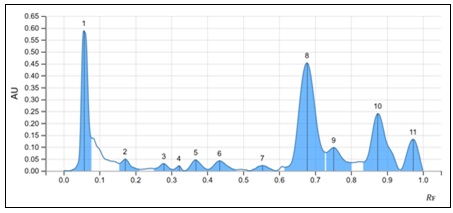
FIG. 1: HPTLC CHROMATOGRAPHIC FINGERPRINT PEAK PROFILE AT 254 NM ON TRACK 1
TABLE 9: HPTLC CHROMATOGRAPHIC FINGERPRINT PROFILE UNDER ULTRAVIOLET LIGHT AT 254 NM ON TRACK 2
| Peak # | Start RF | Start H | Max RF | Max H | Max % | End RF | End H | Area A | Area % | Manual Peak |
| 1 | 0.013 | 0.0000 | 0.053 | 0.5796 | 34.69 | 0.135 | 0.0266 | 0.01718 | 24.28 | No |
| 2 | 0.155 | 0.0183 | 0.174 | 0.0403 | 2.41 | 0.211 | 0.0018 | 0.00112 | 1.58 | No |
| 3 | 0.247 | 0.0043 | 0.279 | 0.0249 | 1.49 | 0.305 | 0.0025 | 0.00075 | 1.05 | No |
| 4 | 0.342 | 0.0000 | 0.373 | 0.0403 | 2.41 | 0.400 | 0.0048 | 0.00119 | 1.68 | No |
| 5 | 0.413 | 0.0074 | 0.439 | 0.0381 | 2.28 | 0.498 | 0.0015 | 0.00160 | 2.27 | No |
| 6 | 0.518 | 0.0000 | 0.561 | 0.0288 | 1.72 | 0.598 | 0.0033 | 0.00114 | 1.61 | No |
| 7 | 0.598 | 0.0033 | 0.677 | 0.4308 | 25.78 | 0.727 | 0.0848 | 0.02298 | 32.48 | No |
| 8 | 0.727 | 0.0848 | 0.748 | 0.1083 | 6.48 | 0.792 | 0.0509 | 0.00534 | 7.55 | No |
| 9 | 0.806 | 0.0485 | 0.869 | 0.2412 | 14.43 | 0.932 | 0.0183 | 0.01408 | 19.90 | No |
| 10 | 0.932 | 0.0183 | 0.969 | 0.1387 | 8.30 | 1.000 | 0.0002 | 0.00538 | 7.60 | No |
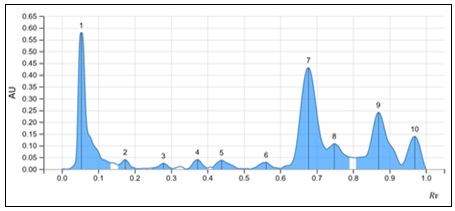
FIG. 2: HPTLC CHROMATOGRAPHIC FINGERPRINT PEAK PROFILE AT 254 NM ON TRACK 2
TABLE 10: HPTLC CHROMATOGRAPHIC FINGERPRINT PROFILE UNDER FLUORESCENCE LIGHTAT 366 NM ON TRACK 1
| Peak # | Start RF | Start H | Max RF | Max H | Max % | End RF | End H | Area A | Area % | Manual Peak |
| 1 | 0.000 | 0.0000 | 0.047 | 0.5486 | 27.89 | 0.094 | 0.0326 | 0.01173 | 17.28 | No |
| 2 | 0.113 | 0.0449 | 0.132 | 0.1305 | 6.63 | 0.155 | 0.0407 | 0.00320 | 4.71 | No |
| 3 | 0.184 | 0.0395 | 0.232 | 0.1311 | 6.67 | 0.252 | 0.0836 | 0.00540 | 7.95 | No |
| 4 | 0.252 | 0.0836 | 0.273 | 0.2238 | 11.38 | 0.298 | 0.0560 | 0.00649 | 9.56 | No |
| 5 | 0.298 | 0.0560 | 0.315 | 0.1133 | 5.76 | 0.326 | 0.0668 | 0.00224 | 3.29 | No |
| 6 | 0.326 | 0.0668 | 0.363 | 0.1847 | 9.39 | 0.403 | 0.0739 | 0.01006 | 14.82 | No |
| 7 | 0.403 | 0.0739 | 0.432 | 0.1150 | 5.85 | 0.463 | 0.0561 | 0.00552 | 8.13 | No |
| 8 | 0.463 | 0.0561 | 0.471 | 0.1486 | 7.55 | 0.489 | 0.0439 | 0.00205 | 3.02 | No |
| 9 | 0.655 | 0.2067 | 0.682 | 0.2603 | 13.23 | 0.735 | 0.0685 | 0.01578 | 23.25 | No |
| 10 | 0.737 | 0.0682 | 0.755 | 0.0900 | 4.57 | 0.808 | 0.0000 | 0.00398 | 5.87 | No |
| 11 | 0.808 | 0.0000 | 0.839 | 0.0212 | 1.08 | 0.906 | 0.0087 | 0.00142 | 2.10 | No |
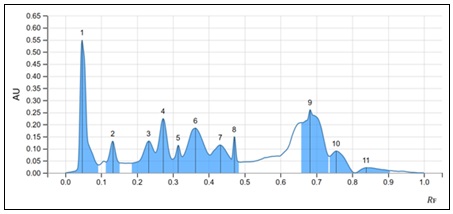
FIG. 3: HPTLC CHROMATOGRAPHIC FINGERPRINT PEAK PROFILE AT 366 NM ON TRACK 1
TABLE 11: HPTLC CHROMATOGRAPHIC FINGERPRINT PROFILE UNDER FLUORESCENCE LIGHTAT 366 NM ON TRACK 2
| Peak # | Start RF | Start H | Max RF | Max H | Max % | End RF | End H | Area A | Area % | Manual peak |
| 1 | 0.000 | 0.0000 | 0.037 | 0.5313 | 31.28 | 0.084 | 0.0327 | 0.01157 | 18.22 | No |
| 2 | 0.110 | 0.0402 | 0.131 | 0.1159 | 6.82 | 0.153 | 0.0392 | 0.00302 | 4.76 | No |
| 3 | 0.198 | 0.0441 | 0.234 | 0.1242 | 7.31 | 0.250 | 0.0906 | 0.00449 | 7.06 | No |
| 4 | 0.250 | 0.0906 | 0.271 | 0.2129 | 12.54 | 0.298 | 0.0544 | 0.00621 | 9.78 | No |
| 5 | 0.298 | 0.0544 | 0.316 | 0.0956 | 5.63 | 0.326 | 0.0681 | 0.00201 | 3.16 | No |
| 6 | 0.326 | 0.0681 | 0.360 | 0.1718 | 10.12 | 0.400 | 0.0779 | 0.00927 | 14.59 | No |
| 7 | 0.400 | 0.0779 | 0.427 | 0.1095 | 6.45 | 0.482 | 0.0432 | 0.00634 | 9.99 | No |
| 8 | 0.645 | 0.2085 | 0.685 | 0.2453 | 14.44 | 0.729 | 0.0751 | 0.01654 | 26.05 | No |
| 9 | 0.729 | 0.0751 | 0.747 | 0.0919 | 5.41 | 0.797 | 0.0000 | 0.00406 | 6.39 | No |
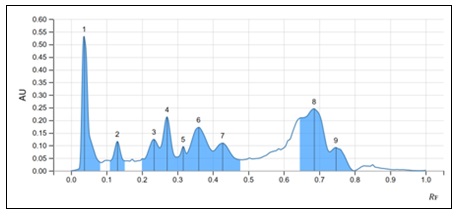
FIG. 4: HPTLC CHROMATOGRAPHIC FINGERPRINT PEAK PROFILE AT 366 NM ON TRACK 2
TABLE 12: HPTLC CHROMATOGRAPHIC FINGERPRINT PROFILE UNDER VISIBLE LIGHT SCANAT 580NM ON TRACK 1
| Peak # | Start RF | Start H | Max RF | Max H | Max % | End RF | End H | Area A | Area % | Manual peak |
| 1 | 0.000 | 0.0000 | 0.029 | 0.5588 | 49.02 | 0.158 | 0.0000 | 0.02392 | 41.80 | No |
| 2 | 0.318 | 0.0057 | 0.347 | 0.0659 | 5.78 | 0.384 | 0.0016 | 0.00213 | 3.73 | No |
| 3 | 0.385 | 0.0016 | 0.424 | 0.0433 | 3.80 | 0.460 | 0.0000 | 0.00150 | 2.62 | No |
| 4 | 0.547 | 0.0000 | 0.661 | 0.2895 | 25.40 | 0.716 | 0.0496 | 0.02052 | 35.87 | No |
| 5 | 0.716 | 0.0496 | 0.735 | 0.0643 | 5.64 | 0.816 | 0.0000 | 0.00316 | 5.52 | No |
| 6 | 0.818 | 0.0000 | 0.879 | 0.1182 | 10.36 | 0.939 | 0.0000 | 0.00598 | 10.46 | No |
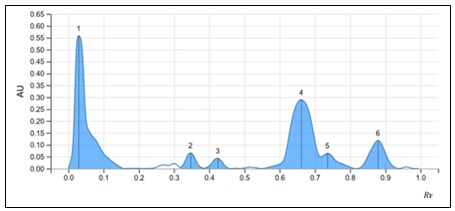
FIG. 5: HPTLC CHROMATOGRAPHIC FINGERPRINT PEAK PROFILE AT 580 NM ON TRACK 1
TABLE 13: HPTLC CHROMATOGRAPHIC FINGERPRINT PROFILE UNDER VISIBLE LIGHT SCANAT 580NM ON TRACK 2
| Peak # | Start RF | Start H | Max RF | Max H | Max % | End RF | End H | Area A | Area % | Manual Peak |
| 1 | 0.000 | 0.0000 | 0.027 | 0.5648 | 50.96 | 0.119 | 0.0000 | 0.02986 | 49.01 | No |
| 2 | 0.321 | 0.0100 | 0.348 | 0.0701 | 6.33 | 0.387 | 0.0002 | 0.00225 | 3.70 | No |
| 3 | 0.387 | 0.0002 | 0.423 | 0.0477 | 4.31 | 0.456 | 0.0000 | 0.00156 | 2.56 | No |
| 4 | 0.556 | 0.0063 | 0.656 | 0.2819 | 25.43 | 0.713 | 0.0560 | 0.02045 | 33.56 | No |
| 5 | 0.823 | 0.0000 | 0.876 | 0.1236 | 11.15 | 0.931 | 0.0089 | 0.00599 | 9.83 | No |
| 6 | 0.932 | 0.0087 | 0.961 | 0.0201 | 1.81 | 0.995 | 0.0010 | 0.00082 | 1.34 | No |
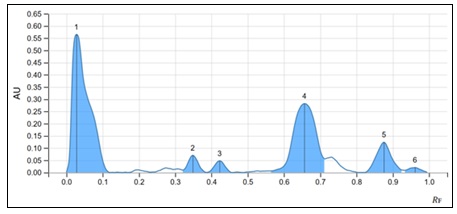
FIG. 6: HPTLC CHROMATOGRAPHIC FINGERPRINT PEAK PROFILE AT 580 NM ON TRACK 2
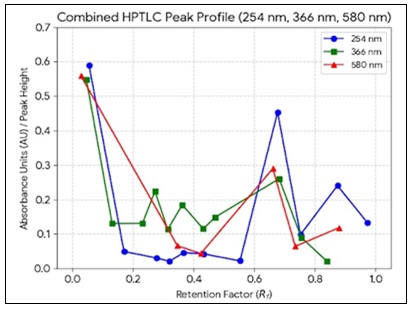
FIG. 7: COMBINED HPTLC PEAK PROFILE (254NM, 366NM, 580NM)
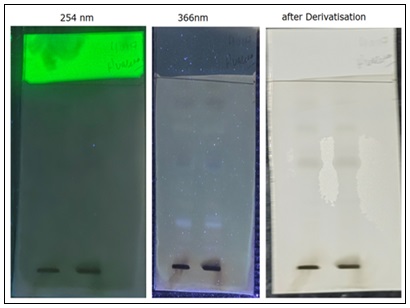
FIG. 8: HPTLC PEAK ANALYSIS AND CHROMATOGRAM VISUALIZATION
CONCLUSION: In conclusion, this study successfully establishes the first preliminary quality control and standardization baseline for Vilvathy Legium prepared on a precise laboratory scale. The formulation complies with all tested regulatory safety limits, demonstrating parameters within permissible microbial thresholds alongside conforming benchmarks for heavy metals, specific pathogens, mycotoxins, and pesticide residues.
While the detected heavy metal concentrations including Lead fully comply with established PLIM and WHO limits, their trace presence necessitates careful interpretation rather than broad assumptions of absolute safety. While the metrics defined here are bounded by a single-sample pilot design, the highly reproducible distribution of phytochemicals shown in the Preliminary HPTLC fingerprinting confirms a precise extraction process.
Ultimately, these baseline parameters provide an essential stepping stone for routine batch-to-batch quality checks, continuous toxicological monitoring, and future multi-batch industrial scale-up validation of this classical Siddha polyherbal matrix.
ACKNOWLEDGEMENT: The authors are sincerely grateful to the Director, HOD and all of the faculty members of the Department of Kuzhandhai Maruthuvam, National Institute of Siddha, Chennai for their guidance and support. We’d also like to Thank Interstellar testing Centre Pvt Limited, Haryana for their technical support.
Source of Support: The author(s) received no financial support for the research, authorship, and/or publication of this article.
CONFLICT OF INTEREST: The author(s) declared no potential conflicts of interest with respect to the research, authorship, and/or publication of this article.
REFERENCES:
- Bagul MS and Rajani M: Phytochemical evaluation of classical formulation–A case study. Indian Drugs 2005; 42(1): 15-19.
- Thiyagarajan R: Gunapadam Thathu Jeeva Vaguppu. Directorate of Indian Medicine and Homeopathy, Chennai, Ninth Edition 2014.
- Kandhasamy Mudhaliyar S: Athmarakshamirthamennum Vaidhiya Sarasangiragam. B. Rathina Nayakar & Sons, Chennai, Reprint Edition 2016.
- Swarnamariammal I: Siddha Marunthakaviyal Vidhigalum Seimuraigalum. Directorate of Indian Medicine and Homeopathy, Chennai, First Edition 2009.
- Ashokkumar K, Murugan M, Dhanya MK and Wany A: Phytochemistry and therapeutic potential of black pepper [Piper nigrum (L.)] essential oil and piperine: a review. Clinical Phytoscience 2021; 7(1): 52.
- Choudhary N and Singh V: A census of longum's phytochemicals and their network pharmacological evaluation for identifying novel drug-like molecules against various diseases, with a special focus on neurological disorders. PLoS One 2018; 13(1): e0191006.
- Lohar DR: Protocol for Testing of ASU Medicines. Pharmacopeial Laboratory for Indian Medicines, Ministry of AYUSH, Ghaziabad, 2007.
- Kannusamy Pillai S: Sigicha Rathna Deepamennum Vaidhiya Nool. B. Rathina Nayakar & Sons, Chennai, Reprint Edition 2007.
- Sarakku Sudhisei Muraikal. Directorate of Indian Medicine and Homeopathy, Chennai, First Edition 2008.
How to cite this article:
Divya A, Priyadharshini V, Arul Mozhi P and Meenakshisundaram M: Standardization of siddha poly herbal formulation Vilvathy legium. Int J Pharm Sci & Res 2026; 17(8): 2415-26. doi: 10.13040/IJPSR.0975-8232.17(8).2415-26.
All © 2026 are reserved by International Journal of Pharmaceutical Sciences and Research. This Journal licensed under a Creative Commons Attribution-NonCommercial-ShareAlike 3.0 Unported License.
Article Information
15
2415-2426
1123 KB
492
English
IJPSR
A. Divya *, V. Priyadharshini, P. Arul Mozhi and M. Meenakshisundaram
Department of Kuzhandhai Maruthuvam, National Institute of Siddha, The Tamil Nadu Dr. M.G.R Medical University, Chennai, Tamil Nadu, India.
divyabsms05@gmail.com
06 April 2026
04 June 2026
19 June 2026
10.13040/IJPSR.0975-8232.17(8).2415-26
01 August 2026
 Download