




THE RELATIONSHIP BETWEEN SOCIAL MEDIA ADDICTION AND ACADEMIC PERFORMANCE AMONG MEDICAL UNDERGRADUATE STUDENTS
HTML Full TextTHE RELATIONSHIP BETWEEN SOCIAL MEDIA ADDICTION AND ACADEMIC PERFORMANCE AMONG MEDICAL UNDERGRADUATE STUDENTS
Usha J. Modi *, Jigar P. Modi, Bhumika J. Patel and Mukesh Kumar B. Vora
GMERS Medical College and Civil Hospital, Sola, Ahmedabad, Gujarat, India.
ABSTRACT: Background: Social media usage has become widespread among medical undergraduates. Although it provides opportunities for communication and academic collaboration, excessive use may adversely affect academic performance. Objective: To determine the association between duration of social media usage and academic performance among medical undergraduate students and to assess the correlation between social media addiction scores and academic achievement. Methods: A cross-sectional study was conducted among 427 medical undergraduate students. Data were collected using a validated Social Media Addiction Scale and a structured questionnaire assessing daily social media usage. Academic performance was measured using university examination percentage marks. Statistical analysis included descriptive statistics, “Fisher’s exact test (Monte Carlo simulation)”, and Pearson’s correlation coefficient. Results: Of the 427 participants, 199 (46.6%) were male and 228 (53.4%) were female. The mean university examination percentage was 63.37 ± 6.40. A statistically significant association was observed between duration of social media usage and academic performance (χ² = 16.23, df = 8, p = 0.041). No significant association was found between gender and academic performance (χ² = 0.431, df = 2, p = 0.806). Pearson’s correlation analysis revealed no significant relationship between daily social media usage and university examination percentage (r = −0.04, p > 0.05), whereas a significant positive correlation was found between daily usage and social media addiction score (r = 0.31, p < 0.001). Conclusion: Increased duration of social media usage is associated with poorer academic performance. Higher daily usage significantly correlates with greater social media addiction. Responsible and moderated social media use should be encouraged among medical students.
Keywords: Social media, Social media addiction, Academic performance, Medical students, Pearson correlation
INTRODUCTION: Social media has transformed communication by enabling rapid exchange of information and interaction across digital platforms.
It is widely used among adolescents and young adults and has become integrated into everyday academic and social life. Increasing evidence suggests that the intensity and patterns of social media use may influence psychological well-being and behavioral outcomes 6–8.
Medical students represent one of the most active groups of social media users. Social networking platforms may facilitate peer collaboration and academic engagement; however, excessive or problematic use has been associated with reduced concentration, increased psychological distress, and impaired academic functioning 2, 3, 6. The concept of social media addiction has gained attention due to its potential negative effects on students’ productivity and overall well-being 2, 3. Previous studies examining the relationship between social media use and academic performance have yielded mixed findings. Some research reports negative associations between excessive use and academic achievement 1, 4, whereas others indicate that structured and purposeful use may offer educational benefits. Given the demanding academic environment of medical education, understanding how social media usage and addiction patterns relate to academic performance is important. Therefore, this study aimed to determine the association between duration of social media usage and academic performance and assess the relationship between social media addiction scores and academic achievement.
MATERIALS AND METHODS:
Study Design and Participants: A cross-sectional study was conducted among medical undergraduate students across second, third, and fourth professional years over a period of 3 months (Oct 2025 to Dec 2025).
The sample size was calculated using the standard formula for cross-sectional studies. Assuming a 50% prevalence of social media addiction (due to lack of precise prior estimates), a 95% confidence level, and a 5% margin of error, the minimum required sample size was estimated to be 384 participants. In addition, the achieved sample size was considered sufficient for detecting small to moderate correlations between social media usage, addiction scores, and academic performance with acceptable statistical power (≥80%) at a 5% level of significance. After accounting for a potential 10% non-response rate, the adjusted sample size was approximately 422, and 427 students volunteered to participate in the study. All students present during scheduled lecture sessions over the data collection period (October–December 2025) were approached and invited to participate. Information explaining the purpose of the questionnaire study was given to the students before the study and informed consent was obtained. Medical students who did not consent to the study were excluded from the study. Before administration of the questionnaire, ethical approval was obtained from Institutional Ethics Committee (GMERSMCS/RC/113/2025) on 1/10/2025.
Academic performance data were based on self-reported university examination scores, which may be subject to reporting bias or inaccuracies. Although students were encouraged to provide accurate information, the possibility of over- or under-reporting cannot be excluded.
Questionnaire Development: The study instrument was designed after an extensive review of published literature 9, 10 and in consultation with two faculty members specializing in medical education. Relevant domains aligned with the study objectives were identified and organized systematically to ensure logical progression. Care was taken to draft the items in clear and concise language to enhance respondent comprehension and minimize ambiguity. Social Media Addiction Scale–Student Form demonstrated excellent internal consistency, with an overall Cronbach’s α of 0.93. Domain-wise reliability coefficients for the four subscales ranged from 0.81 to 0.86, indicating good internal consistency across all domains. In addition, the instrument has previously demonstrated high stability, with a reported test–retest reliability coefficient (uniform formatting throughout manuscript) of 0.94 9.
A preliminary pilot test was conducted among 20 undergraduate medical students representing different professional years. The pilot phase aimed to evaluate clarity, relevance, and feasibility of the questionnaire. Based on the feedback obtained, minor revisions were made to refine wording and improve structural coherence before final deployment.
The finalized questionnaire consisted of five components:
- Demographic information, including university examination percentage scores.
- Categories of social media platforms used.
- Average daily duration of social media engagement.
- Academic and non-academic purposes of social media utilization; and
- Assessment of social media addiction.
For this study, social media was operationally defined as digital platforms that facilitate communication, interaction, and information sharing. Applications used for instant messaging and text-based communication were included within this scope. Social media addiction was evaluated using a standardized and validated 29-item psychometric scale encompassing four domains: virtual tolerance (5 items), virtual communication (9 items), virtual problems (9 items), and virtual information (6 items) 9. Each item was rated on a five-point Likert scale ranging from 1 (strongly disagree) to 5 (strongly agree), with higher scores indicating greater levels of problematic use. Although the scale does not prescribe universally accepted diagnostic cut-off values, scores can be interpreted comparatively, and some studies categorize users into levels such as normal use, mild, moderate, and severe addiction based on score distribution or percentile-based grouping 9, 16, 17. The final questionnaire was administered to students immediately following scheduled lecture sessions and 15-20 min were given for completion.
Statistical Analysis: Data were analyzed using descriptive statistics (mean, standard deviation, frequencies, and percentages). The Chi-square test was applied to determine associations between categorical variables. Pearson’s correlation coefficient was used to assess relationships between continuous variables. A p-value < 0.05 was considered statistically significant. We have considered students’ university marks above 75% as high performers and below 65% as low performers.
RESULTS:
Demographics: In this study total 427 students took part, among those 199(46.6%) were male and 228(53.39%) were female students. The distribution of students of each year has been shown in Table 1. The mean percentage mark secured in university exam was 63.37 ± 6.40.
TABLE 1: DISTRIBUTION OF STUDY PARTICIPANTS ACCORDING TO GENDER AND PROFESSIONAL YEAR
| Professional year | Number of students (%) | Gender |
| 2nd year | 170 (39.8%) | Male: 73 |
| Female: 97 | ||
| 3rd year | 107 (25%) | Male: 55 |
| Female:52 | ||
| 4th year | 150 (35.1%) | Male: 71 |
| Female: 79 |
Social Media Used: As shown in Fig. 1, Instagram (84.1%, n = 359), WhatsApp (83.4%, n = 356), and YouTube (79.9%, n = 341) were the most commonly used social media platforms among participants. ChatGPT was used by 42.6% (n = 182) of students, followed by Telegram (24.8%, n = 106) and Snapchat (19.4%, n = 83), while minimal usage was reported for Google Plus, Facebook, and other platforms. As shown in Fig. 2, the most common academic use of social media was for test preparation (65.3%, n = 279), followed by assignments (54.8%, n = 234) and research purposes (42.1%, n = 180). Additionally, 36.8% (n = 157) of students used social media for health-related news, while 30.0% (n = 128) used it for seminar preparation.
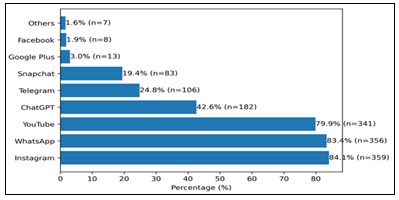
FIG. 1: DISTRIBUTION OF SOCIAL MEDIA PLATFORMS USED (N = 427)
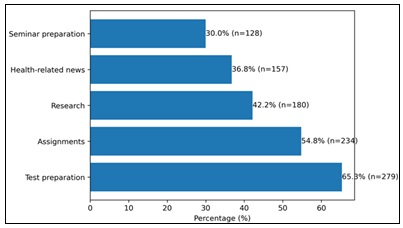
FIG. 2: ACADEMIC PURPOSES OF SOCIAL MEDIA USE (N = 427)
Social Media Usage and Academic Performance: As shown in Fig. 3, the majority of students reported using social media for 1–3 hours daily (52.7%, n = 225), followed by 3–5 hours (32.8%, n = 140). A smaller proportion reported usage of less than 1 hour (5.2%, n = 22), 5–7 hours (5.4%, n = 23), and more than 7 hours (4.0%, n = 17). The comparison between social media use and academic performance has been shown in Table 2. The association between duration of social media usage and academic performance was found to be statistically significant (Fisher exact test, p = 0.041), so there was a significantly higher use of social media amongst low performers when compared to average or high performers.
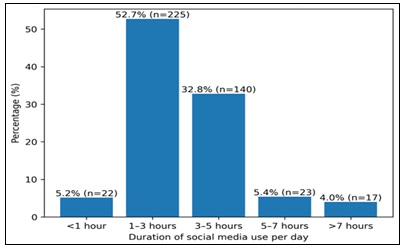
FIG. 3: DISTRIBUTION OF DAILY SOCIAL MEDIA USAGE DURATION (N = 427)
TABLE 2: COMPARISON BETWEEN SOCIAL MEDIA USE AND ACADEMIC PERFORMANCE, P-VALUE CALCULATED USING FISHER’S EXACT TEST (MONTE CARLO SIMULATION)
| Duration of Social media use | Categorization of university exam marks(n) | p value | |||
| <65% | 65-75% | >75% | Total | 0.041 | |
| < 1 hr
Percent within marks |
18
7.7% |
4
2.2% |
0 | 22
5.1% |
|
| 1 - 3 hr
Percent within marks |
114
48.6% |
110
59.1% |
1
16.7% |
225
52.7% |
|
| 3 - 5 hr
Percent within marks |
81
34.4% |
55
29.6% |
4
66.7% |
140
32% |
|
| 5 - 7 hr
Percent within marks |
12
5.1% |
11
5.9% |
0 | 23
5.3% |
|
| >7 hr
Percent within marks |
10
4.3% |
6
3.2% |
1
16.7% |
17
3.9% |
|
| Total | 235(100%) | 186(100%) | 6(100%) | 427(100%) | |
n = number of students.
Gender with Academic Performance: The majority of students, irrespective of gender, scored below 65%. A similar proportion of males and females fell within the 65–75% range. Very few students of either gender scored above 75%. Overall, the distribution of percentages is comparable between males and females, with no obvious gender-based difference on descriptive assessment. The association between gender and percentage category was analyzed using the Chi-square test. No statistically significant association was observed between gender and percentage category (χ² = 0.431; df = 2; p = 0.806).
TABLE 3: COMPARISON OF GENDER WITH ACADEMIC PERFORMANCE
| Gender | < 65% | 65 - 75% | >75% | Total | p value |
| Male (n) | 110 | 87 | 2 | 199 | 0.8 |
| Female (n) | 125 | 99 | 4 | 228 | |
| Total | 235 | 186 | 6 | 427 |
n = number of students
Social Media Addiction Scale: The mean scores of various domains in the social media addiction scale have been shown in Table 4. The mean total social media addiction score in the present study was 74.33 ± 8.86, indicating a moderate level of social media use among the participants. Domain-wise scores also suggested moderate engagement across all dimensions of the scale. However, in the absence of standardized cut-off values, these findings should be interpreted as relative indicators rather than definitive classifications of addiction.
TABLE 4: THE MEAN SCORES OF VARIOUS DOMAINS IN THE SOCIAL MEDIA ADDICTION SCALE
| Social media addiction domain | Average domain scores | Range |
| Virtual communication | 22.41 ± 4.70 | 9-36 |
| Virtual tolerance | 13.29 ± 3.17 | 5-24 |
| Virtual problem | 21.18 ± 5.60 | 9-40 |
| Virtual information | 17.45 ± 3.86 | 6-27 |
| Total score | 74.33 ± 8.86 | -- |
TABLE 5: PEARSON’S CORRELATION BETWEEN SOCIAL MEDIA USAGE WITH UNIVERSITY EXAM PERCENTAGE MARKS AND THE SOCIAL MEDIA ADDICTION SCORE
| Pearson’s Correlation | University exam percentage marks | Social media addiction score |
| Social media usage per day | r = −0.04 | r = 0.31 |
| p value | > 0.05 | < 0.001 |
Statistical Correlations: Pearson’s correlation analysis showed no statistically significant correlation between daily social media usage and university examination percentage marks (r = −0.04, p > 0.05). However, a statistically significant positive correlation was observed between daily social media usage and social media addiction score (r = 0.31, p < 0.001).
DISCUSSION: Social media is defined as digital platforms that facilitate communication, interaction, and information sharing, including both social networking sites and instant messaging applications. Messaging platforms were included due to their widespread use for academic and social communication among students; however, this broader definition may limit comparability with studies that adopt narrower definitions focusing primarily on social networking platforms 9, 16. Social media has become an integral part of everyday communication, particularly among university students. Medical undergraduates frequently use digital platforms not only for social interaction but also for academic collaboration and information sharing. The present study explored the association between social media usage patterns, social media addiction, and academic performance among medical students.
In the current study, the most commonly used platforms were Instagram (84%), WhatsApp (83%), and YouTube (80%). Similar usage patterns have been documented in previous studies where visually oriented and messaging-based applications were reported to be the preferred platforms among young adults and university students 10.
These platforms allow rapid communication, multimedia sharing, and easy access to information, which may explain their popularity among students 1, 2. WhatsApp functions as a multifunctional communication tool, allowing users to interact instantly, form academic groups, exchange ideas, and share study-related materials. These capabilities make it particularly useful for collaborative learning among medical students 9-14. In contrast, YouTube provides extensive access to educational content, including recorded lectures, demonstration videos, and presentations from established institutions. Such resources support visual learning and help students better understand complex subjects through self-paced learning 10, 11, 15-17.
In the present study, 52.7% and 32% of students reported spending approximately 1–3 hours and 3–5 hours per day on social media, respectively. In contrast, earlier studies have documented a lower average daily usage ranging from about 50 minutes to 1.5 hours 18. This difference may be attributed to rapid technological advancements over the past decade, which have led to the emergence of multiple user-friendly and engaging social media platforms that provide extensive and easily accessible information. Increased usage can also be understood through the lens of the uses and gratifications theory, which emphasizes factors such as fulfillment of individual needs, curiosity-driven engagement, and influence of social norms 18. A wide variety of platforms, including WhatsApp, YouTube, Facebook, Instagram, Snapchat, blogs, forums, and other digital resources, were utilized by students for academic purposes such as completing assignments, preparing for examinations and seminars, conducting research, and accessing health-related information.
In this study, we found that there is no statistically significant association between gender and academic performance. Both male and female students demonstrated similar academic outcomes, suggesting that the influence of social media usage on academic performance may not differ substantially between genders. Comparable findings have been reported in earlier studies where gender differences in the academic impact of social media use were minimal 19.
The results of the present study demonstrated a statistically significant association between the duration of social media use and academic performance. Higher durations of social media use were associated with lower categories of academic performance; however, given the cross-sectional design, no causal relationship can be established. This observation is consistent with findings reported in earlier research suggesting that excessive engagement with social networking platforms may interfere with study time and concentration, ultimately affecting academic productivity 11, 16.
A validated social media addiction scale was employed to assess whether the duration of usage translated into addictive behavior. Pearson’s correlation analysis in the present study did not demonstrate a significant linear relationship between daily social media usage and continuous university examination percentage marks, suggesting that the amount of time spent online alone may not fully explain variations in academic performance. Notably, this finding differs from the categorical analysis, where a statistically significant association was observed between categorized social media usage and categorized academic performance using Fisher’s exact test. This discrepancy may be explained by the possibility of a non-linear relationship or the influence of unmeasured confounding factors. Overall, the results suggest that higher social media usage may be associated with lower academic performance categories, but this does not necessarily correspond to a consistent linear decline in examination scores.
Similar observations have been reported in previous studies, where moderate use of social networking platforms did not significantly influence academic outcomes and may even facilitate information exchange and collaborative learning among students 10. However, existing literature presents mixed evidence regarding this relationship. Some studies have reported a negative association, attributing it to distractions arising from multitasking, which may impair concentration and learning efficiency 20. Furthermore, excessive use that progresses toward addictive patterns has been linked to increased academic procrastination, as well as reduced sleep duration and quality, ultimately contributing to higher levels of academic stress 21. On the other hand, certain studies have highlighted a beneficial role of social media in education, emphasizing its potential as a tool for collaborative learning, improved communication, and enhanced engagement between students and educators 22. These contrasting findings suggest that the impact of social media is not inherently detrimental but depends largely on the manner and purpose of its use. Therefore, it is important for medical educators to recognize the potential of social media platforms and strategically incorporate them into teaching–learning processes to optimize academic outcomes. An important observation in the present study was the significant positive correlation between daily social media usage and social media addiction scores. Students who spent more time on social networking platforms had higher addiction scores, suggesting a tendency toward problematic or excessive use.
This finding is consistent with previous studies reporting that increased exposure to social networking platforms may lead to compulsive usage behaviors characterized by loss of control and excessive preoccupation with online interactions 2.
The concept of social media addiction has received increasing attention in recent years. Problematic social media use may manifest through behavioral patterns such as compulsive checking of platforms, withdrawal symptoms when offline, and prioritization of online engagement over academic or personal responsibilities. Previous research has suggested that such patterns may negatively influence productivity and overall well-being among students 2.
Overall, the findings of the present study suggest that although social media platforms can serve as useful tools for communication and information exchange, excessive use may contribute to problematic patterns of behavior and reduced academic focus. Encouraging responsible and balanced use of social networking platforms may help students benefit from digital technologies without compromising academic performance.
Limitations: The present study has certain limitations. First, the cross-sectional design limits the ability to establish causal relationships between social media usage and academic performance. Second, the data were based on self-reported responses, including university examination scores, which may be subject to recall bias or social desirability bias.
Third, the analysis was primarily based on bivariate statistical methods, and multivariable analysis to adjust for potential confounding factors such as professional year, prior academic ability, sleep patterns, stress levels, study habits, and socioeconomic background was not performed. Therefore, the observed associations may be influenced by unmeasured confounders. Additionally, the study was conducted in a single institution, which may limit the generalizability of the findings to other educational settings.
CONCLUSION: The findings of the present study suggest that higher durations of social media use are associated with lower categories of academic performance among medical undergraduate students. However, no significant linear relationship was observed between daily social media usage and continuous university examination scores, indicating that the relationship between social media use and academic performance is complex and may not be strictly linear. These findings highlight that the impact of social media depends not only on the duration of use but also on the nature and purpose of engagement.
While social media platforms can serve as valuable tools for communication, information sharing, and collaborative learning, excessive or unregulated use may contribute to less favorable academic outcomes. Therefore, promoting balanced and purposeful use of social media is essential. Medical educators should consider integrating structured and guided use of social media into teaching–learning strategies to enhance its benefits while minimizing potential adverse effects. Further research, particularly longitudinal studies, is warranted to better understand the direction and underlying mechanisms of this relationship.
ACKNOWLEDGEMENT: We thank Dr. Ajay Bhandarkar for providing guidance for this study and Dr. Cengiz Sachin for letting us use the social media addiction scale-student form and allowing its inclusion in our manuscript.
CONFLICTS OF INTEREST: The authors have none to declare.
REFERENCES:
- Alahmar AT: The impact of social media on the academic performance of second year medical students at College of Medicine, University of Babylon, Iraq. J Med Allied Sci 2016; 6(2): 77.
- Błachnio A, Przepiorka A and Pantic I: Association between Facebook addiction, self-esteem and life satisfaction: a cross-sectional study. Comput Human Behav 2016; 55: 701–705. https://doi.org/10.1016/j.chb.2015.10.026
- Guedes E, Sancassiani F, Carta MG, Campos C, Machado S and King ALS: Internet addiction and excessive social networks use: what about Facebook? Clin Pract Epidemiol Ment Health 2016; 12: 43–48. https://doi.org/10.2174/1745017901612010043
- Jha RK, Shah DK, Basnet S, Paudel KR, Sah P and Sah AK: Facebook use and its effects on the life of health science students in a private medical college of Nepal. BMC Res Notes 2016; 9: 378. https://doi.org/10.1186/s13104-016-2186-0
- Mouratidis T, Kafetsios K and Stavropoulos V: Risk factors for problematic social media use in youth: a systematic review of longitudinal studies. Curr Psychol 2025; 44: 237–253.
- Keles B, McCrae N and Grealish A: A systematic review: the influence of social media on depression, anxiety and psychological distress in adolescents. Int J Adolesc Youth 2020; 25(1): 79–93. https://doi.org/10.1080/02673843.2019.1590851
- Boer M, Stevens GWJM, Finkenauer C, de Looze ME and van den Eijnden RJJM: Social media use intensity, social media use problems, and mental health among adolescents. Int J Environ Res Public Health 2021; 18(13): 6938. https://doi.org/10.3390/ijerph18136938
- Huang C: Time spent on social network sites and psychological well-being: a meta-analysis. Cyberpsychol Behav Soc Netw 2017; 20(6): 346–354. https://doi.org/10.1089/cyber.2016.0758
- Şahin C: Social media addiction scale–student form: the reliability and validity study. Turk Online J Educ Technol 2018; 17(1): 169-82.
- Bhandarkar AM, Pandey AK, Nayak R, Pujary K and Kumar A: Impact of social media on the academic performance of undergraduate medical students. Med J Armed Forces India 2021; 77(1): 37–41. doi:10.1016/j.mjafi.2020.10.021.
- Shah V and Kotsenas AL: Social media tips to enhance medical education. Acad Radiol 2017; 24(6): 747-752.
- Chytas D: Use of social media in anatomy education: a narrative review of the literature. Ann Anat 2019; 221: 165-172.
- Cole D, Rengasamy E, Batchelor S, Pope C, Riley S and Cunningham AM: Using social media to support small group learning. BMC Med Educ 2017; 17(1): 201.
- Galiatsatos P, Porto-Carreiro F, Hayashi J, Zakaria S and Christmas C: The use of social media to supplement resident medical education - the SMART-ME initiative. Med Educ Online 2016; 21: 29332.
- Cheston CC, Flickinger TE and Chisolm MS: Social media use in medical education: a systematic review. Acad Med 2013; 88(6): 893-901.
- Hopkins L, Hampton BS and Abbott JF: To the point: medical education, technology, and the millennial learner. Am J Obstet Gynecol 2018; 218(2): 188-192.
- Ranginwala S and Towbin AJ: Use of social media in radiology education. J Am Coll Radiol 2018; 15(1): 190-200.
- AlFaris E, Irfan F and Ponnamperuma G: The pattern of social media use and its association with academic performance among medical students. Med Teach 2018; 40(1): 77-82.
- Kirschner PA and Karpinski AC: Facebook® and academic performance. Comput Human Behav 2010; 26(6): 1237–1245. doi:10.1016/j.chb.2010.03.024
- Karpinski AC, Kirschner PA, Ozer I, Mellott JA and Ochwo P: An exploration of social networking site use, multitasking, and academic performance among United States and European university students. Comput Hum Behav 2013; 29(3): 1182-1192.
- Azizi SM, Soroush A and Khatony A: The relationship between social networking addiction and academic performance in Iranian students of medical sciences: a cross-sectional study.BMC Psychol 2019; 7(1): 28.
- Junco R and Cole-Avent GA: An introduction to technologies commonly used by college students. N Dir Student Serv 2008; 2008(124): 3-17.
How to cite this article:
Modi UJ, Modi JP and Patel BJ and Vora MKB: The relationship between social media addiction and academic performance among medical undergraduate students. Int J Pharm Sci & Res 2026; 17(8): 2482-89. doi: 10.13040/IJPSR.0975-8232.17(8).2482-89.
All © 2026 are reserved by International Journal of Pharmaceutical Sciences and Research. This Journal licensed under a Creative Commons Attribution-NonCommercial-ShareAlike 3.0 Unported License.
Article Information
23
2482-2489
623 KB
325
English
IJPSR
Usha J. Modi *, Jigar P. Modi, Bhumika J. Patel and Mukesh Kumar B. Vora
GMERS Medical College and Civil Hospital, Sola, Ahmedabad, Gujarat, India.
ushalalwani89@gmail.com
01 April 2026
05 May 2026
08 May 2026
10.13040/IJPSR.0975-8232.17(8).2482-89
01 August 2026
 Download